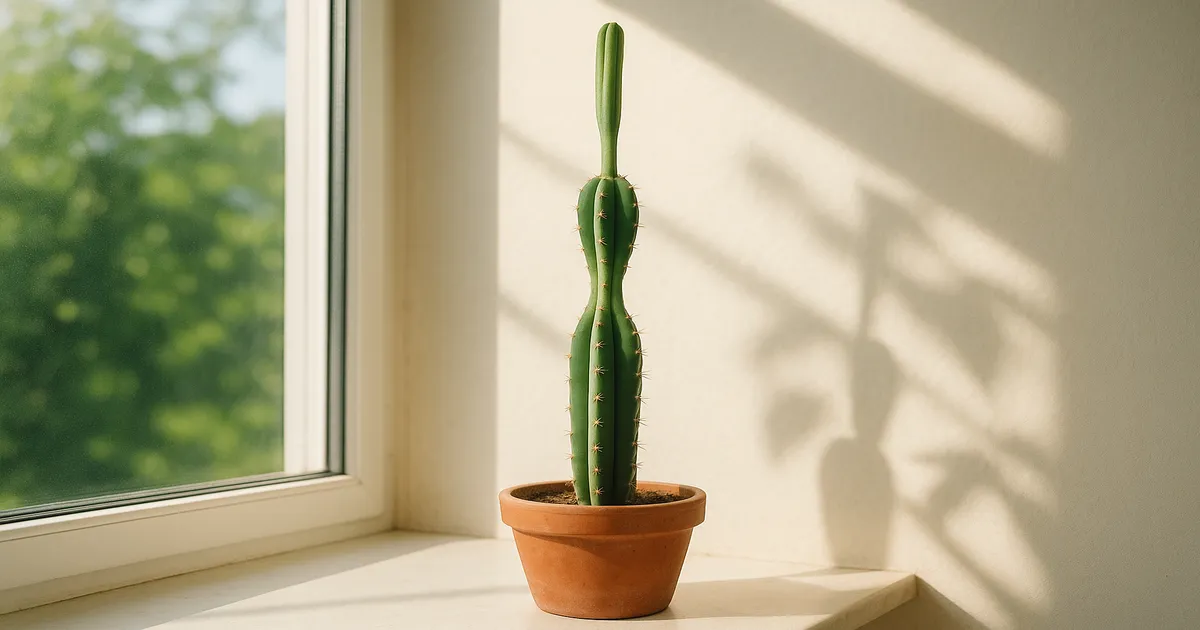
Quick Answer: That odd slender section on your San Pedro cactus is almost certainly etiolation — permanent structural damage caused by insufficient light. The weakened tissue will never thicken back up. If the constriction is longer than 2–3 inches or the top is heavy and leaning, chopping is strongly recommended. Read on to make the call, cut correctly, and stop it happening again.
If you’ve been staring at your San Pedro cactus wondering “should I chop the top after the odd slender part?” — you’re not alone. That thin, pinched section is one of the most common problems growers run into with this species. The good news: it’s completely fixable. The bad news: the weak tissue itself is permanent. Here’s everything you need to make the right decision.
What Is That Odd Slender Section on a San Pedro Cactus?
Etiolation: The Science Behind the Thin Neck
The narrow, constricted zone is called etiolation — a stress response to insufficient light. Growers also call it a “neck,” “waist,” or “weak point.” All those terms describe the same thing.
When light drops below what the plant needs, the growth hormone auxin accumulates on the shaded side of the stem and drives elongated, asymmetric cell division. The result is a section of stem that’s thinner, paler, and less ribbed than the healthy tissue above and below it. Critically, the vascular bundles in that zone are more widely spaced and structurally compromised. This isn’t just cosmetic. That zone is a genuine fault line where the cactus can snap under its own weight.
Why San Pedro Cacti Are Especially Prone to This Problem
Echinopsis pachanoi is one of the fastest-growing cacti in cultivation, capable of adding 12–18 inches per year under good conditions. That speed is part of what makes it rewarding to grow — but it also means even a few weeks of inadequate light produces a very visible constriction. A slower-growing species might show only a subtle change; a San Pedro makes the problem obvious.
Will the Constricted Section Ever Thicken Back Up?
No. Etiolated tissue is permanent. Moving the plant to better light allows new growth to emerge correctly, but the thin section itself will not fill out or strengthen. It stays weak — which is exactly why chopping is often the right move.
Common Causes of a Thin or Constricted Section
Insufficient Light: The Primary Culprit
This is the cause in the vast majority of cases. San Pedro needs full sun to very bright direct light (5,000–10,000+ foot-candles) outdoors. Indoors, it requires at minimum bright indirect to direct sun (3,000–5,000+ foot-candles) from a south- or west-facing window — and even that is the lower boundary of what it tolerates without etiolating.
If your plant lives near a window that gets fewer than four hours of direct sun, or if it was moved indoors for winter, that’s almost certainly your answer.
Seasonal Light Reduction and Winter Dormancy Disruption
A San Pedro thriving on a sunny patio in July may receive only 1,000–2,000 foot-candles through a window in December — a fraction of what it needs. If you keep the plant warm and continue watering through winter, it won’t go dormant. It’ll keep growing, just badly. The correct winter protocol is cool temperatures (45–55°F / 7–13°C) and near-complete drought, which slows or stops growth entirely.
Overwatering Combined with Warm Temperatures
Excess moisture during low-light periods compounds etiolation dramatically. A well-watered, warm San Pedro in a dim room produces soft, water-logged, thin-walled tissue even faster than a dry one. Soil that stays wet longer than 7–10 days in winter, or 3–5 days in summer, is too wet for this plant.
Excess Nitrogen Fertilizer
High-nitrogen fertilizers push rapid, lush growth with thin cell walls. A formula heavily weighted toward nitrogen — such as a 20-10-10 general-purpose blend — used during low-light conditions is a recipe for a pronounced neck. Phosphorus and potassium matter far more for structural integrity in cacti.
Other Contributing Factors
A severely root-bound plant can produce thin, stunted growth as the root system struggles to support the column. Pest damage from spider mites, scale, or mealybugs can injure the apical meristem and cause distorted new growth that resembles etiolation but is usually discolored rather than uniformly slender. Frost damage, sunscald, and rare genetic mutations (cresting, monstrose growth) can also create constricted or irregular zones, though these are usually identifiable by associated scarring, discoloration, or unusual form.
Should You Chop the Top After the Odd Slender Part? How to Decide
When Chopping Is Strongly Recommended
Chop if any of the following apply:
- The constriction is longer than 2–3 inches (5–8 cm)
- The top is heavy enough to lean or visibly stress the thin zone
- The neck bends or wobbles under its own weight
- You want to propagate the healthy top section anyway
Chopping is not a drastic measure for San Pedro — it’s a routine horticultural practice that removes a structural hazard and gives you a cutting to root at the same time.
When You Might Wait and Monitor
Hold off if:
- The constriction is under 1 inch (2.5 cm) and the plant is otherwise stable
- You’ve just moved the plant to significantly better light and want to see whether new growth corrects itself
- The structural risk is genuinely low
Even then, understand that the thin tissue won’t improve. You’re simply deciding whether the risk is worth waiting on.
How to Assess the Severity
Measure the thin zone with a ruler. Then gently apply light lateral pressure to the top of the cactus. Any flex or movement at the constriction point is a clear sign the structural risk is real. A constriction that feels rubbery or soft rather than firm warrants immediate action.
How to Chop a San Pedro Cactus Correctly
Tools and Sterilization
Use a sharp, large-bladed knife — a clean bread knife or machete both work well for thick columns. Sterilize with 70%+ isopropyl alcohol before cutting, and again between cuts. A dull or dirty blade is how you introduce rot. Wear thick gloves; San Pedro spines are substantial, and a slipping knife on a round column is a genuine hazard.
Where to Make the Cut
Cut just below the etiolated section, into healthy, firm, normally-thick tissue. The cut surface should show clean, solid green flesh — not the pale, soft tissue of the constriction zone. If you’re saving the top as a cutting, make a second cut just above the etiolated section and discard the thin middle piece entirely.
Treating and Callousing the Cut Surfaces
Dust both cut surfaces immediately with powdered sulfur or activated charcoal to discourage fungal infection. Then place both pieces in a dry, shaded spot with good airflow and let them callous for 2–4 weeks — longer in humid climates. The cut surface should form a firm, dry, papery layer before the cutting touches soil. Rushing this step is the most common cause of cutting rot.
Rooting the Top Cutting
Once fully calloused, stand the cutting upright in a well-draining cactus mix. Water very sparingly at first — just enough to slightly moisten the medium — and keep temperatures between 65–85°F (18–29°C). Rooting typically takes 4–12 weeks depending on season and warmth. Don’t fertilize until the cutting shows new growth from the apex, which signals that roots have established.
What Happens to the Base Stump?
The stump won’t just sit there. Within weeks to months, lateral offsets (pups) will emerge from the areoles below the cut. These can be left to grow as a multi-headed clump or removed and rooted individually once they reach a few inches in length. Many growers find the base produces more character after a chop than it ever had as a single column.
Fixing the Root Cause: Light, Water, Soil, and Nutrients
Improving Light Conditions
Outdoors, the goal is full direct sun (5,000–10,000+ foot-candles) for as much of the day as possible. If your plant has been in low light, acclimate it gradually over 10–14 days to avoid sunscald — start with morning sun only, then increase exposure.
Indoors, a south- or west-facing window is the minimum. For serious indoor growing, a full-spectrum LED grow light (Mars Hydro TS 600W) positioned 6–12 inches from the apex, running 14–16 hours per day during the growing season, is the most reliable way to prevent etiolation year-round.
Correcting Overwatering
Water only when the soil is completely dry. A wooden skewer or moisture meter inserted to the bottom third of the pot tells you what the surface can’t. General guidelines:
- Summer (active growth): every 7–14 days, depending on pot size and heat
- Winter (dormancy): once every 4–6 weeks, or not at all below 50°F (10°C)
Always ensure pots have drainage holes. Never let the plant sit in standing water.
The Right Soil Mix
A fast-draining mix is non-negotiable:
- 50% inorganic grit (perlite, pumice, or coarse horticultural grit)
- 30% quality cactus/succulent potting mix
- 20% coarse sand (not fine beach sand)
Target a soil pH of 6.0–7.0 and avoid peat-heavy mixes, which hold moisture far too long.
Fertilizing Correctly
Switch to a low-nitrogen, high-phosphorus cactus formula with an N-P-K ratio such as 2-7-7 or 5-10-10. Apply monthly during active growth (roughly April through September in the Northern Hemisphere) at half the recommended label strength. Stop entirely during dormancy.
How to Prevent Etiolation in Future Growth
Light is the single most important factor in San Pedro care. Everything else is secondary. If the plant isn’t getting enough, no amount of perfect watering or ideal soil will prevent a constriction from forming.
Beyond light, enforce proper winter dormancy: reduce watering dramatically when days shorten and allow indoor temperatures to fall to 45–55°F (7–13°C) if possible. Rotate the pot 90–180° every 2–4 weeks so all sides of the column receive even exposure. If your plant is tall or has any lean, stake it proactively with a bamboo cane and soft plant ties — this reduces mechanical stress on weak zones and buys you time to make a thoughtful decision about whether to chop.
Finally, check the growing tip, areoles, and base during every watering session. Look for fine webbing (spider mites), small brown or white bumps along the ribs (scale), or white cottony masses at the areoles (mealybugs). Catching pests early keeps them from damaging the apical meristem and creating the kind of distorted growth that can mimic etiolation.
Frequently Asked Questions
Will the thin section on my San Pedro cactus ever grow back thicker?
No. Etiolated tissue is permanent. The elongated, structurally weakened cells that formed during low-light conditions will not fill out no matter how much light the plant receives afterward. New growth from the apex will emerge correctly once light improves, but the thin zone itself stays thin.
How long should I let a San Pedro cutting callous before planting it?
Allow 2–4 weeks in a dry, shaded spot with good airflow. The cut surface should form a firm, papery seal before it contacts soil or moisture. In humid climates, err toward the longer end. Planting too early is the most common cause of cutting rot.
Is there a best time of year to chop a San Pedro cactus?
Spring is ideal. Warm temperatures encourage faster callousing and rooting, and the plant’s natural growth surge helps the base produce pups quickly. Summer works well too. Avoid chopping in late autumn or winter if possible — cool temperatures slow callousing significantly and increase the risk of fungal issues on the cut surface.
How much light does a San Pedro need indoors to prevent etiolation?
At least 3,000–5,000+ foot-candles of bright indirect to direct sun — the absolute minimum. A south- or west-facing window may provide this in summer but rarely in winter. For reliable year-round indoor growing, supplement with a full-spectrum LED grow light running 14–16 hours per day, positioned 6–12 inches from the apex.
What will happen to the base stump after I chop the top off?
The stump stays alive and, within weeks to a few months, begins producing lateral offsets (pups) from the areoles near the cut. These can be left to grow as a multi-headed clump or removed and rooted individually once they reach a few inches in length.