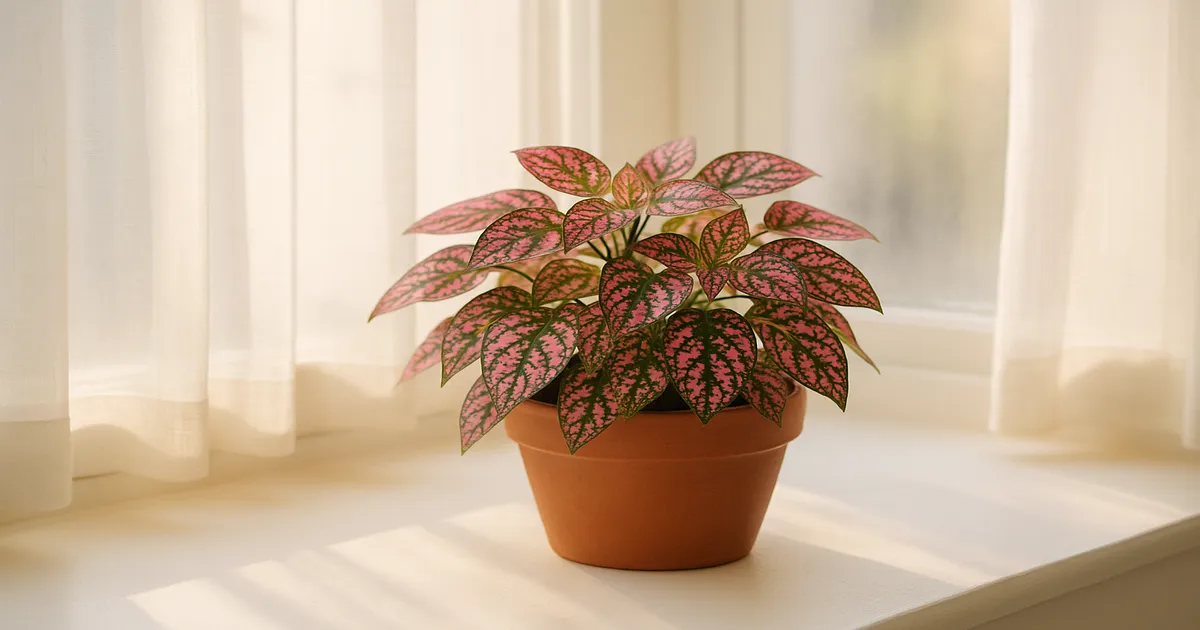
Quick Answer: Water your polka dot plant every 5–7 days in spring and summer, and every 10–14 days in winter. Skip the fixed schedule — instead, water when the top 1–2 inches of soil feel dry. That one habit prevents the overwatering and underwatering that kill most polka dot plants.
Figuring out how often to water a polka dot plant trips up a lot of people, and for good reason. Hypoestes phyllostachya sits in a narrow sweet spot: it needs consistent moisture but punishes waterlogged soil fast. Get it right, and those vivid pink, red, or white spots stay bold and bright. Get it wrong in either direction, and the plant tells you — loudly — within a day or two.
How Often to Water a Polka Dot Plant: Quick Reference
| Parameter | Optimal Range |
|---|---|
| Watering frequency (spring–summer) | Every 5–7 days |
| Watering frequency (winter) | Every 10–14 days |
| Soil moisture target | Evenly moist, never soggy |
| Ambient humidity | 50–70% relative humidity |
| Preferred water temperature | Room temperature (65–75°F / 18–24°C) |
| Light requirement | Bright indirect light (1,500–3,000 foot-candles) |
Check the Soil, Not the Calendar
No schedule survives contact with real life. A plant near a heating vent in January, sitting in a terracotta pot, dries out far faster than one in a glazed pot by a north window. The only reliable trigger is the soil itself. Push your finger about an inch into the mix — if it feels dry at that depth, water thoroughly. If it still feels cool and damp, wait a day or two and check again.
Why Polka Dot Plants Have Specific Water Needs
Native Habitat
Hypoestes phyllostachya comes from the humid tropical understories of Madagascar, where it grows beneath a forest canopy in filtered light. Rain is frequent, but the forest floor drains quickly — roots never sit in standing water for long. Consistent moisture plus fast drainage is exactly what you’re trying to recreate indoors.
Shallow, Fibrous Roots
The root system is shallow and fibrous, typically occupying only the top 3–5 inches of soil. Those fine roots have limited oxygen storage, so waterlogged soil suffocates them within 24–48 hours. At the same time, a small root system can’t buffer drought the way a deep-rooted plant can — once the soil dries out completely, wilting follows fast.
Leaves and Pigmentation
The large, thin leaves lose water through transpiration quickly, especially in warm or dry indoor air. Worth noting: the anthocyanin pigments responsible for pink and red coloration fade noticeably under water stress. Dull, washed-out spots are often the first sign that something is off with your watering, even before the leaves start to droop.
Reading Your Plant: Underwatering vs. Overwatering
Signs of Underwatering
- Leaves curl inward to reduce exposed surface area
- Brown, crispy edges — dry and papery, not soft or yellow
- Dull or faded spot coloration
- Soil pulling away from the edges of the pot
- Pot feels noticeably light when lifted
That last one — the pot-lift test — is a quick secondary check worth building into your routine.
Signs of Overwatering
- Lower leaves turn yellow and drop
- Plant wilts even though the soil is wet (a key red flag)
- Stem base feels soft or mushy
- Soil smells sour or faintly sulfurous
- Roots are brown and mushy rather than white and firm
Both overwatering and underwatering can cause wilting, which confuses a lot of people. The difference: drought wilting comes with dry soil and crispy edges; overwatering wilting comes with wet soil and yellowing leaves.
Signs of Inconsistent Watering
Swinging between bone-dry and waterlogged is arguably harder on the plant than either extreme held consistently. Calcium moves through the xylem continuously and can’t be “caught up” after a drought period. The result is calcium-deficiency symptoms even when calcium is present in the soil: brown leaf tips, patchy yellowing, and new leaves that emerge small or distorted.
Factors That Change Your Watering Frequency
Season and Light
In summer, longer days and brighter light drive transpiration — the plant drinks more and dries out faster. In winter, light levels near most windows can drop to 25–200 foot-candles, slowing water consumption significantly. A schedule that worked in July will overwater the same plant in December.
Temperature and Airflow
Every 10°F rise in temperature roughly doubles a plant’s transpiration rate. A polka dot plant in an 85°F room needs water nearly twice as often as one kept at 65°F. Heating vents, fans, and air conditioning increase evapotranspiration by 30–50% — if your plant sits near any of these, check the soil more frequently.
Pot Material and Size
Terracotta and unglazed ceramic are porous, wicking moisture through the pot walls and drying soil 20–30% faster than plastic or glazed pots. Pot size matters too. An oversized pot holds far more soil than the root system can draw from, keeping the lower half wet for weeks — a reliable setup for root rot even if you’re watering “correctly.” Stick to pots only 1–2 inches larger in diameter than the root ball.
Soil Composition
Dense, peat-heavy, or compacted soil holds water long after the surface looks dry. A well-draining mix dries down predictably and gives roots the air they need between waterings. See the soil blend recommendation below.
Water Quality
A few things worth knowing about tap water:
- Chloramine (increasingly used instead of chlorine) cannot be removed by leaving water out overnight — it requires an activated carbon filter. A filtered pitcher works well for this.
- Fluoride accumulates in leaf tissue and causes tip burn that mimics drought stress; if you’re in a fluoridated area, switch to filtered or rainwater.
- Hard water (over 200 ppm total dissolved solids) gradually raises soil pH, locking out micronutrients.
- Cold water (below 55°F) shocks tropical roots — always use room-temperature water.
How to Fix an Overwatered Polka Dot Plant
Act quickly — root rot progresses fast in warm conditions.
- Gently unpot the plant and shake off the old soil.
- Inspect the roots: healthy roots are white or cream and firm; rotted roots are brown, black, or mushy.
- Trim all damaged roots with sterile scissors or pruning shears.
- Dust the cut ends with powdered cinnamon or horticultural sulfur, both of which have antifungal properties.
- Repot into fresh, well-draining soil in a clean pot with drainage holes.
Never reuse soil that had root rot in it. The ideal mix for Hypoestes:
- 40% high-quality potting mix (peat- or coco coir-based) (Fox Farm Ocean Forest)
- 30% perlite
- 20% orchid bark or coarse horticultural sand
- 10% worm castings or compost
This blend drains quickly, holds just enough moisture, and targets the ideal soil pH of 6.0–7.0. After repotting, water conservatively for the first 1–2 cycles while the roots reestablish.
If rot was extensive, apply a soil drench with a biological fungicide containing Trichoderma spp. or Bacillus subtilis. These beneficial microbes outcompete pathogenic fungi like Pythium and Phytophthora without the harshness of chemical options.
How to Revive an Underwatered Polka Dot Plant
When soil dries out severely, it can become hydrophobic — water poured from the top runs straight down the gap between soil and pot wall, leaving the root zone bone dry. Bottom watering solves this. Place the pot in a tray of room-temperature water for 20–30 minutes. The soil wicks moisture upward through capillary action, rehydrating evenly from the inside out.
If water beads on the surface and refuses to absorb, add 1–2 drops of unscented dish soap per liter of water as a surfactant to break the surface tension. Flush the soil thoroughly with clean water afterward to remove any residue.
Don’t flood a severely stressed plant all at once — the sudden shift in water potential can shock already-stressed cells. Water moderately, wait 30 minutes, then water again. Trim any crispy or brown leaves to redirect energy toward healthy tissue. Within a day or two, you should see the leaves regain turgor and perk back up.
Building a Reliable Watering Routine
How Often to Water a Polka Dot Plant by Season
Pick a day to check the soil, not a day to water. Check every 3–4 days and water only when the top 1–2 inches are dry.
- Spring: Gradually increase frequency as days lengthen and temperatures rise.
- Summer: Water most often; check soil every 2–3 days during heat waves.
- Fall: Start tapering off; don’t water just because it’s been a week.
- Winter: Reduce to every 10–14 days. Keep the plant away from cold windowsills — glass can drop to 40–50°F on cold nights, chilling the roots even when the room feels warm.
Tools That Help
A basic analog soil moisture meter removes the guesswork. Insert the probe into the center of the pot and water when the reading hits 3–4 on a 1–10 scale. Avoid watering at 5 or above — the soil still has plenty of moisture even if the surface feels dry.
Self-watering pots with a reservoir are also worth considering. They maintain consistent soil moisture by letting the plant draw water as needed through capillary action, which eliminates the boom-and-bust cycle that causes so many problems.
Supporting Habits
- Humidity: Maintain 50–70% relative humidity. Group plants together, use a pebble tray (pot base above the waterline), or run a cool-mist humidifier.
- Fertilizing: Feed with a balanced, water-soluble fertilizer at half strength (such as a 20-20-20 formula) every 2–4 weeks during active growth. Stop in fall and winter — feeding a slow plant pushes lush growth the roots can’t support, and excess salts draw water out of roots through osmosis.
- Pinching: Pinch growing tips regularly to keep the plant compact. A leggy plant has more leaf surface losing water than its roots can keep up with. Regular pinching also delays flowering — once Hypoestes bolts, it redirects energy to seed production and the root system weakens, making water management harder.
Frequently Asked Questions
How do I know when my polka dot plant needs water?
Check the top 1–2 inches of soil — if they feel dry, it’s time to water. You can also lift the pot: a noticeably light pot almost always means dry soil. Early drooping or inward leaf curling is the plant signaling thirst before serious damage sets in.
Can a polka dot plant recover from overwatering?
Yes, if you catch it early. Unpot the plant, trim any rotted roots, and repot into fresh, well-draining soil in a clean pot. Plants with minor root damage typically bounce back within 2–4 weeks; those with extensive rot are harder to save but worth attempting.
Why is my polka dot plant wilting even though the soil is wet?
Wilting in wet soil is a classic sign of root rot. When roots are damaged by waterlogging, they lose the ability to absorb and transport water — so the plant wilts from the top down even though moisture surrounds the roots. Check the stem base for softness and the soil for a sour smell, then follow the overwatering rescue steps above.
Should I mist my polka dot plant instead of watering the soil?
No. Misting raises humidity briefly but does nothing to hydrate the root zone. It can also leave water sitting on leaves in low-airflow conditions, encouraging fungal issues. A pebble tray or humidifier is far more effective.
How often should I water a polka dot plant in winter?
Reduce watering to every 10–14 days. Lower light levels slow photosynthesis and water consumption dramatically, so a summer schedule will keep the soil too wet. Always check the soil before watering, and keep the plant away from cold windowsills where chilling temperatures further impair water uptake.