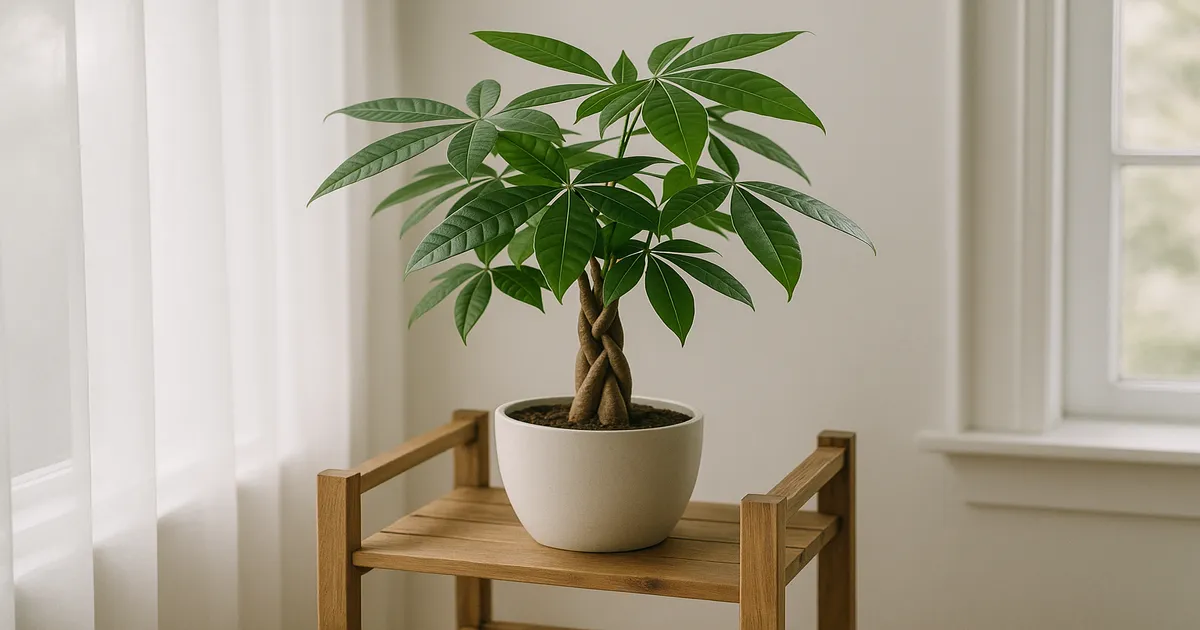
Quick Answer: Water your money tree (Pachira aquatica) every 7–14 days in spring and summer, and every 14–21 days in fall and winter. Let the top 1–2 inches of soil dry out before watering again, and always use a pot with drainage holes.
Figuring out how much watering a money tree needs is one of the most common questions new owners ask — and for good reason. Pachira aquatica sits in an awkward middle ground: it’s not a drought-loving succulent, but it’s far more rot-prone than its swampy origins might suggest. Get the balance right and this plant thrives for decades. Get it wrong in either direction and you’ll see yellowing leaves, mushy roots, or crispy brown tips within weeks.
One quick note before we dive in: “money tree” is also used for Crassula ovata (jade plant) in some regions. That’s a succulent with completely different watering needs. Everything here covers Pachira aquatica only.
Money Tree Watering: Core Parameters at a Glance
| Parameter | Recommended Range |
|---|---|
| Watering frequency (growing season) | Every 7–14 days |
| Watering frequency (dormant season) | Every 14–21 days |
| Soil moisture target | Top 1–2 inches dry before rewatering |
| Ideal humidity | 50–70% relative humidity |
| Water temperature | Room temperature (18–24°C / 65–75°F) |
| Pot drainage | Mandatory |
| Soil pH | 6.0–7.0 |
Check Before You Water
Ignore the calendar. Push your finger about an inch into the soil — if it still feels damp, wait a few more days. If it’s dry at that depth, water thoroughly until it drains freely from the bottom. A moisture meter makes this even easier; aim for a reading of 3–4 on a 1–10 scale before you water.
Understanding How Much Watering a Money Tree Actually Needs
What Its Native Habitat Really Tells Us
Pachira aquatica grows naturally along riverbanks and swamp margins in Central and South America. That leads many owners to assume it wants constantly wet soil — but there’s a critical detail that gets lost: in the wild, it grows in moving, oxygenated water, not stagnant, airless mud. A waterlogged pot is nothing like a flowing riverbank. Roots sitting in still, oxygen-depleted soil suffocate and rot quickly.
Growing Season vs. Dormant Season
During spring and summer, your money tree is actively growing and moving a lot of water through its system, so watering every 7–14 days is appropriate. Come fall and winter, growth slows dramatically. Cut back to every 14–21 days and let the soil dry a little more between sessions. Many overwatering problems happen in winter simply because owners keep their summer schedule running.
How Pot Material and Size Change Everything
The same watering schedule can produce very different results depending on your setup.
- Terracotta pots are porous and wick moisture away from the soil, drying it out 25–50% faster than plastic or glazed ceramic — a good choice if you tend to overwater
- Plastic and glazed ceramic pots hold moisture much longer, so you’ll water less often
- Oversized pots are a common trap: the extra soil beyond the root zone stays wet for weeks, inviting rot even when you’re being careful
- Root-bound plants do the opposite — the root mass displaces most of the soil, so the pot dries out in just a few days
Signs Your Money Tree Has a Watering Problem
Overwatering Symptoms
Overwatering is the number-one killer of money trees, and it’s sneaky because early symptoms are easy to dismiss.
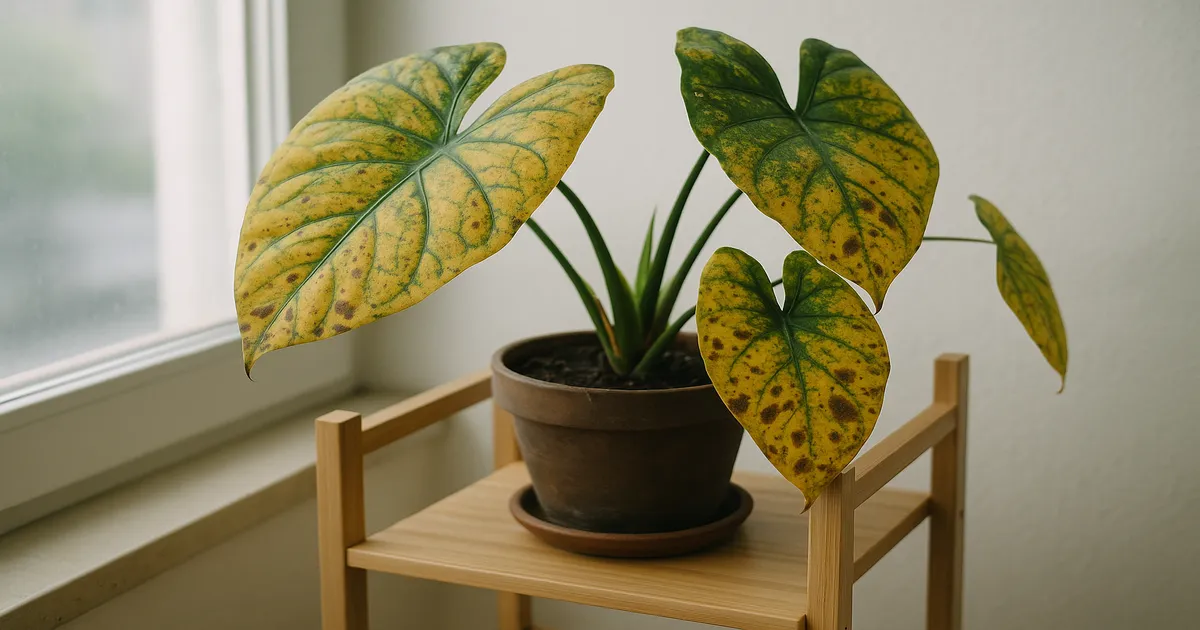
- Yellowing leaves, starting with the lower or older ones
- Leaves dropping while still green
- Soft or mushy stem base
- Soil that smells sour or swampy
- Fungus gnats hovering around the pot (they breed in persistently moist topsoil)
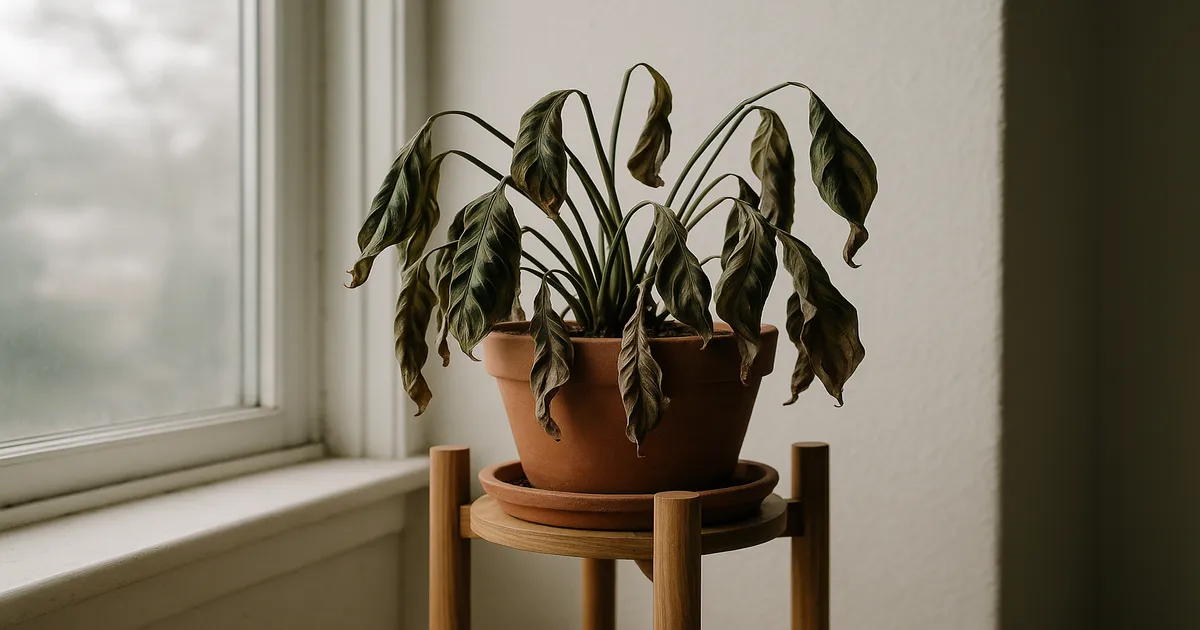
Here’s the trap that catches many owners: once root rot sets in, damaged roots can no longer transport water to the leaves. The plant wilts and yellows — exactly the same symptoms as underwatering. Owners see a drooping plant and water it again, making everything worse. If the soil is wet and the plant is wilting, stop watering immediately. The soil check is your only reliable diagnostic.
Advanced root rot is caused by water mold pathogens (Phytophthora and Pythium) that spread through soggy soil via swimming spores. At this stage you’ll see black or brown mushy roots with no firm white tips, a foul odor from the soil, and rapid leaf drop. Act fast.
Underwatering Symptoms
Both overwatering and underwatering can cause wilting and browning, which is exactly why checking soil moisture is non-negotiable before drawing any conclusions.
Underwatering signs include:
- Wilting that bounces back within a few hours of watering
- Leaves curling inward (a water-conservation response)
- Crispy brown leaf tips and margins — not soft or mushy
- Soil pulling away from the edges of the pot
- A noticeably lightweight pot when you lift it
When cells lose water, they lose turgor pressure — the hydraulic force that keeps leaves upright. The plant also starts producing abscisic acid (ABA), a stress hormone that closes the stomata to slow water loss, which reduces photosynthesis and compounds the damage over time.
Pachira is more drought-tolerant than many tropicals, but repeated severe drying kills off the fine feeder roots responsible for most water and nutrient uptake. Occasional mild drying is fine; repeated bone-dry episodes are not.
How to Fix Money Tree Watering Problems
Recovering an Overwatered Money Tree
- Stop watering immediately and move the plant to bright indirect light to encourage evaporation
- Improve airflow around the pot — a gentle fan helps
- Tip the pot briefly to drain any pooled water
- Unpot and inspect the roots — healthy roots are firm and white to tan; rotted ones are brown or black and mushy
- Trim all rotted roots with sterilized scissors, cutting back to healthy tissue
- Treat with a biological fungicide containing Trichoderma spp. or a copper-based drench
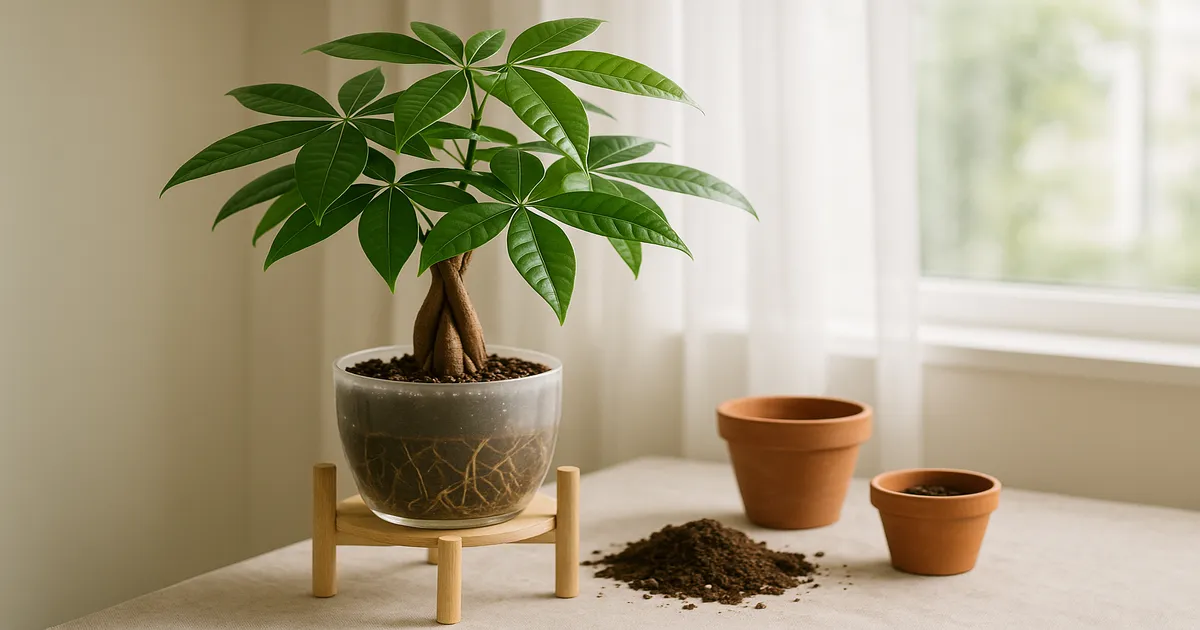
- Repot in fresh, well-draining mix (see soil recipe below)
- Wait 5–7 days before rewatering to let cut root ends callous
If more than 70% of the roots are gone, take healthy stem cuttings as insurance while you attempt recovery.
For active root rot, after pruning, soak remaining roots in a dilute hydrogen peroxide solution — 3% H₂O₂ mixed 1:4 with water — for 30 minutes to kill anaerobic pathogens. Dust cut ends with powdered cinnamon or sulfur (both have antifungal properties), then repot into completely fresh, sterile mix. Apply a Bacillus subtilis biological drench (Serenade Garden Disease Control) to the new soil, and water sparingly for 4–6 weeks while roots regenerate.
Rehydrating an Underwatered Money Tree
When soil gets very dry, it often becomes hydrophobic — water runs down the sides of the pot and out the bottom without actually soaking in. Bottom-watering solves this: set the pot in a basin of room-temperature water for 30–45 minutes and let the soil absorb moisture from below. Before top-watering again, poke a few holes in compacted soil with a chopstick to improve penetration. Trim any fully crispy leaves — they won’t recover, and the plant is better off redirecting energy to new growth.
Building a Consistent Watering Routine
A fixed schedule will eventually fail you, because your plant’s water needs shift with the seasons, your home’s humidity, and how much light it’s getting. Instead:
- Check weekly — set a phone reminder to feel the soil every 7 days
- Use a moisture meter and water when it reads 3–4 on a 1–10 scale
- Keep a simple plant journal — note the date and whether the soil was dry, moist, or wet. Patterns emerge quickly.
Soil, Pots, and Drainage
The Best Soil Mix for a Money Tree
The goal is a mix that holds just enough moisture for roots to drink but drains fast enough to prevent waterlogging. This recipe works well:
- 40% high-quality potting mix (peat or coco coir base)
- 30% perlite
- 20% orchid bark or coarse pine bark
- 10% coarse sand or pumice
Target a soil pH of 6.0–7.0. Avoid anything marketed as “moisture-retaining,” and never use garden soil — it compacts badly in containers and suffocates roots. A thin layer of perlite on the soil surface also deters fungus gnats from laying eggs.
Drainage Holes Are Non-Negotiable
There is no workaround for a pot without drainage holes. Water has to go somewhere, and without an exit it pools at the bottom and creates permanent anaerobic conditions. Decorative cachepots are fine as outer sleeves — just keep the plant in its nursery pot with holes inside.
The Gravel-at-the-Bottom Myth
Putting a layer of gravel at the bottom of a pot doesn’t improve drainage — it actually makes things worse. Water moves through soil by capillary action and won’t cross into coarser material until the soil above is fully saturated. This creates a “perched water table” — a zone of permanently waterlogged soil right where your roots live. Skip the gravel entirely.
Environmental Factors That Affect Watering Frequency
A money tree in bright indirect light (1,500–3,000 foot-candles) can use water two to three times faster than one sitting in a dim corner (25–100 foot-candles). More light means more photosynthesis, more growth, and more transpiration. Warmer temperatures accelerate this further — roughly speaking, every 10°C rise in temperature doubles the rate of biological activity.
Humidity matters too. Low humidity (below 40%) creates a steep vapor pressure deficit, pulling water out of leaves rapidly, drying soil faster, and stressing the plant. Aim for 50–70% relative humidity. A hygrometer lets you monitor conditions accurately rather than guessing.
Avoid placing your money tree near heating or cooling vents. The constant airflow accelerates evaporation from both the soil and the leaves, throwing off any routine you’ve established. Keep the plant at least a few feet from vents, radiators, and exterior doors.
Water Quality Tips
Chlorine and chloramine: Chlorine off-gasses if you leave tap water out uncovered for 24 hours. Chloramine — which many municipalities now use instead — doesn’t evaporate and requires an activated carbon filter to remove. Check your supplier’s annual water quality report if you’re unsure which is used in your area.
Fluoride and brown tips: Fluoride accumulates in leaf tissue over time and causes browning at the tips, a problem that’s frequently misdiagnosed. It comes from tap water, some fertilizers, and certain potting mixes. Switching to filtered or rainwater makes a noticeable difference.
Hard water and pH creep: Hard water is loaded with calcium and magnesium carbonates. Used repeatedly, it gradually pushes soil pH above 7.5, locking out micronutrients like iron, manganese, and zinc. The result is interveinal chlorosis — yellowing between the leaf veins while the veins themselves stay green. If you notice this pattern, test your soil pH and consider a dilute acidifying treatment.
Flushing mineral buildup: Every 2–3 months, flush the soil by watering slowly and steadily until water has run freely from the drainage holes for several minutes. This leaches accumulated mineral salts and fluoride before they reach damaging levels. Always use room-temperature water — cold water causes thermal shock to tropical roots and temporarily impairs water uptake.
Frequently Asked Questions
How do I know if my money tree needs water?
Push your finger about an inch into the soil. If it feels dry at that depth, it’s time to water. If it still feels damp, wait a few more days and check again. A moisture meter reading of 3–4 on a 1–10 scale is your green light.
Can a money tree recover from overwatering?
Yes, if you catch it early. Stop watering, inspect the roots, prune any mushy or black ones, and repot in fresh well-draining soil. Treat with a biological fungicide and give the plant time to regenerate. If more than 70% of the root system is lost, recovery is unlikely — propagate healthy stem cuttings as a backup.
Why are my money tree’s leaves turning yellow?
The most common cause is overwatering, which starves roots of oxygen and prevents nutrient uptake. But yellow leaves can also result from underwatering, low light, nutrient deficiency, or soil pH that’s drifted too high. Check soil moisture first — if it’s been consistently wet, overwatering is the likely culprit.
How do I fix brown leaf tips on a money tree?
Crispy brown tips usually point to low humidity, fluoride toxicity from tap water, or placement near an HVAC vent. Move the plant away from drafts, switch to filtered or overnight-rested tap water, and flush the soil to clear mineral buildup. Trim the browned tips with clean scissors — they won’t green up again, but new growth should come in clean once conditions improve.
Should I mist my money tree?
Misting provides only a brief, superficial humidity boost — ambient humidity returns to normal within minutes. It can also leave water sitting on leaves, which encourages fungal issues. A small humidifier or grouping plants together is far more effective for maintaining the 50–70% relative humidity that Pachira prefers.