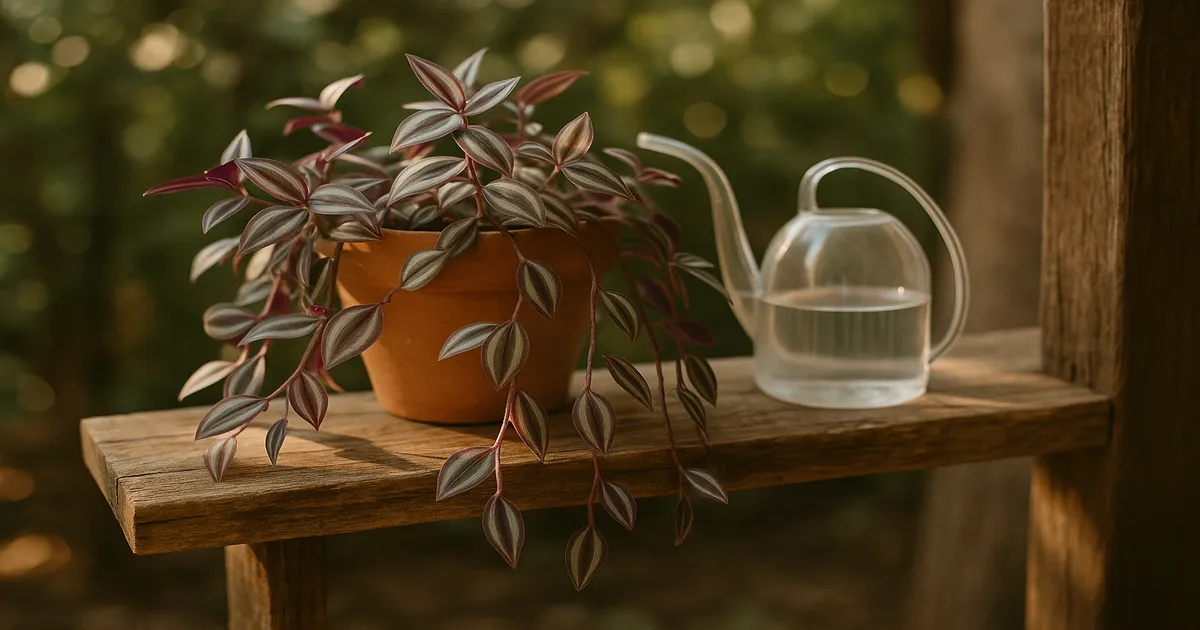
Quick Answer: Water your Tradescantia when the top 1–2 inches of soil feel dry — roughly every 5–7 days in summer and every 10–14 days in winter. This is a soil-moisture-driven practice, not a calendar one. Check before you water, every single time.
Figuring out how often to water a Tradescantia is the single most common question new owners ask — and the most common thing they get wrong. These plants sit in a sweet spot on the care spectrum: thirstier than a Sansevieria, but far more forgiving than a Calathea. Get the watering right and they’ll reward you with fast, lush growth. Get it wrong and you’ll be dealing with mush or crispy tips within weeks.
How Often Do You Water a Tradescantia?
The General Rule of Thumb
Water thoroughly when the top 1–2 inches (2.5–5 cm) of soil are dry to the touch. In practice, that works out to roughly every 5–7 days during the growing season and every 10–14 days in winter. Those numbers shift depending on your home’s conditions, your pot material, and which species you’re growing — but they’re a solid starting point.
Why a Fixed Schedule Doesn’t Work
Tradescantia doesn’t know what day it is. Light levels, temperature, humidity, and pot size all influence how quickly soil dries out, and those variables change constantly. A plant in a terracotta pot near a sunny window in July will need water far sooner than the same plant in a plastic pot on a dim shelf in December. Always check the soil first.
Watering Needs by Tradescantia Species
Most Drought-Tolerant (T. pallida, T. sillamontana)
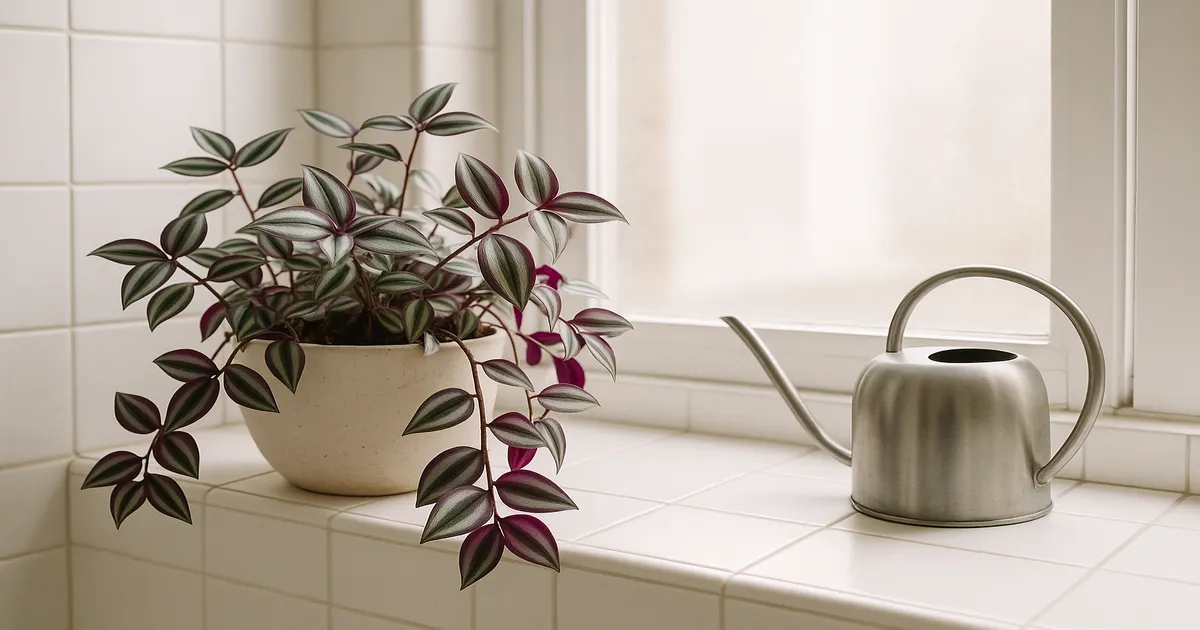
T. pallida (Purple Heart) has semi-succulent stems that store water, making it the most drought-tolerant common species in the genus. You can push it to two weeks between waterings in summer without drama. T. sillamontana (White Velvet) goes even further — its silvery trichomes physically reduce transpiration, so it needs the least water of all. Treat it almost like a succulent.
Moderate Water Needs (T. zebrina, T. spathacea)
T. zebrina (Inch Plant / Wandering Dude) is the species most people own, and it falls comfortably in the middle. It tolerates short dry spells but will show stress if left dry for more than 10–12 days in warm conditions. T. spathacea (Moses-in-the-Cradle) has a rosette form that holds less moisture in its leaves, so it handles drying out reasonably well between waterings.
Higher Moisture Needs (T. fluminensis, T. ohiensis)
T. fluminensis has thinner, less waxy leaves and prefers slightly more consistent moisture — expect stress signs within 7–10 days of the soil drying out completely. T. ohiensis is more commonly grown outdoors, but when kept inside it appreciates steady moisture, especially during active growth.
How Variegation Affects Water Demand
Heavily variegated cultivars like T. zebrina ‘Quadricolor’ or ‘Silver Plus’ have less green chlorophyll, so they photosynthesize less efficiently. Lower photosynthesis means lower water uptake. If you’re growing one of these forms, err toward the drier end of the watering range.
Signs Your Tradescantia Needs Water — and When to Hold Off
Signs of Underwatering
- Crispy brown leaf tips progressing inward from the edges
- Slightly wrinkled or shriveled stems — the plant is burning through stored water
- Soil pulling away from the pot edges, indicating it has shrunk as it dried
- Leaf curl and dull, muted coloration
Signs of Overwatering
- Yellowing lower leaves that feel soft and limp
- Mushy or blackened stem bases — a serious warning sign
- Wilting despite wet soil — the counterintuitive one that trips most people up
- Foul smell from the soil, indicating anaerobic bacterial activity
One important caveat: Tradescantia’s water-storing stems can keep the plant looking healthy for days after root rot has already started below the surface. Don’t wait for a dramatic collapse — check the roots if anything seems off.
The Finger Test and Moisture Meter
The finger test is free and reliable. Push your index finger 1–2 inches into the soil. If it feels moist, put the watering can down. If it feels dry, water now. For a more objective reading, an inexpensive analog soil moisture meter takes the guesswork out entirely — aim to water when the reading sits in the lower third of the “moist” zone.
Seasonal Watering Adjustments
Spring and Summer: Active Growth
This is when your Tradescantia is working hardest. Longer days, higher temperatures, and lower humidity all push transpiration up. Expect to water every 5–7 days, and don’t be surprised if plants in terracotta pots or near sunny windows need water even sooner. Check the soil every few days rather than waiting for a fixed interval.
Autumn and Winter: Slower Growth
Tradescantia isn’t fully dormant in winter, but its metabolic rate drops significantly as days shorten and temperatures fall. Water demand decreases by roughly 30–50%. Carrying your summer schedule straight through winter is one of the most reliable ways to cause root rot. Stretch intervals to every 10–14 days and always confirm the soil is dry before watering.
How Light and Temperature Shift Demand
Above 85°F (29°C), transpiration spikes and you may need to water more often than usual. Below 55°F (13°C), water uptake slows dramatically — be especially cautious if your plant sits near a cold window in winter. Bright indirect light (1,500–3,000 foot-candles) supports healthy water uptake; in low light below 500 foot-candles, demand drops sharply and overwatering risk rises.
Common Watering Problems and How to Fix Them
Overwatering and Root Rot
If you suspect root rot, act quickly:
- Stop watering immediately and move the plant to bright indirect light with good airflow.
- Unpot and inspect the roots. Healthy roots are firm and white to tan; rotted roots are brown or black, mushy, and smell unpleasant.
- Prune all affected roots with sterile scissors, sterilizing between cuts with 70% isopropyl alcohol.
- Treat with a biological fungicide containing Trichoderma spp. or Bacillus subtilis to suppress remaining pathogens.
- Repot into fresh, well-draining mix in a clean pot with drainage holes.
- Wait 3–5 days before rewatering to let cut root ends callous.
Underwatering and Drought Stress
When soil has dried out completely, top-watering often just runs around the hardened root ball. Instead, bottom-water: set the pot in a basin of room-temperature water for 20–30 minutes and let the soil absorb moisture from below. Gently poke the surface with a chopstick first to break up any compaction. Trim crispy leaf tips with clean scissors afterward — they won’t recover, but removing them keeps the plant tidy.
Wrong Pot Size or Material
An oversized pot holds far more soil than the roots can colonize. That unoccupied soil stays wet long after the surface looks dry — the perched water table effect — creating ideal conditions for root rot. Stick to a pot only 1–2 inches larger in diameter than the root ball. For material: terracotta dries out 20–40% faster than plastic or glazed ceramic, making it a smart choice if you tend to overwater. Plastic or glazed pots hold moisture longer, which suits drier environments or people who sometimes forget to water.
Poor Soil Mix
Dense, peat-heavy mixes hold water in their fine pores, keeping roots saturated long after watering. A well-draining DIY blend fixes this:
- 50% standard potting mix (peat- or coco coir-based)
- 25% perlite
- 25% coarse horticultural sand or pumice
Target a soil pH of 6.0–7.0. Avoid garden soil (too dense, potential pathogens) and pure peat (becomes hydrophobic when dry and too acidic long-term). For T. pallida or T. sillamontana, push the perlite and pumice content up to 40% combined for even faster drainage.
Water Quality
Tradescantia is moderately sensitive to fluoride — concentrations above 0.25 ppm can cause tip burn that looks exactly like underwatering. Repeated use of hard water gradually raises soil pH above 7.5, locking out iron and manganese. Chloramine, used in many municipal water systems, doesn’t off-gas like chlorine and can disrupt beneficial soil microbes.
The simplest fix is filtered water, rainwater, or distilled water. Letting tap water sit uncovered for 24–48 hours removes chlorine but won’t touch chloramine or fluoride. Every 2–3 months, flush the soil thoroughly — water until it runs freely from the drainage holes for a full minute — to leach accumulated mineral salts.
How to Water Tradescantia Correctly
Top-Watering vs. Bottom-Watering
Top-watering works well for most healthy plants. Pour water slowly over the soil surface and let it drain through completely. Bottom-watering — setting the pot in a basin for 20–30 minutes — is better when soil has become very dry or compacted, since it ensures the entire root ball rehydrates evenly. You don’t need to bottom-water every time, but it’s a useful tool.
How Much Water to Use
Water until it drains freely from the drainage holes. This isn’t about a specific volume — it’s about ensuring the entire root zone gets hydrated and accumulated salts get flushed out. Shallow, frequent watering that only wets the top inch encourages weak surface roots and makes the plant more drought-sensitive over time.
After Watering: Empty the Saucer
Let the pot drain for 30–60 minutes, then empty the saucer. Leaving your Tradescantia sitting in standing water is just slow overwatering. Make it a habit: water, wait, dump. Always use room-temperature water (65–75°F / 18–24°C) — cold water can shock the root system and cause temporary wilting.
Drainage Holes Are Non-Negotiable
Without a drainage hole, water accumulates at the bottom of the pot no matter how careful you are. Salts build up, anaerobic conditions develop, and root rot follows. Every pot your Tradescantia lives in needs at least one drainage hole. And skip the layer of gravel at the bottom — it doesn’t improve drainage. It actually raises the perched water table, keeping the soil above it wetter for longer.
Keeping Your Tradescantia Watering on Track
Pick a consistent day to check the soil, not to water it. That small mental shift makes a big difference. Finger test or moisture meter first, water second — only if the top 1–2 inches are dry. Water deeply when you do water, then leave it alone until the next check.
Keep your Tradescantia in bright indirect light, 2–4 feet from an east- or west-facing window, or a south-facing window with a sheer curtain. Maintain temperatures between 60–80°F (15–27°C) and humidity at 40–60%. A digital hygrometer is cheap and removes the guesswork. Avoid heating vents and cold drafts, both of which disrupt normal transpiration.
If your plant is drying out every 2–3 days despite correct care, it’s probably root-bound. Repot in spring into a pot 1–2 inches larger with fresh mix. For a very leggy plant, propagation is often the better call — Tradescantia roots effortlessly from 3–5 inch stem cuttings with at least two nodes, placed in water or moist soil.
Frequently Asked Questions About Watering Tradescantia
How do I know if my Tradescantia needs water?
Push your index finger 1–2 inches into the soil. If it feels dry, water now. If it still feels moist, wait a few more days and check again. Slight leaf curl or dull coloration can also signal thirst, but the finger test is more reliable than appearance alone.
Can Tradescantia recover from overwatering?
Yes, if you catch it early. Unpot the plant, prune any rotted roots with sterile scissors, treat with a biological fungicide, and repot in fresh well-draining mix. Wait 3–5 days before watering again. If the stem bases are completely mushy and black, recovery is unlikely — but healthy stem cuttings taken from above the rot can still be propagated successfully.
How often should I water Tradescantia in winter?
Cut back to every 10–14 days as a starting point, but always confirm the soil is dry before watering. Water demand drops by roughly 30–50% in winter due to lower light and cooler temperatures. Running a summer watering schedule through winter is a leading cause of root rot in this genus.
Why are my Tradescantia’s leaf tips turning brown even though I water regularly?
Brown tips despite regular watering usually point to one of three causes: fluoride or mineral buildup from tap water, humidity below 30%, or salt accumulation from fertilizer. Switch to filtered or rainwater, flush the soil thoroughly every couple of months, and check your room’s humidity with a hygrometer. Low humidity is the most common culprit.
Should I mist my Tradescantia?
No. Misting creates wet patches on the foliage that encourage fungal disease without meaningfully raising ambient humidity. If your home sits below 40% relative humidity, use a room humidifier placed nearby instead — that raises actual humidity around the plant rather than just wetting the leaves temporarily.