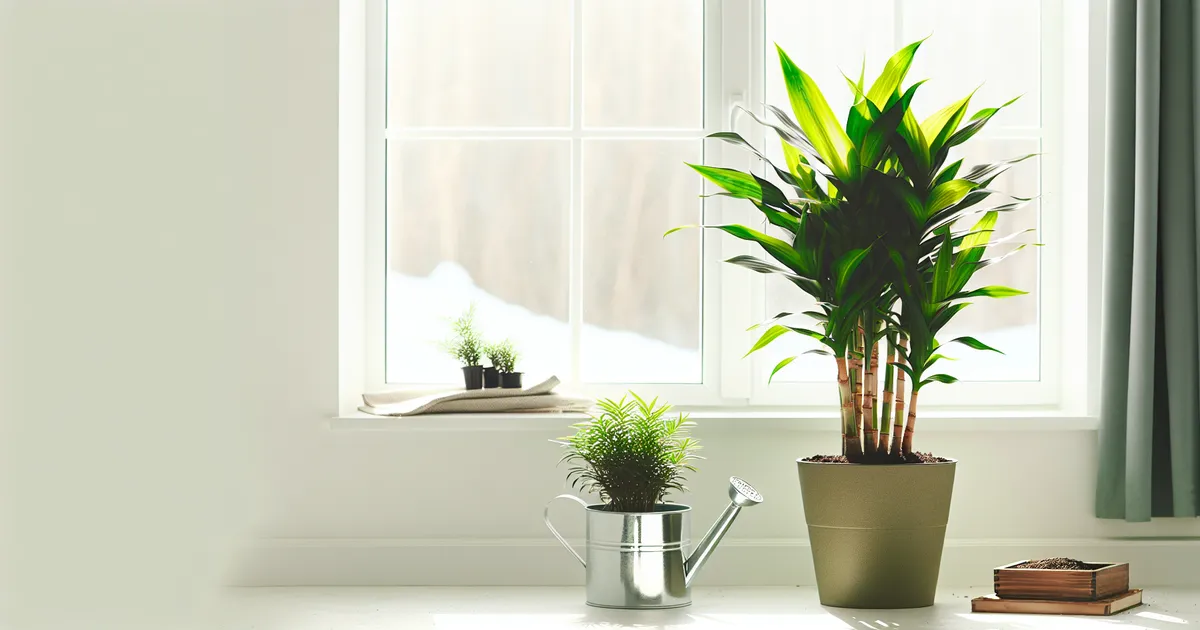
Quick Answer: If you’re wondering how to revive a Dracaena, start by checking two things — the stem and the growing tip. Scratch the cane near the top: green or white tissue underneath means your plant is alive and recovery is very likely. Expect 2–8 weeks for a full comeback, depending on how stressed the plant is.
Knowing how to revive a Dracaena starts with understanding what actually went wrong. These plants are tougher than they look, but they fail in predictable ways — and once you spot the signs, the fix is usually straightforward. This guide walks you through every major cause of decline, step-by-step solutions, and how to keep your plant healthy long after recovery.
Quick Diagnosis: Is My Dracaena Dead or Just Stressed?
Before you do anything else, check two things: the growing tip and the cane.
Scratch the stem gently with a fingernail near the top. Green or white tissue that feels slightly moist means your plant is alive. Brown, dry, hollow tissue means that section is dead — but the cane lower down may still be viable. Don’t give up until you’ve checked the base.
60-Second Diagnosis Checklist
- Roots: Pull the plant from its pot. White and firm = healthy. Brown, mushy, foul-smelling = root rot.
- Soil moisture: Bone dry and shrinking from the pot edges? Underwatering. Still soggy days after watering? Overwatering.
- Light: Dim corner or blasted by direct afternoon sun?
- Leaf tips: Brown tips with a yellow halo = fluoride or salt buildup. Crispy brown tips without yellow = drought or low humidity.
- Pests: Check leaf undersides and stem joints for webbing, white fuzz, or small bumps.
Know Your Dracaena: Species and Resilience
Common Species at a Glance
| Species | Common Name | Resilience |
|---|---|---|
| D. fragrans | Corn Plant | High — forgiving, tolerates low light |
| D. marginata | Dragon Tree | Very high — drought-tolerant, tough canes |
| D. trifasciata | Snake Plant | Extremely high — nearly indestructible |
| D. sanderiana | Lucky Bamboo | Moderate — often grown in water |
| D. reflexa | Song of India | Moderate — prefers stable conditions |
| D. deremensis cvs. | Janet Craig / Warneckii | High — low-light tolerant |
Dracaenas have a useful metabolic trick: they can partially close their stomata during the day to conserve water, similar to succulents. Their woody canes also store water and carbohydrates, acting like a biological battery during stress. That’s why a Dracaena that looks half-dead can still surprise you with a comeback.
The one thing that must survive for recovery to work: the apical meristem — the growing tip at the very top. If it’s green and firm, new leaves will emerge even after significant damage below. If it’s completely rotted or dried out, you’ll need to propagate from the cane instead (see the FAQ below).
How to Revive a Dracaena: 9 Problems and Their Fixes
Symptom Quick-Reference Table
| Symptom | Most Likely Cause |
|---|---|
| Yellow lower leaves + mushy stem base | Overwatering / root rot |
| Crispy brown tips, dry soil, light pot | Underwatering |
| Brown tips with yellow halo | Fluoride / salt toxicity |
| Pale, washed-out leaves | Too much direct light |
| Leggy growth, small new leaves | Too little light |
| Sudden blackening after cold snap | Temperature shock |
| Silvery stippling, fine webbing | Spider mites |
| White cottony masses in leaf axils | Mealybugs |
| Interveinal yellowing on new leaves | Iron or manganese deficiency |
| Soil drying out within a day of watering | Root bound |
1. Overwatering and Root Rot — The #1 Killer
Saturated soil starves roots of oxygen, creating conditions where Pythium, Phytophthora, and Fusarium pathogens thrive. Root cell membranes break down, and the plant enters physiological drought — it literally can’t absorb water even though the soil is wet. Severity: Moderate to Severe.
How to fix it:
- Remove the plant from its pot and shake off old soil.
- Trim all black, mushy, or foul-smelling roots with sterile scissors.
- Dust cut root ends with powdered cinnamon or sulfur — both have antifungal properties.
- Let roots air-dry for 30–60 minutes.
- Repot into fresh mix: 60% quality potting mix + 20% perlite + 20% coarse horticultural sand.
- Water in with a biological fungicide containing Trichoderma harzianum or Bacillus subtilis to protect recovering roots.
- Hold off watering for 7–10 days to encourage roots to seek moisture.
Key tip: The pot must have drainage holes. No exceptions.
2. Underwatering and Drought Stress
When soil stays dry too long, leaf cells lose turgor pressure, stomata close, and tips desiccate from the outside in. Dracaenas tolerate drought better than most tropicals, but there’s still a point of no return. Severity: Mild to Moderate.
How to fix it:
Dry, compacted soil becomes hydrophobic — water pours straight through without absorbing. Bottom-watering solves this.
- Place the pot in a basin of room-temperature water.
- Add a drop of liquid castile soap to break surface tension.
- Soak for 30–45 minutes until the top inch of soil feels damp.
- Drain fully before returning the plant to its spot.
- Trim desiccated brown tips with clean scissors at a slight angle, cutting just into the dead tissue and leaving a tiny brown margin.
Key tip: Going forward, water when the top 1–2 inches of soil are dry. D. marginata can handle the top 50% drying out between waterings.
3. Fluoride and Salt Toxicity (Brown Tips With Yellow Halos)
Dracaenas accumulate fluoride in their leaf tissue rather than expelling it. Municipal tap water at 0.7–1.2 ppm sounds low, but it builds up over months to levels above 20 ppm in leaf tissue — enough to interfere with photosynthetic enzymes. Acidic soil below pH 6.0 makes this worse by increasing fluoride availability. Severity: Mild to Moderate — cosmetic but chronic.
How to fix it:
- Flush the soil with 3–4× the pot volume of distilled or rainwater in one session to leach accumulated fluoride and salts.
- Switch permanently to distilled water, collected rainwater, or reverse osmosis filtered water.
- If salt crust is severe, repot into fresh, low-fluoride potting mix.
- Adjust soil pH to 6.0–7.0 — this alone significantly reduces fluoride uptake.
- Trim affected tips; they won’t green up, but new growth will come in clean.
Important: Leaving tap water out overnight dissipates chlorine but does not remove fluoride. Fluoride requires filtration or distillation — this is a persistent myth worth busting.
4. Too Little or Too Much Light
Below about 50 foot-candles, a Dracaena can’t photosynthesize enough to maintain its leaves, leading to pale yellowing and leggy growth. Above 5,000 foot-candles of direct sun, photooxidative bleaching causes white, scorched patches — especially on variegated cultivars. Severity: Mild to Moderate.
How to fix it:
- Too dim: Move to bright indirect light (1,500–3,000 foot-candles). An east-facing window is ideal. If natural light is insufficient, a full-spectrum LED grow light at 5,000–6,500K run for 12–14 hours per day works well.
- Too bright: Pull back from the window or add a sheer curtain to diffuse direct rays. Increase sun exposure by no more than 30 minutes per day over two weeks when acclimating.
Key tip: Never move a plant from a dark corner directly into bright light. The shock causes more damage than the original low-light stress.
5. Cold Drafts and Temperature Shock
Below 50°F (10°C), cell membrane lipids begin to solidify, disrupting ion transport and causing cellular collapse. Cold injury is sneaky — visible damage often appears 24–72 hours after the chilling event, making the cause easy to miss. Severity: Moderate to Severe.
How to fix it:
- Move the plant immediately to a stable indoor spot at 65–85°F (18–29°C).
- Wait 2–4 weeks before pruning — let the plant show you what’s truly dead.
- Keep it away from both cold windows and heating vents (the latter causes rapid desiccation).
- Withhold fertilizer for 6–8 weeks while the root system stabilizes.
6. Pest Infestations
Spider mites thrive in low humidity, leaving silvery stippling and fine webbing. Mealybugs hide in leaf axils as white cottony masses. Scale insects look like small brown bumps on stems. Thrips cause silvery streaking on new growth. Fungus gnat larvae quietly damage fine root hairs in persistently moist soil. Severity: Mild to Severe depending on infestation level.
How to fix it:
- Spider mites: Shower the plant with lukewarm water, then apply neem oil solution (2 tsp neem oil + 1 tsp castile soap per quart of water) every 5–7 days for 3–4 cycles. Raising humidity above 50% RH makes your plant a hostile environment for mites.
- Mealybugs: Dab colonies with a cotton swab soaked in 70% isopropyl alcohol, then follow with neem oil spray. Repeat weekly for 4–6 weeks.
- Scale: Scrape off visible scale with a soft toothbrush, then apply horticultural oil to smother the rest.
- Thrips: Spinosad spray (derived from soil bacteria, low mammalian toxicity) is highly effective. Yellow sticky traps help monitor population levels.
- Fungus gnats: Let soil dry more between waterings, apply a Bacillus thuringiensis israelensis (Bti) soil drench to kill larvae, and top-dress with coarse sand to deter egg-laying.
7. Nutrient Deficiency or Fertilizer Burn
Older leaves yellowing uniformly points to nitrogen deficiency. Yellow tissue between green veins on new leaves suggests iron or manganese deficiency — often caused by soil pH above 7.5 locking out micronutrients. Fertilizer burn looks similar to fluoride toxicity but comes with a white salt crust on the soil surface. Severity: Mild to Moderate.
How to fix it: For deficiency, feed at ¼ to ½ label strength with a balanced 3-1-2 NPK fertilizer during active growth only. If you’re seeing interveinal chlorosis on new leaves, apply a chelated iron supplement and bring pH to 6.0–6.5. For fertilizer burn, flush thoroughly with distilled water and withhold all feeding for 6–8 weeks.
8. Root Bound Conditions
When roots fill every inch of the pot, soil dries out within a day or two of watering, nutrient cycling breaks down, and roots start strangling each other. Severity: Mild to Moderate.
How to fix it:
- Choose a new pot just 1–2 inches larger in diameter — oversizing increases root rot risk.
- Repot in spring when the plant is entering active growth.
- If severely root bound, prune up to one-third of the root mass to stimulate fresh growth.
- After repotting, keep in medium indirect light and hold fertilizer for 4–6 weeks.
9. Low Humidity
Indoor air in winter can drop to 20–30% RH with heating systems running. At low humidity, vapor pressure deficit increases, forcing stomata closed — effectively cutting off CO₂ uptake even in decent light. The result is chronic tip burn and leaf curl. Severity: Mild.
How to fix it: A cool-mist humidifier targeting 40–60% RH is the most effective option. Grouping plants together also raises local humidity through collective transpiration. A pebble tray (pot base above the waterline) adds a modest 5–10% RH boost as a supplemental measure.
Watering, Light, and Environment: Getting the Basics Right
How Often to Water
Stick your finger 1–2 inches into the soil. If it’s still damp, wait. Most Dracaenas need watering when the top inch or two feels dry. D. marginata is the exception — it’s comfortable waiting until the top half of the soil has dried out. In winter, reduce watering frequency by 30–50% across all species as growth slows.
Which Water to Use
Distilled water, collected rainwater, and reverse osmosis filtered water are the gold standard. Municipal tap water contains fluoride that accumulates in leaf tissue over months. Switching water sources won’t reverse existing brown tips, but it will prevent new ones.
Light Levels by Species
- Low light (150–250 foot-candles): D. fragrans and D. deremensis cultivars can tolerate this, though growth will be slow.
- Medium indirect light (250–1,000 foot-candles): Ideal for most species — a few feet from a bright window.
- Bright indirect light (1,000–3,000 foot-candles): Where D. marginata and D. reflexa thrive.
East-facing windows are the sweet spot — bright morning light, no harsh afternoon rays. South or west-facing windows work if the plant sits 3–5 feet back from the glass or behind a sheer curtain.
Safe Temperature Range
Keep Dracaenas between 60–95°F (15–35°C). Avoid cold drafts near single-pane windows in winter and hot, dry air from heating vents. A stable interior wall location is almost always the safest choice.
Frequently Asked Questions
Can I revive a Dracaena with no leaves left? Yes, if the cane is still firm and green inside. Cut the dead top back to healthy tissue, keep the cane in bright indirect light, and water sparingly. New shoots typically emerge from dormant buds along the cane within 4–8 weeks.
How do I propagate a Dracaena from a dead top? Cut a healthy section of cane at least 4–6 inches long with at least one node. Let the cut ends callous for 24 hours, then place horizontally in moist potting mix or stand upright in a glass of water. Roots and new shoots appear within 4–8 weeks. Keep it warm — above 65°F (18°C) — for best results.
Why does my Dracaena keep getting brown tips even after I fix the watering? The most common culprit is fluoride in tap water. Switch to distilled or rainwater and flush the soil thoroughly. Also check that soil pH sits between 6.0 and 7.0, since acidic conditions increase fluoride uptake. Brown tips that are already there won’t reverse, but new growth should come in clean.
How long does it take a Dracaena to recover? Mild stress (underwatering, low humidity) resolves in 2–4 weeks once conditions improve. Root rot recovery takes 4–8 weeks if caught early, and longer if the root system was severely damaged. Cold shock recovery varies widely — some plants bounce back in a month; others take a full growing season.
Should I fertilize a Dracaena while it’s recovering? No. Hold off on fertilizer for at least 4–8 weeks after any major intervention — repotting, root rot treatment, or cold damage. A stressed root system can’t process nutrients efficiently, and fertilizing too soon risks burning recovering roots. Resume feeding at ¼ strength once you see new growth.
`) invisible to readers. No bracketed placeholders remain.
Word Count
Original: approximately 2,400 words. Revised: approximately 1,750 words — within the 1,200–1,800 target range.