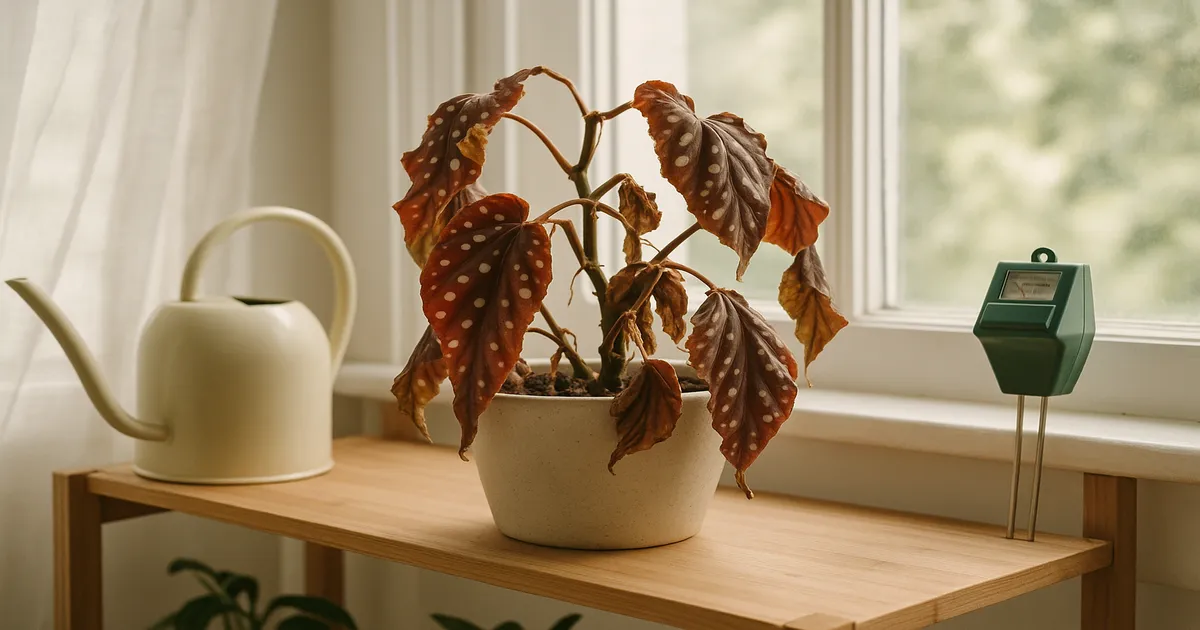
Quick Answer: A wilting Begonia Kit Kat is most often caused by overwatering and the rhizome rot that follows. But drought, low humidity, temperature stress, pests, and disease can all produce the same drooping leaves. Because the thick rhizome stores water, your plant can look perfectly fine until the damage is already serious — so getting the diagnosis right before you act is everything. Match the symptom below to your plant and follow the specific fix from there.
What Makes Begonia Kit Kat Prone to Wilting?
Begonia ‘Kit Kat’ is a rhizomatous cultivar. It grows from a thick, fleshy, horizontal stem — the rhizome — that creeps along or just below the soil surface. The leaves are small, rounded, and slightly puckered, with a distinctive chocolate-brown and green pattern that makes this a collector favourite. It stays compact and low, which makes it ideal for windowsills and terrariums.
The rhizome acts as the plant’s main storage organ for water and nutrients. That’s what makes diagnosing wilt tricky: Kit Kat can draw on those reserves and look perfectly healthy right up until the rhizome itself is compromised. By the time you notice drooping leaves, the underlying problem is often well established.
The leaves are also thin-walled and relatively delicate. Once the vascular supply from the rhizome is interrupted — whether by rot, drought, or pests — those leaves lose turgor pressure fast. Wilting here usually signals a systemic problem, not just a missed watering.
9 Common Causes of Begonia Kit Kat Wilting
1. Overwatering and Root or Rhizome Rot
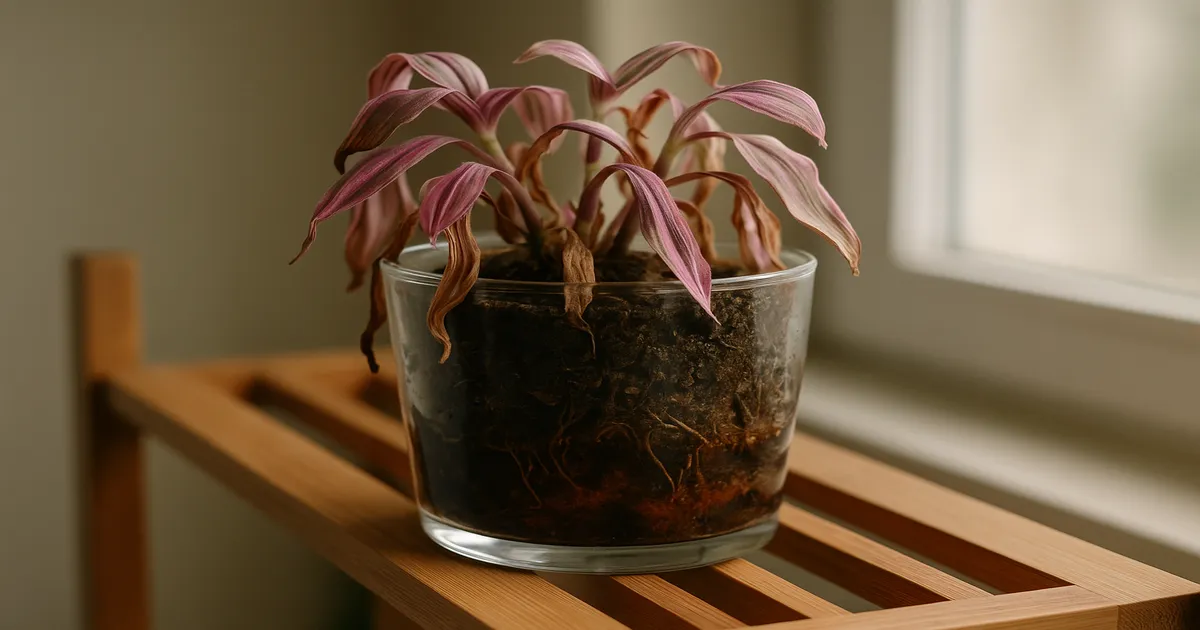
This is the single most common reason a Begonia Kit Kat wilts. Waterlogged soil drives out oxygen, creating anaerobic conditions that invite Pythium, Phytophthora, and Rhizoctonia — pathogens that rot roots and rhizome tissue and block water transport up through the plant.
Diagnostic clues:
- Soil is still wet 7–10 days after watering
- Rhizome feels soft or mushy, with brown or black discolouration inside
- Lower leaves yellow before the plant wilts
- A sour or musty smell from the soil
2. Underwatering and Drought Stress
Less common, but real. When the soil dries out completely and the rhizome’s reserves run out, the thin leaf cells lose turgor rapidly.
Diagnostic clues:
- Soil is bone dry and pulling away from the pot edges
- Leaf margins feel crispy or papery
- The rhizome feels firm but noticeably lightweight
- Wilting is uniform across the whole plant
3. Low Humidity
Kit Kat thrives at 50–70% relative humidity (RH). Most heated or air-conditioned homes run at 30–50% RH, sometimes lower. When transpiration from the leaves outpaces what the roots can supply, the plant wilts and leaf edges curl inward.
Diagnostic clues: Browning, inward-curling leaf edges; wilting worst in the afternoon or near vents; soil moisture is fine.
4. Too Much or Too Little Light
Bright indirect light — roughly 1,500–3,000 foot-candles — is the sweet spot. Above about 3,500 foot-candles of direct sun, leaf cells are damaged by sunscald, causing bleached patches alongside wilting. At the other extreme, chronic low light (below 500 foot-candles) starves the plant of the energy it needs to maintain cellular pressure, leading to gradual wilting and weak, stretched growth.
5. Temperature Stress and Cold Drafts
Keep Kit Kat between 65–80°F (18–27°C). Below 55°F (13°C), chilling injury compromises cell membranes and the plant’s ability to regulate water balance — leaves may look water-soaked or glassy before wilting. Above 90°F (32°C), transpiration races ahead of root uptake. Cold drafts from windows or AC vents are a surprisingly common culprit, especially in winter.
6. Pest Infestation
Several pests cause wilting by attacking roots or draining leaf cells:
- Fungus gnat larvae (Bradysia spp.) — feed on fine root hairs and introduce rot pathogens
- Root mealybugs (Rhizoecus spp.) — feed on roots and rhizome; invisible until you unpot the plant
- Vine weevil grubs — consume root and rhizome tissue; more common in plants kept outdoors
- Spider mites — piercing-sucking feeding causes widespread cell damage; thrives below 40% RH
- Thrips — damage leaf cells and can vector viruses that cause systemic wilting
7. Compacted Soil, Poor Drainage, or Repotting Shock
Compacted or heavy soil restricts the oxygen roots need for active water uptake. Overpotting — placing the plant in a pot much larger than its root ball — keeps excess soil wet for too long, promoting rot. Repotting shock from disturbing the rhizome can also trigger temporary wilting that typically resolves within one to two weeks. Optimal soil pH is 5.5–6.5; outside that range, nutrient lockout can contribute to wilting.
8. Fertilizer Burn and Salt Accumulation
Too much fertilizer raises the salt concentration in the soil. Through osmosis, those salts pull water out of root cells — a process called plasmolysis — and the plant wilts despite moist soil. White crusty deposits on the soil surface or pot rim are a giveaway. Over-fertilizing during winter dormancy is the most common trigger.
9. Bacterial and Fungal Disease
- Botrytis cinerea (gray mold) — thrives in humid, stagnant air; causes crown collapse and wilting
- Bacterial stem rot (Erwinia spp.) — rapid, foul-smelling collapse; enters through wounds
- Xanthomonas leaf spot — can spread to vascular tissue in severe cases
How to Fix a Wilting Begonia Kit Kat
Treating Overwatering and Root Rot
- Unpot the plant and gently shake off the soil to expose roots and rhizome.
- Cut away all mushy, brown, or black tissue with sterile scissors, cutting back to firm, cream-coloured growth.
- Dust cut surfaces with powdered cinnamon or powdered sulfur as a natural antifungal, or apply a dilute 3% hydrogen peroxide solution.
- Let the rhizome air-dry for 2–4 hours.
- Repot in fresh, well-draining mix (see the recipe below) in a clean pot with drainage holes.
- Hold off watering for 3–5 days to let wounds callous.
- For severe rot, drench the new soil with a copper-based fungicide or a biological product containing Trichoderma spp. — Bonide Copper Fungicide works well here.
Rehydrating an Underwatered Plant
Water thoroughly until it drains freely from the bottom. If the soil has become hydrophobic and water beads off the surface, place the whole pot in a basin of room-temperature water for 20–30 minutes to fully rehydrate. A long-spouted watering can makes it easy to water at the base without wetting the leaves — the Haws Slimline Indoor Watering Can is a good option. Once rehydrated, resume a consistent watering schedule and never use leaf misting as a substitute for root watering.
Raising Humidity the Right Way
- Move the plant to a naturally humid spot, such as a bathroom with good indirect light.
- Run a cool-mist ultrasonic humidifier nearby to keep RH at 50–70%. The Levoit Classic 300S is a reliable choice that covers a standard room.
- Set the pot on a pebble tray filled with water, making sure the pot base sits above the waterline.
- Group plants together to build a localised humid microclimate.
- Do not mist the leaves directly — begonia foliage is prone to fungal spotting when wet.
Correcting Light Exposure
Too much light: Move to a bright indirect spot and use a sheer curtain to diffuse direct sun. Transition gradually over one to two weeks — abrupt moves add stress.
Too little light: Shift closer to an east- or north-facing window, or add a full-spectrum LED grow light positioned 6–12 inches above the plant for 12–14 hours per day. The Soltech Aspect Grow Light is a popular pick that blends into most interiors.
Addressing Temperature Stress
Move the plant away from cold windows, exterior walls, and AC or heating vents. Aim for a stable 65–80°F (18–27°C). If chilling injury has already occurred, remove damaged leaves, keep the plant warm, and hold off on fertilizing until you see new growth.
Eliminating Pests
- Fungus gnats: Let the top 1–2 inches of soil dry between waterings; use yellow sticky traps for adults; drench soil with Bacillus thuringiensis israelensis (Bti); apply diatomaceous earth as a top dressing.
- Root mealybugs: Unpot, wash all soil from roots, treat with a neem oil drench or insecticidal soap solution, then repot in fresh sterile mix.
- Spider mites: Raise humidity above 60% RH; apply insecticidal soap or neem oil to all leaf surfaces including undersides; repeat every 5–7 days for three to four cycles.
- Thrips: Apply a spinosad-based insecticide or neem oil; use blue sticky traps for monitoring; isolate affected plants immediately.
Fixing Soil, Drainage, and Repotting Issues
Repot into a shallow, wide pot with multiple drainage holes — rhizomatous begonias prefer width over depth. Choose a pot only 1–2 inches wider than the current root ball. If pH is outside 5.5–6.5, test with a soil pH meter, then adjust with agricultural sulfur (to lower) or dolomitic lime (to raise).
Flushing Fertilizer Salt Buildup
Take the pot to a sink and slowly pour plain, room-temperature water through the soil — use three to four times the pot volume to thoroughly leach the salts. Let it drain completely, then move it back to its spot. Skip fertilizing for 4–6 weeks, then resume at quarter strength.
Managing Fungal and Bacterial Disease
- Botrytis: Improve air circulation with a small fan; remove all affected tissue; apply a copper-based fungicide or a biological product containing Bacillus subtilis.
- Bacterial rot: Remove and destroy affected sections — there is no cure for advanced bacterial rot. Prevention through clean tools and good hygiene is the only real defence.
- Sterilize all cutting tools with 70% isopropyl alcohol between every cut.
Prevention: Stopping Your Begonia Kit Kat from Wilting Again
Watering Schedule and Technique
Water when the top 1 inch of soil feels dry — typically every 7–10 days in summer and every 14–21 days in winter. Always water at the base of the plant using room-temperature water; cold water can shock the roots and cause brief wilting. If your tap water is heavily chlorinated, let it sit for 24 hours before using, or switch to filtered or rainwater.
Best Soil Mix for Rhizomatous Begonias
A custom mix drains well, holds just enough moisture, and keeps pH in the right zone:
- 40% peat-based potting mix or coco coir
- 30% perlite or pumice
- 20% fine orchid bark or coarse horticultural sand
- 10% worm castings
Target pH: 5.5–6.5. Refresh or replace the mix every one to two years to prevent compaction and salt buildup.
Choosing the Right Pot
Terracotta or unglazed ceramic pots are ideal — their porous walls allow excess moisture to evaporate and keep the root zone aerated. Always ensure multiple drainage holes, and never size up by more than 1–2 inches at a time.
Ideal Conditions at a Glance
| Parameter | Optimal Range |
|---|---|
| Temperature | 65–80°F (18–27°C) |
| Relative Humidity | 50–70% |
| Light | Bright indirect (1,500–3,000 fc) |
| Soil pH | 5.5–6.5 |
| Watering (summer) | Every 7–10 days |
| Watering (winter) | Every 14–21 days |
Fertilising Without Causing Harm
Feed monthly in spring and summer with a balanced, water-soluble fertilizer at quarter to half strength — a 10-10-10 or 20-20-20 formulation works well. Jack’s Classic All Purpose 20-20-20 is a reliable, widely available option. Stop feeding entirely from October through February, when growth naturally slows.
Monthly Inspection Routine
Check the undersides of leaves and the base of the rhizome for early pest signs. Remove dead or yellowing leaves promptly to reduce fungal pressure. Rotate the pot 90° every two to four weeks for even light exposure.
Diagnosing Begonia Kit Kat Wilting by Symptom
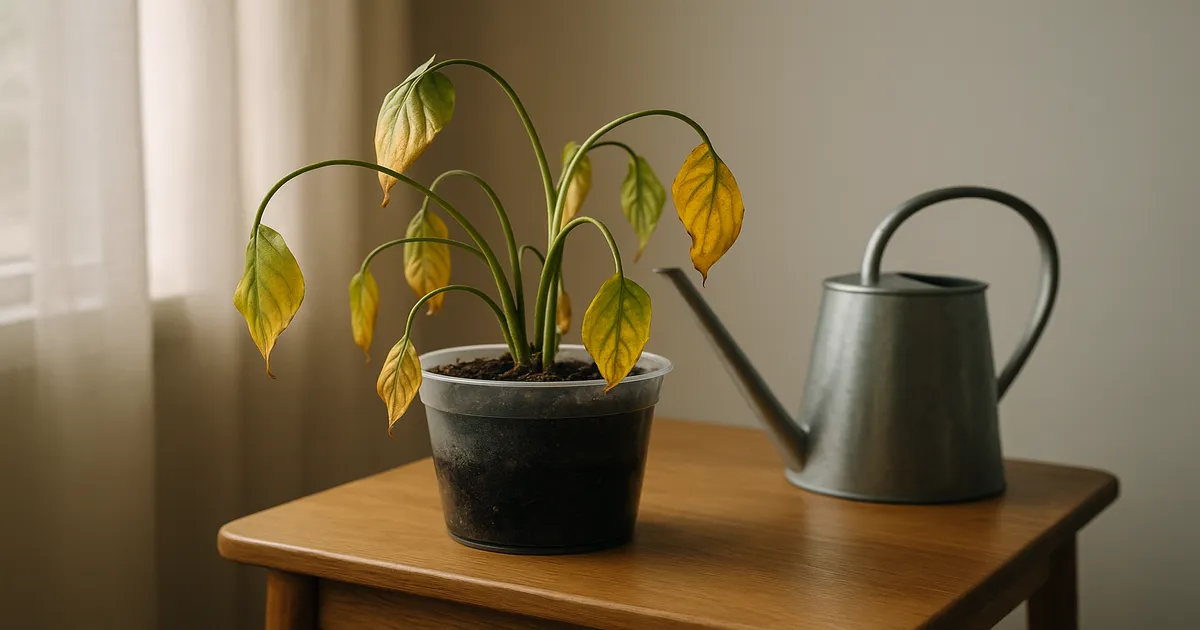
Wilting despite wet soil — Classic sign of root or rhizome rot. Damaged roots cannot move water up to the leaves, so the plant wilts even though the soil is saturated. Unpot immediately, inspect the rhizome, and follow the root rot fix above.
Wilting with dry, crispy leaf edges — Points to drought stress. If water runs straight off the surface, the soil has become hydrophobic — use the bottom-soak method to rehydrate fully before returning to a regular schedule.
Wilting near a window or vent — Temperature stress or low humidity is likely. Move to a stable, draft-free location and check your room humidity.
Wilting after repotting — Some drooping is normal while the plant re-establishes vascular connections. Keep conditions stable, don’t overwater, and give it one to two weeks before worrying. If wilting worsens or smells develop, check for rot introduced during the process.
Sudden collapse with foul smell — Fast, dramatic collapse almost always means bacterial stem rot (Erwinia) or advanced Pythium rot. Remove and destroy affected tissue immediately, sterilize your tools, and repot any surviving healthy portions in fresh mix.
Frequently Asked Questions
Can a wilting Begonia Kit Kat be saved after root rot?
Yes, often — but speed matters. If any portion of the rhizome remains firm and cream-coloured inside, cut away all rotted tissue, dust the wounds with cinnamon or powdered sulfur, let it air-dry for a few hours, and repot in fresh well-draining mix. Even a small healthy section can regenerate with the right conditions.
Why is my Begonia Kit Kat wilting even though the soil is wet?
Wet soil combined with a wilting plant almost always means root or rhizome rot. Overwatering deprives roots of oxygen, allowing fungal pathogens to destroy the tissue that moves water up to the leaves — so the plant is effectively drought-stressed even though the soil is saturated. Unpot, inspect the rhizome, and treat for root rot immediately.
How often should I water a Begonia Kit Kat indoors?
Water when the top 1 inch of soil feels dry — roughly every 7–10 days in summer and every 14–21 days in winter. The exact frequency depends on your pot size, humidity, and light levels, so use your finger rather than a fixed calendar. A soil moisture meter can take the guesswork out if you’re unsure — the XLUX Soil Moisture Meter is inexpensive and straightforward to use.
What humidity level does Begonia Kit Kat need?
Aim for 50–70% relative humidity. Most standard indoor environments run lower than this, especially in winter when heating systems dry the air. A small humidifier or a pebble tray is usually enough to bridge the gap.
How do I know if my Begonia Kit Kat is healthy?
A healthy Kit Kat has a firm, creeping rhizome that’s pale cream inside, upright leaves with vibrant chocolate-and-green patterning, and visible new growth in spring and summer. Keep conditions consistent and you may even see small pink or white flowers in late winter to early spring — a reliable sign the plant is genuinely content.