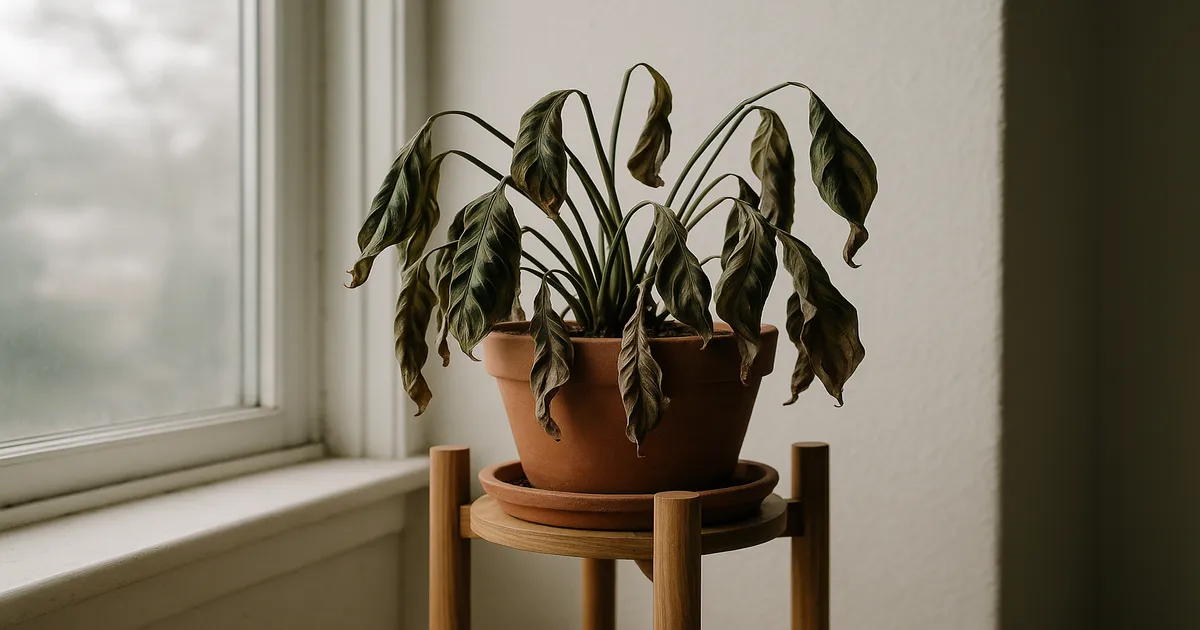
Quick Answer: A sad-looking prayer plant is almost always struggling with one of a handful of fixable problems — overwatering, low humidity, incorrect light, root rot, pests, or water quality issues. These tropical plants are notoriously dramatic, but they’re also resilient. Identify the cause, make the adjustment, and most prayer plants bounce back within a few weeks.
Prayer plants (Maranta leuconeura and their close relatives in the Goeppertia and Calathea genera) are native to the humid, shaded floor of South American rainforests — and they haven’t forgotten it. When you’re asking “why does my prayer plant look so sad?”, the answer almost always traces back to one environmental condition drifting too far from those tropical origins. The good news: once you know what to look for, the fix is usually straightforward.
The “prayer plant” name comes from a behavior called nyctinasty — leaves fold upward at dusk like hands in prayer, then flatten again at dawn. This movement is powered by specialized cells called pulvini at the base of each leaf. When the plant is stressed, the pulvini are often the first to fail. A prayer plant that has stopped moving is already waving a red flag.
Why Does My Prayer Plant Look So Sad? Start With Watering
More prayer plants are killed by too much water than by anything else. Getting watering right is the single most impactful thing you can do.
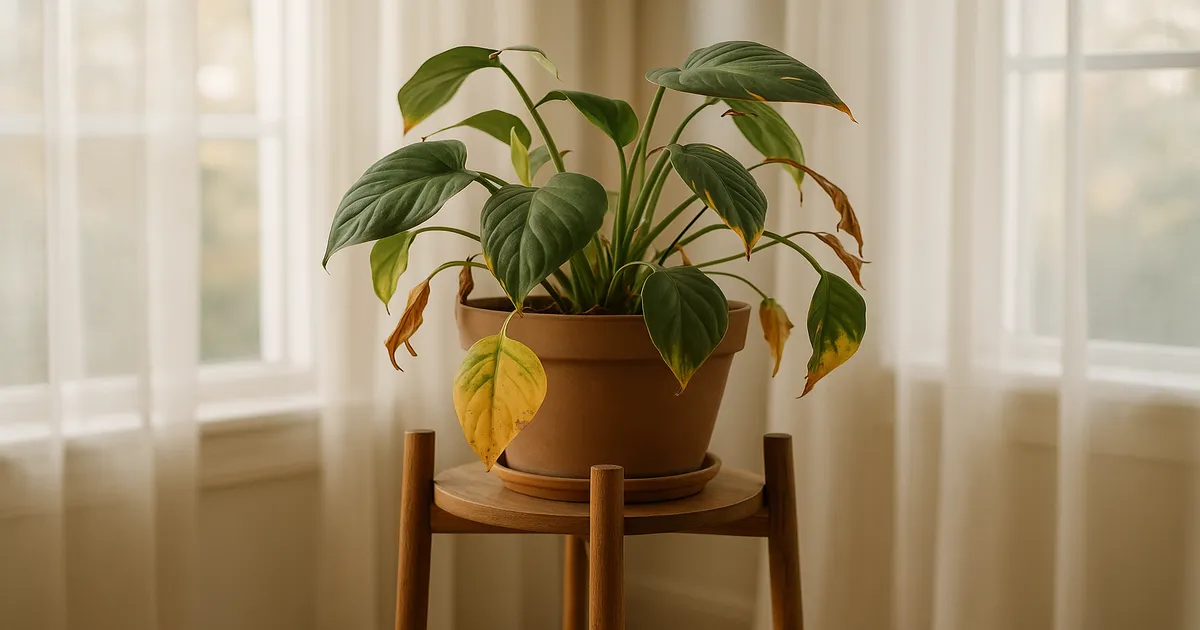
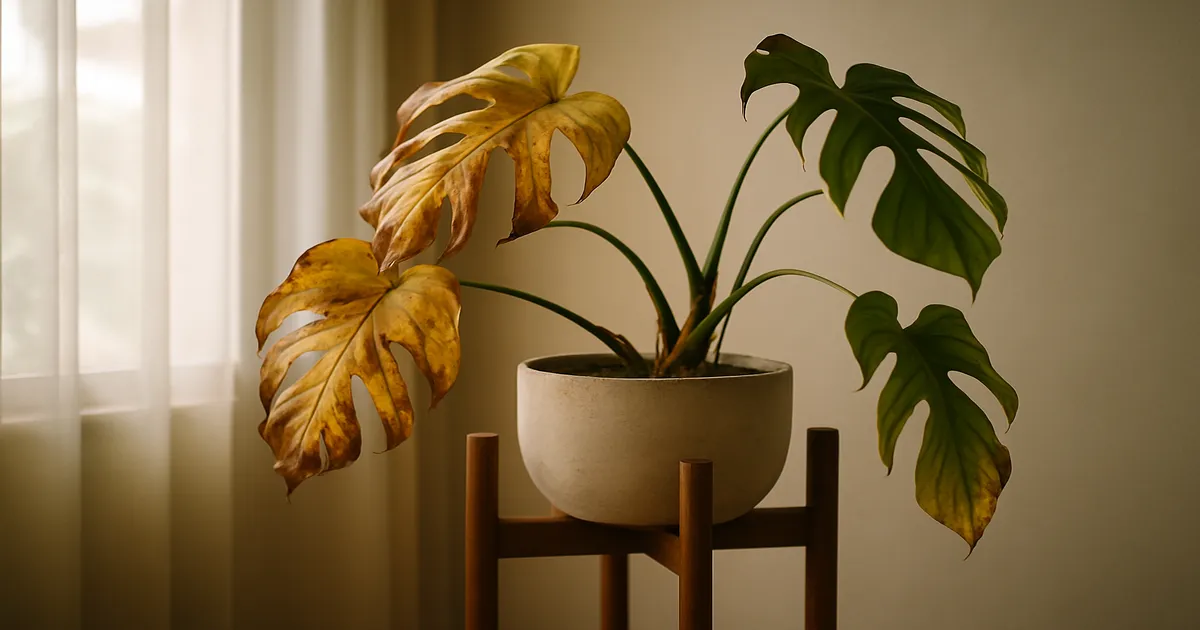
Signs of Overwatering
Overwatering suffocates roots. When soil stays waterlogged, oxygen is displaced from the pore spaces and roots begin to die — which means they can no longer move water upward. The result is a plant that wilts even though the soil is soaking wet, a phenomenon called wet wilt. It’s counterintuitive and easy to misread as underwatering, which makes things worse.
Watch for:
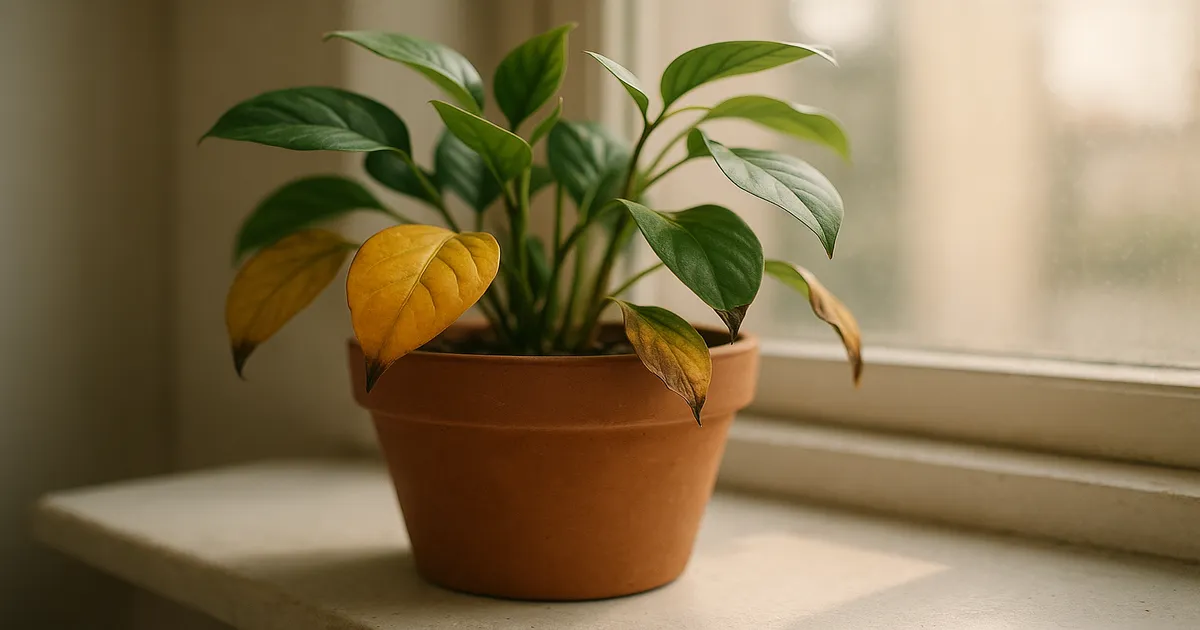
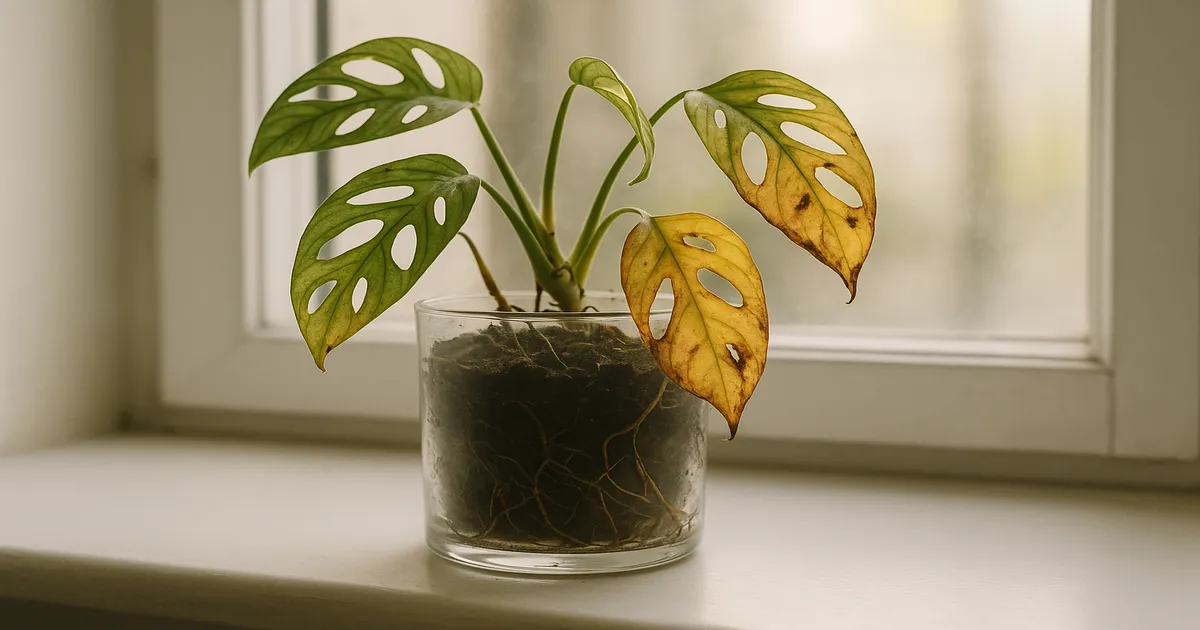
- Yellowing lower leaves that feel soft, not crispy
- Mushy or blackened stems near the soil line
- Soil that stays wet for more than 10–14 days
- A sour or rotten smell from the pot
- Visible mold on the soil surface
Signs of Underwatering
Underwatering causes turgor loss throughout the plant. The pulvini cells are especially sensitive to dehydration, so a thirsty prayer plant will often stop its characteristic movement before the leaves look visibly damaged.
Watch for:
- Crispy brown edges and tips
- Leaves that curl or cup inward
- Soil pulling away from the sides of the pot
- Leaves that feel thin and papery rather than firm
How to Water a Prayer Plant Correctly
Push your finger 1–2 inches into the soil. If it still feels damp, wait. If it’s dry, water thoroughly until it drains freely from the bottom. A wooden chopstick works just as well — if soil clings to it when you pull it out, there’s still moisture present.
You can also use the lift test: a pot with dry soil feels noticeably lighter than a freshly watered one. This becomes second nature quickly. For a more precise reading, a soil moisture meter such as the XLUX Soil Moisture Meter takes the guesswork out entirely.
A few other factors that matter:
- Pot material: Terracotta wicks moisture away from the soil and helps prevent overwatering. Plastic and glazed ceramic retain moisture longer — fine if you tend to underwater, risky if you water frequently.
- Pot size: Never go more than 1–2 inches larger in diameter when repotting. Oversized pots hold excess soil that stays wet long after the root zone has dried out.
If you’ve confirmed root rot, skip ahead to that section — the fix goes beyond adjusting your watering schedule.
Low Humidity: Why Dry Air Makes Prayer Plants Miserable
Prayer plants evolved where humidity regularly sits at 80–90%. Most homes, especially in winter with the heat running, hover around 20–40%. That gap is significant.
How Low Humidity Damages Leaves
When the air is very dry, the plant loses water through its leaf pores faster than the roots can replace it. The thinnest, most exposed tissue goes first: the leaf margins and tips. This is the classic “tip burn” that prayer plant owners know well.
Best Ways to Raise Humidity
Ranked by effectiveness: