Quick Answer: To grow zinnias from seed, sow directly in the garden after your last frost date once soil temperature reaches 70°F. Plant seeds ¼ inch deep in a full-sun spot with well-draining soil. Expect sprouts in 5–10 days. Pinch seedlings at 4–6 inches tall for bushier plants and more blooms. The two biggest beginner mistakes are sowing into cold soil and overwatering — avoid those and zinnias are nearly foolproof.
Learning how to grow zinnias from seed is one of the most satisfying projects in the garden. They’re fast, colorful, and forgiving — as long as you respect two non-negotiables: warm soil and good drainage. This guide covers everything from picking the right seeds to saving your own at the end of the season.
Choosing the Right Zinnia Seeds
Zinnia Species: elegans, angustifolia, and Hybrids
Most garden zinnias belong to one of four cultivated species. Knowing which you’re growing matters, especially in humid or disease-prone climates.
- Zinnia elegans — the classic. Largest flowers, widest cultivar range, most susceptible to powdery mildew.
- Zinnia angustifolia — compact, single-flowered, and notably disease-resistant. A smart pick for hot, humid summers.
- Zinnia haageana — bicolor blooms, intermediate size, excellent heat tolerance.
- Zinnia marylandica — a hybrid of elegans × angustifolia, bred for powdery mildew resistance. The Profusion and Zahara series belong here.
If you’ve battled that white powdery coating on leaves in late summer, switching species is the most effective long-term fix.
Best Cultivar Groups by Use
| Group | Key Traits | Notable Series |
|---|---|---|
| Dahlia-flowered | Large double blooms, 3–5 in across | Benary’s Giant |
| Cactus-flowered | Quilled, twisted petals | Soleado |
| Pompon/Button | Small, dense doubles | Thumbelina |
| Single-flowered | Open center, one row of petals | Profusion |
| Cut-and-come-again | Long stems, prolific | Oklahoma |
| Dwarf/Compact | 6–12 in tall; container-friendly | Magellan |
For cut flowers, go with Oklahoma or Benary’s Giant. For containers or front-of-border plantings, Magellan or Thumbelina stay tidy. For low-maintenance color all summer, Profusion is hard to beat.
How to Check Seed Viability
Zinnia seeds stay viable for 2–3 years when stored properly, but germination rates drop with age. Check the “packed for” date — anything older than two years is worth testing first.
Paper-towel germination test:
- Dampen a paper towel and lay 10 seeds on one half.
- Fold the towel over the seeds and seal inside a plastic bag.
- Keep at 75°F for 7–10 days.
- Count germinated seeds — 7 out of 10 (70%+) means the batch is good to go.
Store leftover seeds in an airtight container with a silica gel packet in the refrigerator at 35–45°F. Skip the freezer — fluctuating moisture during freeze-thaw cycles can damage seeds.
When and Where to Plant Zinnia Seeds
Timing: Last Frost Dates and Soil Temperature
Zinnias are frost-sensitive at every growth stage. One cold night can wipe out a flat of seedlings. But the frost date alone isn’t enough — you also need soil at 70°F or warmer, consistently. Air temperature can feel warm while soil is still sitting at 58°F, which slows germination and invites fungal rot.
Use a soil thermometer rather than guessing from the calendar. To speed things up, lay black plastic mulch over the bed two weeks before sowing — it can raise soil temperature by 5–10°F.
Direct Sow vs. Starting Indoors
Direct sowing wins almost every time. Zinnias have a taproot that’s easily damaged during transplanting, and root disturbance can set plants back by weeks. Many experienced growers skip indoor starting entirely.
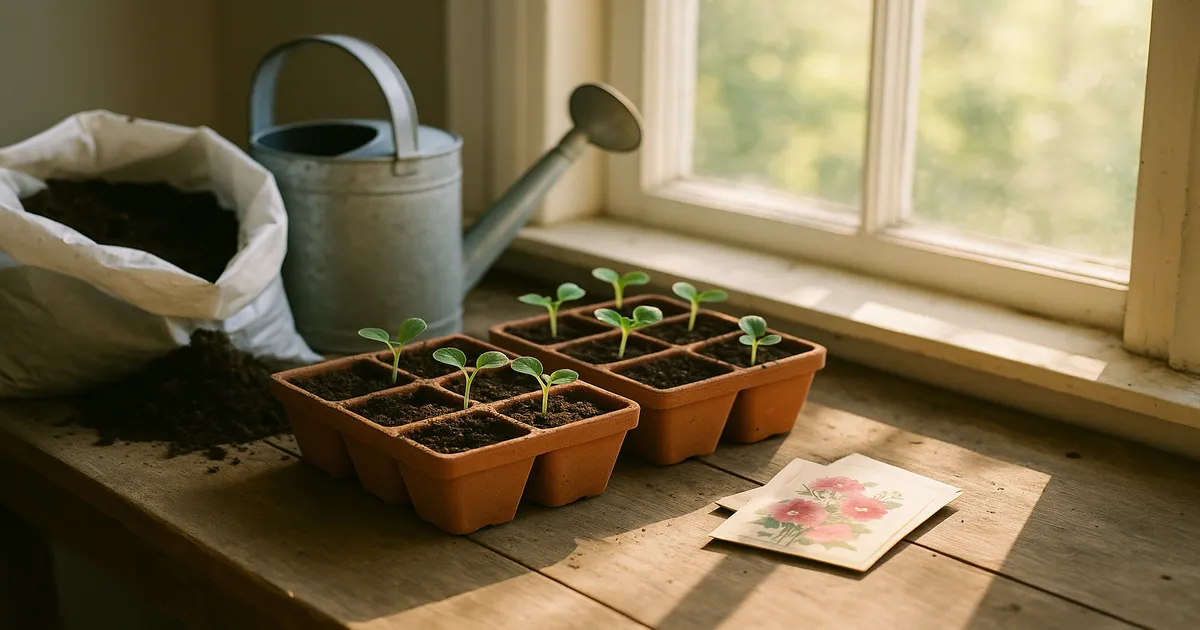
If your season is short, limit indoor sowing to 3–4 weeks before your last frost date. Use biodegradable peat or coir pots that go straight into the ground without disturbing roots. Anything older than four weeks tends to become root-bound and transplants poorly.
Choosing the Best Planting Site
Zinnias need full sun — at least 6 hours daily, ideally 8 or more. They evolved on sun-baked Mexican plateaus, and shade causes them to stretch, weaken, and become disease-prone.
Air circulation matters almost as much as sunlight. Avoid planting against walls, fences, or dense hedges that trap humid air. Good airflow is your first line of defense against powdery mildew.
How to Grow Zinnias from Seed: Step-by-Step Sowing
Soil Preparation and pH
Target a soil pH of 6.0–6.5. Outside the range of 5.5–7.0, nutrient lockout becomes a problem — phosphorus becomes unavailable above pH 7.0, while aluminum and manganese reach toxic levels below 5.5. A simple pH test before planting saves a lot of troubleshooting later.
For heavy clay soils, work in coarse perlite (about 20–30% by volume) along with aged compost to improve drainage and aeration. Zinnias’ taproots need to push deep, and compacted soil stops them cold.
Sowing Depth and Spacing
Plant seeds ¼ inch (6 mm) deep. Too deep and the seedling exhausts its energy reserves before reaching light. Too shallow and the seed dries out before the root can anchor. After placing seeds, cover with a thin layer of fine vermiculite rather than heavy potting mix — it holds moisture while staying light enough for seedlings to push through.
Spacing by plant size:
- Dwarf types: 6–9 inches apart
- Medium types: 9–12 inches apart
- Large/tall types: 12–18 inches apart
Proper spacing isn’t just about room to grow — it’s one of the most effective cultural practices for preventing powdery mildew.
Watering After Sowing
Use a gentle mist or bottom-water your trays. A heavy stream displaces seeds and compacts the surface. Keep the soil consistently moist but never waterlogged until germination.
Using a Heat Mat Indoors
Set a seedling heat mat to 75–80°F soil temperature. This speeds germination and reduces the window when seeds are vulnerable to rot. Once about 50% of seeds have sprouted, remove the mat — continued bottom heat can stress young roots.
Under ideal conditions, expect sprouts in 5–10 days. In cooler soil, allow up to 14 days before worrying.
Seedling Care: From Sprout to Garden
Light
Indoors, position seedlings 2–4 inches below a full-spectrum LED grow light running at 6500K for 14–16 hours per day. Rotate trays 180° every 2–3 days to prevent leaning. Without enough light, seedlings etiolate — they grow tall, pale, and spindly, and never fully recover their vigor.
Watering and Damping-Off Prevention
Damping-off is caused by soilborne pathogens (Pythium, Rhizoctonia, Fusarium) that thrive in wet, poorly aerated conditions. The symptom is unmistakable: the stem pinches to a wire-thin thread at soil level and the seedling collapses overnight.
Prevention is far easier than treatment:
- Use a sterile, soilless seed-starting mix — never garden soil
- Ensure all containers have drainage holes
- Bottom-water to keep the soil surface dry
- Run a small fan on low to improve airflow and reduce surface humidity
If damping-off appears, remove affected seedlings immediately, then drench with a 1:4 dilution of 3% hydrogen peroxide in water, or apply a Bacillus subtilis-based biological fungicide.
Pinching for More Blooms
When seedlings reach 4–6 inches tall, pinch out the growing tip just above a leaf node. This redirects energy into side branches, producing a bushier plant with far more bloom sites. It feels counterintuitive to cut a healthy seedling, but the payoff is dramatic.
Hardening Off
Spend 7–10 days gradually introducing seedlings to outdoor conditions. Start with 1–2 hours in a sheltered, shaded spot, then slowly increase both sun exposure and time outside each day. Watering with a dilute seaweed or kelp extract solution during this period can help reduce transplant stress.
Common Problems and How to Fix Them
Seeds Not Germinating
Nine times out of ten, the culprit is cold soil. Below 65°F, germination slows dramatically and rot sets in. Check soil temperature, not air temperature. Other causes include sowing too deep, old seed with low viability, or waterlogged soil.
Powdery Mildew
That white, dusty coating is caused by Golovinomyces cichoracearum, a fungus that spreads through airborne spores — it doesn’t even need wet leaves to take hold. Z. elegans cultivars are most vulnerable.
Treatment options, in order of preference:
- Potassium bicarbonate spray (1 tbsp per gallon) — raises leaf surface pH, hostile to spores
- Dilute milk spray (40% milk, 60% water) — lactoferrin has documented antifungal activity; apply in the morning so leaves dry quickly
- Neem oil (clarified hydrophobic extract) every 7–14 days
- Wettable sulfur for severe cases — never apply above 90°F or you risk leaf burn
Long term, switch to Profusion, Zahara, or Zydeco series for built-in resistance.
Spider Mites and Aphids
Spider mites appear as tiny stippled dots on leaves, often with fine webbing on the undersides. They thrive in hot, dry conditions and can complete a generation in 5–7 days — populations explode fast. Aphids cluster on new growth and leave behind sticky honeydew that develops into sooty black mold.
For both: spray with insecticidal soap or neem oil in the early morning or evening to avoid leaf scorch. Knock aphids off first with a firm stream of water. Repeat every 5–7 days until the population collapses.
Poor Flowering and Leggy Growth
If your zinnias are producing leaves but few blooms, excess nitrogen is the most likely cause. High-nitrogen fertilizers push vegetative growth at the expense of flowers. Switch to a low-nitrogen, high-phosphorus bloom formula (5-10-10) once budding begins. Also check sun exposure and deadheading frequency — both directly affect bloom production.
Ongoing Care for Maximum Blooms
Watering Established Plants
Once established, zinnias are genuinely drought-tolerant. Aim for about 1 inch of water per week (including rainfall), watering deeply and then letting the soil dry out somewhat before the next watering. Use drip irrigation or soaker hoses to keep foliage dry. Overhead watering in the evening is a reliable way to invite fungal disease.
Fertilizing
Work a balanced slow-release granular fertilizer (10-10-10 or 12-12-12) into the soil at planting. Wait until seedlings have 2–3 sets of true leaves before applying any fertilizer — younger seedlings can be burned by fertilizer salts. Once buds appear, switch to a bloom formula (5-10-10) and supplement with liquid fish emulsion every 2–3 weeks.
Deadheading
Remove spent blooms regularly and don’t let them go to seed while the plant is still in peak season. Deadheading redirects energy from seed production back into new flowers, extending bloom time by weeks. Snip just above the next set of leaves or a visible bud.
Saving Seeds for Next Year
Let a few late-season blooms fully dry on the plant — petals will turn papery and brown. Harvest the achenes (small, winged seeds attached to the base of the petals), spread them on a paper towel to finish drying for a week indoors, then store in an airtight container with a silica gel packet at 35–45°F. Properly stored seeds remain viable for 2–3 years.
Note that seeds from F1 hybrid cultivars won’t breed true. Save seeds from open-pollinated varieties like Oklahoma or Benary’s Giant for reliable results.
Frequently Asked Questions About Growing Zinnias from Seed
How long does it take for zinnia seeds to germinate?
In ideal conditions — soil at 70–84°F with consistent moisture — zinnia seeds germinate in 5–10 days. In cooler soil (below 70°F), germination slows and can take up to 14 days. If nothing has sprouted by day 14, check soil temperature and moisture before assuming the seeds have failed.
Should I soak zinnia seeds before planting?
No. Zinnia seeds germinate readily without any pre-treatment. Unlike hard-coated seeds that need scarification or stratification, zinnias just need warm soil and consistent moisture. Soaking can actually soften the seed coat prematurely and increase rot risk if soil conditions aren’t perfect.
Why are my zinnia seedlings falling over at the soil line?
This is damping-off, caused by soilborne fungi that attack the stem at soil level. It’s triggered by overwatering, poor drainage, and low airflow. Use a sterile seed-starting mix, bottom-water your trays, and run a small fan near seedlings. If it’s already happening, remove affected plants and drench with a 1:4 dilution of 3% hydrogen peroxide.
How do I get my zinnias to produce more flowers?
Three things make the biggest difference: pinching, deadheading, and correct fertilizing. Pinch seedlings at 4–6 inches to encourage branching. Deadhead spent blooms consistently. Once buds appear, switch from a balanced fertilizer to a low-nitrogen bloom formula (5-10-10) — too much nitrogen feeds leaves at the expense of flowers. Full sun (at least 6–8 hours daily) is also non-negotiable for heavy blooming.
Can I direct sow zinnia seeds, or do I need to start them indoors?
Direct sowing is strongly preferred. Zinnias have a sensitive taproot that doesn’t respond well to transplanting, and plants started directly in the garden often outperform transplants within a few weeks. Start indoors only if your growing season is very short, and limit it to 3–4 weeks before your last frost date using biodegradable pots.