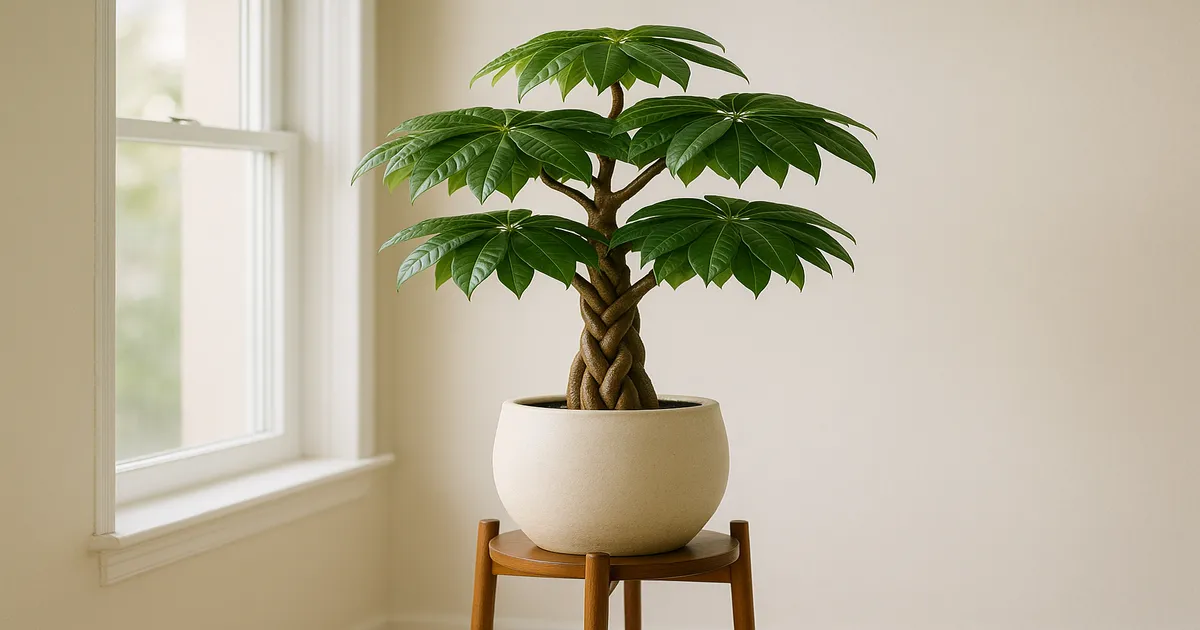
Quick Answer: To prune a money tree, use sterilized bypass pruning shears to cut 0.5–1.5 cm above a healthy node at a 45-degree angle, removing no more than 20–25% of total foliage per session. Spring (March–May) is the best time for significant cuts, though light maintenance pruning is fine throughout the growing season. Done correctly, pruning keeps your Pachira aquatica compact, bushy, and beautifully balanced.
Money trees (Pachira aquatica) are vigorous growers — and that’s both their charm and their challenge. Learning how to prune a money tree properly is one of the most impactful things you can do for its long-term health. Without regular pruning, this fast-growing tropical quickly becomes leggy and top-heavy, with leaves clustered only at the tips of bare stems. A little strategic cutting changes everything.
When Is the Best Time to Prune a Money Tree?
Spring: The Ideal Window
March through May is prime time. The plant is entering its active growth phase, wounds heal quickly, and lateral buds activate fast. You’ll typically see new growth within two to six weeks of pruning. If you’re planning any significant reshaping, do it now.
Summer and Fall: What’s Safe
Light maintenance pruning — removing a wayward branch, pinching out new tips, cleaning up dead leaves — is perfectly fine throughout summer. In fall, stick to minor tidying only. The plant is winding down, and heavy cuts at this stage heal slowly.
Winter: What to Avoid
Skip any significant pruning in winter. Growth slows dramatically, wound healing is sluggish, and new shoots that do emerge tend to be weak and etiolated (pale and stretched) due to low light. Save the big cuts for spring.
Tools You Need Before You Start
A sharp pair of bypass pruning shears handles most jobs cleanly. For stems thicker than 2.5 cm (1 inch), switch to a small pruning saw to avoid crushing the tissue. Dull blades tear rather than cut, leaving ragged wounds that are slower to heal and more vulnerable to infection.
Wipe the blades with 70% isopropyl alcohol before you start and between cuts — especially when moving from a diseased branch to a healthy one. This one step prevents pathogen transfer and is non-negotiable when dealing with any fungal or bacterial issue.
Pachira aquatica sap can mildly irritate sensitive skin, so gloves are worth wearing. For cuts larger than 1.5 cm in diameter, a horticultural pruning paste helps seal the wound against moisture loss and pathogen entry. If you plan to propagate your cuttings, have some IBA rooting hormone powder or gel ready to go.
How to Prune a Money Tree: Step-by-Step
Step 1 — Assess the Plant and Set a Goal
Before you pick up the shears, look at the plant from all angles. Are you trying to reduce height, fill in a sparse side, or just tidy things up? A clear goal prevents over-cutting. A quick mental sketch of your target shape saves a lot of regret.
Step 2 — Identify the Nodes
A node is the point where a leaf or leaf stem attaches to the branch — you’ll often see a slight swelling or bump. New growth emerges from nodes, so every cut should be just above one. Cutting between nodes leaves a dead stub that eventually rots.
Step 3 — Make the Cut
Position your blade 0.5–1.5 cm (¼–½ inch) above the node and cut at a 45-degree angle, slanting away from the bud. The angle sheds water away from the cut surface, reducing the risk of rot. One clean, single-motion cut is always better than sawing back and forth.
Step 4 — Respect the 20–25% Rule
Remove no more than 20–25% of total foliage in one session. Taking more sends the plant into shock, depleting energy reserves and triggering stress responses like leaf drop. If the plant needs drastic reshaping, spread the work over two or three sessions across the growing season.
Step 5 — Shape for Balance
Money trees look their best when the braided trunk occupies roughly the bottom third of the plant’s total height, with the canopy filling the upper two-thirds. Work from the outside in — trim the longest, most errant branches first, step back, assess, then continue. Remove any crossing or rubbing branches from the interior to improve airflow and light penetration.
Step 6 — Aftercare
Move the plant to bright indirect light (1,500–3,000 foot-candles) to fuel recovery. Hold fertilizer for four weeks — pushing nutrients into a freshly pruned plant before new growth appears can stress the root system. Maintain humidity around 50–60% using a pebble tray or a small humidifier, and keep the plant away from heating vents and cold drafts while it recovers.
Common Pruning Scenarios
Fixing a Leggy Money Tree
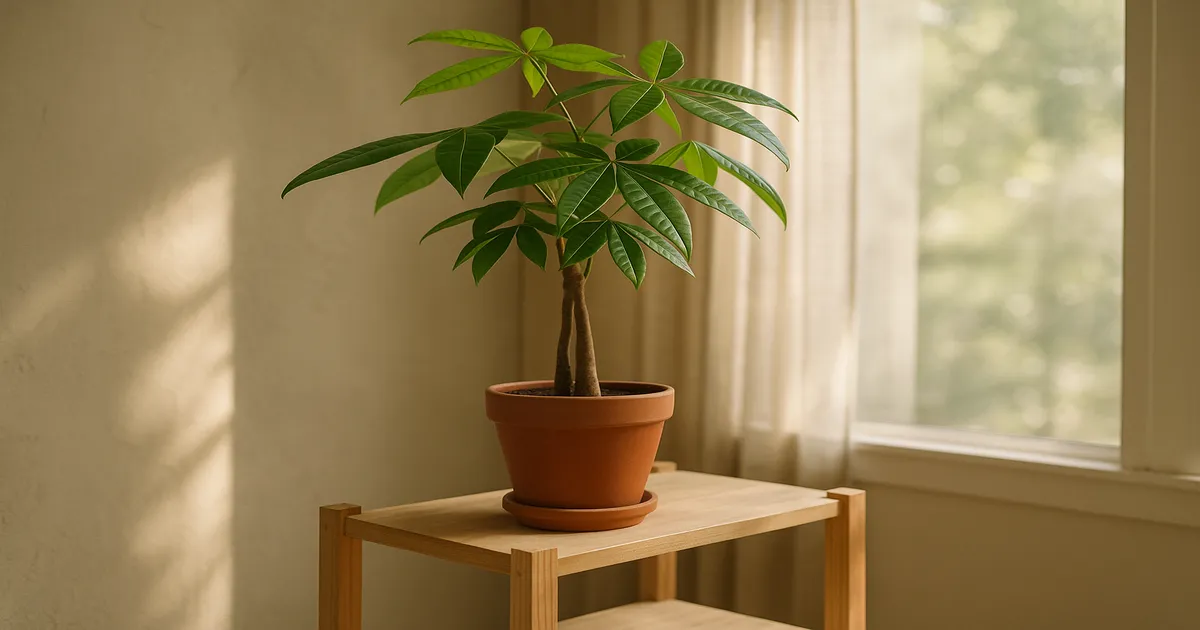
This is the classic lollipop problem — long bare stems with a tuft of leaves at the top, caused by unchecked apical dominance. The terminal bud produces auxin, a growth hormone that suppresses lateral buds lower down. Remove that tip and the auxin flow stops, waking up dormant side buds. One cut can generate two, three, or even four new shoots. Cut the dominant stems back to a node lower on the branch — not all the way to the trunk, but enough to break the pattern. Expect a flush of lateral shoots within a few weeks.
Correcting a Lopsided Canopy
Uneven light exposure causes one side to grow faster than the other. Prune the overgrown side more heavily and leave the weaker side alone to catch up. Immediately after pruning, rotate the plant 90–180 degrees and keep rotating it every two to four weeks going forward.
Removing Dead, Damaged, or Diseased Branches
Cut back into live wood — at least 2–3 cm below the visible damage, into tissue that shows green when you lightly scratch it with a fingernail. Sterilize your shears between every single cut. Bag and bin all diseased material; never put it in the compost.
Pruning After Repotting
Repotting disturbs the roots and temporarily reduces the plant’s ability to take up water. Removing 10–15% of the canopy at the same time lowers water demand, giving the recovering root system a fighting chance. Hold fertilizer for six to eight weeks after repotting.
Pruning a Money Tree That Has Outgrown Its Space
If the plant is touching the ceiling or crowding everything around it, you can cut it back significantly — but spread the work over the growing season. Respect the 20–25% per session rule, wait for new growth to emerge, then take another pass if needed.
How to Propagate Cuttings from Pruning
Don’t throw away healthy trimmings. Look for stem sections 10–15 cm (4–6 inches) long with at least two to three nodes and a leaf set or two. Avoid anything soft, discolored, or taken from a diseased branch.
Both water and soil rooting work. Water lets you watch root development — just change the water every few days to prevent bacterial buildup. For a higher success rate, a 50/50 mix of perlite and coarse vermiculite provides better aeration. Dip the cut end into IBA rooting hormone at 0.1–0.3% concentration, cover the cutting with a clear plastic bag or humidity dome to keep humidity above 70%, and place it in bright indirect light. Expect roots in four to eight weeks, with spring cuttings rooting faster than those taken later in the season. Once roots reach 2–3 cm, pot the cutting into a well-draining mix.
Keeping Your Money Tree in Shape Year-Round
The best pruning strategy is one that means you rarely need to prune heavily. Bright indirect light (1,500–3,000 foot-candles) is the single most important factor in keeping growth compact and full — low light is the primary driver of leggy stems. Rotate the plant 90 degrees every two to four weeks for even exposure.
Water thoroughly when the top 2–3 cm of soil is dry. A soil moisture meter removes the guesswork entirely and helps you avoid the overwatering that leads to root rot, which Pachira aquatica is particularly susceptible to. Use room-temperature water — anything below 15°C (59°F) can trigger leaf drop.
Feed with a balanced liquid fertilizer at half strength every two to four weeks during spring and summer only. Stop entirely in fall and winter — fertilizing during slow growth produces weak, etiolated shoots that will need corrective pruning later.
Finally, pinch out new terminal growth with your fingernails two to three times per growing season. This encourages branching without even picking up a tool, and keeps the plant from ever getting far enough out of shape to need drastic intervention.
Frequently Asked Questions About How to Prune a Money Tree
How much can you cut off a money tree at once?
Remove no more than 20–25% of total foliage in a single session. Taking more can shock the plant and trigger significant leaf drop. If major reshaping is needed, spread the cuts over two or three sessions through the growing season.
Will a money tree grow back after heavy pruning?
Yes. Pachira aquatica is resilient and recovers well from significant pruning when it’s done during the active growing season (spring or early summer). Expect new lateral shoots within two to six weeks. Pruning during winter or while the plant is already stressed — from root rot or repotting shock — slows recovery considerably.
Should you ever prune the braided trunk?
No. The braided trunk is the plant’s defining feature and should be left alone. The individual stems are fused or tightly intertwined, and cutting into them can permanently disfigure the plant. All pruning should focus on the branches and canopy above the braid.
How do I make my money tree bushier instead of taller?
Prune or pinch out the terminal growing tips on the tallest stems. This removes the source of apical dominance and redirects energy into dormant lateral buds, producing multiple new side shoots from each pruned tip. Consistent bright indirect light and regular rotation will keep new growth even and full.
Can you prune a money tree in winter?
Minor tidying — removing dead leaves or a single damaged branch — is fine. Significant pruning should wait until spring. Wounds heal slowly in winter, and any new shoots that emerge in low light tend to be weak and etiolated. Wait until March for best results.