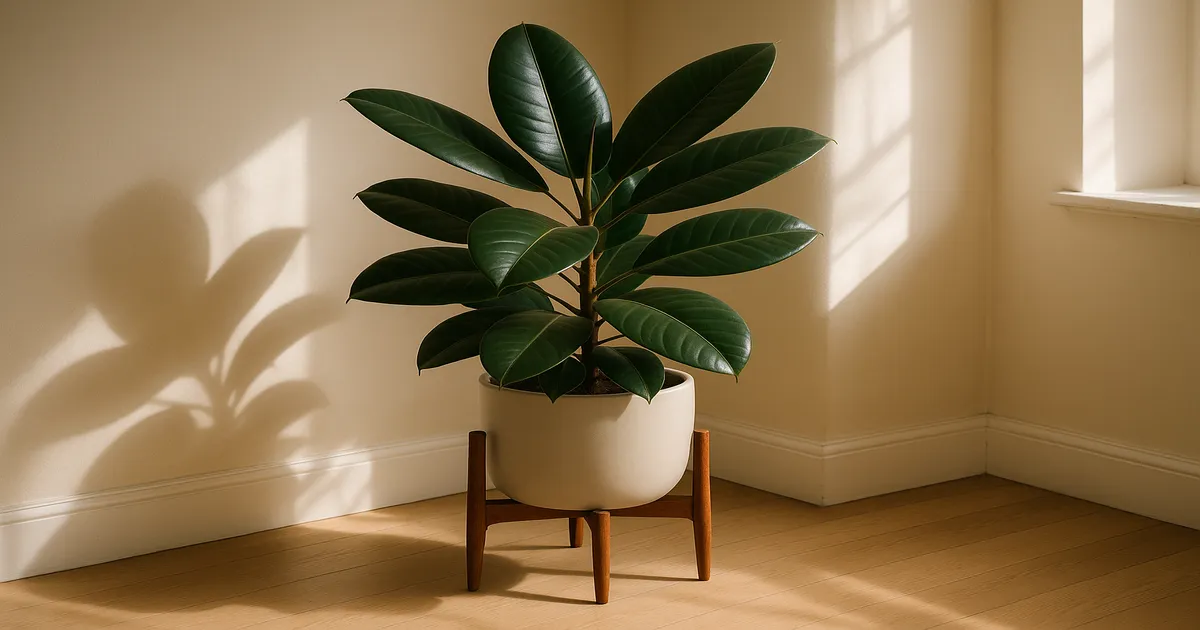
Quick Answer: Yes, you should prune your rubber plant — but it’s rarely urgent unless you’re dealing with dead or diseased growth. Most rubber plants benefit from occasional pruning to control height, encourage branching, and maintain a fuller shape. Suit up first, though: the milky latex sap is a skin and eye irritant, so gloves and eye protection are non-negotiable.
If you’ve ever looked at your rubber plant and wondered whether to prune it or just leave it alone, you’re not the first. Ficus elastica is a vigorous grower — it can add 30–60 cm a year indoors — and without some intervention it tends to become a tall, bare-stemmed pole with a tuft of leaves at the top. A little strategic pruning changes everything.
Should You Prune Your Rubber Plant?
Yes, with one caveat. Pruning is never strictly required for a healthy rubber plant, but it’s usually the difference between a leggy, top-heavy stem and a lush, multi-branched statement plant. The four main reasons to prune are: controlling height, encouraging branching, removing dead or diseased material, and taking propagation cuttings.
Pruning is essential when you have dead, damaged, or diseased growth — remove that material immediately, regardless of the season. Everything else — shaping, height reduction, encouraging fullness — is optional but often worth doing if you want a more attractive plant.
What Is a Rubber Plant and Why Does It Get Leggy?
Native to India, Nepal, and Southeast Asia, Ficus elastica can reach 30–40 metres in the wild. Indoors it tops out at a more manageable 1.8–3 metres, but it still grows quickly — up to 60 cm in a single growing season under good conditions.
The reason rubber plants go leggy comes down to apical dominance. The growing tip produces a hormone called auxin that travels down the stem and suppresses the side buds. The plant essentially tells itself: keep growing up, don’t bother branching. Remove that tip and the auxin source disappears. Within a few weeks, 2–4 dormant side buds get the green light to grow, and a single cut transforms a pole into a bushy plant.
A note on cultivars: The classic ‘Robusta’ and broad-leaved ‘Decora’ bounce back quickly and respond enthusiastically to pruning. Variegated types like ‘Tineke’ and ‘Ruby’ are more sensitive — they need brighter light to maintain their colouration and should be pruned more conservatively. ‘Burgundy’ and ‘Abidjan’ sit somewhere in the middle: slower growing but still reliable responders.
When Should You Prune a Rubber Plant?
Spring through early summer is the sweet spot. The plant is entering active growth, temperatures are in the ideal 18–29°C range, and new buds break quickly — you’ll see results within weeks rather than months. Summer pruning is also fine for most cuts.
For shaping and height reduction, it’s best to avoid autumn and winter. Slower growth means slower recovery, and a cut can sit dormant for months before anything happens. The exception, always, is dead or diseased material — that comes off the moment you spot it, whatever the season.
How often? Light annual shaping in spring keeps most rubber plants looking their best. Tip-pinching can be done throughout the growing season as needed. Beyond that, let the plant tell you.
Safety First: Handling Rubber Plant Latex
Every Ficus elastica cultivar produces a white, milky latex sap when cut. It’s a skin and eye irritant and is toxic if ingested by humans, cats, dogs, and most household pets. This isn’t a reason to avoid pruning — it’s just a reason to be prepared.
What you need:
- Nitrile gloves — latex sap can cause contact dermatitis, especially with repeated exposure
- Safety glasses — cuts under pressure can squirt sap unexpectedly
- Paper towels — to blot fresh cut surfaces before the latex dries
- Keep children and pets away from the plant while cuts are fresh
For skin contact, wash thoroughly with soap and water. For eye contact, flush with clean water for at least 15 minutes and seek medical advice. If a pet or child ingests any part of the plant, contact a poison control centre or vet immediately.
How to Prune a Rubber Plant: Step-by-Step
Tools You Need
- Sharp, clean pruning shears
- 70% isopropyl alcohol for sterilising blades
- Nitrile gloves and safety glasses
- Paper towels
Wipe the blades with isopropyl alcohol before you start and between cuts whenever disease is involved.
Encouraging Branching on a Leggy Plant
- Choose the height where you want branching to begin and find the nearest node (where a leaf attaches or previously attached).
- Make a clean cut 5–10 mm above that node at a slight angle — this prevents water pooling on the wound.
- Blot excess latex with a paper towel and allow the cut to air-dry for 15–30 minutes. Don’t mist it.
- Move the plant to its brightest available spot.
- Expect 2–4 new growth points within 4–8 weeks during the growing season.
Reducing Height Without Stressing the Plant
Never remove more than one-third of the plant in a single session. If you need to take off more, split the job into two sessions spaced 4–6 weeks apart. Cut just above a node at your target height, blot the latex, and move the plant somewhere bright to recover.
For very tall specimens, consider air layering instead of a straight cut. Choose a point 30–60 cm below the top, remove leaves from a 5–8 cm section of stem, and make an upward angled cut one-third through the stem (or remove a 2–3 cm ring of bark). Dust the wound with rooting hormone powder, pack with a golf-ball-sized amount of moist sphagnum moss, and wrap tightly in clear plastic film sealed at both ends. Roots should be visible through the plastic within 4–8 weeks. Once well-developed, cut just below the moss ball and pot up the new plant.
Tip-Pinching for a Fuller Shape
This is the gentlest approach. Simply remove the top 2–5 cm of each growing shoot. New lateral buds activate just below the pinch point, and once those shoots have grown a few centimetres you can pinch them again — building a noticeably denser canopy over a single growing season.
Removing Dead or Diseased Stems
Cut back to firm, healthy, green tissue and don’t leave dead stubs, as they invite rot. Sterilise your shears between every cut. If you suspect root rot (soft brown roots, foul smell), unpot the plant, trim all affected roots, dust with powdered cinnamon as a natural antifungal, and repot into fresh, well-draining mix.
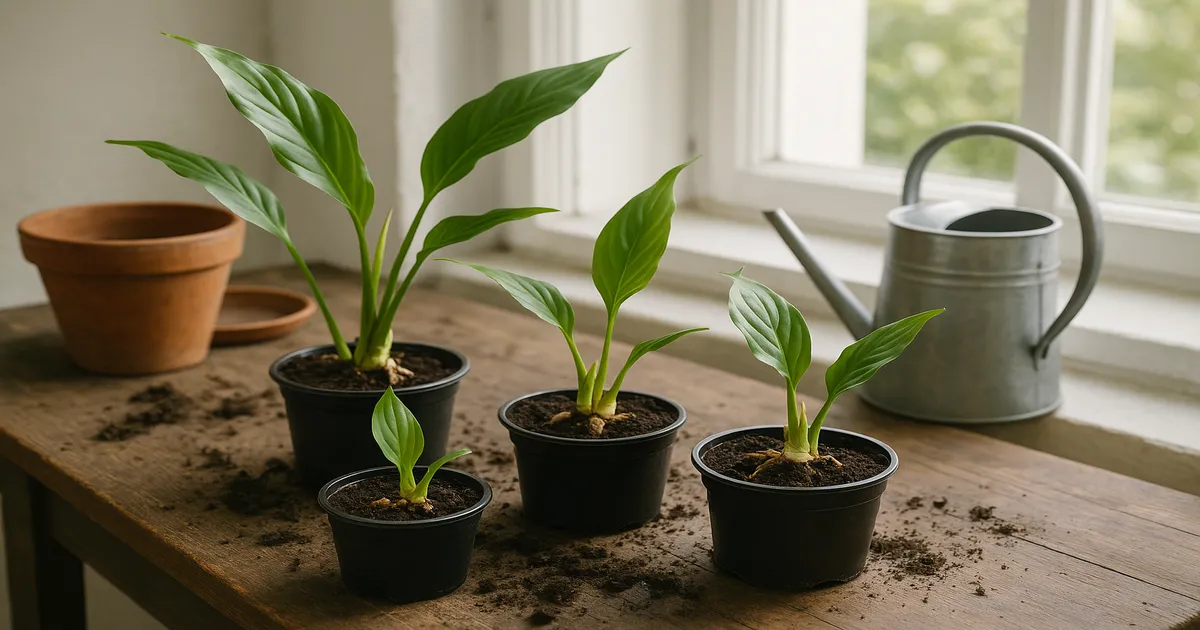
Taking Propagation Cuttings
- Take a tip cutting 10–15 cm long with 2–3 healthy leaves.
- Remove the lowest leaf to expose a node.
- Let the cut end air-dry for 30–60 minutes until the latex stops weeping.
- Optional: dip in an IBA-based rooting hormone powder or gel.
- Insert into 100% perlite or sphagnum moss — not standard potting mix.
- Cover with a clear plastic bag or propagation dome to maintain humidity around 70–80%.
- Provide medium indirect light and temperatures of 21–27°C. Roots typically form in 4–8 weeks.
Aftercare: Helping Your Rubber Plant Recover
Light: Move the plant to the brightest available indirect light (1,500–3,000 foot-candles) after pruning. This is the single most important thing you can do to encourage dormant buds to break. Avoid harsh direct afternoon sun, which can stress a recovering plant.
Watering: Don’t increase watering frequency in an attempt to help. Allow the top 50–75% of the soil to dry before rewatering. A soil moisture meter removes the guesswork entirely.
Fertilising: Wait 2–4 weeks before feeding again. The root system is under mild stress after pruning, and pushing it with fertiliser salts too soon can cause more harm than good. Once new growth is actively appearing, resume your normal schedule with a balanced liquid fertiliser. (Jack’s Classic All Purpose 20-20-20 Water Soluble Plant Food)
What to expect: Some leaf drop after pruning is completely normal. New lateral buds should appear within 4–8 weeks during the growing season. Rotating the pot 90° every 2–4 weeks encourages those new shoots to develop evenly rather than reaching toward the nearest light source.
Frequently Asked Questions
Where do you cut a rubber plant to make it branch?
Cut just above a node — the point where a leaf attaches or previously attached — leaving about 5–10 mm of stem above it. This removes the apical dominance suppressing the side buds, and 2–4 new branches typically emerge within 4–8 weeks. The lower on the stem you cut, the more dramatic the branching effect, but the longer the bare stem below.
How much can you cut off a rubber plant at once?
No more than one-third of the plant’s total foliage or height in a single session. Removing more can shock the plant and cause significant leaf drop. If you need to make a more substantial reduction, split the work into two sessions spaced 4–6 weeks apart.
Will a rubber plant grow back after pruning?
Yes — reliably and often enthusiastically. New growth typically appears within 4–8 weeks during the active growing season, emerging as lateral buds just below the cut. Pruning in spring or early summer and moving the plant to bright indirect light afterwards gives the fastest results.
Why is my rubber plant tall but has no branches?
Classic apical dominance. The growing tip is producing auxin that suppresses every side bud along the stem, so the plant keeps going straight up. The fix is a clean cut just above a node at the height where you want branching to start — those dormant buds below will activate within a few weeks.
Can I propagate the cuttings from my pruned rubber plant?
Absolutely, and it’s one of the best reasons to prune in spring. Take tip cuttings 10–15 cm long with 2–3 leaves, let the cut end air-dry for 30–60 minutes until the latex stops weeping, then root in perlite or sphagnum moss under a humidity dome at 21–27°C. You’ll typically have a rooted cutting ready to pot up in 4–8 weeks.