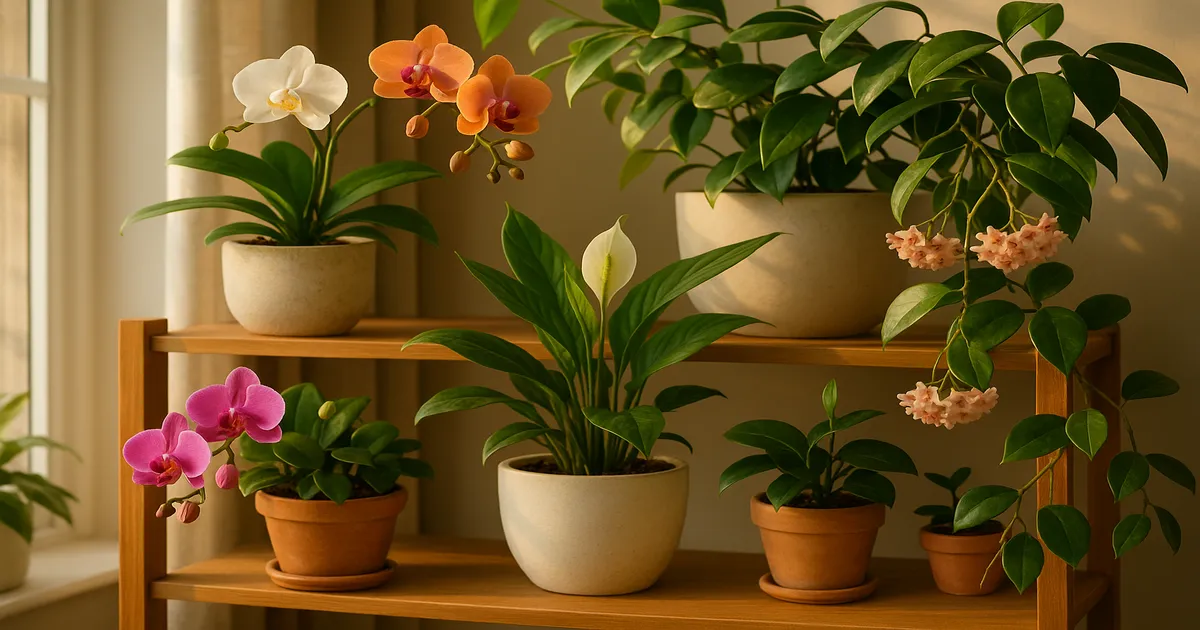
Quick Answer: That mysterious nub, spike, or stalk pushing out of your houseplant might genuinely be a flower — or it could be a new leaf, an aerial root, or an offset playing tricks on you. Check the tip shape and growth direction first, then photograph it every couple of days. Most structures reveal themselves within one to two weeks.
You’re watering your plant on a Tuesday morning and suddenly notice something you’ve never seen before pushing up from the soil. Is it?! I think it’s a flower — and that rush of excitement is completely warranted, because a blooming houseplant is genuinely special. But before you text everyone you know, take 60 seconds to confirm what you’re actually looking at.
Is It Really a Flower? How to Tell in Seconds
Three quick checks will get you most of the way there:
- Look at the tip. Flower buds are rounded or pointed and often show color differentiation or tiny scale-like bracts. Roots taper uniformly or end in a blunt cap. New leaves are tightly furled and usually reddish or pale from lack of chlorophyll.
- Check the direction of growth. Flower spikes grow upward, toward light. Roots grow downward or angle toward pot walls. Offsets emerge from the base as small rosettes.
- Photograph it, then photograph it again in two to three days. A new leaf will elongate and begin to flatten. A flower bud will show color or structural change while staying compact. Roots keep heading for the soil.
Patience is your best diagnostic tool.
Common Look-Alikes at a Glance
| What you see | What it probably is |
|---|---|
| Tightly coiled, pale or reddish shoot | New leaf unfurling |
| Brownish or silvery cord from a node | Aerial root |
| Small rosette at the base | Offset or pup |
| Thick green stalk with no buds yet | Inflorescence stalk (pre-bloom) |
| Round-tipped, silvery-green growth in an orchid | Root, not a spike |
”Is It?! I Think It’s a Flower” — What You’re Actually Looking At
Flowers, Inflorescences, and Bracts
A true flower is the reproductive structure of a flowering plant. In its complete form it contains sepals, petals, stamens (male parts), and a pistil (female part). Many houseplant “flowers,” though, are highly modified versions of this — and some of what we casually call a flower isn’t a flower at all.
An inflorescence is a cluster of multiple small flowers on a single stalk. A bract is a modified leaf that surrounds or supports the inflorescence — and bracts are often far showier than the actual flowers they protect.
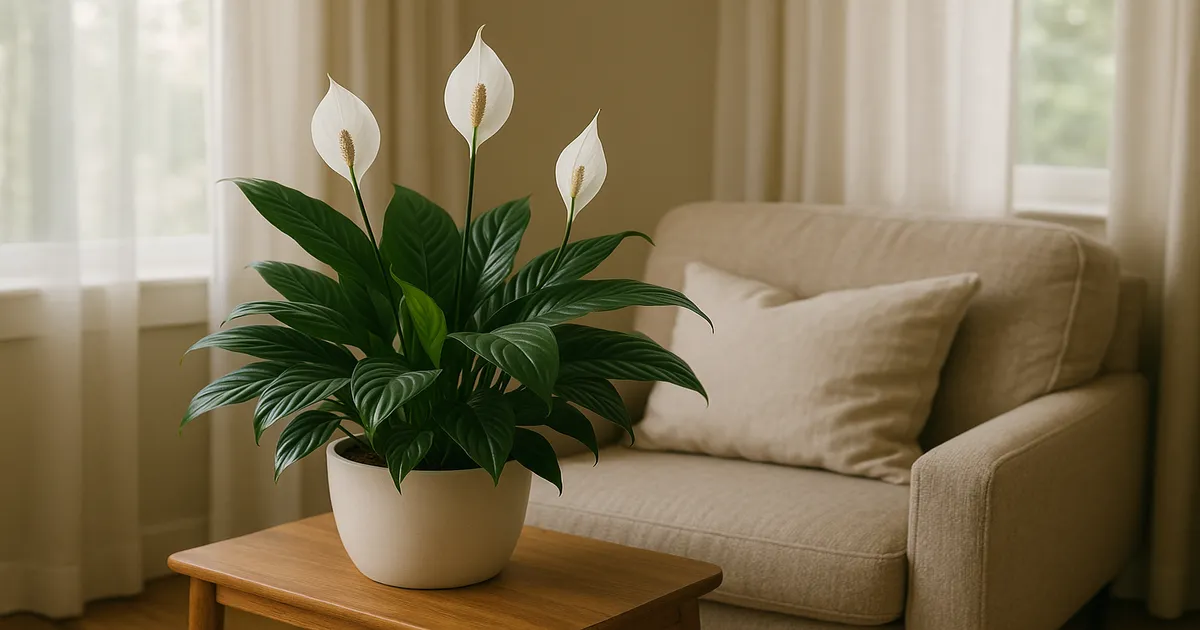
The Peace Lily’s elegant white “petal” is a spathe, which is a large bract. The real flowers are the tiny structures packed onto the central spadix. The same is true for Anthuriums. Bromeliads take this further: that vivid pink or red “flower” is entirely bract tissue, with tiny true flowers tucked inside. Bracts evolved to attract pollinators just as effectively as petals do — often more so.
Flower Bud vs. New Leaf
New leaves emerge tightly furled, often with a pointed tip and a reddish or pale color. Within three to five days they elongate noticeably and the tip begins to flatten. A flower bud, by contrast, stays compact and develops color or a scaly texture rather than opening into a flat blade.
Aerial Roots vs. Flower Spikes
Aerial roots are brownish or silvery-green, cord-like, and emerge from nodes along the stem. They grow toward humidity or pot walls. In Monsteras, Pothos, and Philodendrons they’re completely normal — not a sign of stress or disease.
Offsets vs. Bloom Stalks
Offsets (pups) are miniature versions of the parent plant, appearing at the base as a tiny rosette or cluster of leaves. A bloom stalk is a single, undivided stem with no leaf structure of its own. If the new growth is developing leaves, it’s almost certainly an offset.
The Orchid Root vs. Spike Test
Phalaenopsis roots and flower spikes look genuinely similar at first. Here’s how to tell them apart:
- Tip shape. A root tip is round and smooth, often with a bright green or silvery sheen. A spike tip is flat and slightly notched — often described as “mitten-shaped.”
- Direction. Roots grow toward the pot wall or downward. Spikes grow upward and angle toward light.
- Texture. Roots are round in cross-section; spikes are slightly flattened.
- Nodes. As a spike grows, small triangular bracts appear at intervals. Roots have none.
Photograph it every two to three days. The difference becomes unmistakable within a week.
One more thing about Hoyas: those short, knobby, woody stubs are peduncles — the structures from which flower clusters emerge. New Hoya owners sometimes mistake them for damage and remove them. Don’t. Peduncles are perennial structures that produce new flower clusters season after season. Removing one costs you at least a full growing season of blooms.
Why Is My Houseplant Suddenly Blooming? 6 Science-Backed Triggers
1. Reproductive Maturity
Every plant has a juvenile phase during which flowering is hormonally impossible regardless of conditions. A Snake Plant may need three to five years indoors before it’s capable of blooming. Once a plant crosses into reproductive maturity, the right environmental cue is all it needs.
2. Photoperiodism — Day Length Signals
Many plants measure the length of the dark period each night using a photoreceptor protein called phytochrome. Short-day plants (SDPs) — including Christmas Cactus and Kalanchoe — flower when nights exceed roughly 12 hours. Even a brief light interruption (a nearby lamp, a streetlight through a curtain) can prevent flowering. Day-neutral plants like African Violets and Anthuriums flower regardless of photoperiod.
3. Cool Nights
Temperature drop is one of the most reliable bloom triggers. Phalaenopsis orchids need nighttime temperatures of 55–65°F (13–18°C) for four to six weeks to initiate a new spike. Christmas Cactus responds to nights below 60°F (15°C). A Snake Plant near a drafty window in October may produce a bloom spike seemingly out of nowhere — the cool air is doing exactly what it’s supposed to.
4. Mild Drought Stress
When water becomes scarce, plants produce abscisic acid (ABA), a hormone that can shift priorities from vegetative growth toward reproduction. Succulents, Hoyas, and Bromeliads are particularly responsive to this. The key word is mild — severe drought causes bud drop, not flowering.
5. Fertilizer Ratios
High nitrogen encourages leafy growth and suppresses flowering. High phosphorus promotes root development and flower production. If your plant is getting a nitrogen-heavy general fertilizer all year, it may have no hormonal reason to bloom. Switching to a bloom-booster formula (such as a 5-10-5 ratio) in late winter or early spring can shift that balance. A dedicated bloom fertilizer like Jack’s Classic Blossom Booster 10-30-20 works well for this purpose.
6. Ethylene Gas Exposure
Ethylene (C₂H₄) is a gaseous plant hormone that triggers flowering in certain species — most notably Bromeliads. Placing a ripe apple in a sealed bag with a mature Bromeliad for seven to ten days exposes the plant to enough ethylene to reliably induce a bloom spike. Ethylene is also produced by gas stoves and ripening fruit, which matters if you’re trying to control bloom timing precisely.
How to Encourage Your Houseplant to Bloom: Species-Specific Steps
Phalaenopsis Orchids
After blooms drop, move the plant to bright indirect light near an east- or west-facing window (1,500–3,000 foot-candles). In autumn, allow nighttime temperatures to fall to 55–65°F (13–18°C) for four to six weeks — a windowsill works perfectly. Continue fertilizing at quarter-strength weekly with a balanced orchid fertilizer like rePotme MSU Orchid Fertilizer during this period, then switch to a bloom-booster formula once a spike appears. Do not cut the spike until it has fully yellowed; it may branch from a lower node and produce a second flush.
Christmas and Thanksgiving Cactus
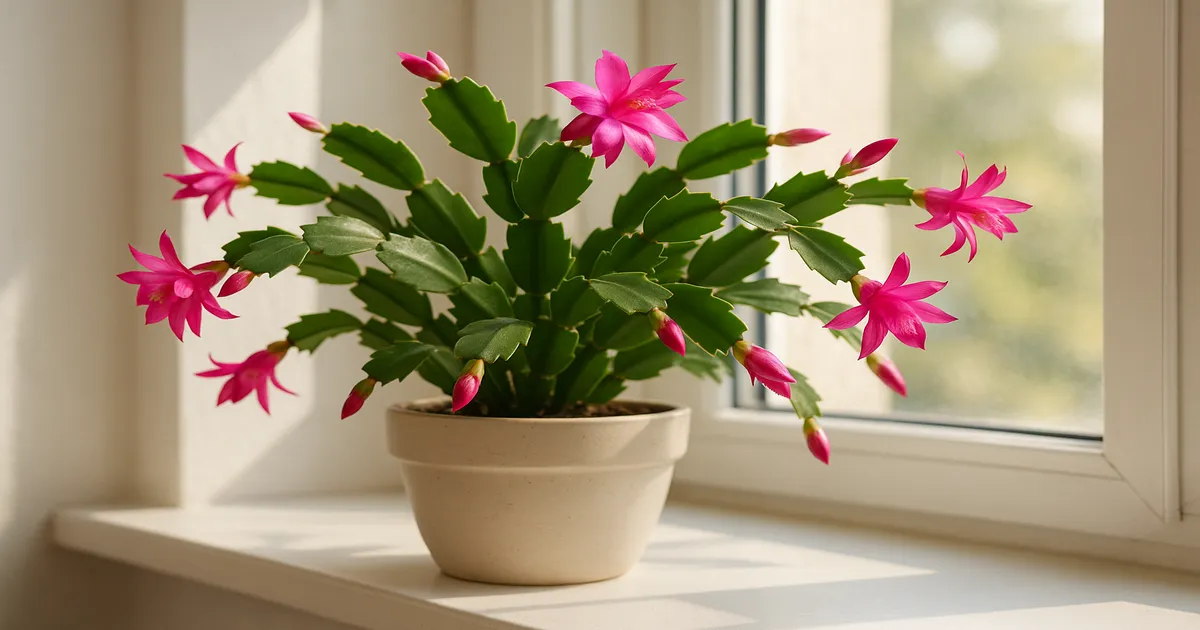
Starting in early October, give the plant 12–14 hours of complete darkness per night — a closet or cardboard box works. Reduce watering slightly, letting the top inch of soil dry between waterings, and keep nighttime temperatures at 50–60°F (10–15°C). Once buds appear (usually four to eight weeks in), return the plant to bright indirect light and resume regular watering.
Bromeliads — The Apple Trick
Confirm the plant is mature (a full rosette, typically 18–36 months old). Place the Bromeliad and one ripe apple inside a large sealed clear plastic bag and keep it in moderate indirect light for seven to ten days. A bloom spike should emerge within six to fourteen weeks. Begin propagating any pups at the base — the mother plant will gradually decline after blooming.
Hoyas
Move the plant to the brightest spot you have (ideally 2,000–5,000 foot-candles). Let the soil dry completely between waterings during the growing season. Apply a high-phosphorus fertilizer monthly from spring through summer — Dr. Earth Organic Bud & Bloom is a good organic option. Resist repotting; slight root-binding encourages flowering. And never, ever remove the peduncles.
General Tips for Any Flowering Houseplant
- Switch to a bloom-booster fertilizer (5-10-5 or similar) in late winter or early spring.
- Verify light levels with a light meter app or a dedicated meter like the Dr.meter LX1330B — most flowering houseplants need at least 1,500 foot-candles to bloom reliably.
- Avoid excess nitrogen. It’s the single most common reason a healthy, mature houseplant refuses to flower.
- Maintain 50–70% relative humidity for most tropical species. A digital hygrometer like the Govee Bluetooth Hygrometer Thermometer will tell you exactly where you stand.
Species Spotlight: Surprising and Unusual Houseplant Blooms
Phalaenopsis Orchid — The spike emerges between the leaves, grows upward, and develops a flat mitten-shaped tip. It can take two to three months from emergence to first bloom. Don’t cut the spike until it’s fully yellow and papery.
Peace Lily and Anthurium — Both produce a spathe-and-spadix inflorescence. The spathe is a modified bract (white in Peace Lilies, waxy red or pink in Anthuriums). When the spadix turns yellow and powdery, the plant is actively releasing pollen.
Bromeliad — That vivid pink or red structure is entirely bract tissue. The actual flowers are small and emerge from within. The bract holds its color for months; after blooming, the mother plant begins to decline — propagate the pups.
Hoya — Perfect waxy stars arranged in a round umbel, often fragrant and nectar-producing. The perennial peduncles they emerge from should never be removed.
Snake Plant — Many owners don’t know it can bloom at all. After years of nothing, a mature, slightly root-bound plant may send up a tall spike of creamy-white tubular flowers with an intensely sweet fragrance, most noticeable at night.
Christmas and Thanksgiving Cactus — Tubular flowers in red, pink, white, or purple emerge from the tips of flattened stem segments. Schlumbergera bridgesii (Christmas) blooms slightly later than S. truncata (Thanksgiving); the two are frequently mislabeled at garden centers.
ZZ Plant, Pothos, and Aloe — ZZ Plants produce a small aroid inflorescence at soil level, easy to miss entirely. Pothos can theoretically bloom indoors but almost never does. Aloe produces a tall raceme spike with tubular orange or yellow flowers. All three are rare enough that if you see one, document it.
FAQ: “Is It?! I Think It’s a Flower” — Common Questions Answered
Q: My orchid has a new growth but I can’t tell if it’s a root or a spike. What’s the fastest way to know? A: Look at the tip. A root tip is round and smooth with a silvery or bright-green sheen. A spike tip is flat and slightly notched — “mitten-shaped” is the standard description. If you’re still unsure, photograph it every two days; the difference becomes obvious within a week.
Q: My Peace Lily has a green spathe instead of a white one. Is something wrong? A: Not necessarily. Green spathes are common when light levels are low or when the plant is young. As the inflorescence matures it typically whitens, though some cultivars stay greenish. Increase light slightly and the next bloom is likely to be whiter.
Q: My plant bloomed once and never again. What am I doing wrong? A: The most common culprits are too much nitrogen fertilizer, insufficient light, and skipping the seasonal cues the plant needs (cool nights for orchids, darkness treatment for Christmas Cactus). Match your care to the specific triggers for your species and blooming becomes much more predictable.
Q: Is it normal for a Snake Plant to bloom indoors? A: Yes, though it’s uncommon enough to surprise most owners. It typically happens after several years, when the plant is slightly root-bound and has experienced cooler autumn temperatures. The fragrant white spike is worth waiting for.
Q: Should I remove the flower spike after blooming is finished? A: It depends on the plant. For orchids, wait until the spike is fully yellow before cutting — it may produce a second flush from a lower node. For most other species, removing the spent spike once it dies back is fine and keeps the plant tidy.