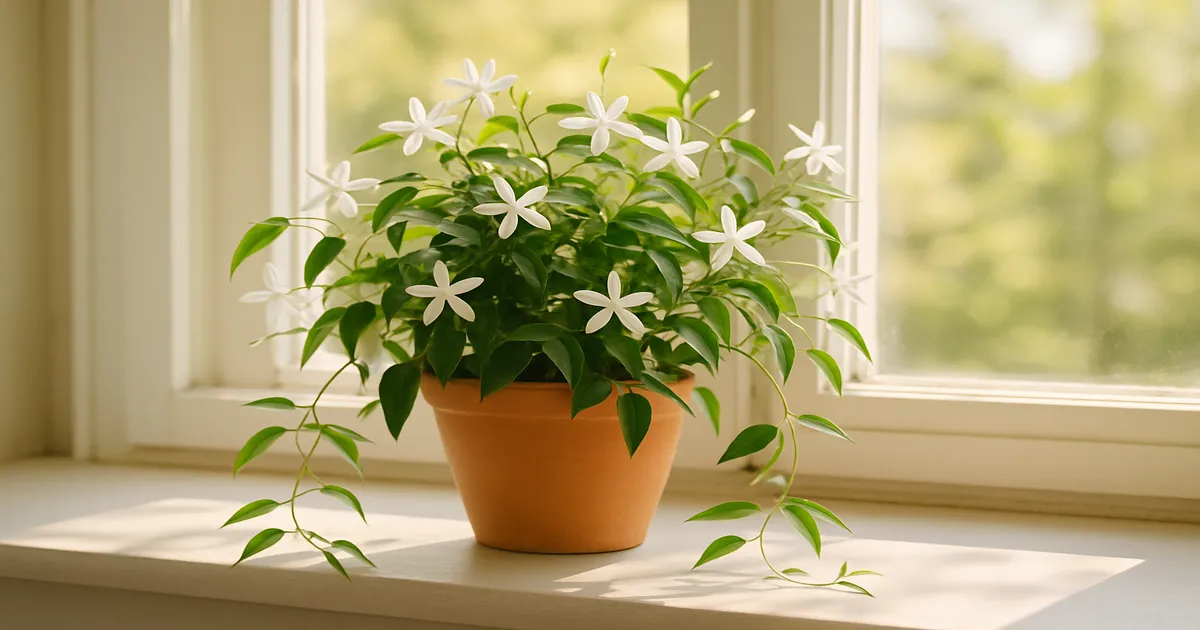
Quick Answer: To grow jasmine indoors successfully, you need bright indirect light (1,500–3,000 foot-candles), well-draining slightly acidic soil (pH 6.0–6.5), and 50–70% humidity. The single biggest reason indoor jasmine fails to bloom is skipping the cool rest period — Jasminum polyanthum needs 6–8 weeks at 40–55°F in autumn to set flower buds. If your home stays warm year-round, choose J. sambac instead.
Growing jasmine indoors rewards patience with something few houseplants can match: a windowsill full of starry white flowers and a fragrance that fills the entire room in late winter. But knowing how to grow jasmine indoors properly takes more than finding a sunny spot. Get the species, light, and seasonal timing right, and you’ll have a plant that blooms reliably for years.
How to Grow Jasmine Indoors: Key Requirements at a Glance
| Factor | Requirement |
|---|---|
| Light | Bright indirect light (1,500–3,000 fc) + 2–4 hrs direct sun |
| Soil pH | 6.0–6.5 |
| Humidity | 50–70% RH |
| Watering | When top 1 inch of soil is dry (active growth) |
| Cool rest (J. polyanthum) | 6–8 weeks at 40–55°F in autumn |
| Fertilizer | Balanced in spring/summer; high-phosphorus in late summer |
Which Jasmine Species Is Right for You?
Two species dominate the indoor market, and picking the right one for your home makes everything easier.
Jasminum polyanthum (Pink Jasmine) is the most widely available and the most spectacular bloomer — hundreds of pink-budded white flower clusters in late winter. The catch: it needs a cool dormancy period each autumn. If you can move it to an unheated room or enclosed porch for 6–8 weeks, this is your plant.
Jasminum sambac (Arabian Jasmine) is the better choice for warm apartments where temperatures stay above 65°F year-round. No cool rest required, more compact growth, and it blooms in flushes through the warm months. It’s also the species used to scent jasmine tea.
Jasminum officinale (Common Jasmine) is a vigorous twiner with highly fragrant white flowers. It tolerates indoor conditions slightly better than J. polyanthum but needs a large trellis and plenty of space.
Jasminum mesnyi (Primrose Jasmine) is the odd one out — semi-evergreen with yellow flowers and a milder fragrance. It tolerates lower light than the others, making it a practical choice when fragrance isn’t the top priority.
A Note on That Famous Scent
Jasmine’s fragrance comes from a cocktail of volatile compounds: benzyl acetate, linalool, indole, and cis-jasmone — the last being the compound most associated with the classic jasmine note used in perfumery. The scent peaks in the evening because jasmine is moth-pollinated in the wild. Moths are most active after dark, so the flowers ramp up their chemical broadcast accordingly.
Light Requirements for Growing Jasmine Indoors
How Much Light Does Jasmine Really Need?
Jasmine needs bright indirect light — 1,500 to 3,000 foot-candles — and this is where most indoor growers go wrong. A room that looks bright to human eyes often registers just 100–300 foot-candles. That’s enough to keep a pothos alive, but nowhere near enough for jasmine to bloom.
Insufficient light causes etiolation: stems grow long and weak, leaves are pale and widely spaced, and the plant simply won’t produce flower buds. No amount of fertilizer or humidity will compensate for a fundamentally underlit position.
A south- or west-facing window is ideal. Two to four hours of direct sun through glass is actually beneficial — jasmine handles it well, and that intensity (3,000–8,000+ foot-candles) gives it the energy to bloom prolifically. East-facing windows work if the plant gets morning sun. North-facing windows are almost always insufficient.
Use a smartphone app like Photone to check actual foot-candle readings at your plant’s location. The number will probably surprise you.
Using Grow Lights to Supplement Natural Light
Full-spectrum LED grow lights positioned 6–12 inches above the canopy can make up for what a window can’t provide. A quality panel like the Soltech Solutions Aspect delivers consistent, measurable output without the heat of older HID fixtures. During active growth in spring and summer, aim for a 14–16 hour photoperiod. In autumn, reduce this to 10–12 hours — shorter days help trigger dormancy and bud initiation in J. polyanthum, just as they would outdoors.
Temperature, Humidity, and the Cool Rest Period
Why J. polyanthum Needs a Cool Dormancy
This is the single most common reason indoor jasmine doesn’t bloom. J. polyanthum evolved in the highland regions of China and Myanmar, where autumn brings genuinely cool temperatures. It needs 6–8 weeks at 40–55°F (4–13°C) to initiate flower buds. Keep it in a warm living room year-round and it stays vegetative indefinitely.
From October through December, move J. polyanthum to an unheated spare room, enclosed porch, or garage where temperatures hold in the 45–55°F range. Once you see buds forming — usually December or January — bring it back into warmth and resume normal watering. The buds develop quickly once temperatures rise.
Temperature ranges by species:
- J. polyanthum: 45–55°F (7–13°C) during dormancy; 60–75°F (15–24°C) during active growth
- J. sambac: 65–85°F (18–29°C) consistently; no cool rest needed; keep away from cold drafts
- All species: Avoid temperatures below 35°F (2°C), which risk frost damage
A min/max thermometer placed near the plant will tell you what temperatures it’s actually experiencing overnight — often colder near windows than you’d expect. The AcuRite Indoor Thermometer Hygrometer tracks both temperature and humidity in one unit.
Raising Humidity: What Actually Works
Most homes sit at 30–50% relative humidity, below jasmine’s preferred 50–70%. When humidity drops below 40%, the vapor pressure difference between leaf tissue and surrounding air increases sharply, pulling moisture out of the plant faster than roots can replace it. The result is brown leaf tips, bud drop, and a plant that’s perpetually stressed.
Your options, ranked from least to most effective:
- Pebble tray — raises local humidity by roughly 5–10%. Better than nothing, not a complete solution.
- Plant grouping — clustering plants together creates a shared microclimate through collective transpiration.
- Ultrasonic humidifier — the most effective option by far. Place it within 3–4 feet of the plant and target 50–60% RH. The Levoit Classic 300S is a reliable choice with a built-in humidity sensor.
One thing to avoid: misting the foliage directly. Wet leaves invite Botrytis cinerea (gray mold). A humidifier keeps the air moist without wetting the plant itself.
Watering and Soil
How Often to Water Jasmine Indoors
Push your finger into the soil up to the first knuckle (about 1 inch). During active growth, water when that top inch is dry. During the winter rest period, wait until the top 2 inches are dry. When you do water, do it thoroughly — water until it runs freely from the drainage holes, then discard any excess sitting in the saucer after 30 minutes.
Both overwatering and underwatering cause wilting, which is confusing. The key difference: overwatered soil feels wet and may smell musty, and the plant wilts despite damp soil. That’s because saturated, anaerobic conditions promote Phytophthora and Pythium root rot, which destroys the roots’ ability to transport water. Underwatered plants wilt in dry soil, and leaf edges feel crispy.
If you suspect root rot:
- Remove the plant from its pot and inspect the roots
- Trim brown, mushy roots with sterilized scissors
- Dust cut surfaces with powdered sulfur or cinnamon
- Repot into fresh, sterile mix and hold off watering for a few days
The Best Soil Mix for Indoor Jasmine
Jasmine needs soil that drains fast but stays consistently moist — not wet. A reliable DIY mix:
- 60% high-quality potting mix + 20% perlite + 20% coarse horticultural sand
- Or: 50% potting mix + 30% orchid bark + 20% perlite for even better aeration
Target pH 6.0–6.5. A soil pH meter is worth the investment, especially if you’re dealing with yellow leaves. The Bluelab pH Pen gives accurate readings and is easy to calibrate.
Use terracotta pots where possible — porous clay allows moisture to evaporate through the walls, reducing waterlogging risk significantly. Whatever pot you choose, drainage holes are non-negotiable. Avoid oversized containers: too much soil volume stays wet too long, creating root rot conditions even with good drainage.
Fertilizing for Maximum Blooms
Seasonal Fertilizer Schedule
- Spring through summer: Balanced water-soluble fertilizer (10-10-10 or similar) every 2–3 weeks. Jack’s Classic All Purpose 20-20-20 works well at half the recommended rate.
- Late summer: Switch to a low-nitrogen, high-phosphorus formula (such as 5-30-5) to shift the plant’s energy from foliage to bud initiation.
- Autumn through winter: Stop fertilizing entirely during the rest period.
High-nitrogen fertilizers in late summer are one of the most common mistakes — they push lush green growth at exactly the moment you want the plant focusing on buds.
Fixing Iron Chlorosis
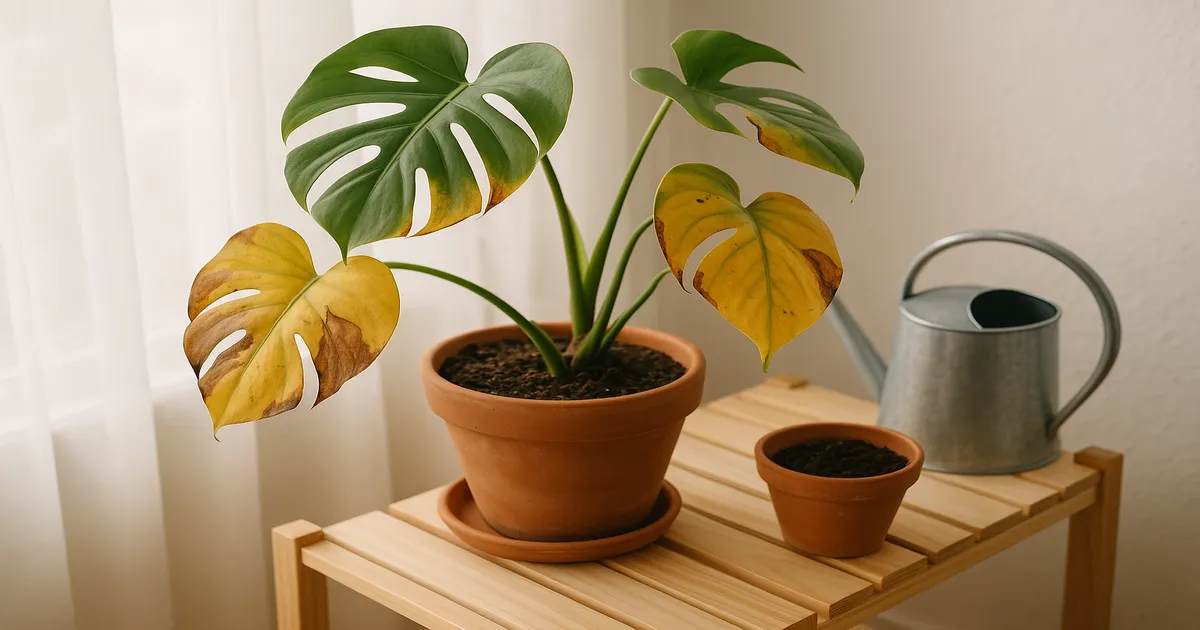
If leaves are turning yellow while the veins stay green, that’s iron chlorosis. It’s common in jasmine and almost always caused by soil pH creeping above 6.5, which locks iron into forms the plant can’t absorb. Apply chelated iron (Fe-EDTA or Fe-EDDHA) as a foliar spray or soil drench, and lower pH with sulfur powder amendments. Chelated iron stays available across a wider pH range than standard iron supplements.
Every 2–3 months, flush the soil by watering heavily and repeatedly until a large volume of water has passed through the pot. This leaches accumulated fertilizer salts that cause root burn and pH drift.
Pruning, Training, and Repotting
J. polyanthum flowers on new growth produced in the current season, so pruning timing matters. Prune immediately after flowering — typically late winter to early spring — to give the plant maximum time to produce new flowering shoots before next season.
How to prune:
- Cut back flowered stems by one-third to one-half
- Remove dead, crossing, or weak stems entirely
- Thin the interior to improve air circulation
- Sterilize pruning shears with 70% isopropyl alcohol before and between cuts
Jasmine’s twining stems will grab onto anything nearby — including each other — leading to a tangled mess if you’re not proactive. Weave new growth through your trellis or hoop regularly as it extends, distributing it evenly for better light penetration and bloom distribution.
Repot every 1–2 years in spring, moving up only one pot size at a time. If you’re not doing a full repot, refresh the top 2 inches of soil annually with fresh mix to replace depleted nutrients and prevent the surface from becoming hydrophobic.
Common Pests
Spider mites (Tetranychus urticae) thrive in hot, dry air — exactly the conditions jasmine hates. Identify them by stippled, bronzed foliage and fine webbing on leaf undersides. Increase humidity, shower the plant to knock mites off physically, then apply 2% insecticidal soap or neem oil every 5–7 days for three cycles.
Mealybugs appear as white cottony masses at leaf axils. Dab individual colonies with 70% isopropyl alcohol on a cotton swab, then follow up with neem oil weekly for 4–6 weeks.
Aphids cluster on new growth and buds, causing distorted, curled leaves. Blast them off with water, then apply insecticidal soap. Lacewing larvae (Chrysoperla spp.) are an effective biological control for persistent infestations.
Scale shows up as brown or tan bumps on stems. Scrape off manually with a soft toothbrush and apply horticultural oil during the crawler stage.
Isolate every new plant for 2–3 weeks before it joins your collection. Inspect your jasmine weekly — catching an infestation at five mealybugs is vastly easier than dealing with five hundred.
Seasonal Care Calendar
Spring: Resume fertilizing with a balanced feed, increase watering frequency, and repot if the plant is root-bound. Once flowering finishes, prune back immediately to encourage new growth for next season.
Summer: Push growth hard. If you can move J. polyanthum outdoors to a spot with morning sun and afternoon shade, do it — fresh air and natural light will produce a stronger plant come winter. Bring it back inside before nighttime temperatures drop below 50°F.
Autumn: The pivotal season for J. polyanthum. Switch to a high-phosphorus fertilizer for a few weeks, then stop feeding entirely. Move the plant to its cool rest location (45–55°F) and reduce the photoperiod to 10–12 hours if using grow lights. Reduce watering but don’t let the soil dry out completely. J. sambac owners: keep things warm and steady.
Winter: For J. polyanthum, maintain cool temperatures and minimal watering for 6–8 weeks. Once buds appear, move the plant back to a warm, bright spot and resume normal watering. For J. sambac, continue warm-weather care with slightly reduced watering and no fertilizer until late winter.
Frequently Asked Questions About Growing Jasmine Indoors
Why is my indoor jasmine not blooming?
The most likely cause is skipping the cool rest period. Jasminum polyanthum needs 6–8 weeks at 40–55°F in autumn to initiate flower buds — without it, the plant stays vegetative. Insufficient light is the second most common culprit: if your plant is getting fewer than 1,500 foot-candles, it won’t have the energy to bloom regardless of other conditions.
How do I know when to bring J. polyanthum back indoors after its cool rest?
Watch for tiny green buds beginning to swell at the leaf axils — this usually happens in December or January after 6–8 weeks of cool temperatures. Once you see buds forming, move the plant back to a warm, bright spot and resume normal watering. The buds develop rapidly in warmth and will open within a few weeks.
Can jasmine grow indoors year-round without going outside?
Yes, with the right setup. J. sambac is the easiest species for permanent indoor growing — it needs no cool rest and stays compact. J. polyanthum can also stay indoors year-round if you can provide a cool rest period in an unheated room or enclosed porch. Neither species requires an outdoor stint, though J. polyanthum benefits from a summer outdoors if you have the option.
Why are my jasmine’s leaves turning yellow?
Interveinal yellowing — leaves turning yellow while the veins stay green — points to iron chlorosis caused by soil pH above 6.5. Test your soil pH and correct it with sulfur amendments, then apply chelated iron as a foliar spray or soil drench. Uniform yellowing of older leaves is more likely a nitrogen deficiency or natural leaf senescence.
How fast does indoor jasmine grow?
J. polyanthum is a vigorous grower and can put on 3–5 feet of new growth in a single season under good conditions. J. sambac grows more slowly and stays compact — typically 1–2 feet of new growth per year indoors. Both benefit from regular pruning to keep them manageable and to encourage the dense, branching growth that produces the most flowers.