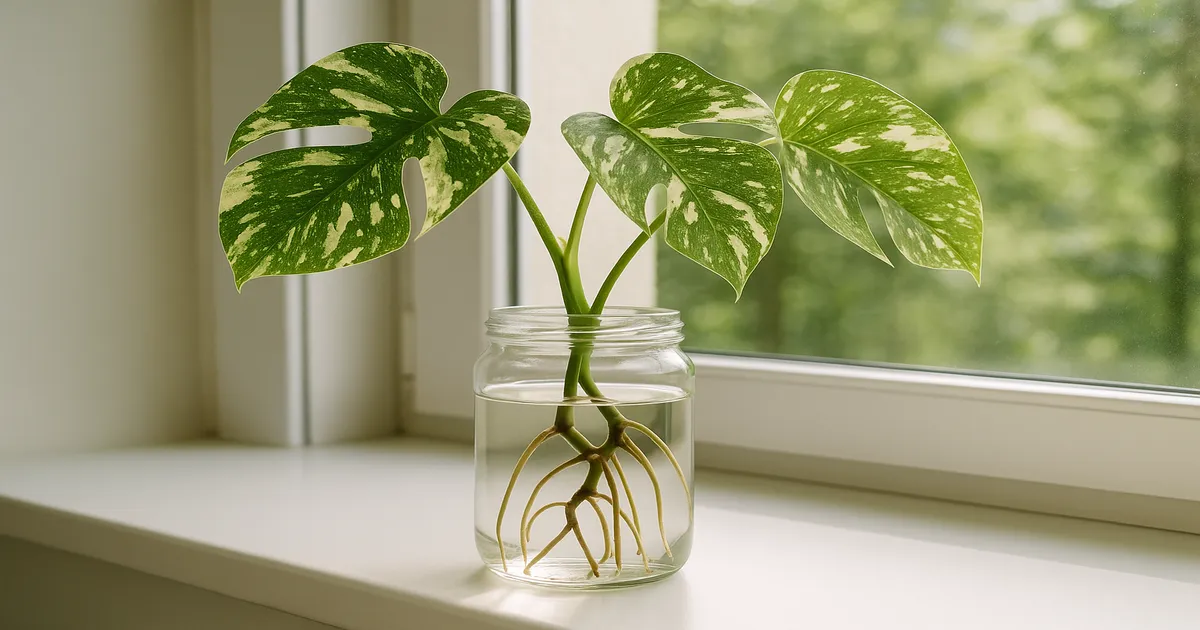
Quick Answer: To re-grow healthy roots on a Monstera Thai Constellation after root rot, unpot the plant, wash away all old soil, and cut every rotted root back to firm white tissue. Soak the remaining roots in diluted hydrogen peroxide, dust cuts with cinnamon, let the ends callus for 30–60 minutes, then propagate in sphagnum moss or a chunky aroid mix at 70–80°F with 60–80% humidity. Expect 2–8 weeks for initial root emergence and 2–4 months for full establishment — Thai Constellations regenerate roots more slowly than green Monsteras, so patience is essential.
If you’re trying to re-grow and propagate healthy roots on a Monstera Thai Constellation after root rot and failing so far, you’re probably not doing it wrong — you’re underestimating how different this plant is from a standard Monstera deliciosa. The creamy variegation that makes it so desirable also makes recovery genuinely harder. Here’s exactly what to do, and why.
Why Propagating Healthy Roots on a Thai Constellation After Root Rot Is So Difficult
The white and cream sectors of Thai Constellation leaves contain no chlorophyll. They’re beautiful, but they’re photosynthetically inert. That means the plant runs on a fraction of the energy a fully green Monstera would have available for root regeneration. Callus formation is slower. Root initiation is slower. Everything takes longer.
Set realistic expectations: initial root emergence takes 2–8 weeks, and full establishment can take 2–4 months. That’s not failure — that’s just how this plant works.
The Most Common Reasons Previous Rescue Attempts Fail
- Not cutting back far enough. Even a small margin of infected tissue gives pathogens a foothold to recolonize.
- Reusing contaminated soil or pots. Old potting mix and unsterilized pots harbor Pythium spores that survive for months. Repotting into the same environment almost guarantees reinfection.
- Returning to the same conditions. Fresh soil won’t help if the plant goes back to low light, cold temperatures, or the same watering habits that caused the problem.
What Causes Root Rot in Monstera Thai Constellation
Overwatering and Anaerobic Soil
Chronically wet soil drives out oxygen, and roots need oxygen to function. Without it, they switch to anaerobic fermentation, producing ethanol and acetaldehyde — both toxic to root cells. This breakdown then attracts Pythium and Phytophthora, water molds that spread rapidly through saturated media.
Thai Constellation’s thick, fleshy roots compound the problem: they can look healthy on the outside while rotting internally. By the time you notice yellowing leaves, a wobbly stem, or foul-smelling soil, the damage is often extensive.
Wrong Soil Mix and Pot Size
Standard potting mixes hold far too much moisture for aroids. High peat content compacts over time, eliminating the air pockets roots depend on. Oversized pots are equally dangerous — when a small Thai Constellation sits in a pot much larger than its root ball, the surrounding soil stays wet for weeks because there aren’t enough roots to absorb it.
Low Light and Reduced Photosynthesis
Photosynthesis drives transpiration, which pulls water through the plant and out through the leaves. In low light, the whole system slows and soil stays wet far longer than expected. For a Thai Constellation — already energy-limited due to its variegation — even moderate light reduction can tip the balance toward rot. If your plant sits more than a few feet from a window, that alone may be causing recurring problems.
Cold Temperatures
Below 60°F (15°C), root metabolism slows and the plant’s natural defenses weaken. Cold, wet soil is the ideal environment for Pythium and Phytophthora. Windowsill placement in winter is a common culprit — even when room temperature seems fine, the root zone can be significantly colder.
Step 1 — Emergency Triage: Remove All Rot
Unpot, Wash, and Inspect
Remove the plant from its pot and shake off as much old soil as possible. Wash the entire root system under lukewarm running water until no old medium remains — any contaminated soil left clinging to roots can reintroduce pathogens. This is messy, but thoroughness here is everything.
What you’re looking for:
- Healthy roots: White to pale tan, firm, slightly waxy — keep all of these
- Borderline roots: Light tan, slightly soft but not mushy — trim the tips and monitor
- Rotted roots: Dark brown to black, mushy, hollow, foul-smelling — remove every single one
If a root looks borderline, squeeze it gently. If it collapses or feels hollow, cut it off.
How Far Back to Cut
Cut generously — always a little past where you think the infection ends. Then inspect the stem base. Slice a thin cross-section: healthy tissue will be white and firm. If you see brown discoloration in the center, keep cutting upward until you reach clean white tissue. A rotted crown that isn’t fully removed will undo everything else.
Sterilize your scissors or pruning shears with 70% isopropyl alcohol between every single cut. Pathogens transfer on blades, and one contaminated cut can spread rot to healthy tissue you just exposed.
Step 2 — Treat Cuts and Prevent Reinfection
Hydrogen Peroxide Soak
Mix 3% hydrogen peroxide with water in a 1:4 ratio and submerge the remaining roots for 5–10 minutes. The oxidizing action kills anaerobic pathogens — Pythium and Phytophthora in particular — and temporarily oxygenates the tissue. Note that H₂O₂ also kills beneficial microbes, so follow up with a biological inoculant once the cutting is established.
Fungicide and Biocontrol Options
For severe infections, a copper-based fungicide drench provides additional protection against oomycetes. Once chemical treatments have dried, introduce beneficial organisms: Bacillus subtilis or Trichoderma spp. inoculants colonize the root zone and competitively suppress pathogenic fungi — a highly effective long-term strategy.
Cinnamon and the Callusing Step
Dust cut root ends and any stem wounds with plain cinnamon powder. The active compound, cinnamaldehyde, has genuine antifungal properties and works well as a natural sealant for fresh cuts.
After treating, set the plant somewhere warm and dry — out of direct sun — for 30–60 minutes before placing it in any rooting medium. This allows a thin protective callus to form over the exposed tissue, reducing the window for pathogen entry. It’s a small step that most people skip, and it makes a real difference.
Step 3 — How to Re-Grow Healthy Roots on a Monstera Thai Constellation
Sphagnum Moss: The Best Option for Aroids
Long-fiber sphagnum moss is the top choice for regrowing roots on aroids. It holds moisture while maintaining excellent airflow, and it’s naturally antimicrobial — its slightly acidic pH (3.5–4.5) and the compound sphagnol actively suppress fungal growth. Moisten the moss until it feels like a wrung-out sponge, never dripping, wrap it around the node and cut end, and enclose in a clear humidity dome or plastic bag with a small ventilation gap. Look for a high-quality long-fiber variety for best results.
Bottom heat at 75°F (24°C) via a seedling heat mat significantly speeds root initiation — worth using if your home runs cool.
Water Propagation
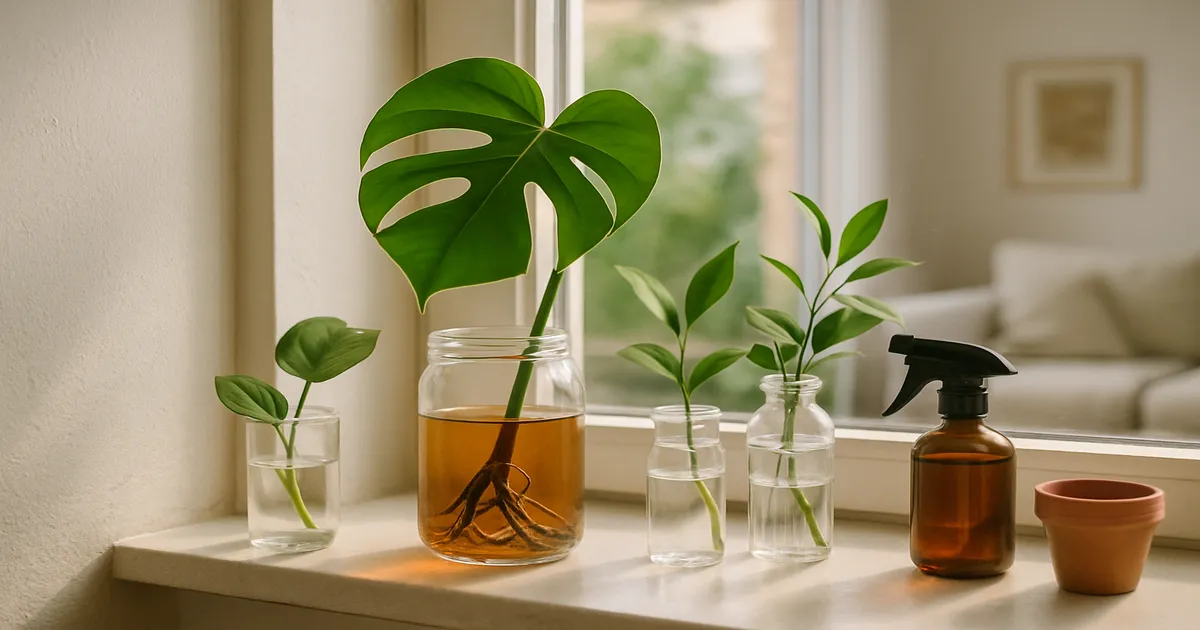
Water propagation works but requires discipline. Change the water every 3–5 days — stagnant water turns anaerobic quickly. Add a few drops of 3% hydrogen peroxide per liter to keep it oxygenated. When roots appear, transition gradually by mixing small amounts of aroid mix into the water container over 1–2 weeks before potting up. Water-grown roots have a different anatomy than soil roots, so rushing the transition causes setbacks.
Chunky Aroid Mix
Propagating directly in your final aroid mix eliminates the water-to-soil transition entirely — roots develop already adapted to the medium. Keep the mix barely moist (mist rather than water) and use a clear nursery pot so you can check root development without disturbing the cutting.
LECA and Semi-Hydro
LECA creates a passive hydroponic reservoir where clay balls wick moisture upward via capillary action while maintaining constant airflow around the roots. Anaerobic conditions are essentially impossible. It’s the best long-term option for anyone who has repeatedly struggled with root rot, though roots grown in LECA will need acclimatization if you ever transition back to soil.
Rooting Hormone
Apply IBA (indole-3-butyric acid) rooting hormone gel to the cut end before placing in any medium. IBA is the most effective synthetic auxin for stimulating adventitious root formation. For a slow-rooting variegated aroid, it meaningfully shortens the vulnerable window before roots emerge.
Step 4 — The Right Soil Mix and Pot for Repotting
DIY Aroid Mix Formula
| Component | Proportion | Purpose |
|---|---|---|
| Orchid bark (medium grade) | 40% | Drainage, aeration, structure |
| Perlite | 20% | Drainage, prevents compaction |
| Coarse horticultural pumice | 20% | Aeration, pH stability |
| Worm castings | 10% | Slow-release nutrition, beneficial microbes |
| Coco coir | 10% | Minimal moisture retention |
Target pH: 5.5–6.5. Water should flow through this mix within 2–3 seconds of pouring. If it doesn’t, add more bark or perlite.
Pot Choice and Size
Terracotta pots are ideal during recovery — their porous walls allow moisture to evaporate from the sides, reducing anaerobic conditions at the root zone. Size the pot to fit the root ball with only a small margin of extra space. If the roots currently fit a 4-inch pot, don’t jump to a 6-inch. Drainage holes are mandatory.
Never reuse old potting mix from a plant that had root rot. If reusing bark, perlite, or pumice, sterilize first: bake at 250°F (121°C) for 30 minutes, or drench with diluted hydrogen peroxide and allow to dry completely.
Step 5 — Recovery Environment
Light: Bright indirect light at 1,500–3,000 foot-candles — typically 2–4 feet from a bright east- or west-facing window. Direct sun stresses a weakened plant. Below 200 foot-candles, photosynthesis stalls, and for an already energy-limited variegated plant, recovery can stop entirely.
Temperature: Keep the root zone at 70–80°F (21–27°C). Avoid cold windowsills, air conditioning vents, and drafty spots.
Humidity: Aim for 60–80% relative humidity. High humidity reduces transpiration demand on a plant with no root system to pull water from, preventing leaves from desiccating before new roots establish. Always leave some airflow — sealed, stagnant air promotes foliar fungal issues.
Watering: Don’t water on a schedule. Wait until the top 2 inches of mix are completely dry, then water thoroughly and let the pot drain fully. Never let it sit in standing water.
Fertilizing: Hold off entirely until you can see new root growth and the plant is producing new leaves. Fertilizing a plant with a damaged root system causes fertilizer burn on the vulnerable new roots. Once active growth resumes, start at quarter-strength with a balanced liquid fertilizer and build up gradually.
Long-Term Prevention
The single most effective prevention strategy is checking soil moisture before every watering rather than following a calendar. A watering schedule ignores the fact that your plant’s needs change with the seasons, the weather, and its growth stage. In winter, a Thai Constellation may need water half as often as in summer — lower light means less photosynthesis, less transpiration, and much slower water uptake. This is when most root rot cases develop.
For long-term root zone health, incorporate worm castings into your mix and consider periodic applications of Bacillus subtilis or mycorrhizal inoculants. These organisms occupy the root zone and competitively exclude harmful pathogens — a living biological barrier that chemical fungicides can’t replicate over time.
Repot every 1–2 years, or when roots are visibly circling the bottom of the pot or emerging from drainage holes. Always size up by just 1–2 inches in diameter.
Frequently Asked Questions
Can a Monstera Thai Constellation survive with no roots at all?
Yes — if a healthy node and a section of firm, green stem are present, the plant can survive and eventually produce new roots. The stem stores energy, and the node contains meristematic tissue capable of generating adventitious roots. Recovery will be slow, but it’s genuinely possible with the right conditions.
How long does it take to re-grow healthy roots on a Thai Constellation after root rot?
Expect initial root emergence in 2–8 weeks, with full establishment taking 2–4 months. This is significantly slower than a green Monstera deliciosa due to the reduced photosynthetic capacity of the variegated tissue. Warm temperatures (75–80°F), high humidity (60–80%), and bright indirect light all help shorten this window.
Should I cut the leaves off while regrowing roots?
Removing heavily damaged or yellowed leaves reduces the plant’s water loss and energy expenditure, which helps during recovery. However, don’t strip all leaves — any healthy green tissue is still photosynthesising and producing the energy needed for root regeneration. Keep at least one healthy leaf if possible.
How do I know if my Thai Constellation is recovering?
The first sign is usually new root tips appearing — white, firm, and slightly pointed. In sphagnum moss you can gently part the moss to check without disturbing the cutting. In a clear nursery pot you can see roots reaching the sides. New leaf growth is a strong secondary indicator, though it typically follows root development rather than preceding it.
Is it worth trying to save a Thai Constellation with severe root rot, or should I take a cutting instead?
If the stem and at least one node are healthy, taking a stem cutting is often the more reliable path. A cutting with a healthy node starts fresh, without the compromised vascular tissue that a heavily rotted plant carries. If the crown and stem are clean, saving the original plant is worthwhile — but when in doubt, propagate from the healthiest section rather than trying to rescue a severely damaged base.