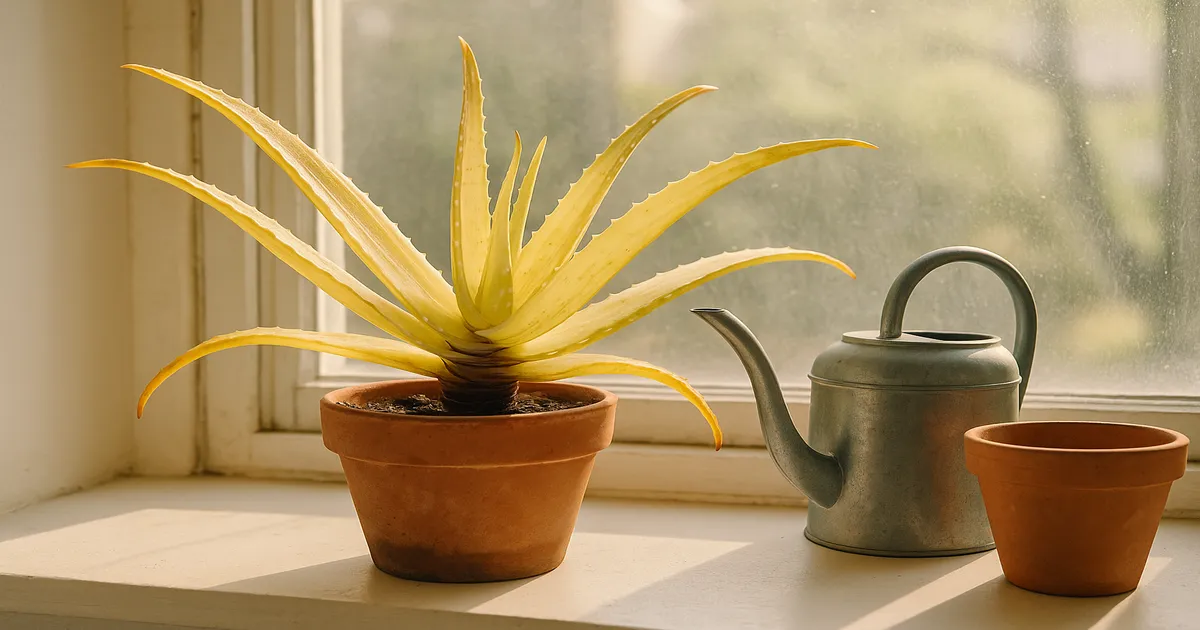
Quick Answer: Aloe vera most commonly dies from overwatering and the root rot that follows, but poor drainage, wrong light, and cold drafts are close runners-up. Match your plant’s symptoms to the table below, then follow the targeted fix — most aloe plants can be rescued if you catch the problem early enough.
If you’re staring at a mushy, shriveling, or strangely pale plant and asking why is my aloe vera dying, you’re in good company. Aloe is famously tough, which is exactly why its decline feels so baffling. The good news: nearly every cause on this list is fixable once you know what you’re looking at.
Why Is My Aloe Vera Dying? Start Here
Match Your Symptoms to the Cause
| Symptom | Most Likely Cause |
|---|---|
| Mushy, translucent leaves at the base; foul smell | Overwatering / root rot |
| Thin, puckered, papery leaves; dry brown tips | Underwatering |
| Leggy growth; pale color; rosette splaying open | Too little light |
| White or tan patches; papery scarring on leaves | Sunscald (too much direct sun) |
| Brown, mushy patches after a cold night | Cold damage |
| Sticky residue; visible bumps or white fluff | Pest infestation |
| Brown, crispy tips; white crust on soil surface | Over-fertilization / salt buildup |
| Orange-brown pustules on leaf surfaces | Fungal disease (aloe rust) |
Find your symptom, then jump to that section. If you’re seeing multiple symptoms at once, start with overwatering — it’s the most common trigger and often causes secondary problems.
Overwatering and Root Rot: The Number One Reason Aloe Vera Dies
Why Aloe Is So Vulnerable
Aloe vera uses CAM (Crassulacean Acid Metabolism) photosynthesis, opening its stomata only at night to conserve water. Its leaves store moisture — up to 96% water by weight — and its root system is shallow and fibrous, spreading laterally rather than diving deep. Waterlogged soil quickly turns anaerobic, and that oxygen-starved environment is where root rot pathogens (Pythium, Phytophthora, and Fusarium) thrive.
Signs of Root Rot
- Leaves at the base feel mushy, look translucent, or have turned brown
- The soil or plant base smells foul — almost sulfurous
- Roots are black or dark brown, slimy, and fall apart when touched
- Healthy roots, by contrast, are white to tan and firm
How to Save an Overwatered Aloe Vera
- Unpot immediately. Remove all soil from the root ball.
- Trim rotted roots with sterile scissors, cutting back to healthy, firm tissue.
- Treat the cuts with powdered cinnamon or sulfur — both have antifungal properties. A 1:1 mix of 3% hydrogen peroxide and water also works.
- Air-dry for 24–48 hours so cut ends can callous over.
- Repot into fresh, dry mix — 50–60% coarse perlite or pumice blended with 40–50% cactus/succulent potting mix, in a terra cotta pot with a drainage hole. A pre-blended gritty mix works well here.
- Wait one full week before watering to let the roots settle.
Going forward, water every 2–3 weeks in summer and once a month or less in winter.
Underwatering: When Drought Stress Goes Too Far
Symptoms of an Underwatered Aloe
Aloe can handle drought, but it has limits. When the plant depletes its internal water reserves, leaf cells lose turgor pressure — a process called plasmolysis — and the leaves literally deflate. Watch for:
- Leaves that feel flat, thin, or puckered rather than plump
- A dull gray-green color instead of vibrant green
- Dry, brown leaf tips
- The whole rosette drooping or leaning to one side
Underwatering vs. Overwatering: The Key Difference
Texture tells the story. Underwatered leaves are dry and thin — almost papery. Overwatered leaves are soft and mushy — they collapse when pressed. When in doubt, unpot and check the roots.
How to Rehydrate a Drought-Stressed Aloe
Give the plant a thorough soak-and-drain: pour water slowly until it runs freely from the drainage holes, let every drop drain, then put the pot back. Never let it sit in a saucer of standing water. Leaves should plump back up within one to two weeks.
Lighting Problems: Too Much or Too Little
Not Enough Light
Aloe vera needs bright indirect light to full sun — roughly 1,500–10,000 foot-candles. In low light, it etiolates: growth becomes leggy, color fades to pale green or yellow, and the tight rosette opens up and goes floppy.
Sunscald
Moving an indoor aloe directly into intense summer sun shocks the plant. Photooxidative damage bleaches chlorophyll faster than the plant can protect itself, leaving white, tan, or orange-brown patches and papery scarring. A reddish-brown color shift, however, is usually just a normal stress response to high light — not damage — and reverses when conditions normalize.
Finding the Right Spot
A south- or west-facing windowsill is ideal in the Northern Hemisphere. If natural light is limited, a full-spectrum grow light running at 6,500K for 12–14 hours a day does the job. When moving a plant to a brighter spot — especially outdoors in spring — do it gradually over 2–4 weeks to avoid sunscald.
Soil, Drainage, and Pot Problems
Why Standard Potting Mix Is Wrong for Aloe
In its native Arabian Peninsula habitat, aloe vera grows in rocky, fast-draining soil with a pH of 7.0–8.5. Standard houseplant potting mix is designed to retain moisture — the opposite of what aloe needs. It also compacts over time, cutting off the airflow roots depend on. Chronic poor drainage looks almost identical to overwatering, even if you’re watering infrequently.
Pot Material Matters
Terra cotta is the best choice. Its porous walls allow moisture and gas to move through, keeping the root zone from staying wet too long. Plastic and glazed ceramic trap moisture and offer no gas exchange — fine for moisture-loving tropicals, risky for aloe. Whatever material you choose, a drainage hole is non-negotiable.
Best Soil Mix for Aloe Vera
Blend 50–60% coarse perlite or pumice with 40–50% cactus/succulent potting mix. This replicates the fast-draining, gritty texture of aloe’s native soil. Replace the mix entirely every 2–3 years as organic matter breaks down and the blend compacts.
Temperature Extremes and Cold Damage
How Cold Hurts Aloe
Below 50°F (10°C), aloe’s metabolism slows significantly. Below 32°F (0°C), ice crystals form inside leaf cells and rupture the cell walls — damage that is irreversible. Cold-damaged leaves develop water-soaked, translucent patches, then turn brown or black from the tips inward. The texture turns mushy in a way that closely mimics overwatering, so cold damage is often misdiagnosed.
Heat Stress and Drafts
Cold drafts from AC vents or single-pane windows in winter are a surprisingly common hidden cause of aloe decline. On the other end, temperatures above 95°F (35°C) combined with low humidity cause leaf tip burn and rapid dehydration. Both extremes produce symptoms that look like other problems entirely.
Ideal Indoor Temperature
Keep your aloe between 60–80°F (15–27°C). In winter, move it away from cold glass and air vents. In summer, shield it from heat radiating off south-facing windows if temperatures climb into the high 90s.
Pests, Diseases, and Nutrient Issues
Common Aloe Pests
- Mealybugs: White, cottony clusters in leaf axils; sticky honeydew; sooty black mold
- Scale insects: Hard or soft brown bumps on leaf surfaces; plant slowly weakens
- Fungus gnats: Tiny flies around the soil; larvae damage roots in persistently wet soil
- Root mealybugs: Hidden around roots in the soil; often mistaken for a watering problem
- Aloe mites: Microscopic; cause warty, tumor-like growths at the growing tip (aloe wart disease)
Pest Treatments
| Pest | Treatment |
|---|---|
| Mealybugs | Dab with 70% isopropyl alcohol on a cotton swab; follow with neem oil spray |
| Scale insects | Scrape off manually; apply horticultural oil or neem oil |
| Fungus gnats | Let soil dry out; use yellow sticky traps; apply Bacillus thuringiensis israelensis (Bti) or beneficial nematodes |
| Root mealybugs | Unpot, wash roots, apply a neem oil soil drench or imidacloprid-based granules |
| Aloe mites | No reliable treatment; isolate immediately and consider discarding the plant |
Diseases
Root rot (Pythium, Phytophthora, Fusarium) is almost always triggered by overwatering — fix the watering and you fix most disease risk. Aloe rust appears as orange-brown pustules on leaf surfaces. Bacterial soft rot (Pectobacterium spp.) causes rapid, foul-smelling tissue collapse, often entering through wounds or insect damage. Remove affected tissue with sterile tools and improve air circulation.
Fertilizer: Too Much or Too Little
Aloe evolved in low-nutrient soils and doesn’t need much feeding. Deficiency symptoms:
- Nitrogen deficiency: Overall pale yellow-green color, slow growth
- Potassium deficiency: Brown leaf margins and tips
- Magnesium deficiency: Yellowing between leaf veins (interveinal chlorosis)
Over-fertilization causes brown, crispy tips and a white salt crust on the soil surface. Fix it by flushing the soil with plain water — three to four times the pot volume — to leach out excess salts, then withhold fertilizer for two to three months.
Feed with a diluted succulent fertilizer at an NPK ratio of 2-7-7 or 5-10-10, at half the recommended strength, once monthly in spring and summer only. (Schultz Cactus Plus 2-7-7 Liquid Plant Food)
How to Keep Your Aloe Vera Healthy Long-Term
Watering: The Soak-and-Drain Method
Water thoroughly and infrequently — never a little bit often. Push your finger 2 inches into the soil; if it’s still damp, wait. Water every 2–3 weeks in spring and summer, every 4–6 weeks in fall and winter. Use room-temperature water and, if you’re on tap water, let it sit overnight to off-gas chlorine. Fluoride and chlorine buildup can cause brown leaf tips that many people mistake for underwatering. A soil moisture meter removes the guesswork entirely.
Seasonal Adjustments
- Spring/Summer: Active growing season — water more frequently, fertilize monthly, maximize light
- Fall: Taper watering as growth slows; stop fertilizing
- Winter: Water once every 4–6 weeks, no fertilizer, keep away from cold windows and drafts
Repotting and Long-Term Health
Repot every 2–3 years in spring, moving up only 1–2 inches in pot diameter — oversized pots hold excess moisture and raise root rot risk. When you repot, you’ll likely find offsets (pups) at the base. Separate and pot them individually to reduce crowding and give you backup plants. Rotate the pot 90° every 2–4 weeks for even, upright growth, and keep indoor humidity between 30–50%.
Frequently Asked Questions
Can aloe vera recover from root rot?
Yes, if you catch it before the rot reaches the stem. Unpot the plant, trim all black or mushy roots back to healthy tissue, dust the cuts with cinnamon or sulfur, and let the plant air-dry for 24–48 hours before repotting into fresh, gritty mix. The earlier you act, the better the odds.
Why are my aloe vera leaves turning brown and soft?
Soft, brown leaves almost always point to overwatering or cold damage. Check the soil — if it’s been wet for more than a week, root rot is likely. If the plant was recently near a cold window or in a draft, cold injury is the culprit. Either way, hold off on watering until you’ve identified and fixed the root cause.
Why is my aloe vera dying even though I barely water it?
Infrequent watering doesn’t guarantee safety if the pot or soil drains poorly. Water can pool around the roots for days even after a single watering. Check that your pot has a drainage hole, that the soil is a gritty, fast-draining mix, and that the pot isn’t sitting in a saucer of standing water.
Why is my aloe vera turning yellow?
Yellowing is most often caused by overwatering, insufficient light, or nitrogen deficiency. Soft yellow leaves with wet soil means too much water. Pale yellow with leggy growth means not enough light. Overall pale yellow with slow growth and dry soil suggests a possible nutrient deficiency. Check watering and light first before reaching for fertilizer.
Should I cut off dead or damaged aloe vera leaves?
Yes. Remove dead, severely damaged, or fully rotted leaves at the base using clean, sterile scissors or a knife. This prevents disease from spreading and keeps the plant’s energy focused on healthy growth. Leave partially damaged leaves in place unless they’re more than half dead — the plant will often recover the rest on its own.