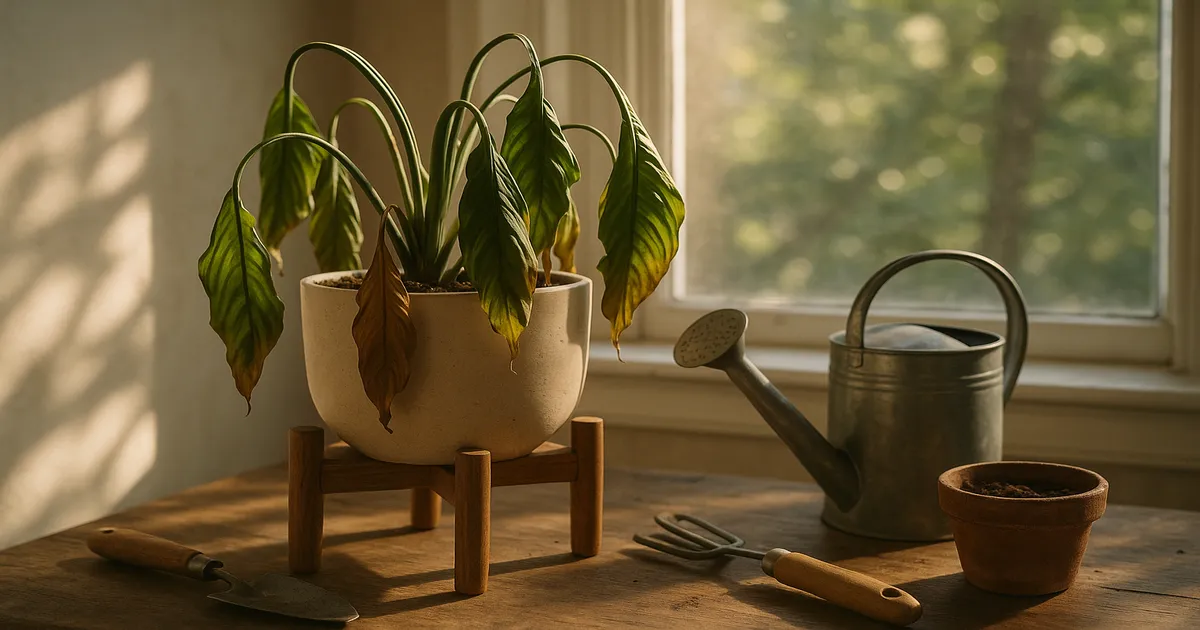
Quick Answer: Most houseplants die from overwatering, incorrect light, or temperature stress — often a combination of all three. Identify the most likely culprit using your plant’s specific symptoms, fix the root cause first, and the plant usually recovers with consistent aftercare.
If you’ve ever found yourself Googling “why is my plant dying?” at 11pm while staring at a drooping, yellowing mess, you’re in good company. Houseplant decline is almost always fixable — but only once you know what you’re actually dealing with. This guide walks you through every major cause, from soggy roots to sneaky pest infestations, so you can diagnose the problem and take action today.
Why Is My Plant Dying? The Most Common Culprits
Most houseplant decline traces back to one of these nine causes — and they often overlap:
- Overwatering — the single most common killer
- Incorrect light — too little or too much
- Temperature stress or cold drafts
- Underwatering or low humidity
- Pest infestations
- Root-bound pot or degraded soil
- Nutrient deficiency or fertilizer toxicity
- Root rot or fungal/bacterial disease
- Repotting shock
One stressor rarely acts alone. Waterlogged soil, for example, simultaneously starves roots of oxygen, kills beneficial microbes, invites fungal pathogens, and locks out nutrients — producing four different symptoms from a single mistake.
How to use this guide: Start at the top, since overwatering is the most likely culprit for most houseplants. Match your symptoms to each section, then apply the relevant fix. If your plant shows multiple symptoms, tackle the most urgent issue (root rot, active pests) before addressing secondary problems.
Overwatering: The Number One Reason Houseplants Die
What Overwatering Does to Roots
Healthy potting mix holds roughly 10–20% air in its pore spaces. Flood it consistently and that drops to near zero, creating anaerobic conditions. Without oxygen, root cells die within 24–48 hours in severe cases, and fungal pathogens like Pythium and Fusarium move in quickly to colonize the dead tissue.
Signs Your Plant Is Overwatered
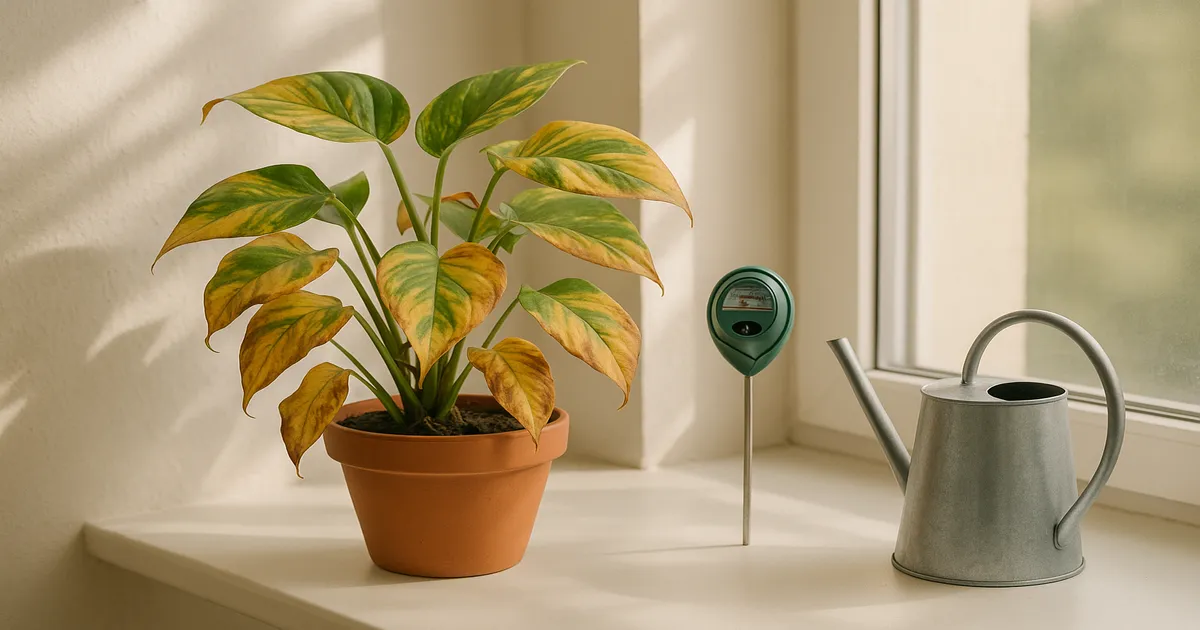
- Yellowing lower leaves, even when soil is wet
- Mushy, brown, or foul-smelling roots
- Wilting despite moist soil
- Soft or darkened stem base
- Fungus gnats hovering around the soil
Snake plants, ZZ plants, succulents, and cacti are especially vulnerable. They evolved in dry or seasonally dry environments and have almost no tolerance for sustained moisture.
How to Fix an Overwatered Plant
- Remove the plant from its pot and inspect the roots.
- Trim all black, mushy, or foul-smelling roots with sterilized scissors.
- Dust cut surfaces with powdered cinnamon or sulfur — both have antifungal properties.
- Repot into fresh, well-draining mix containing 20–30% perlite. A quality indoor blend like Fox Farm Ocean Forest works well for most tropicals.
- Use a terracotta pot with drainage holes — the porous walls wick away excess moisture.
- Apply a soil drench containing Bacillus subtilis to suppress pathogen regrowth.
- Going forward, water only when the top 1–2 inches of soil feel dry to the touch.
Incorrect Light: Too Much or Too Little
What Happens in Low Light
Every plant has a light compensation point — the minimum intensity at which photosynthesis matches respiration. Drop below it and the plant consumes more energy than it produces, slowly starving. You’ll see etiolation (long, weak stems reaching toward the light), pale or yellowing leaves, and leaf drop with no new growth to replace what’s lost.
What Happens in Too Much Direct Sun
Excess direct sun triggers photooxidation, which bleaches chlorophyll and damages leaf tissue. Stomata close to prevent water loss, halting gas exchange and effectively pausing photosynthesis. Look for bleached or tan patches on upper leaf surfaces, crispy edges, and midday wilting.
Light Requirements by Plant Type
| Light Level | Range | Example Plants |
|---|---|---|
| Low light | 50–250 foot-candles | Cast iron plant, ZZ plant |
| Medium indirect | 250–1,000 foot-candles | Pothos, Peace lily |
| Bright indirect | 1,500–3,000 foot-candles | Monstera, Fiddle-leaf fig |
| Full/direct sun | 3,000–10,000+ foot-candles | Cacti, succulents, herbs |
Use the plain-English descriptions (“bright indirect light”) as your primary guide and treat foot-candle figures as a useful reference, not a target to obsess over. A free lux meter app on your phone gives a reasonable ballpark reading.
How to Fix a Light Problem
- Too little: Move the plant to a south- or east-facing window, or supplement with a full-spectrum LED grow light set to 5,000–6,500K for foliage plants, running 12–16 hours daily. The Barrina T5 Full Spectrum Grow Light is a reliable and affordable option.
- Too much: Pull the plant back from the window or filter harsh midday sun with a sheer curtain. Increase light exposure gradually — add an hour or two per week — to avoid shock.
Temperature Stress and Cold Drafts
Most tropical houseplants suffer membrane damage below 50–55°F (10–13°C). Cell membranes lose fluidity, ion transport breaks down, and enzyme activity slows. Frost damage is worse — ice crystals physically rupture cell walls, and that destruction is irreversible. At the other extreme, temperatures above 95°F (35°C) cause enzymes to denature and stomata to close. This is rare indoors but can happen near south-facing glass in summer.
Cold air blowing on foliage — even above the chilling threshold — causes localized damage. Ficus benjamina is notoriously sensitive, dropping leaves overnight when placed near a drafty window or air conditioning vent.
How to Protect Your Plant from Temperature Extremes
- Keep plants away from A/C vents, heating ducts, exterior doors, and drafty single-pane windows.
- Maintain indoor temperatures between 65–85°F (18–29°C).
- Place a min/max thermometer near your plants to catch overnight dips you’d otherwise miss. The ThermoPro TP53 is inexpensive and accurate.
- If cold damage has already occurred, trim dead tissue and hold off on fertilizer until the plant shows new growth.
Underwatering and Low Humidity
Drought Stress vs. Low Humidity
When soil dries out too much, plants can’t generate enough turgor pressure to keep cells firm. Guard cells lose pressure and close the stomata, halting photosynthesis. Prolonged drought can cross the permanent wilting point — cell membranes are damaged and won’t recover even when water returns.
Low humidity is a subtler problem. Most homes sit at 30–50% relative humidity, which is survivable for tough plants like Pothos and Snake plants but chronically stressful for humidity-lovers. When humidity is low, moisture is pulled out of leaves faster than roots can replace it.
Humidity targets:
- 30–50% RH: Pothos, Snake plant, ZZ plant
- 50–60% RH: Monstera, Ficus
- 60–80% RH: Calathea, ferns, orchids
Telling the Two Apart
Underwatering shows up as dry, crispy edges on older leaves first, soil pulling away from the pot edges, and a noticeably lightweight pot. Low humidity tends to cause brown tips specifically — especially on Calathea, Dracaena, and Spider plants — while the rest of the leaf stays green.
How to Rehydrate a Dry Plant and Boost Humidity
- If soil has become hydrophobic (water runs straight through), use bottom watering: set the pot in a tray of water for 20–30 minutes until the soil rehydrates from below.
- A cool-mist ultrasonic humidifier is the most effective solution for low humidity. The Levoit Classic 300S is a popular choice that covers most room sizes.
- Grouping plants together raises local humidity naturally through transpiration.
- A pebble tray with water works as a passive supplement — just make sure the pot sits above the waterline, not in it.
- Misting leaves provides only a momentary bump and can encourage fungal disease. It’s not a reliable fix.
Pest Infestations: Identifying and Eliminating Common Bugs
The Most Common Houseplant Pests
- Spider mites pierce individual cells and extract the contents, leaving stippled, bronzed foliage and fine webbing on leaf undersides. They thrive in hot, dry conditions and can double their population in five days at 80°F.
- Fungus gnat larvae feed on root hairs and organic matter in moist soil, stunting growth and opening wounds for pathogens. Their presence usually signals overwatering.
- Mealybugs appear as white cottony clusters in leaf axils; they suck sap and excrete honeydew that leads to sooty mold.
- Scale insects look like brown or tan bumps on stems and leaves; they extract phloem sap and cause yellowing and dieback.
- Thrips rasp leaf surfaces, causing silvery streaking, and can carry plant viruses.
How to Treat a Pest Infestation
- Isolate the affected plant immediately — pests spread fast.
- Rinse the entire plant under the shower or sink to physically remove as many insects as possible.
- Apply a 2–3% insecticidal soap solution or neem oil (clarified hydrophobic extract, 0.9–3%) to all leaf surfaces, including undersides. Bonide Insecticidal Soap Concentrate is a reliable ready-to-dilute option.
- Repeat every 5–7 days for 3–4 treatment cycles to break the egg-to-adult lifecycle.
- For fungus gnats, let the top 2 inches of soil dry out completely between waterings and apply a Bacillus thuringiensis var. israelensis (BTi) soil drench to target larvae.
Root-Bound Pots, Poor Soil, and Nutrient Problems
When Your Plant Has Outgrown Its Pot
When roots fill every cubic inch of the pot, they start circling and compressing. Water uptake becomes inefficient, the pot dries out within hours, and nutrient access shrinks. Visible signs include roots emerging from drainage holes, circling the soil surface, or the pot visibly bulging.
How Soil Breaks Down Over Time
Potting mix has a functional lifespan of roughly 12–18 months in active use. Peat and coir particles compress, bark chips decompose, and the structure becomes dense and poorly draining. Old mix also tends to become hydrophobic when dry — water beads on the surface instead of soaking in.
Reading Nutrient Deficiency Symptoms
The location of symptoms is the key diagnostic clue:
- Nitrogen: Old leaves yellow first (nitrogen is mobile — the plant pulls it toward new growth)
- Phosphorus: Purple or reddish undersides; poor root development
- Potassium: Brown, scorched edges on leaf margins
- Iron: Interveinal chlorosis on new growth (veins stay green, tissue between turns yellow) — often caused by high soil pH rather than actual iron shortage
- Magnesium: Interveinal chlorosis on older leaves
- Calcium: Distorted, cupped new growth; tip burn
Fertilizer Salt Toxicity
Over-fertilizing deposits soluble salts in the soil, creating osmotic stress — roots struggle to absorb water even when soil is moist. White crusty deposits on the soil surface or pot exterior are a warning sign. Fix it by flushing the soil thoroughly with water several times until it runs clear from the drainage holes.
Root Rot, Fungal Disease, and Repotting Shock
Diagnosing and Treating Root Rot
Healthy roots are white or tan and firm. Root rot — caused by Phytophthora, Pythium, Fusarium, or Rhizoctonia — turns them brown, black, mushy, and foul-smelling. The plant wilts despite moist soil because damaged roots can no longer transport water upward. Treatment mirrors the overwatering fix: unpot, trim, treat cut surfaces, and repot in fresh well-draining mix.
Common Fungal and Bacterial Diseases
- Bacterial soft rot (Erwinia spp.): Enzymes dissolve cell walls, causing rapid mushy collapse with a foul odor. Remove affected tissue aggressively and improve air circulation.
- Powdery mildew: White, powdery coating on leaf surfaces — a sign of poor air circulation and fluctuating humidity. Improve ventilation and reduce leaf wetness.
- Botrytis (gray mold): Fuzzy gray mold in cool, humid, stagnant conditions. Remove affected parts and improve airflow immediately.
Repotting Shock
Repotting disturbs the rhizosphere microbiome — the beneficial bacteria and mycorrhizal fungi that support root function. The plant temporarily loses water-uptake efficiency, causing wilting and leaf drop in the days or weeks following the move. This is normal and usually self-resolving. To minimize it: avoid removing more than 30% of the root mass, don’t upsize the pot by more than 2 inches in diameter, and hold off on fertilizer until you see new growth.
How to Keep Your Plant Healthy Long-Term
Build a Watering Routine That Fits Your Plant
There’s no universal watering schedule. A Snake plant in a terracotta pot in summer needs water far less often than a Peace lily in a plastic nursery pot in winter. Use the finger test every time: water when the top 1–2 inches of soil are dry for most tropicals, and only when the soil is completely dry for succulents and cacti.
Match the Environment to the Plant’s Origin
Research your plant’s native biome — it’s the most reliable care baseline you’ll find. A Monstera from a Mexican rainforest wants bright indirect light, warmth, and 50–60% humidity. A cactus from the Sonoran Desert wants full sun and near-desert dryness. Get the environment right and most problems solve themselves.
Inspect Plants Regularly
Check your plants monthly. Flip leaves over to look for pests, inspect the soil surface for gnats or mold, and notice any changes in leaf color or posture. Early intervention is always easier than emergency rescue.
Repot at the Right Time with the Right Soil
Repot only when the plant is genuinely root-bound. Move up just one pot size — 2 inches larger in diameter. Refresh potting mix every 12–18 months even if you’re not sizing up, to restore soil structure and nutrient availability. For succulents and cacti, choose a chunky, perlite-heavy mix; for tropical foliage plants, use a more moisture-retentive blend like Espoma Organic Indoor Potting Mix.
Frequently Asked Questions
Why is my plant dying even though I water it regularly?
Regular watering is often the problem, not the solution. Most houseplants die from overwatering rather than neglect. If you’re watering on a fixed schedule regardless of soil moisture, you’re likely keeping the roots too wet. Switch to the finger test — water only when the top 1–2 inches of soil feel dry — and check the roots for rot if the plant is already declining.
How do I know if my plant is dying from overwatering or underwatering?
Check the soil and the roots. Overwatered plants have wet or damp soil, mushy roots, and yellowing lower leaves — the plant wilts even though water is present. Underwatered plants have bone-dry soil pulling away from the pot edges, a very lightweight pot, and crispy brown edges on older leaves. When in doubt, unpot the plant: firm white roots point to underwatering; brown, soft roots point to overwatering.
Can a dying plant be saved, or is it too late?
Most plants can be saved if at least some healthy root tissue remains and the cause of decline is addressed. Even a plant that has lost all its leaves can recover if the stem is still firm and green at the base. Act quickly — identify the stressor, fix it, and give the plant stable conditions to recover. If roots are 100% rotted and the stem is mushy to the soil line, survival is unlikely.
Why are my plant’s leaves turning yellow?
Location matters. Lower, older leaves yellowing first usually indicates overwatering or nitrogen deficiency. New growth yellowing with green veins suggests an iron or magnesium deficiency, often linked to high soil pH. Sudden mass leaf drop — especially in Ficus — is typically a response to temperature change, cold drafts, or being moved to a new location.
How often should I water my houseplant?
It depends on the species, pot type, soil mix, light level, and season — there’s no single correct answer. The most reliable method is the finger test: push your finger 1–2 inches into the soil and water only when it feels dry at that depth for most tropicals. Succulents and cacti should be watered only when the soil is completely dry, which may mean once every two to four weeks in winter.