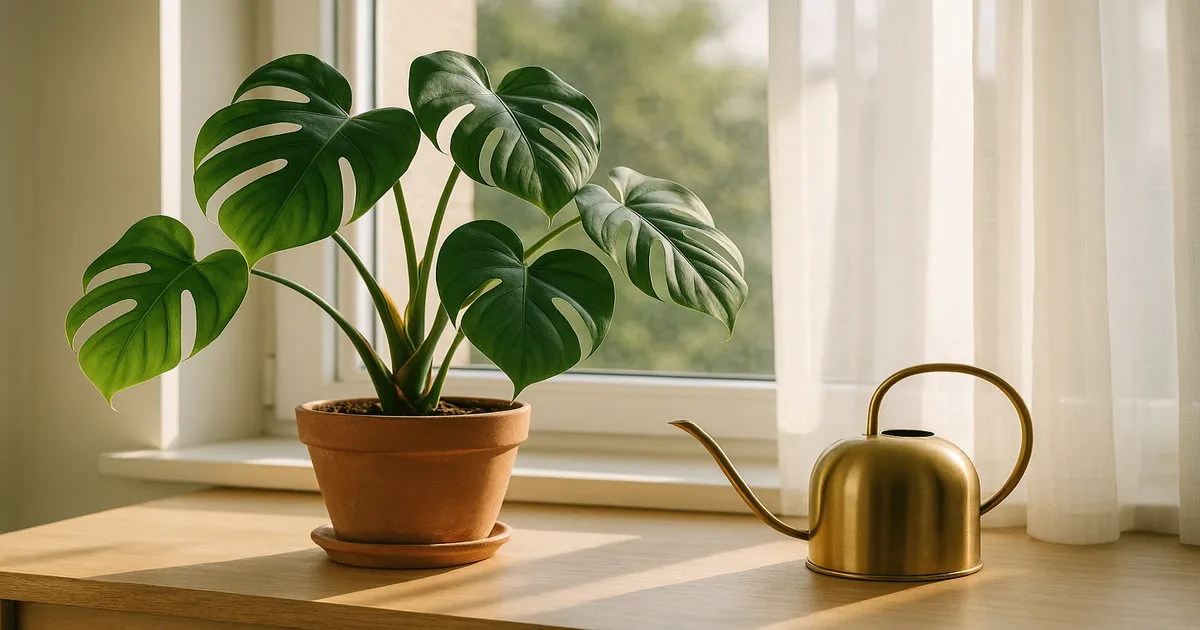
Quick Answer: That sad, drooping umbrella look means your Monstera has lost turgor pressure — the internal water pressure that keeps its big leaves held out flat and proud. The most common culprits are underwatering, overwatering with root rot, low light, and low humidity, but there are nine possible causes in total. Find the right one and your plant can bounce back surprisingly fast.
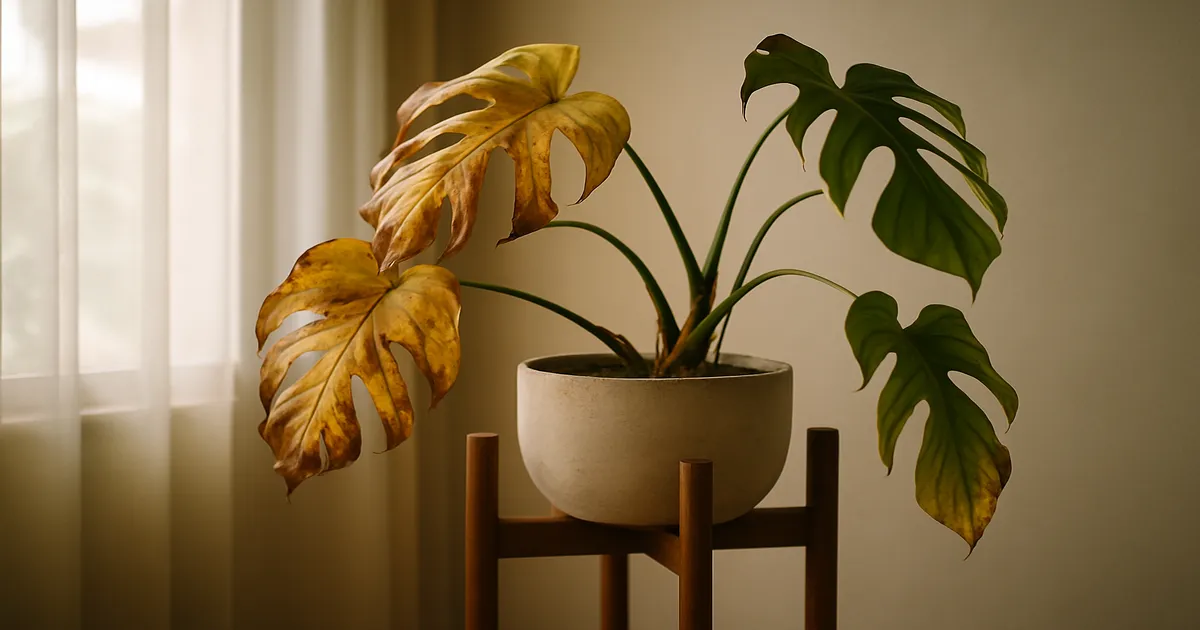
If you’ve ever walked past your Monstera and done a double-take because its leaves are hanging down like a soggy umbrella, you’re not alone. “Why is my Monstera leaf looking like a sad umbrella?” is one of the most searched Monstera questions out there, and for good reason. Those leaves are big, dramatic, and very expressive. When something’s off, they show it.
The good news: drooping is almost always fixable once you know what you’re dealing with.
Why Your Monstera Leaf Looks Like a Sad Umbrella
What “Sad Umbrella” Actually Means
A healthy Monstera leaf fans out horizontally, held up by a long, stiff petiole. When that leaf droops at the edges or goes completely limp, it’s mimicking a collapsed umbrella — and that posture is your plant’s way of waving a distress flag.
The nine most common causes are:
- Underwatering
- Overwatering / root rot
- Inadequate light
- Temperature stress or cold drafts
- Low humidity
- Pest infestation
- Root-bound pot
- Nutrient deficiency
- Transplant shock
The Science Behind the Droop: Turgor Pressure
Every leaf cell contains a vacuole — essentially a water-filled balloon. When that vacuole is full, the cell is firm and the leaf stands upright. When water is lost faster than the plant can replace it, the vacuoles shrink, pressure drops, and the leaf goes limp. This is called loss of turgor pressure.
Monstera leaves are especially vulnerable because they’re so large — up to 36 inches across on a mature Monstera deliciosa — so even a small drop in turgor pressure becomes immediately visible.
Is It Normal? New Leaves vs. Problem Drooping
New Monstera leaves emerge wrapped in a papery sheath called a cataphyll. As the leaf unfurls, it can look floppy and pale for one to two weeks while the cell walls harden. This is completely normal — resist the urge to panic or overwater.
Here’s a simple way to tell the difference:
- Probably normal: Only the newest leaf is drooping, the rest of the plant looks healthy, and the leaf emerged within the last two weeks.
- Something’s wrong: Multiple leaves droop at once, drooping is paired with yellowing or crispy edges, or the soil is bone dry / soaking wet.
If it’s the latter, keep reading.
The 9 Reasons Your Monstera Leaf Is Drooping (and How to Fix Each One)
1. Underwatering — The Most Common Culprit
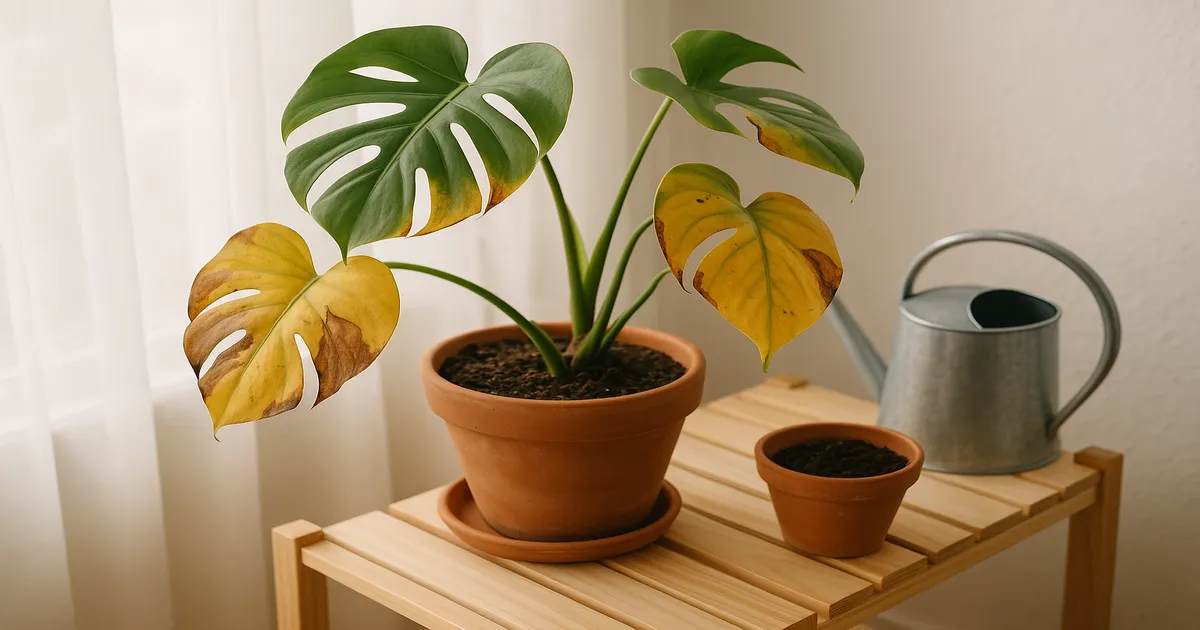
When soil gets too dry, the plant’s cells lose water faster than the roots can replace it. The petiole — which relies on internal hydraulic pressure — goes limp. Signs to look for:
- Soil is dry more than 2 inches below the surface
- The pot feels unusually light
- Leaf edges are crispy and brown
- The whole plant droops, not just one leaf
Fix: Use the soak-and-drain method. Set the pot in a bucket of room-temperature water for 20–30 minutes so the soil fully rehydrates, then let it drain completely. Going forward, check soil moisture with your finger or a moisture meter before every watering rather than sticking to a fixed schedule. Water when the top 2 inches are dry.
2. Overwatering and Root Rot — Drooping Despite Wet Soil
This one trips people up. If the soil is wet but the leaves still droop, overwatering and root rot are the likely culprits. Waterlogged soil creates anaerobic conditions that allow pathogens like Phytophthora and Pythium to destroy root tissue. Without healthy roots, the plant can’t absorb water even when it’s sitting in it — sometimes called physiological drought.
Signs:
- Soil is soggy but leaves droop anyway
- Yellowing, especially on lower leaves
- Musty or sour smell from the soil
- Roots are brown, black, or mushy when inspected
Fix: Unpot the plant and remove all brown, mushy root tissue with sterilized scissors. Treat remaining roots with a solution of 3% hydrogen peroxide diluted 1:4 with water, or a copper-based fungicide. Repot into a fresh, well-draining mix — a 2:1:2 ratio of orchid bark, perlite, and quality potting mix works well. (Fox Farm Ocean Forest) Wait 24–48 hours before watering again to let cut ends callous.
3. Inadequate Light — Weak Petioles Can’t Hold Big Leaves
In low light, Monstera produces less of the sugars that fuel strong cell growth. Over time, petioles weaken and can’t support large leaf blades. The plant also stretches toward whatever light it can find, producing leggy growth with small, fenestration-free leaves.
Monstera needs bright indirect light — roughly 1,500–3,000 foot-candles — to thrive. Variegated cultivars like Thai Constellation and Albo Variegata are especially demanding because their white patches contain no chlorophyll.
Fix: Move the plant to within 3–5 feet of a large east-facing window, or use a sheer curtain to filter direct sun from a south- or west-facing window. If natural light genuinely isn’t an option, a full-spectrum LED grow light positioned 12–18 inches above the plant, running 12–14 hours a day, will do the job.
4. Temperature Stress and Cold Drafts
Monstera is a tropical plant. Temperatures below 50°F (10°C) — even briefly — disrupt the protein channels (aquaporins) that move water through cells, causing rapid drooping and sometimes dark, water-soaked patches on leaves. The optimal range is 65–85°F (18–29°C).
Watch out for air conditioning vents, drafty single-pane windows, and exterior doors in winter. Damage can appear within hours of cold exposure.
Fix: Move the plant at least 3–4 feet away from any drafts or vents. If leaves show cold-damage patches, wait one to two weeks before pruning — the full extent of damage takes time to reveal itself.
5. Low Humidity — Too Much Water Lost Through Leaves
In low humidity, water evaporates rapidly through the stomata. When that loss outpaces what the roots can supply, turgor pressure drops. Aim for 60%+ relative humidity — most homes run 30–50%, dropping even lower in winter when heating systems run constantly.
Signs: drooping combined with crispy brown tips and edges, symptoms that worsen in winter.
Fix: A cool-mist ultrasonic humidifier placed near the plant is the most effective solution. A pebble tray with water helps slightly at the very local level, and grouping plants together raises humidity through collective transpiration.
Don’t mist. It feels intuitive but doesn’t meaningfully raise ambient humidity, and moisture sitting on leaves promotes fungal diseases like Botrytis and bacterial leaf spot.
6. Pest Infestation — Small Bugs, Big Problems
Pests cause drooping in different ways:
- Spider mites pierce cells and extract their contents, reducing the plant’s ability to hold water.
- Fungus gnat larvae eat fine root hairs, cutting off water absorption.
- Scale and mealybugs extract sap and disrupt vascular flow.
- Thrips rasp leaf surfaces, reducing photosynthetic capacity.
Look for webbing, sticky honeydew, sooty mold, stippling, or silvery streaking on leaves and stems.
Fix: Quarantine the plant immediately. Then treat by pest type:
- Spider mites: Shower the plant, then apply insecticidal soap or neem oil every 5–7 days for three to four weeks.
- Fungus gnat larvae: Let soil dry more between waterings; apply beneficial nematodes (Steinernema feltiae) to the soil.
- Scale: Remove manually with a cotton swab dipped in 70% isopropyl alcohol, then follow with horticultural oil.
- Mealybugs: Apply 70% isopropyl alcohol directly to colonies, then follow with neem oil or insecticidal soap.
- Thrips: Use a spinosad-based insecticide or insecticidal soap; blue sticky traps help monitor populations.
7. Root-Bound Pot — No Room Left to Drink
When roots fill a pot completely, they displace the soil and its water-holding capacity. The plant dries out within days of watering, and tightly circling roots can restrict vascular flow. Signs include roots growing out of drainage holes and a plant that wilts two to three days after watering.
Fix: Repot into a new container only 1–2 inches larger in diameter than the current one — going bigger invites overwatering. Gently tease apart any circling roots before placing in fresh mix. Spring is the ideal time, when the plant is entering active growth.
8. Nutrient Deficiency — A Secondary but Real Cause
Nutrient deficiency rarely droops a plant on its own, but it weakens cell walls and makes the plant more vulnerable. Nitrogen fuels overall growth; potassium regulates turgor directly through stomatal control; magnesium is the central atom of every chlorophyll molecule.
If your Monstera hasn’t been fertilized in six months or more, deficiency is worth considering — especially if drooping is paired with yellowing or brown leaf margins. Note that soil pH outside the optimal 6.0–6.5 range can lock out nutrients even when they’re present in the soil.
Fix: During the growing season (spring through early fall), feed every two to four weeks with a balanced liquid fertilizer. (Dyna-Gro Foliage Pro 9-3-6) Pause in winter when growth slows. If you suspect pH issues, test your soil and amend accordingly.
9. Transplant Shock — Temporary Wilt After Repotting
Repotting breaks fine root hairs — the tiny structures responsible for water absorption. Until new ones regenerate, the plant can’t drink efficiently, so it droops. This typically resolves within one to three weeks and isn’t cause for alarm as long as there are no other stressors.
Fix: Keep the plant in bright indirect light, avoid fertilizing for four to six weeks, and water conservatively. The plant will come around.
How to Diagnose Your Drooping Monstera in 5 Steps
- Check soil moisture first. Push your finger 2 inches into the soil. Dry = underwatering. Muddy with an off smell = overwatering.
- Lift the pot. Feather-light means bone dry. Heavy and musty means it’s time to inspect the roots.
- Assess light, temperature, and humidity. Use a hygrometer, a min/max thermometer, and a light meter app to confirm conditions actually match what your plant needs.
- Examine leaves and stems for pests. Check undersides of leaves and along petioles for webbing, sticky residue, stippling, or tiny insects.
- Review your recent care history. Did you repot recently? Has it been more than two months since you fertilized? Did the heating kick on for the first time this season? Sometimes the answer is hiding in plain sight.
Ongoing Care to Keep Monstera Leaves Upright
- Water by feel, not by schedule. Soil dries faster in summer, in terracotta pots, and in low humidity — and slower in winter and plastic pots. Check before every watering.
- Maintain the tropical triangle. Bright indirect light (1,500–3,000 foot-candles), 65–85°F (18–29°C), and 60%+ humidity. Compromise on one and the others have to compensate.
- Fertilize through the growing season. Feed every two to four weeks from spring through early fall, then stop for winter. Fertilizing a dormant plant causes salt buildup that stresses roots.
- Clean the leaves. Dust can block up to 30% of available light. Wipe leaves with a damp cloth every few weeks — it takes two minutes and makes a real difference, especially for variegated cultivars whose green sections have to work extra hard.
- Winter-proof your setup. Heating systems drop indoor humidity, cold drafts intensify near windows, and light levels fall. Check your hygrometer more often, move the plant away from cold glass, and consider a grow light if your days get very short.
Frequently Asked Questions
How long does it take for a drooping Monstera to recover after watering?
If underwatering is the only problem, you’ll typically see improvement within a few hours, with leaves returning to their normal position within 24–48 hours. If the soil had become severely hydrophobic, use the soak-and-drain method to make sure the roots actually absorb water. Recovery is slower if the plant was stressed over a long period.
Can a Monstera leaf recover its shape after drooping, or is the damage permanent?
In most cases, yes — leaves that drooped due to underwatering, low humidity, or temporary cold stress will bounce back fully once conditions improve. Leaves that suffered physical cell damage from severe cold, root rot, or prolonged pest infestation may remain distorted or develop brown patches. Those leaves won’t repair themselves, but healthy new growth will replace them over time.
My Monstera leaf is drooping but the soil is wet. What’s wrong?
Wet soil plus drooping leaves almost always points to root rot. Waterlogged roots can’t transport water to the leaves even when the soil is saturated — a condition called physiological drought. Unpot the plant, inspect the roots, and remove any brown or mushy tissue. Repot into a well-draining mix and adjust your watering habits going forward.
How often should I water my Monstera to prevent drooping?
There’s no universal schedule — it depends on pot size, pot material, humidity, light, and season. A reliable rule of thumb: water when the top 2 inches of soil are dry. In summer, that might be every 7–10 days; in winter, every 14–21 days. A moisture meter takes the guesswork out entirely.
Why is only one Monstera leaf drooping while the rest look fine?
A single drooping leaf usually points to a localized issue rather than a whole-plant problem. Check whether it’s a new leaf still unfurling (normal), whether that specific leaf has pest damage on its underside, or whether the petiole has been physically damaged or kinked. If the leaf is older and the rest of the plant is healthy, it may simply be at the end of its natural lifespan.