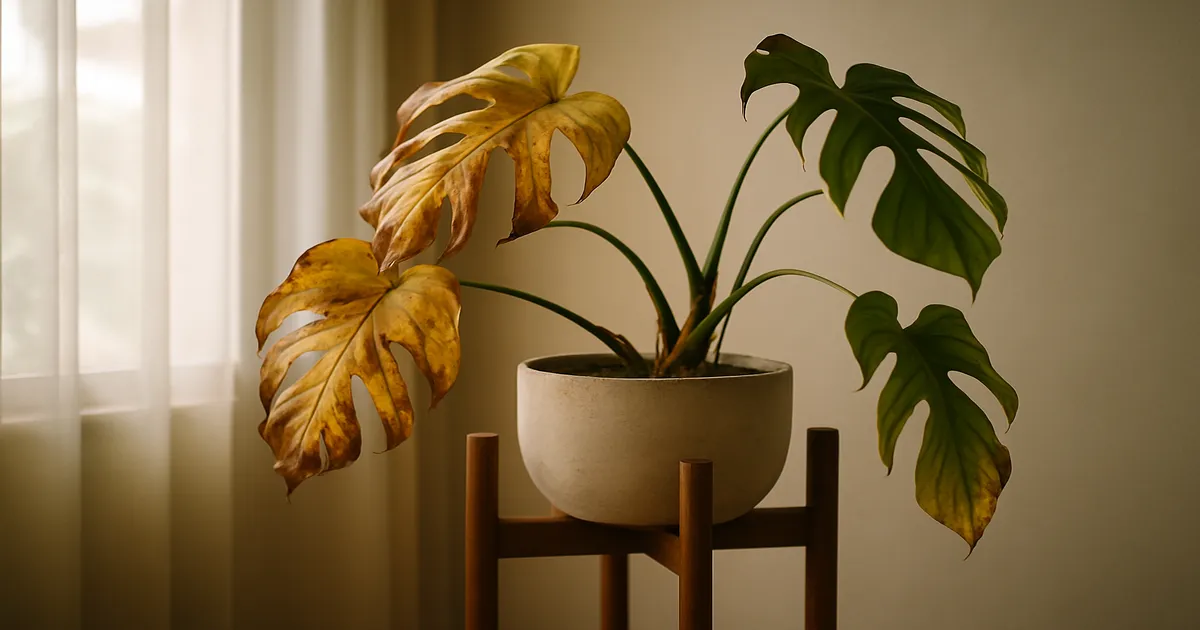
Quick Answer: What is happening to your Monstera almost always traces back to one of ten root causes: overwatering, underwatering, incorrect light, pests, nutrient deficiencies, temperature or humidity stress, root-bound conditions, poor soil, seasonal care mistakes, or variegation-specific challenges. Match your symptoms to the table below, jump to the relevant section, and follow the fix.
What Is Happening to My Monstera? Common Symptoms at a Glance
| Symptom | Most Likely Cause(s) |
|---|---|
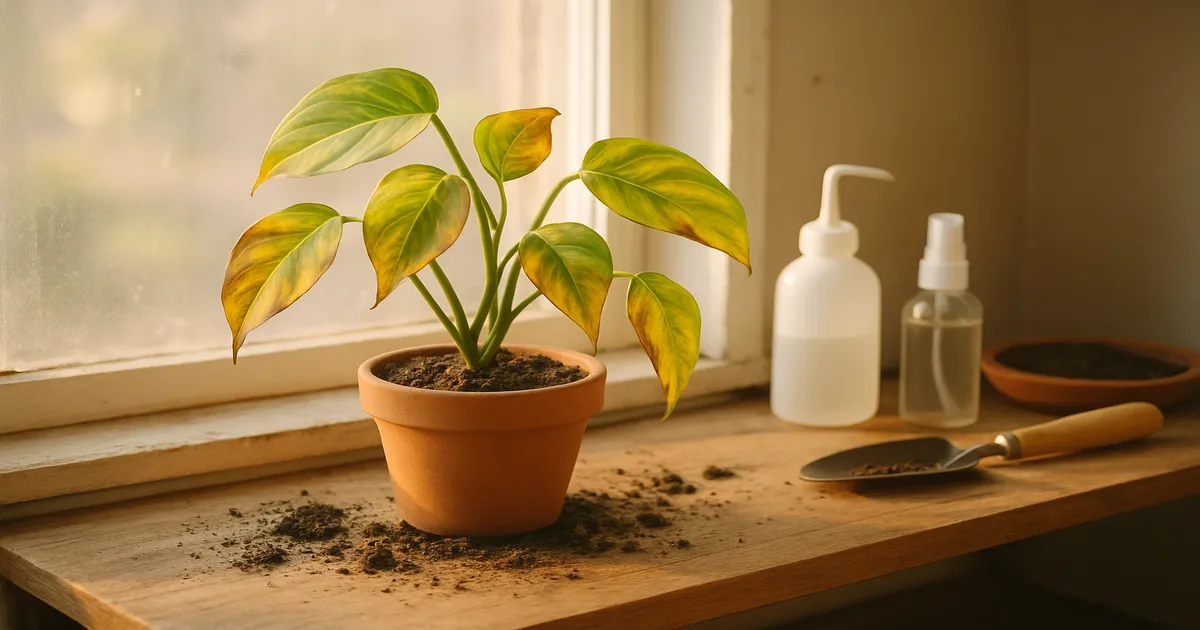
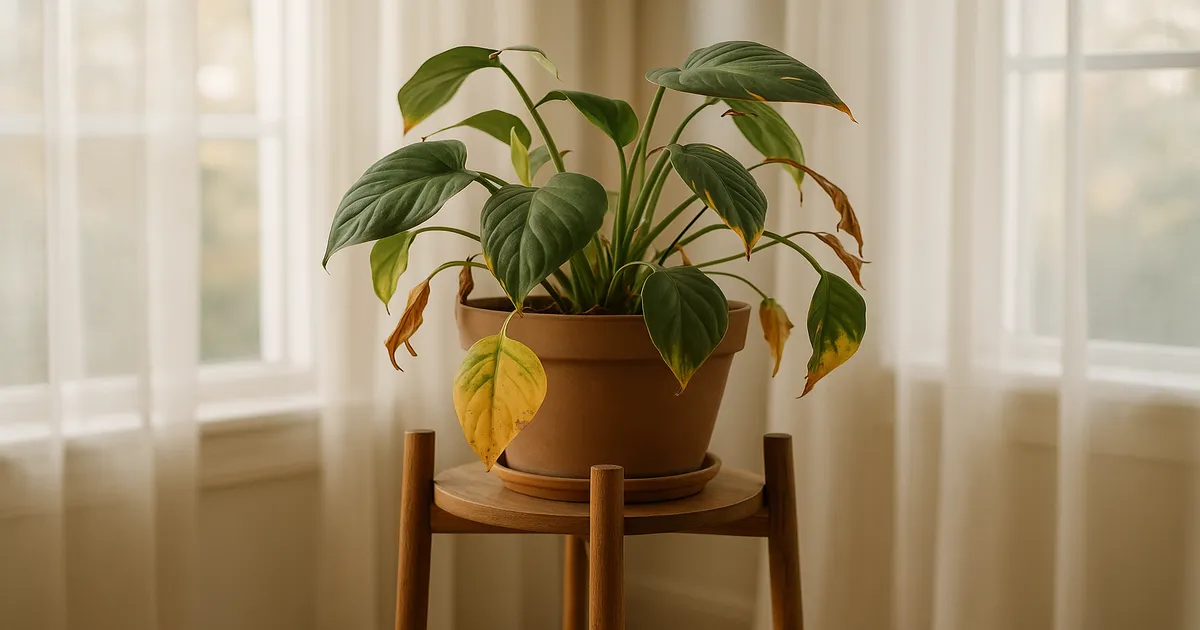
| Yellow leaves (lower, older) | Overwatering, nitrogen deficiency |
| Yellow leaves (new growth, veins green) | Iron or manganese deficiency, pH above 7.0 |
| Brown crispy tips and edges | Underwatering, low humidity, fertilizer burn |
| Soft drooping with wet soil | Overwatering or root rot |
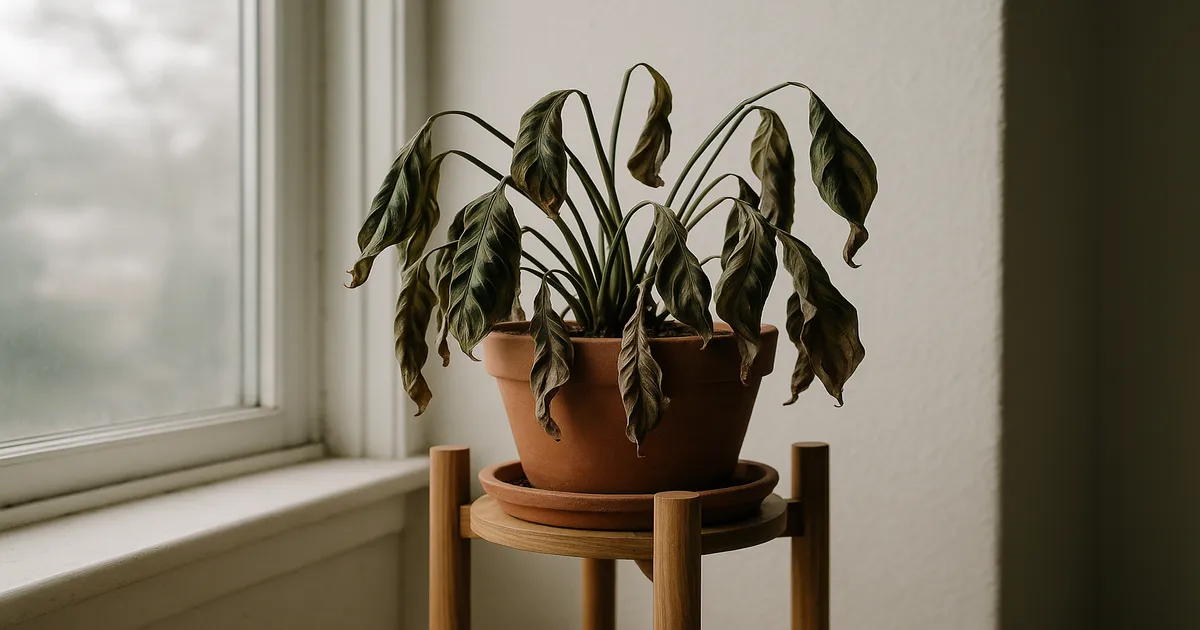
| Drooping with dry soil | Underwatering |
| Bleached silvery or tan patches | Too much direct sun |
| Small leaves, no holes, leggy stems | Low light |
| Distorted new leaves, silver streaks | Thrips |
| Stippled bronze speckling, fine webbing | Spider mites |
| Stunted growth, roots escaping pot | Root-bound |
Find your symptom above, then jump to the matching section. Each one explains why the problem happens and walks you through a clear fix. If you’re seeing multiple symptoms at once, start with the overwatering section — it’s the most common culprit and mimics several other problems.
Know Your Plant: Monstera Basics That Explain Its Behaviour
Species Overview
Monstera deliciosa is the classic Swiss Cheese Plant, native to the rainforest understory of southern Mexico and Central America. M. adansonii is smaller, with more pronounced oval holes. The Thai Constellation and Albo Variegata are variegated cultivars of M. deliciosa — they grow more slowly and need extra attention. Knowing which species you have matters. A Thai Constellation showing pale cream patches may be perfectly healthy, while the same look on a standard deliciosa signals a problem.
In nature, Monsteras are hemi-epiphytic climbers. They start on the forest floor and work their way toward the canopy. That explains their love of support structures, their aerial roots, and their tolerance for lower light — though “lower” in a rainforest still means brighter than most living rooms.
Why Fenestration Develops — or Doesn’t
Those iconic holes and splits don’t appear on young plants or on plants growing in low light. Fenestration develops as the plant matures and light levels increase. The leading theory is that holes help leaves capture dappled canopy light more efficiently while reducing wind resistance. If your Monstera is producing solid, uncut leaves, it’s either too young, not getting enough light, or both. That’s normal behaviour, not a disease.
Aerial Roots and Other Normal Features
Aerial roots growing from the nodes are completely healthy — they’re how Monstera climbs and absorbs atmospheric moisture in the wild. Don’t cut them off unless they’re truly in the way; tucking them into the soil is a better option. The geniculum — the swollen “knee” at the base of each petiole — allows leaves to pivot toward light. If leaves slowly reorient over a few days, that’s phototropism at work, not a problem.
Safety note: All Monstera species contain calcium oxalate crystals, which are toxic to cats, dogs, and humans if ingested. Keep them out of reach of pets and children.
Ideal Care Parameters
| Parameter | Ideal Range |
|---|---|
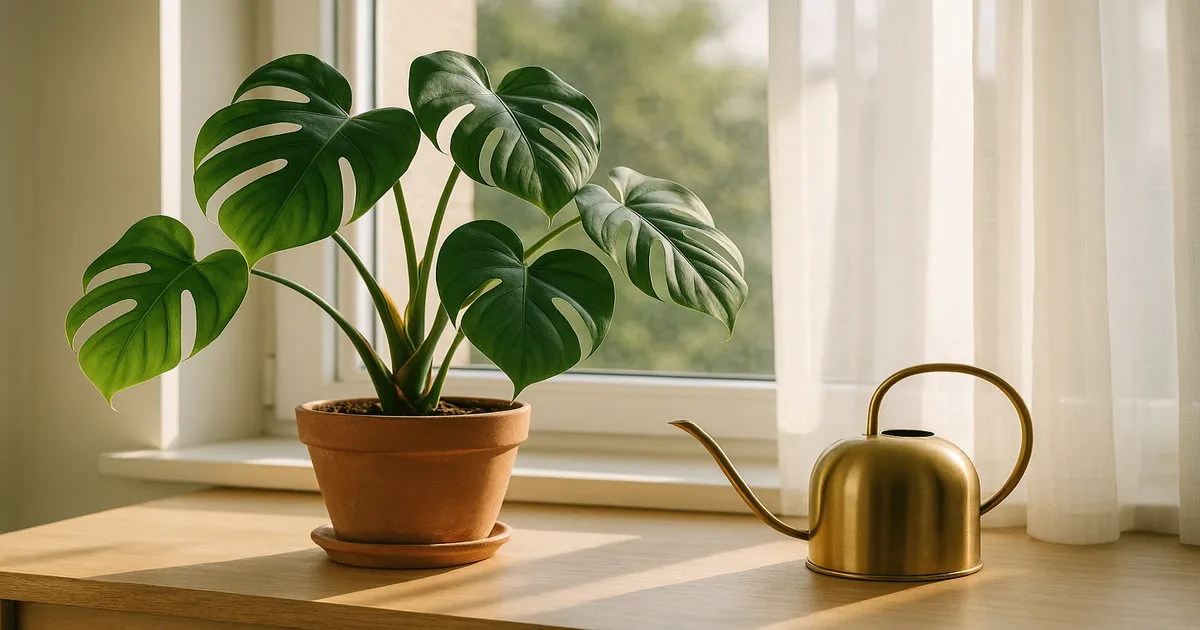
| Light | Bright indirect light (1,500–3,000 foot-candles) |
| Temperature | 65–85°F (18–29°C) |
| Humidity | 60–80% RH |
| Soil pH | 5.5–7.0 |
| Watering frequency | Every 7–14 days (soil-dependent) |
| Fertilizer | Balanced NPK every 2–4 weeks, growing season only |
Overwatering and Root Rot: The Number One Monstera Killer
How to Tell Overwatering from Other Problems
Overwatering is tricky because it looks a lot like underwatering at first — the plant droops, leaves yellow, and growth stalls. The key is soil moisture. If the soil is wet or even damp and the plant is still drooping, overwatering is almost certainly your answer.
Other tell-tale signs:
- Yellowing starts on lower, older leaves and spreads upward
- Leaves feel soft and limp rather than crispy
- Soil stays wet for more than 10–14 days
- A foul, sulfurous smell from the pot
- Fungus gnats hovering around the soil
What Root Rot Actually Does
Saturated soil drives out oxygen, creating anaerobic conditions that allow pathogens — primarily Phytophthora, Pythium, and Fusarium — to destroy root cell walls. Once roots are compromised, the plant can no longer take up water or nutrients, even though the soil is soaking wet. That’s why an overwatered Monstera wilts: it’s essentially dying of thirst in a flooded pot.
Step-by-Step Root Rot Recovery
- Unpot the plant and gently shake away the old soil.
- Inspect the roots — healthy roots are white to tan and firm; rotted roots are brown or black, mushy, and smell bad.
- Trim all damaged roots with sterilised scissors or pruning shears.
- Dust the cut ends with powdered cinnamon or sulfur as a natural antifungal.
- Air-dry the root ball for 30–60 minutes before repotting.
- Repot into fresh, well-draining aroid mix in a pot with drainage holes.
- Withhold water for 3–5 days to encourage new root growth.
- Apply a biological fungicide drench containing Bacillus subtilis to suppress remaining pathogens. (Serenade Garden Disease Control)
Choosing the Right Pot and Soil
Dense potting soil, pots without drainage holes, and oversized containers are the three biggest contributors to root rot. Choose a pot only 1–2 inches larger than the root ball — excess soil volume holds moisture the roots can’t use. A good aroid mix combines quality potting soil with perlite, orchid bark, and a small amount of worm castings. This structure keeps roots moist but never waterlogged.
Underwatering, Low Humidity, and Temperature Stress
Signs Your Monstera Is Thirsty
Underwatering produces crispy, dry brown edges and tips — not soft, yellowing leaves. The soil will be bone dry and often pulling away from the pot edges. Leaves curl inward to reduce surface area and slow water loss. The pot will feel noticeably light. These symptoms can overlap with low-humidity damage, so always check the soil first.
If the soil has become hydrophobic — water runs straight down the pot edges without soaking in — bottom-watering is your best tool. Place the pot in a basin of room-temperature water for 30–45 minutes and let the soil reabsorb moisture from below. For extremely stubborn soil, a single drop of unscented liquid dish soap breaks the surface tension. After rehydrating, consider repotting into fresh mix to prevent the problem recurring.
Cold Damage and Heat Stress
Monstera deliciosa begins showing chilling injury below 50°F (10°C). Cell membranes lose fluidity, and you’ll see dark, water-soaked patches that turn black — often on leaves nearest a cold window or air conditioning vent. Mushy, blackened petioles are a serious sign. Move the plant immediately to a warmer spot and remove damaged tissue. At the other extreme, temperatures above 90°F (32°C) cause wilting, scorched edges, and rapid soil drying.
Raising Humidity the Right Way
Below 40% relative humidity, the vapor pressure difference between the leaf interior and the dry air pulls moisture out faster than roots can replace it — causing those brown, crispy edges. Low humidity also makes your plant far more vulnerable to spider mites.
Effective solutions:
- A humidifier placed nearby is the most reliable option
- Grouping plants together raises local humidity through shared transpiration
- Pebble trays filled with water provide modest improvement
Misting alone is not enough. It raises humidity for minutes, not hours, and can promote fungal issues if done excessively.
Light Problems: Too Little or Too Much
Not Enough Light
Photosynthetic starvation is subtle at first. The plant stretches toward the light source, producing long, leggy stems with small, pale leaves that lack fenestration. Older leaves turn uniformly yellow and drop. In variegated cultivars, green tissue outcompetes white, causing reversion. Below roughly 200 foot-candles, growth essentially stops.
Too Much Direct Sun
Excess direct sun overwhelms the plant’s photoprotective systems, generating reactive oxygen species that bleach chlorophyll — a process called photooxidation. You’ll see bleached, silvery, or washed-out patches, or dry papery tan marks in the middle of the leaf blade rather than just at the edges. Unlike pest damage, sunburn doesn’t spread and won’t appear on leaves that were shaded during the incident.
Finding the Right Spot
Bright indirect light (1,500–3,000 foot-candles) is the target — typically 3–5 feet from an east- or west-facing window, or a south-facing window filtered through a sheer curtain. If your home is genuinely dark, a full-spectrum LED grow light on a 12–14 hour timer will do the job. When moving your plant to a significantly brighter spot, acclimate it gradually — increase exposure by 30 minutes per day over two weeks to avoid sunburn.
What Is Happening to My Monstera? Pests Explained
Spider Mites
Spider mites are nearly invisible to the naked eye, but their damage isn’t. Look for stippled bronze or silvery speckling on leaves and fine webbing on undersides and between petioles. They thrive when humidity drops below 40% and can double their population every 3–5 days. Shower the plant thoroughly, then apply a neem oil solution (2 tsp neem oil + 1 tsp insecticidal soap per quart of water) every 5–7 days for 3–4 weeks. Raising humidity above 60% stops reproduction in its tracks.
Thrips
Thrips rasp leaf surfaces, leaving silver-gray streaks and black fecal deposits. Their most damaging work happens inside unfurling new leaves, causing permanent distortion. Treat with a spinosad-based insecticide and hang yellow sticky traps to monitor adults. Repeat every 7 days for at least four weeks to break the egg-to-adult cycle.
Mealybugs and Scale
Mealybugs look like small tufts of white cotton in leaf axils and along petioles. Scale insects appear as waxy brown bumps on stems. Both excrete honeydew that leads to black sooty mould. For mealybugs, dab individual insects with a cotton swab dipped in 70% isopropyl alcohol, then follow up with a neem oil spray. If above-ground treatment isn’t working, unpot the plant and inspect the roots for root mealybugs.
Fungus Gnats
The adults are mostly harmless, but the larvae feed on root hairs and create entry points for pathogens. The fix is straightforward: let the top 2 inches of soil dry out between waterings (larvae need moisture to survive), and apply a Bacillus thuringiensis israelensis (BTi) soil drench to kill larvae biologically. (Summit Mosquito Bits)
Pest Treatment Rules That Actually Work
- Isolate an infested plant immediately to prevent spread.
- Treat every 5–7 days — most treatments don’t kill eggs.
- Continue for at least 3–4 weeks after you think the problem is resolved.
- Inspect leaf undersides weekly as part of your normal routine.
Nutrient Deficiencies, Fertilizer Burn, and Soil Issues
Reading the Signs
The pattern of yellowing tells you a lot. Uniform yellowing starting on older, lower leaves points to nitrogen deficiency — nitrogen is mobile in the plant, so it gets pulled from old leaves to feed new growth. Yellowing between the veins on new leaves (while veins stay green) suggests iron or manganese deficiency. The same interveinal pattern on older leaves points to magnesium deficiency, since magnesium is the central atom of the chlorophyll molecule.
The pH Lockout Problem
Here’s something many growers miss: iron and manganese deficiency is often not a deficiency at all — it’s a pH lockout. When soil pH rises above 7.0, these minerals become chemically unavailable to roots even if they’re present in the soil. Test your soil pH before reaching for a supplement. If pH is the issue, flushing with slightly acidic water (pH 6.0–6.5) or repotting into fresh mix will solve it faster than adding more fertilizer.
Fertilizer Burn
Excess dissolved salts in the root zone create an osmotic gradient that draws water out of root cells. You’ll see crispy brown tips and edges (similar to underwatering), white crusty deposits on the soil surface, and sometimes sudden wilting right after fertilizing. Flush the soil thoroughly with plain water to leach excess salts, and hold off fertilizing for 4–6 weeks.
Building the Ideal Aroid Mix
A practical DIY recipe: 40% quality potting mix, 30% perlite, 20% orchid bark, and 10% worm castings. This drains freely, holds just enough moisture, and provides a light nutritional base. During the growing season (spring through early fall), fertilize every 2–4 weeks with a balanced NPK fertilizer. (Dyna-Gro Grow 7-9-5 Plant Food) Stop fertilizing in winter when growth slows.
Repotting, Root-Bound Plants, and Seasonal Care
Is Your Monstera Root-Bound?
Roots circling the bottom of the pot, emerging from drainage holes, or pushing the plant upward are clear signs. A root-bound Monstera also dries out within 2–3 days of watering and may show stunted growth or yellowing lower leaves despite otherwise good care. Check the roots each spring by gently lifting the plant — if it’s a solid mass of roots with little visible soil, it’s time to repot.
Choose a new pot only 1–2 inches larger in diameter. Going too big introduces excess soil that stays wet too long. Use fresh, well-draining mix, water lightly after repotting, and withhold fertilizer for 4–6 weeks while roots establish. Expect some temporary wilting or yellowing for 2–6 weeks — this is normal transplant shock, not a sign that something went wrong.
Adjusting Care Through Winter
Monstera isn’t truly dormant in winter, but its metabolism slows considerably. Continuing your summer watering and fertilizing schedule through the colder months is one of the most common mistakes — it leads directly to overwatering and salt buildup. Reduce watering frequency, stop fertilizing entirely, and keep the plant away from cold drafts and heating vents.
Variegated Monstera: Extra Challenges
White and cream leaf sections contain no chlorophyll and can’t photosynthesize. Variegated plants grow more slowly by nature, and their achlorophyllous tissue is more vulnerable to sunburn, cold damage, and desiccation. In low light, green tissue outcompetes white, causing reversion. Give variegated cultivars bright indirect light, avoid cold windows, and don’t be alarmed by slower growth — it’s simply how they work.
A Care Routine That Prevents Most Problems
Weekly and Monthly Checklist
Weekly:
- Check soil moisture before watering — only water when the top 1–2 inches are dry. A moisture meter takes the guesswork out completely; aim for a reading of 3–4 on a 1–10 scale.
- Inspect leaf undersides for early signs of pests.
- Look for new growth — one new leaf every 4–6 weeks during the growing season means your plant is thriving.
Monthly:
- Wipe leaves with a damp cloth to remove dust and maximise light absorption.
- Apply a preventive neem oil spray during dry winter months when spider mites are most active.
- Check that drainage holes are clear.
When to Repot, Fertilize, and Prune
- Repot in spring when roots are escaping the pot or the plant is drying out in under three days.
- Fertilize every 2–4 weeks from spring through early fall; stop completely in winter.
- Prune yellowed or damaged leaves at the base of the petiole using clean, sterilised scissors. Pruning in spring encourages bushier growth.
Frequently Asked Questions
Why are my Monstera’s leaves turning yellow? The most common cause is overwatering. Check the soil — if it’s wet or damp, hold off watering and inspect the roots for rot. If the soil is dry, nitrogen deficiency or very low light may be responsible. Yellowing between the veins on new leaves points to iron or manganese deficiency, often caused by soil pH above 7.0.
Why does my Monstera have brown tips? Brown, crispy tips usually mean underwatering, low humidity, or fertilizer salt buildup. Check the soil moisture first. If the soil is dry, water thoroughly. If the soil is moist, raise humidity above 60% and flush the soil with plain water to clear any salt deposits.
Why isn’t my Monstera growing new leaves? Slow or stalled growth is most often caused by low light, being root-bound, or winter dormancy. Check that your plant is getting bright indirect light, that roots aren’t circling the pot, and that you’re fertilizing during the growing season. Growth naturally slows between October and February.
Why does my Monstera have no holes in its leaves? Fenestration only develops on mature leaves in adequate light. Plants under roughly 200 foot-candles, or those under two to three years old, typically produce solid leaves. Move your plant closer to a bright window or add a grow light, and be patient — fenestration will develop as the plant matures.
Are Monstera aerial roots a problem? No. Aerial roots are completely normal and healthy. They help the plant climb and absorb atmospheric moisture. You can tuck them into the soil, train them into a moss pole, or trim them if they’re genuinely in the way — but leaving them alone is always fine.