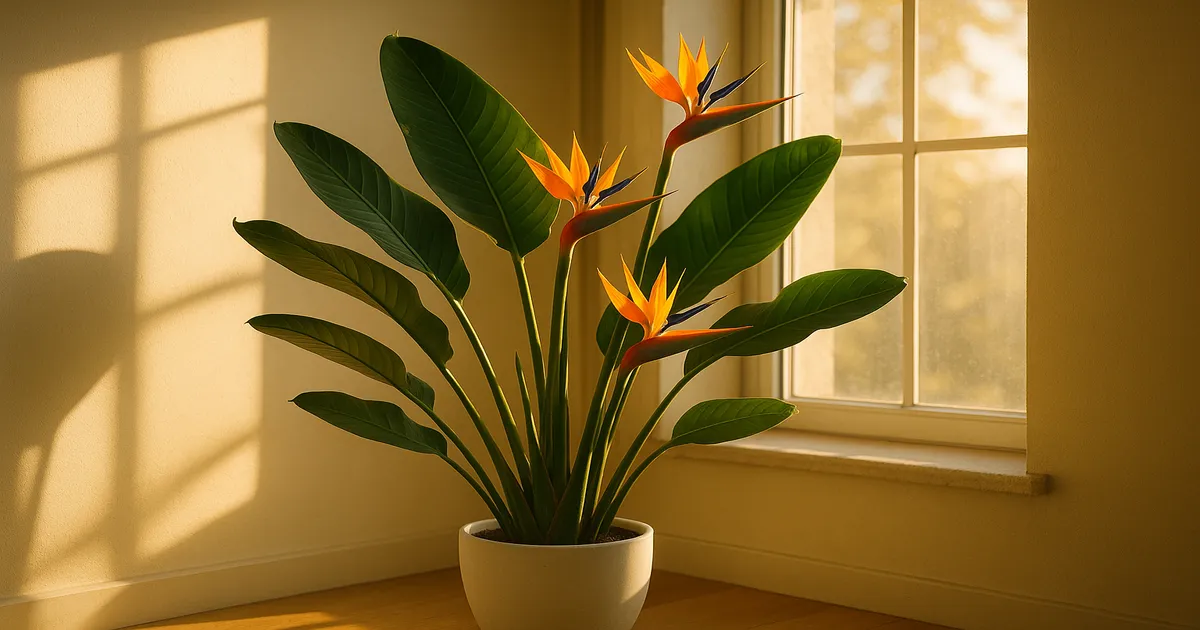
Quick Answer: To improve a Bird of Paradise (Strelitzia reginae or S. nicolai), focus on five things: give it significantly more light, dial in your watering, refresh the soil mix, boost humidity, and feed it consistently during the growing season. These plants are slow growers by nature, so expect real improvement to take weeks to months — but the results are absolutely worth the patience.
How to Improve Your Bird of Paradise: Know Your Plant First
Strelitzia reginae vs. Strelitzia nicolai: Key Differences
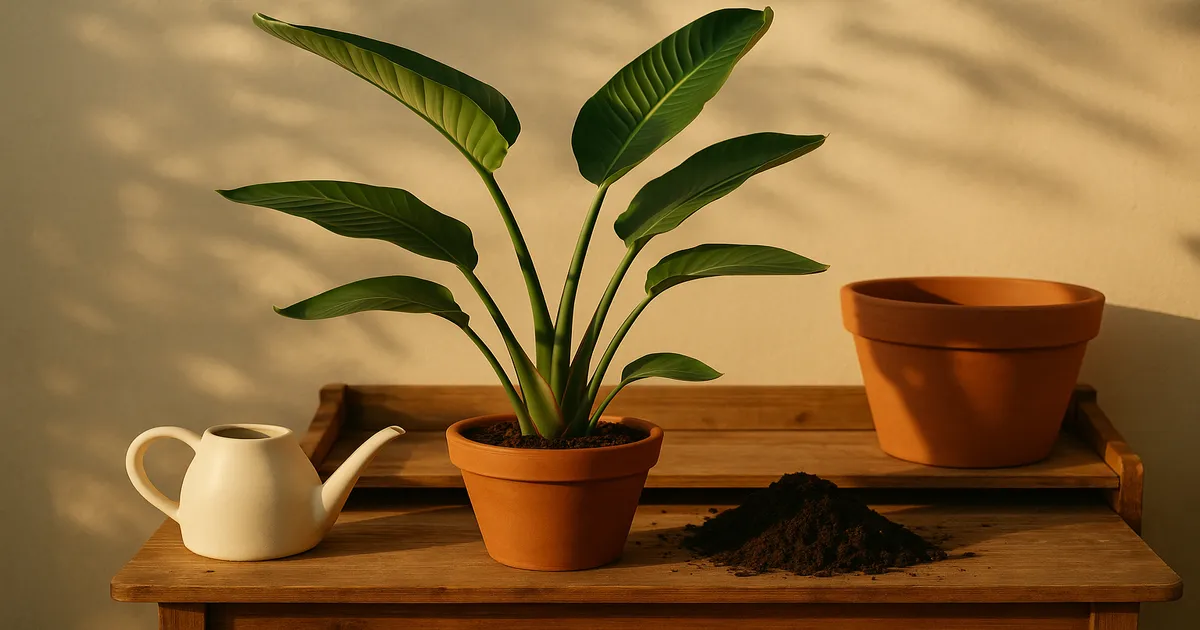
S. reginae is the compact species — typically 3–5 feet indoors — famous for its vivid orange-and-blue flowers. S. nicolai, the Giant Bird of Paradise, can reach 6–10 feet or more and is grown almost entirely for its dramatic, paddle-shaped foliage. There’s also S. juncea, a reed-leaved species that’s more drought-tolerant and increasingly popular. Knowing which one you have matters because their light and water tolerances differ.
A note for pet owners: All Strelitzia species are classified by the ASPCA as toxic to cats and dogs, causing mild gastrointestinal upset — nausea and vomiting — if ingested. Keep them out of reach.
Natural Habitat and Why It Shapes Indoor Care
Both main species originate from subtropical coastal South Africa — open scrubland and forest margins with intense light, well-draining sandy-loam soils, and moderate humidity. That context explains everything about their care. They don’t want to sit in soggy soil, they crave light that most indoor spots simply don’t provide, and they respond well to a bit of seasonal variation.
How Fast Should a Healthy Bird of Paradise Grow?
In ideal conditions, expect one to two new leaves per month during spring and summer. In winter, or in a suboptimal spot, growth may slow to almost nothing. If you haven’t seen a new leaf in two or three months during the growing season, something in the environment needs adjusting.
Diagnosing the Problem: Common Signs Your Plant Is Struggling
Yellow Leaves: Overwatering, Nutrient Deficiency, or Low Light?
Yellow leaves are the most common complaint, and the cause isn’t always obvious. Overwatering produces soft, yellowing lower leaves, soggy soil, and sometimes a sour smell. Nutrient deficiency tends to cause more uniform, overall paleness across the plant. Low light creates a washed-out, faded look — often paired with stalled growth. Check soil moisture and light levels first; those two causes account for the vast majority of yellow-leaf cases.
If yellowing appears between the veins while the veins themselves stay green, that’s interveinal chlorosis — a sign of iron or magnesium deficiency rather than a watering problem.
Brown Leaf Tips and Edges: Underwatering, Low Humidity, or Salt Burn?
Brown, crispy tips usually point to underwatering or low humidity. Fertilizer salt buildup causes an almost identical symptom, but the key difference is that salt burn appears even when you’re watering consistently. If you haven’t flushed your soil in months and you fertilize regularly, salt accumulation is the likely culprit.
Underwatered plants also tend to have curling, rolling leaves and bone-dry soil. Low-humidity damage is more diffuse, affecting leaf margins broadly rather than just the tips.
No New Growth or Stalled Development
Stalled growth during the growing season almost always comes down to light. Insufficient light is the single most underestimated problem with Bird of Paradise indoors — most people assume their bright room is bright enough when it isn’t. A south-facing window in direct sun reads 5,000+ foot-candles; a spot three feet back from that same window might read only 500.
Cold temperatures, a severely root-bound pot, or recent repotting trauma can also pause growth temporarily.
Failure to Bloom Despite Healthy Foliage
A lush, healthy-looking S. reginae that refuses to flower is one of the most common frustrations. The plant needs maturity (three to five years from seed), intense light, mild root-bound stress, and often a cool-period trigger. See the blooming section below. If you have S. nicolai, it rarely blooms indoors regardless of conditions — focus on foliage health instead.
Visible Pests or Sticky Residue on Leaves
Sticky residue (honeydew) usually signals scale insects or mealybugs. Fine webbing on leaf undersides means spider mites. Silvery streaking on new growth points to thrips. Stressed plants are far more vulnerable to pest colonization, so fixing the underlying care issue is always part of the treatment.
How to Improve Your Bird of Paradise: Light and Watering
How Much Light Does a Bird of Paradise Actually Need?
S. reginae wants bright direct to bright indirect light — roughly 3,000–6,000+ foot-candles. S. nicolai tolerates bright indirect light (1,500–3,000 foot-candles), but more light improves performance for both species. For perspective: a typical well-lit living room away from windows often measures just 100–500 foot-candles. That’s not enough for either.
Best Window Placement and Grow Light Options
A south- or west-facing window is your best bet in the Northern Hemisphere, with the plant sitting within one to three feet of the glass. Rotate the pot 90° every two to four weeks for even growth.
If natural light is limited, supplement with a full-spectrum LED grow light run for 12–14 hours per day. One caution: if you’re moving a plant from low light to bright direct sun, do it gradually over two to three weeks. Sudden exposure causes sunscald — bleached, papery patches that are permanent.
Also worth doing: wipe the leaves with a damp microfiber cloth every few weeks. Dust buildup can reduce photosynthetic efficiency noticeably, and these large leaves collect a lot of it.
How to Water a Bird of Paradise Correctly
The goal is thorough, infrequent watering — not a little water every few days. Water deeply until it flows freely from the drainage holes, then let the soil partially dry before watering again. For S. nicolai, water when the top two inches are dry. For S. reginae and S. juncea, let the top three to four inches dry out first.
A simple calibration trick: lift the pot when dry, then again right after watering. You’ll quickly learn how it should feel at each stage. A moisture meter takes the guesswork out entirely. Always discard water sitting in saucers after 30 minutes.
Recovering from Overwatering and Root Rot
If you suspect root rot, don’t wait. Remove the plant from its pot and inspect the roots — healthy roots are white or tan and firm; rotted roots are black, brown, and mushy. Follow this recovery protocol:
- Trim all mushy roots with sterile scissors or pruning shears.
- Dust the cut ends with powdered cinnamon (a natural antifungal) or a sulfur-based fungicide powder.
- Let the root ball air-dry for one to two hours.
- Repot into fresh, dry, well-draining mix.
- Water the new soil with a diluted hydrogen peroxide solution (1 part 3% H₂O₂ to 4 parts water) to oxygenate the root zone and help eliminate residual anaerobic pathogens such as Pythium and Phytophthora.
Fixing an Underwatered Bird of Paradise
If the soil is pulling away from the pot edges and water runs straight through without absorbing, the root ball has gone hydrophobic. The fix is bottom watering: set the pot in a basin of room-temperature water for 30–45 minutes and let the roots rehydrate from below. After that, resume a consistent watering schedule rather than trying to compensate with large, sudden drinks.
Soil, Fertilizer, and Repotting: Building a Strong Foundation
The Best Soil Mix for Bird of Paradise
Standard potting mix alone retains too much moisture for Strelitzia. This DIY blend mimics their native soil conditions well:
- 40% high-quality potting mix (loam-based preferred) (Fox Farm Ocean Forest)
- 30% perlite or pumice
- 20% coarse horticultural sand
- 10% compost or worm castings
Target a soil pH of 5.5–7.0. Outside this range, the plant can’t absorb iron, manganese, or phosphorus properly — even if those nutrients are present in the soil. Test with an inexpensive digital pH meter and adjust as needed: elemental sulfur lowers pH; agricultural lime raises it.
How and When to Fertilize for Maximum Growth
During spring and summer, feed with a balanced liquid fertilizer at half strength every two to four weeks. In late winter and early spring, switch to a bloom-boosting formula with higher phosphorus (such as 5-10-5 or 7-9-5) to support flower initiation in S. reginae. (Jack’s Classic All Purpose 20-20-20)
Every two to three months, flush the soil thoroughly with plain water — water deeply two or three times in succession, letting it drain fully each time. This leaches accumulated fertilizer salts that cause brown leaf tips and root damage. In fall and winter, reduce feeding to once every six to eight weeks, or stop entirely if the plant is in a cool, low-light spot.
Fixing Micronutrient Deficiencies
Interveinal chlorosis — yellowing between the veins while veins stay green — usually means iron deficiency. Apply chelated iron as a foliar spray or soil drench; chelated forms remain available to roots across a wider pH range than standard iron sulfate.
Magnesium deficiency looks similar but tends to affect older leaves first. Fix it with an Epsom salt drench: dissolve one teaspoon per gallon of water and apply monthly during the growing season.
When — and When Not — to Repot
Here’s the counterintuitive truth: a mildly root-bound S. reginae actually blooms better. The slight stress of crowded roots can trigger the plant’s reproductive response. Only repot when roots are visibly escaping drainage holes, cracking the pot, or the plant is clearly declining despite good care — typically every two to three years.
When you do repot, go up only one pot size (one to two inches larger in diameter). An oversized pot holds excess moisture and can delay blooming by years. Spring is the ideal time; wait four to six weeks before resuming fertilization.
Terracotta is the best pot material for Bird of Paradise. Its breathable walls allow excess moisture to escape, which is exactly what these plants need. Heavy-gauge plastic works too if drainage holes are generous. Avoid glazed ceramic for plants prone to overwatering — it holds moisture much longer.
Humidity, Temperature, and Environment
Ideal Humidity and How to Raise It Indoors
Target 50–70% relative humidity. In winter with heating running, indoor air often drops to 20–30% — well below what Strelitzia prefers. Low humidity accelerates leaf-edge browning and can trigger excessive splitting beyond the natural decorative splits these plants are known for.
The most effective solution is a cool-mist ultrasonic humidifier placed within three to six feet of the plant. Grouping plants together and using a pebble tray with water are helpful supplements. Monitor with a digital hygrometer so you’re not guessing.
Misting directly on the leaves gives a brief humidity boost but evaporates too quickly to make a real difference. It’s not harmful — just not particularly effective on its own.
Temperature Range and Protecting Against Drafts
Strelitzia thrives between 65–85°F (18–29°C). Below 50°F (10°C), root function slows significantly and chilling injury can blacken leaf tissue. Keep plants away from HVAC vents, exterior doors, and drafty windows — even brief cold blasts cause damage.
Using a Cool Period to Trigger Blooming
This is one of the lesser-known tricks for getting S. reginae to flower indoors. Expose the plant to nighttime temperatures of 50–55°F (10–13°C) for four to six weeks in fall or early winter, then return it to normal warm conditions. This temperature differential mimics the seasonal shift in its native South African habitat and can trigger flower bud initiation. An unheated spare room or a cool (but frost-free) garage works well for this purpose.
Dealing with Pests
Identifying the Most Common Bird of Paradise Pests
The four pests you’re most likely to encounter:
- Spider mites — fine webbing on leaf undersides, stippled or bronzed foliage; thrive in low humidity
- Scale insects — brown or tan bumps on stems and leaf undersides; leave sticky honeydew residue
- Mealybugs — white cottony clusters in leaf axils and at soil level
- Thrips — silvery streaking and distorted new growth; harder to spot without a hand lens
How to Treat Common Pests
Spider mites: Increase humidity immediately — it’s their kryptonite. Spray the entire plant, especially leaf undersides, with neem oil solution or insecticidal soap. Repeat every five to seven days for three to four cycles.
Scale insects: Remove manually with a cotton swab dipped in 70% isopropyl alcohol, then follow with a neem or horticultural oil spray. Repeat weekly for four to six weeks — scale is persistent.
Mealybugs: Spot-treat with isopropyl alcohol on a cotton swab. For severe infestations, apply systemic imidacloprid granules to the soil so the plant absorbs the insecticide into its tissue.
Thrips: Use a spinosad-based spray and set yellow sticky traps to monitor population levels. Repeat applications are necessary since thrips eggs are protected inside plant tissue.
The single best prevention strategy is keeping the plant healthy — stressed plants are dramatically more susceptible. Beyond that, quarantine any new plant purchases for two to four weeks before placing them near your existing collection, and inspect leaf undersides and stem joints regularly so you catch problems early.
How to Get Your Bird of Paradise to Bloom
Why Bird of Paradise Plants Fail to Flower Indoors
Blooming is S. reginae’s most searched frustration — and it’s almost always a combination of factors rather than one single problem. The plant needs to be mature, stressed just enough, well-lit, and given the right seasonal cues. Miss any of these, and you’ll have beautiful foliage with no flowers. S. nicolai rarely blooms indoors regardless of conditions, so if that’s your species, focus on foliage health instead.
Blooming Checklist for Strelitzia reginae
Work through this list before concluding your plant is a non-bloomer:
- Age: Is the plant at least three to five years old from seed, or one to two years established from a division or offset?
- Light: Is it receiving bright direct light (3,000–6,000+ foot-candles) for at least four to six hours daily?
- Root bound: Are the roots snug but not severely overcrowded? (Slightly pot-bound is good for blooming.)
- Cool period: Has the plant experienced 50–55°F nights for four to six weeks in fall or winter?
- Phosphorus: Are you using a bloom-boosting fertilizer (higher P ratio) in late winter and early spring?
If you can check all five boxes, you’ve given your plant every reasonable advantage. Flower stalks can still take months to appear after conditions improve — that’s normal, not failure.
Frequently Asked Questions
Why are my Bird of Paradise leaves turning yellow?
Yellow leaves most commonly signal overwatering, low light, or nutrient deficiency. Check the soil first — if it’s consistently soggy, overwatering is the likely cause. If the soil is fine but the whole plant looks pale and washed out, insufficient light is probably the issue. Interveinal yellowing (veins stay green while surrounding tissue turns yellow) points specifically to iron or magnesium deficiency.
How do I get my Bird of Paradise to grow faster?
Maximize light first — it’s the biggest growth driver. Then fertilize consistently with a balanced fertilizer every two to four weeks during spring and summer, maintain humidity above 50%, and keep temperatures between 65–85°F. Even under ideal conditions, one to two new leaves per month is the realistic ceiling for this naturally slow-growing plant.
Why is my Bird of Paradise not blooming?
Failure to bloom usually comes down to insufficient light, plant immaturity, or a missing cool-period trigger. S. reginae needs to be at least three to five years old from seed, receive several hours of bright direct light daily, and ideally experience a six-week cool period (50–55°F nights) in fall to initiate flower buds. Being slightly root-bound and receiving adequate phosphorus also help.
Should I mist my Bird of Paradise?
Misting provides a very brief humidity boost that evaporates within minutes, so it won’t meaningfully raise ambient humidity. It’s not harmful, but it’s not a substitute for a humidifier or pebble tray. If you enjoy misting, do it in the morning so leaves dry before evening — wet foliage overnight can encourage fungal issues.
How do I know if my Bird of Paradise needs repotting?
Look for roots escaping from drainage holes, roots visibly cracking or deforming the pot, or a plant that dries out unusually fast after watering. If the plant is otherwise healthy, mild root crowding is fine — and for S. reginae, it can actually encourage blooming. When you do repot, move up only one pot size and do it in spring.