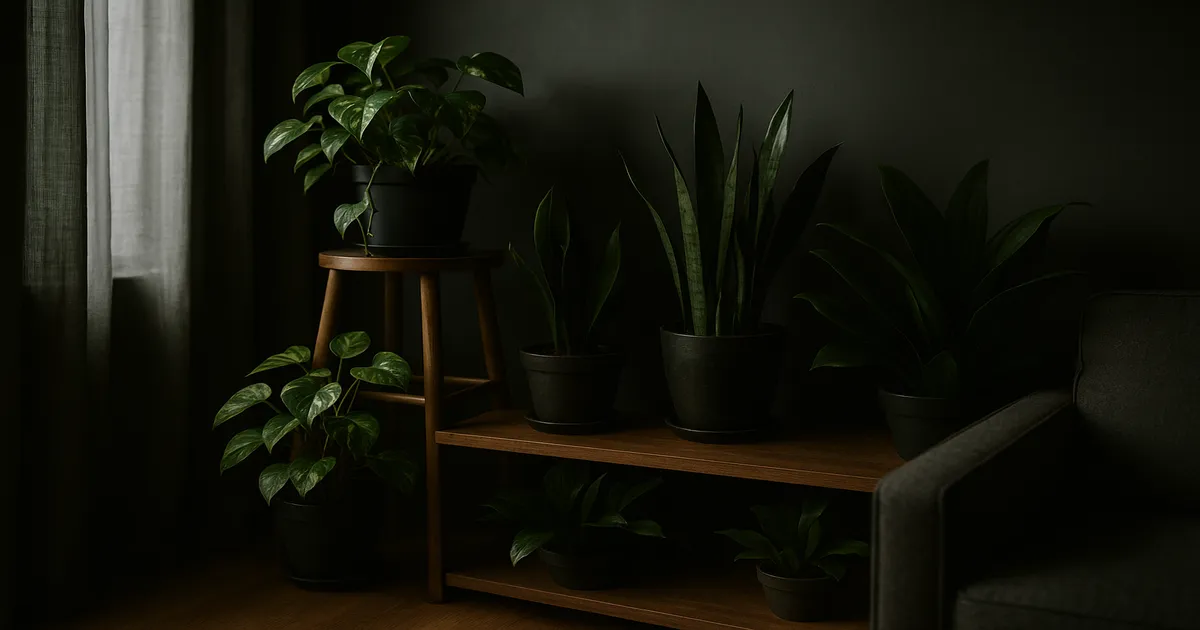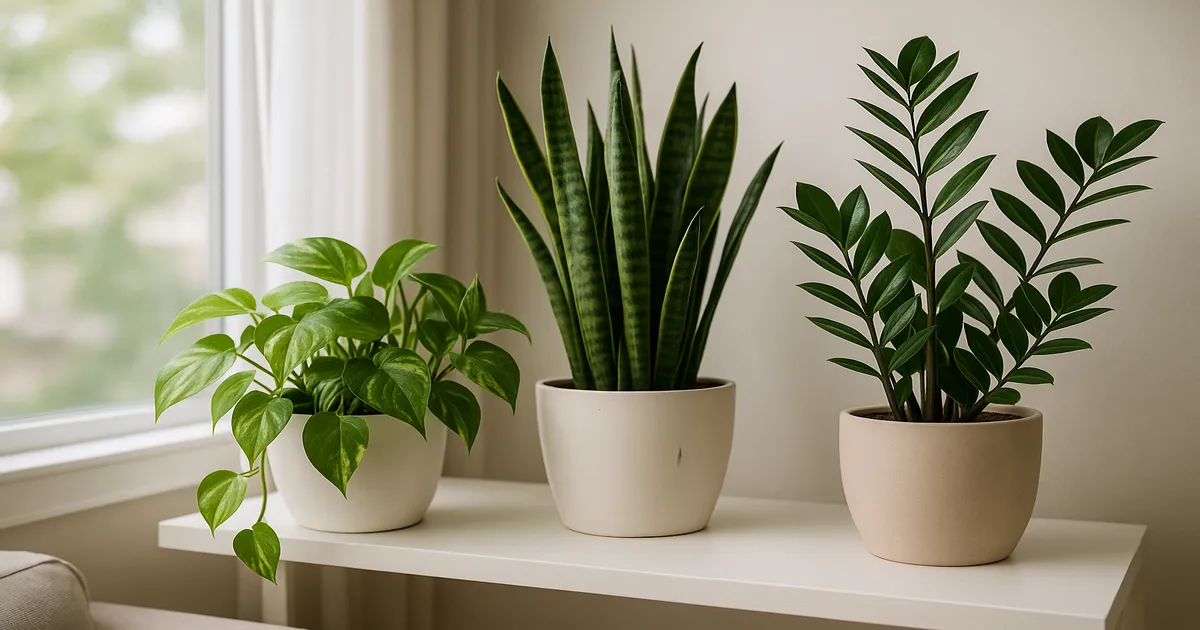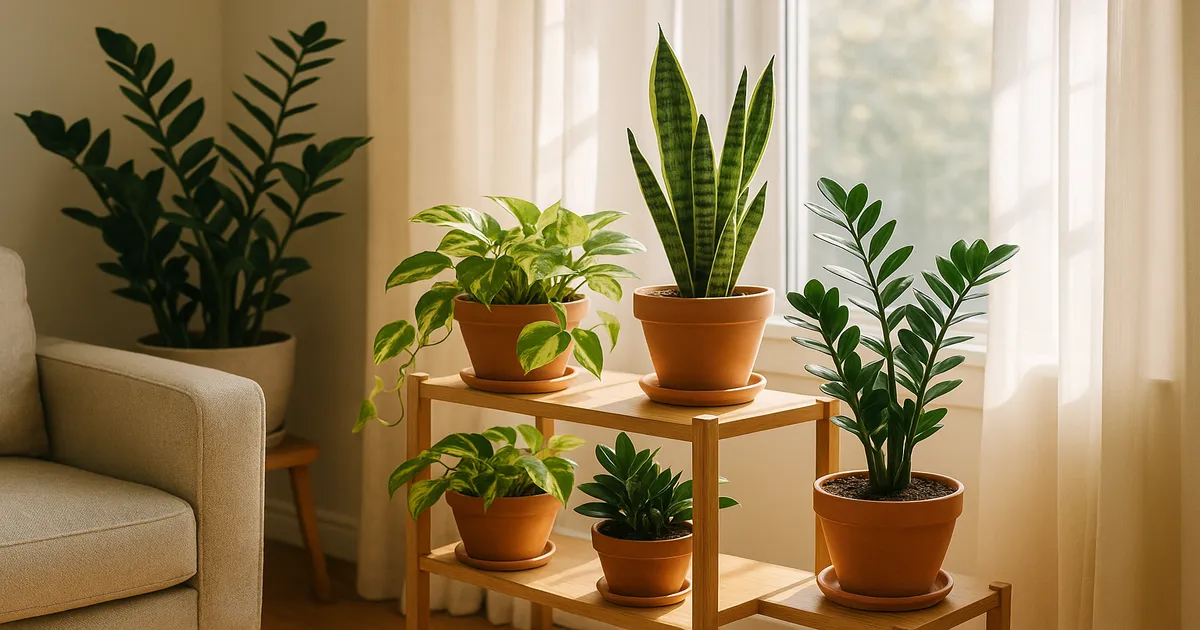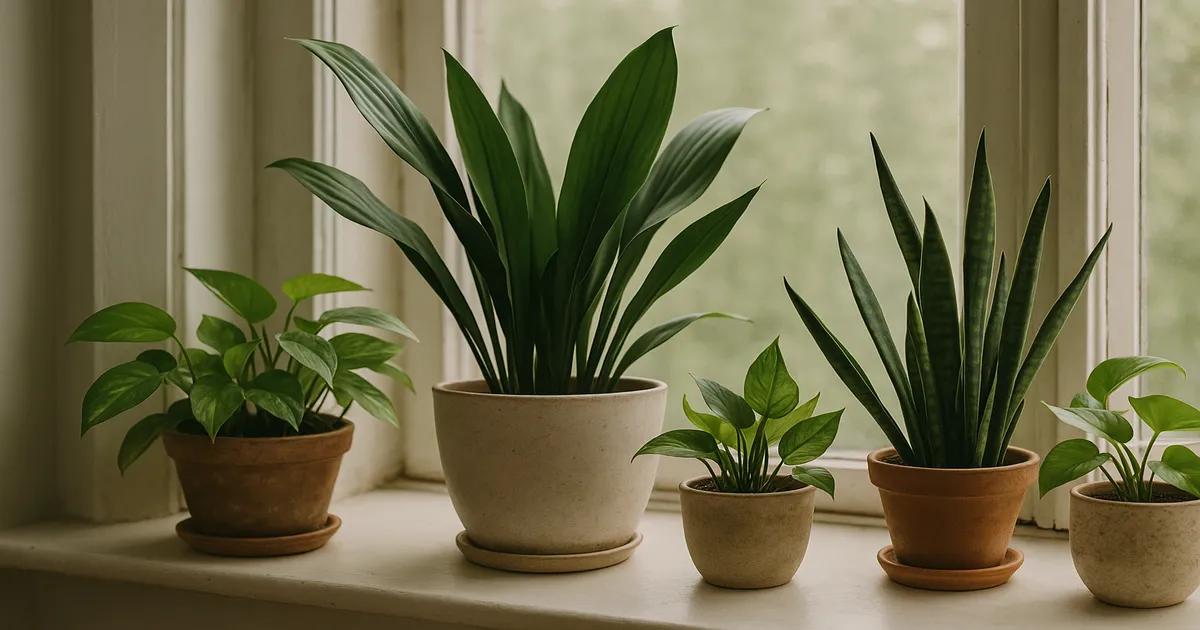
Quick Answer: The best plants for a north-facing window are Pothos (Epipremnum aureum) and ZZ Plant (Zamioculcas zamiifolia). Pothos tolerates as little as 25 foot-candles, forgives irregular watering, and comes in dozens of cultivars. The ZZ Plant is your runner-up if you want something even more hands-off — it survives weeks without water and thrives in the dimmest corners.
North-facing windows are one of the most common challenges in houseplant keeping. They receive no direct sun at any point in the year, and light levels can drop to 25–50 foot-candles in winter — conditions that would slowly kill a fiddle leaf fig or a succulent. But the right plants don’t just survive here; they genuinely thrive. This guide covers the best plants for north-facing windows, what to look for before you buy, and honest mini-reviews of ten species so you can choose with confidence.
Best Plants for a North-Facing Window: Top Picks
Top Pick: Pothos (Epipremnum aureum)
Pothos is the undisputed champion of low-light growing. It functions at light levels that would cause most houseplants to decline, tolerates erratic watering, and is available at virtually every garden center. Solid green cultivars like ‘Golden’ and ‘Neon’ outperform variegated forms in dim conditions, making them the smart pick for a north window specifically.
Runner-Up: ZZ Plant (Zamioculcas zamiifolia)
The ZZ Plant stores water and nutrients in underground rhizomes, allowing it to go two to four weeks between waterings without complaint. Its glossy, dark green leaflets reflect whatever light is available, giving it a surprisingly lush appearance even in a dim corner. If you want a near-zero-maintenance plant that looks polished year-round, this is it.
What to Look For in a North-Facing Window Plant
Not every “low-light” plant is created equal. Here are six criteria worth thinking about before you buy.
Light Compensation Point. This is the minimum light intensity at which a plant’s photosynthesis equals its respiration — the true survival threshold. Plants with a compensation point below 50 foot-candles (pothos, ZZ plant, cast iron plant) are safe bets for north windows. Those with thresholds above 100 foot-candles are a gamble, especially in winter or at latitudes above 45°N.
Watering Tolerance. Low light slows photosynthesis, which means plants take up water much more slowly than they would in a bright window. Overwatering is the number-one killer of north-window plants — not lack of light. Prioritize species that tolerate drought and occasional over-watering, or ones that give you a clear signal when they’re thirsty.
Humidity Requirements. North-facing rooms are often cooler, and winter heating can drop indoor humidity to 20–35%. Most tropical low-light plants prefer 40–60%; ferns want even more. Boston ferns are beautiful but will struggle in a dry living room without active humidity support.
Growth Rate and Space. Slow-growing plants are naturally better suited to low-light conditions — they’re not trying to produce a lot of new growth with limited energy. Fast growers like pothos can still thrive, but they may become leggy without occasional pruning.
Pet and Child Safety. Several of the best low-light plants — pothos, ZZ plant, snake plant, peace lily, philodendron — are toxic to pets and humans if ingested. The cast iron plant and Boston fern are the standout pet-safe options on this list.
Foliage vs. Flowering Potential. Most low-light plants won’t flower indoors — accept that upfront and focus on foliage interest. The peace lily is the genuine exception, capable of producing its distinctive white spathes even in north-facing conditions.
North-Facing Window Plants Compared at a Glance
| Plant | Light Range | Watering Frequency | Humidity Need | Pet Safe | Flowers Indoors | Difficulty | Best For |
|---|---|---|---|---|---|---|---|
| Pothos | 25–200 fc | Every 1–2 weeks | 40–60% | No | No | Beginner | Overall best pick |
| ZZ Plant | 25–150 fc | Every 2–4 weeks | 40%+ | No | No | Beginner | Neglectful waterers |
| Snake Plant | 25–200 fc | Every 2–6 weeks | 30–50% | No | No | Beginner | Dry homes, structure |
| Peace Lily | 50–250 fc | ~Weekly | 50–60% | No | Yes | Beginner | Wanting blooms |
| Heartleaf Philodendron | 50–200 fc | Every 1–2 weeks | 40–60% | No | No | Beginner | Trailing, soft texture |
| Cast Iron Plant | 25–100 fc | Every 2–4 weeks | 30–50% | Yes | No | Beginner | Darkest corners, pet homes |
| Boston Fern | 50–200 fc | Keep moist | 50–80% | Yes | No | Intermediate | Bathrooms, high humidity |
| Chinese Evergreen | 50–250 fc | Every 1–2 weeks | 40–60% | No | No | Beginner | Bold patterned foliage |
| Parlor Palm | 100–400 fc | Every 1–2 weeks | 40–60% | Yes | No | Beginner | Elegant, pet-safe |
| Bird’s Nest Fern | 100–500 fc | Keep lightly moist | 50–70% | Yes | No | Intermediate | Textural interest |
Pothos (Epipremnum aureum)
Pothos can function at 25 foot-candles — roughly the light level of a dimly lit hallway. Its trailing vines look equally good cascading from a shelf or climbing a moss pole, and the sheer number of cultivars means there’s a pothos for every aesthetic. For north windows specifically, stick with ‘Golden’, ‘Neon’, or solid green forms. Heavily variegated cultivars like ‘Marble Queen’ need more light to maintain their patterning and will revert to plain green in dim conditions.
Key specs:
- Light: 25–200 foot-candles
- Water: every 1–2 weeks; allow top 2 inches of soil to dry
- Humidity: 40–60%
- Toxicity: toxic to pets and humans
Pros
- Tolerates drought, low light, and neglect simultaneously
- Fast-growing with a satisfying trailing or climbing habit
- Dozens of cultivars across a wide range of price points
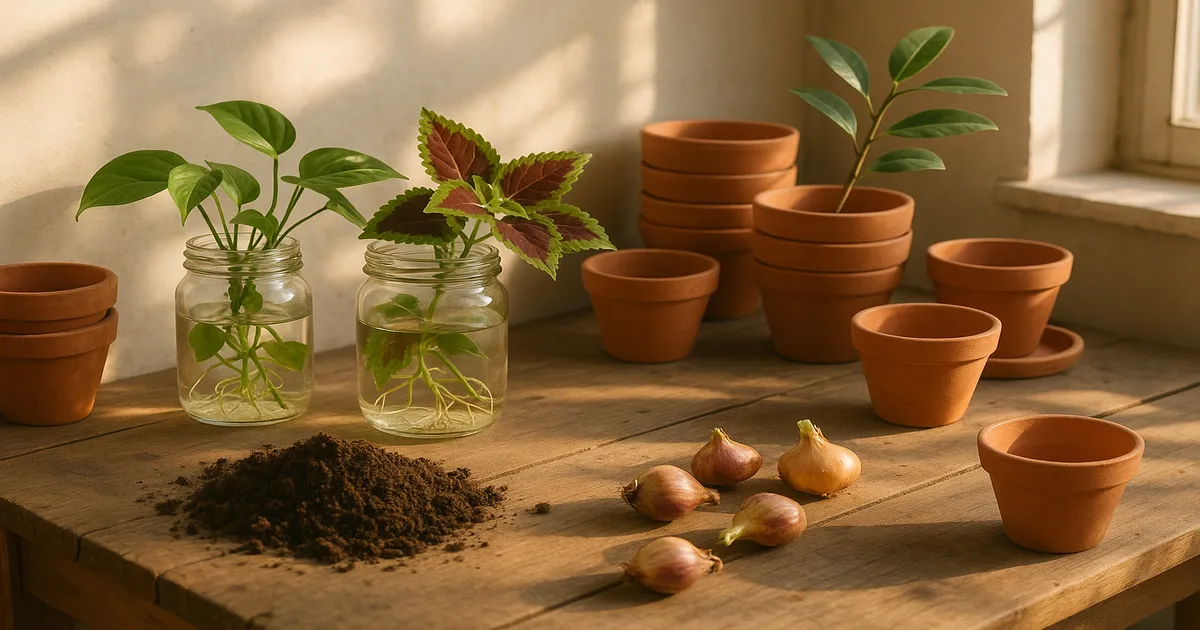
- Propagates easily in water — free plants indefinitely
Cons
- Toxic to pets and humans if ingested
- Variegated cultivars lose patterning in low light
- Becomes leggy without occasional pruning or pinching back
Best for: Anyone new to low-light growing, or anyone who wants a reliable, visually versatile plant with minimal fuss.
ZZ Plant (Zamioculcas zamiifolia)
The ZZ Plant’s underground rhizomes act like a water and nutrient reserve, allowing it to survive weeks — sometimes months — of neglect without visible distress. Its glossy, dark green leaflets reflect available light beautifully, giving it a polished, architectural look that belies how little care it requires. The ‘Raven’ cultivar offers near-black foliage for a dramatic statement; ‘Zenzi’ stays compact if you’re working with limited space.
Key specs:
- Light: 25–150 foot-candles
- Water: every 2–4 weeks; allow soil to dry completely between waterings
- Humidity: 40%+
- Toxicity: toxic to pets and humans
Pros
- Extraordinary drought tolerance thanks to water-storing rhizomes
- Thrives at some of the lowest light levels of any common houseplant
- Slow-growing and naturally tidy — rarely needs pruning
- Very few pest issues compared to most houseplants
Cons
- Toxic to pets and humans
- Extremely slow growth can feel unrewarding for impatient growers
- Expanding rhizomes can crack thin plastic nursery pots over time
Best for: Forgetful waterers, frequent travelers, or anyone who wants a sophisticated-looking plant with essentially zero maintenance.
Snake Plant (Dracaena trifasciata)
Snake plants use CAM photosynthesis — a metabolic pathway that allows them to fix carbon dioxide at night and operate efficiently under very low light. That’s a genuine physiological advantage, not marketing copy, and it makes them one of the few houseplants that can honestly claim to be both drought-tolerant and low-light tolerant. Cultivars range from the classic yellow-edged ‘Laurentii’ to the silvery ‘Moonshine’ and the compact bird’s nest form ‘Hahnii’.
Key specs:
- Light: 25–200 foot-candles
- Water: every 2–6 weeks depending on season; allow soil to dry completely
- Humidity: 30–50%
- Toxicity: toxic to pets
Pros
- CAM photosynthesis makes it genuinely efficient in low-light conditions
- Upright, architectural form suits modern and minimalist interiors
- Tolerates low humidity and dry air better than most tropical plants
- Wide cultivar range from compact to statement-sized
Cons
- Toxic to pets
- Highly susceptible to root rot if overwatered — drainage is non-negotiable
- Variegated forms like ‘Laurentii’ need marginally more light than plain green cultivars
Best for: Anyone in a dry home who wants structural, sculptural foliage without frequent watering.
Peace Lily (Spathiphyllum spp.)
The peace lily earns its place on this list for one reason no other plant here can match: it will actually flower in a north-facing window. Those elegant white spathes are genuinely achievable in low-light conditions, making this the most rewarding plant on the list for anyone who misses having blooms indoors. It also communicates its watering needs by drooping slightly when thirsty — a forgiving signal that makes it easier to manage than its moisture preferences might suggest.
Key specs:
- Light: 50–250 foot-candles
- Water: when top inch of soil is dry, roughly weekly
- Humidity: 50–60%
- Toxicity: toxic to pets and humans
Pros
- One of the only low-light houseplants that reliably flowers indoors
- Visible wilting signals when it needs water — no guesswork
- Lush, tropical appearance with large, glossy leaves
- ‘Sensation’ offers bold, large-leafed drama; ‘Domino’ adds variegated interest
Cons
- Toxic to pets and humans
- Dramatic wilting when underwatered can alarm new owners (it usually recovers quickly with a thorough watering)
- Needs higher humidity than many north-facing rooms naturally provide in winter
- Prone to root rot if left sitting in water
Best for: Anyone who wants the rare reward of flowers from a north-facing window and can maintain humidity above 50%.
Heartleaf Philodendron (Philodendron hederaceum)
Think of the heartleaf philodendron as pothos’s slightly more refined cousin. It’s nearly as tolerant, but its leaves have a softer, velvety texture and a more graceful trailing habit that many growers prefer. New growth appears reliably even in north-facing windows, which makes it genuinely satisfying to grow — you’re not just keeping a plant alive, you’re watching it actively develop. Stick with solid green forms for north windows; the variegated ‘Brasil’ needs noticeably more light.
Key specs:
- Light: 50–200 foot-candles
- Water: every 1–2 weeks; allow top 2 inches to dry
- Humidity: 40–60%
- Toxicity: toxic to pets and humans
Pros
- Fast-growing and visibly rewarding even in low light
- Soft, velvety leaf texture — more tactile and refined than pothos
- Extremely easy to propagate in water
- P. micans offers stunning bronze-toned foliage as an alternative
Cons
- Toxic to pets and humans
- Variegated cultivars like ‘Brasil’ need more light than a north window provides
- Can become leggy in very low light without occasional pinching back
Best for: Anyone who wants a trailing plant similar to pothos but with a softer aesthetic, or who wants something slightly less ubiquitous.
Cast Iron Plant (Aspidistra elatior)
The cast iron plant was a staple of Victorian parlors lit only by gas lamps — that historical context tells you everything about its light tolerance. It has one of the lowest light compensation points of any common houseplant, functioning at just 25–100 foot-candles, and it’s also one of the few plants on this list that is completely pet-safe. Growth is slow, but each long, strap-like leaf is elegant and extremely long-lived.
Key specs:
- Light: 25–100 foot-candles
- Water: every 2–4 weeks; allow soil to dry between waterings
- Humidity: 30–50%
- Toxicity: non-toxic to pets and humans
Pros
- Lowest light tolerance of any plant on this list — the true darkest-corner specialist
- Pet-safe and child-safe
- Tolerates temperature fluctuations and low humidity
- Extremely long-lived; a well-cared-for specimen can last decades
Cons
- Very slow growth — new leaves appear infrequently, which can feel static
- Not widely available in all regions; large specimens can be expensive
- Plain appearance compared to more ornamental options on this list
Best for: Pet owners dealing with the darkest possible north-facing corner, or anyone who wants a genuinely indestructible, low-drama plant.
Boston Fern (Nephrolepis exaltata)
The Boston fern delivers lush, arching fronds that bring a classic, verdant quality to north-facing spaces — but it demands more attention than anything else on this list. Humidity above 50% is non-negotiable, and it will drop fronds dramatically if conditions change suddenly. In the right environment — a bathroom, a kitchen, or a room with a humidifier running — it rewards consistent care with genuinely spectacular, full growth. A cool-mist humidifier like the Levoit Classic 300S placed nearby makes a real difference.
Key specs:
- Light: 50–200 foot-candles
- Water: keep soil consistently moist, not waterlogged
- Humidity: 50–80%
- Toxicity: non-toxic to pets and humans
Pros
- Lush, dramatic appearance — one of the most visually impressive plants on this list
- Pet-safe and child-safe
- Excellent in hanging baskets where fronds can arch freely
- More forgiving of lower humidity than maidenhair ferns
Cons
- High humidity requirement makes it challenging in dry winter rooms
- Drops fronds suddenly and messily if humidity drops
- Not drought-tolerant — consistent moisture is essential
Best for: North-facing bathrooms or kitchens where humidity naturally stays above 50%, or living rooms where you’re already running a humidifier.
Chinese Evergreen (Aglaonema spp.)
Chinese evergreens are among the most adaptable foliage plants available, and darker cultivars perform excellently in north-facing windows. The key is cultivar selection: ‘Maria’, ‘Silver Bay’, and ‘Silver Queen’ all have darker green or silver-toned leaves suited to low-light conditions. Brightly colored pink and red cultivars like ‘Red Siam’ and ‘Pink Dalmatian’ are beautiful, but they need significantly more light than a north window can realistically provide — don’t buy them for this application.
Key specs:
- Light: 50–250 foot-candles
- Water: every 1–2 weeks; allow top 2 inches to dry
- Humidity: 40–60%
- Toxicity: toxic to pets and humans
Pros
- Enormous cultivar variety for different aesthetics
- Tolerates low humidity better than ferns or calatheas
- Bold, patterned foliage adds genuine visual interest
- Slow-growing and naturally tidy
Cons
- Toxic to pets and humans
- Brightly colored cultivars are completely unsuitable for north windows — easy to buy the wrong one
- Prone to root rot if overwatered in low light
Best for: Adding bold, patterned foliage to a north-facing window — just make sure you’re choosing a dark green or silver cultivar, not a pink or red one.
Our Verdict: Best North-Facing Window Plant by Use Case
Best Overall: Pothos. It wins on every metric that matters — lowest light tolerance, forgiving watering needs, wide availability, low cost, and genuine visual appeal. Start here.
Best for Neglectful Waterers: ZZ Plant. Nothing on this list comes close for sheer neglect tolerance. If you travel frequently or simply forget to water, this is your plant.
Best for Pet Owners: Cast Iron Plant or Boston Fern. Both are non-toxic to pets and children. Choose the cast iron plant for the darkest corners and minimal care; choose the Boston fern if you can maintain higher humidity and want a more dramatic look.
Best for Flowers: Peace Lily. The only realistic option on this list for north-window blooms. Keep humidity above 50% and don’t let it sit in standing water.
Best Architectural Statement: Snake Plant. Its upright, sculptural form suits modern interiors, and its CAM photosynthesis pathway makes it genuinely efficient in low-light conditions.
Best for High-Humidity Rooms: Boston Fern. In a bathroom or kitchen where humidity naturally stays above 50%, it will thrive and look spectacular.
Best for Bold Foliage Patterns: Chinese Evergreen. Stick to ‘Maria’, ‘Silver Bay’, or ‘Silver Queen’ — these dark and silver cultivars deliver striking patterned foliage that works in north-window light levels.
Three Universal Tips for Any North-Facing Window
Regardless of which plant you choose, these habits will make a meaningful difference.
Place plants within 3 feet of the window. Light intensity drops off sharply with distance — moving a plant back by just 2 feet can halve its available light.
Reduce watering and fertilizing in winter. Plants in low light use water and nutrients much more slowly. Watering on a fixed schedule year-round is how most north-window plants die.
Consider a grow light if you’re above 45°N. In cities like London, Berlin, Minneapolis, or Montreal, winter light through a north window can drop below the survival threshold of even the most tolerant species. A full-spectrum LED grow light running 12–16 hours per day can make a decisive difference from November through February. The Soltech Aspect is a popular choice for aesthetics; the GE BR30 Full Spectrum LED Grow Light Bulb is a budget-friendly option that screws into any standard lamp socket.
Frequently Asked Questions
Can any plant survive in a north-facing window?
Yes — but only species adapted to low-light forest understory conditions. The safest bets are pothos, ZZ plant, snake plant, cast iron plant, and heartleaf philodendron. Sun-loving plants like succulents, cacti, and most flowering houseplants will slowly decline regardless of how well you care for them.
How do I know if my north-facing window has enough light for plants?
The simplest test: hold your hand about a foot above a white piece of paper near the window. If you can see a faint but defined shadow, you have at least 50 foot-candles — enough for most plants on this list. For a precise reading, a dedicated light meter like the Dr.Meter LX1330B Digital Illuminance Meter will give you a foot-candle reading in seconds. Anything above 25 foot-candles supports pothos, ZZ plant, and cast iron plant; aim for 50+ for peace lily and Chinese evergreen.
Why are my north-facing window plants turning yellow?
Yellow leaves in a north window almost always point to one of three causes. Overwatering is the most common — low light slows water uptake, so soil stays wet far longer than you’d expect. Insufficient light causes older lower leaves to yellow progressively as the plant sacrifices them to conserve energy. Cold drafts from window gaps or cold glass can also trigger yellowing, particularly in winter. Check your watering frequency first, then consider moving the plant closer to the window or supplementing with a grow light.
What plants should I avoid in a north-facing window?
Avoid anything that requires direct sun or high light: succulents, cacti, most orchids, roses, geraniums, hibiscus, and the fiddle leaf fig (Ficus lyrata) will all struggle and eventually decline. Also avoid highly variegated cultivars of otherwise low-light species — ‘Marble Queen’ pothos, ‘Laurentii’ snake plant, and pink or red aglaonema cultivars all need significantly more light than their plain-leafed counterparts to maintain their coloration and health.
Do north-facing window plants need fertilizer?
Yes, but much less than plants in brighter spots. In low light, growth slows considerably, so plants need fewer nutrients. Feed with a balanced liquid fertilizer at half the recommended strength once a month during spring and summer only. Stop fertilizing entirely from October through February — unused fertilizer salts build up in the soil and can damage roots.