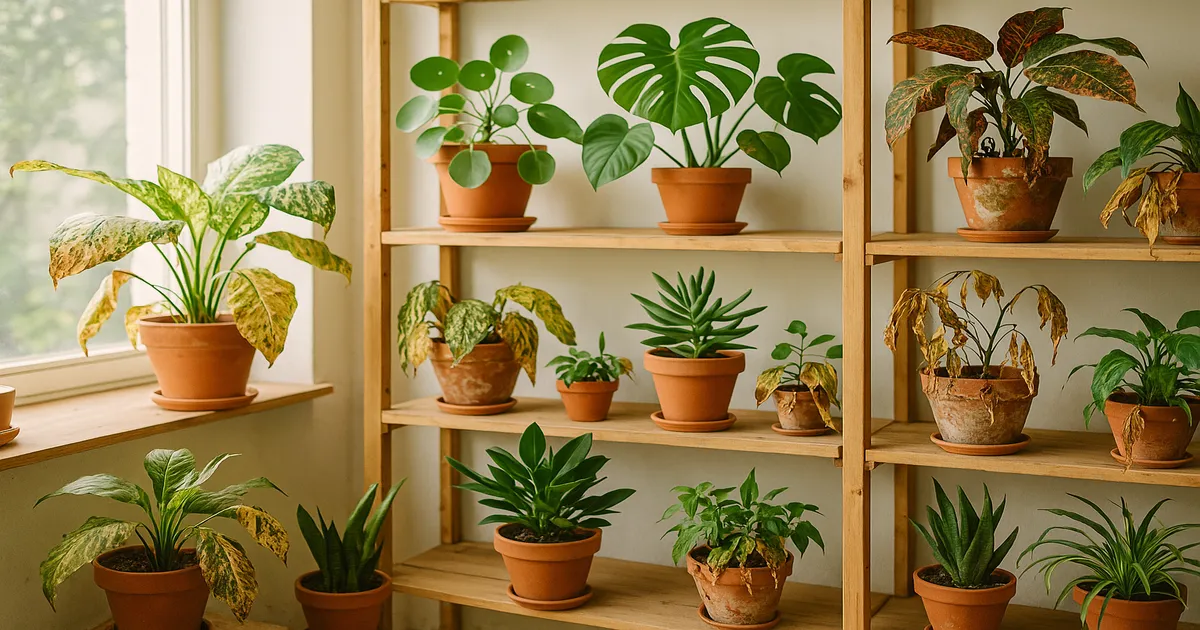
Quick Answer: A nursery plant is worth buying if it has firm, species-typical foliage, no signs of pests or disease, roots that aren’t bursting from the drainage holes, and soil that smells clean and earthy. Walk away from anything with webbing, cottony masses, foul-smelling soil, or mosaic-patterned leaves — those problems follow the plant home.
Standing in a nursery aisle and asking yourself does this nursery plant look good enough to buy? is one of those moments where a little knowledge saves a lot of heartbreak. Plants are often groomed for sale — dead leaves pulled, surface soil freshened — so what you see on the shelf isn’t always the full picture. The good news: a two-minute inspection covers the most critical bases.
Does This Nursery Plant Look Good Enough to Buy? A 60-Second Checklist
Run through these four areas before anything goes in your cart:
- Roots — Peek at the drainage holes. A few root tips poking out is fine; a dense mat of escaping roots is not. If you can, gently tip the pot and check whether the root ball slides out as one rigid plug.
- Foliage — Look for vibrant, species-typical color, firm leaves, and consistent leaf size. Check undersides for webbing, bumps, or cottony fluff.
- Soil — Sniff it. Clean potting mix smells earthy. Sour, sulfurous, or rotten odors signal anaerobic conditions and likely root rot.
- Structure — Stems should be upright and sturdy, with consistent spacing between leaves. Unusually long gaps between leaves (etiolation) mean the plant has been starved of light.
When to Walk Away vs. When to Negotiate a Discount
Some issues are fixable; others are deal-breakers. Always walk away from plants showing:
- Active pest infestations (webbing, cottony masses, sticky honeydew)
- Mosaic or ring-spot patterns on leaves (viral infection — incurable)
- Mushy stems at the soil line
- Foul-smelling soil
Consider negotiating a discount for plants with:
- Mild root-binding (roots just beginning to circle)
- A few yellowing lower leaves from shipping stress
- Cosmetic leaf tears with no sign of disease
Why Nursery Plant Quality Varies
Big-box store plants often travel through a distribution chain spanning two to six weeks before they hit the shelf. During that time they may experience low light, temperature swings, and erratic watering. Independent nurseries typically source from regional growers with faster turnover and more attentive staff — the difference in average specimen quality is real.
Greenhouse growing conditions (60–80% relative humidity, 65–85°F) are optimized for plant health, so stress symptoms you see at point of sale are meaningful. These plants had ideal conditions and still look rough — that’s a red flag, not a cosmetic quirk.
This doesn’t mean you should never buy from a big-box store. It means you should inspect those plants more carefully and expect a higher percentage of marginal specimens. Independent nurseries are worth the slightly higher price if you’re buying something you plan to keep for years.
Know the Healthy Baseline for Each Species
You can’t evaluate a plant without knowing what healthy looks like for that species. Yellow leaves on a croton (Codiaeum variegatum) are completely normal — it’s part of the plant’s natural coloration. Yellow leaves on a Monstera are a warning sign. Similarly, the white and cream sectors on a variegated Monstera deliciosa ‘Albo Variegata’ or Epipremnum aureum ‘Marble Queen’ are genetic, not chlorosis. When in doubt, do a quick image search before you buy.
Root Problems: The Hidden Deal-Breaker
How to Check for Root-Bound Conditions
The root system is the part of the plant you can’t see, which is exactly why it causes so many post-purchase surprises. Roots emerging from drainage holes are the most obvious clue, but severity matters. A few white root tips peeking out? Acceptable. A dense, brown root mat growing down the outside of the pot? That plant needs a new home immediately.
Gently tip the pot. If the entire root-soil mass slides out as one rigid plug with almost no loose soil visible, the plant is severely pot-bound. Severely girdled roots can permanently restrict vascular flow in woody stems even after repotting — it isn’t always recoverable.
Signs of Root Rot Before You Buy
Root rot is caused by oomycete pathogens like Phytophthora and Pythium that thrive in chronically waterlogged soil. Here’s the counterintuitive part: an overwatered plant often looks drought-stressed — wilting, curling leaves — because rotted roots can’t absorb water even when the soil is saturated.
Check for:
- Soil that’s wet despite no recent watering
- Soft, blackened, or mushy stem tissue at the soil line
- A sour or sulfurous smell from the soil
- A pot that feels unusually heavy for its size
Healthy roots are white to light tan, firm, and slightly fuzzy with fine root hairs. They should be distributed throughout the soil rather than forming a wall-to-wall mat.
Pest Inspection: What to Look for Before You Buy a Nursery Plant
Spider Mites, Mealybugs, and Scale
These three pests are the most consequential nursery hitchhikers, and they all hide.
- Spider mites leave fine webbing on leaf undersides and between stems. Affected leaves look stippled, bronzed, or silvery — like someone took fine sandpaper to them.
- Mealybugs look like tiny tufts of white cotton tucked into leaf axils, along stems, or at the soil surface. Check every crevice.
- Scale insects appear as brown, tan, or white waxy bumps on stems and leaf undersides. They don’t move, which is why people often mistake them for part of the plant. Press one with your fingernail — a pest will smear; plant tissue won’t.
Thrips, Whiteflies, and Fungus Gnats
- Thrips cause silver streaking or scarring on leaf surfaces and distorted new growth. Look for tiny dark specks (fecal matter) on leaves.
- Whiteflies erupt in a small cloud when you shake the foliage and leave sticky honeydew that develops into black sooty mold.
- Fungus gnats are the tiny dark flies hovering near the soil. Press a finger about an inch into the soil — if you disturb small flies or see larvae, the infestation is established.
A single infested plant can spread colony populations across your entire collection within two to three weeks. Spider mites and mealybugs reproduce fast, and many pest species have cryptic life stages — eggs, crawlers, hidden egg sacs — that survive a first treatment. If you have any doubt, the plant stays out of your home or goes directly into strict quarantine.
Reading Foliage: Red Flags and What They Mean
Yellowing Leaves
The pattern of yellowing tells you a lot. Uniform yellowing of older, lower leaves points to nitrogen deficiency — nitrogen is mobile, so the plant strips it from older tissue to feed new growth. Yellowing between the veins of new leaves while veins stay green suggests iron or manganese deficiency, often caused by high soil pH rather than an actual mineral shortage. Yellowing across the whole plant with no clear pattern usually signals overwatering or root damage.
A few yellow leaves on a freshly shipped plant can simply be transit stress. One or two is forgivable; a plant where a third of the leaves are yellowing is not.
Light Stress: Etiolation and Sun Scorch
Etiolation — the result of insufficient light — produces spindly stems, abnormally wide gaps between leaves, and a pale, washed-out color. Big-box stores frequently keep plants under lighting well below 50 foot-candles, which isn’t enough for most tropical species. An etiolated plant isn’t necessarily unsalvageable, but it will need significant time to recover.
Sun scorch looks completely different: bleached, white, or papery patches on the upper leaf surface, usually on the side that faced the light source. Affected tissue is crispy and permanent — those patches won’t green up.
Disease Symptoms to Recognize
- Powdery mildew looks like white or gray powder dusted on the leaf surface. Unlike actual dust, it doesn’t wipe off cleanly.
- Bacterial leaf spot creates angular, water-soaked lesions bordered by leaf veins that turn brown or black, sometimes with a yellow halo.
- Viral infections produce mosaic patterns — irregular patches of light and dark green — or ring spots. These patterns don’t follow the logic of nutrient deficiency. Viral infections are incurable and can spread via sap contact. Never buy a plant showing these symptoms.
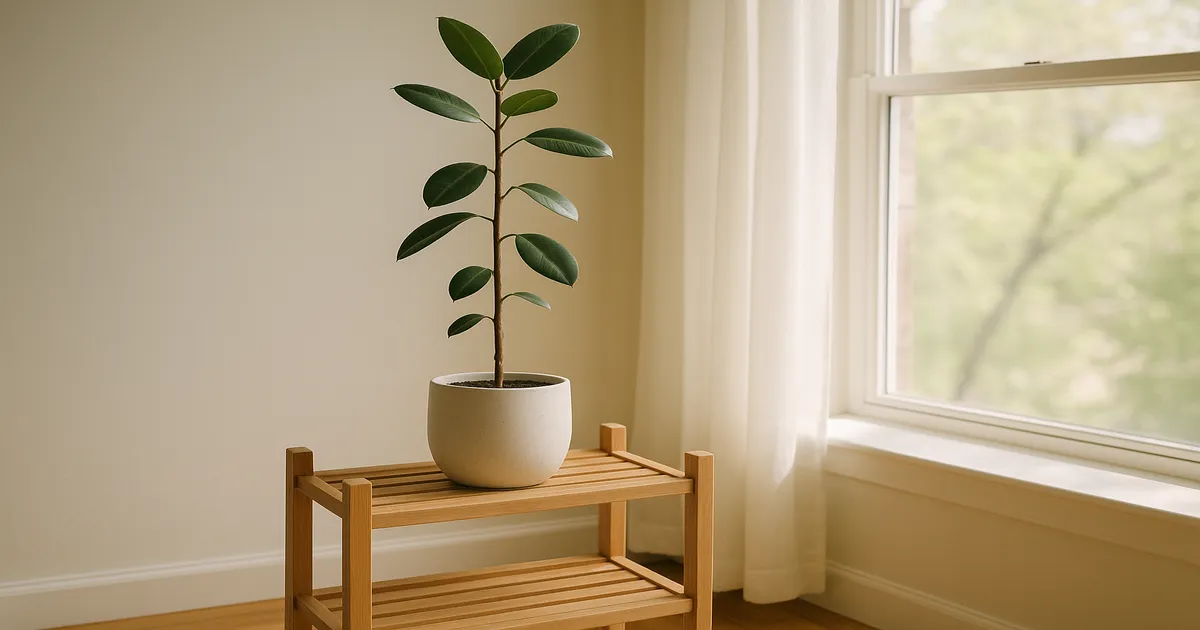
Physical damage like torn leaves and broken stems also matters beyond cosmetics — wounds are pathogen entry points. For woody houseplants like Ficus, Schefflera, or Dracaena, structural deformity established in youth is largely permanent and will require years of corrective pruning.
Pot and Soil Red Flags
No drainage holes is a near-automatic pass. Some plants survive it with careful watering, but you’re starting with a significant handicap. A pot that looks disproportionately large for the plant is also a concern — all that unoccupied, wet soil is a breeding ground for root rot pathogens and fungus gnat larvae.
Mass-market nursery plants are often sold in dense, peat-heavy media optimized for greenhouse irrigation schedules, not the once-a-week watering most people do at home. Press the surface: if it feels compacted or water beads on top rather than absorbing, the media is likely hydrophobic. Most tropical houseplants do best in soil with a pH of 5.5–6.5; media outside that range causes nutrient lockout regardless of how much you fertilize.
Watch for mold or algae on the soil surface (chronic moisture retention) and white crusty deposits on the pot exterior (fertilizer salt buildup). Also check for decorative cachepots — many nurseries drop the growing pot inside one for display, and water accumulates invisibly in the gap. Lift the outer container and look for standing water at the bottom.
What to Do After You Buy a Nursery Plant
Quarantine First
Every new plant should spend time away from your existing collection — even if it looked perfect at the nursery. Two weeks is a minimum; four to six weeks is better if you noticed any suspicious signs. Use separate tools, and wash your hands between handling new and established plants.
Repotting Timing and Soil Mix
Wait two to four weeks before repotting a healthy new plant. Moving it immediately adds transplant shock on top of acclimation stress. The exceptions are severely root-bound or root-rotted plants — those need intervention right away.
When you do repot, use a well-draining tropical mix and go up only one pot size (1–2 inches in diameter):
- 50–60% coco coir or quality peat-based mix
- 20–30% perlite
- 10–20% bark chips
A quality bagged tropical potting mix makes a good base if you don’t want to blend from scratch.
First Treatments for Common Issues
- Spider mites: insecticidal soap solution (2 tsp per quart of water), repeated every 5–7 days for three to four cycles to break the egg cycle
- Mealybugs: dab individuals with 70% isopropyl alcohol on a cotton swab, then follow with a systemic drench for persistent infestations
- Scale: manual removal with a soft toothbrush dipped in insecticidal soap, followed by horticultural oil to smother crawlers
- Fungus gnats: let the top two inches of soil dry completely between waterings; yellow sticky traps help monitor population levels
- Mild root rot: trim affected roots with sterile scissors, dust cuts with powdered sulfur or cinnamon, and repot into fresh well-draining mix
Acclimating Your New Plant
Nursery greenhouses run at 60–80% humidity with carefully managed temperatures. Your home is probably drier and cooler. Give the plant a few weeks to adjust before placing it in its permanent spot — avoid drafts, heating vents, and dramatic light changes in the first month. A soil moisture meter takes the guesswork out of watering during this sensitive period and helps prevent the overwatering that causes most post-purchase plant deaths.
Frequently Asked Questions
How do I know if a nursery plant looks good enough to buy?
Look for firm stems, vibrant species-typical color, consistent leaf size, and no pests or webbing. Sniff the soil — it should smell clean and earthy, not sour or sulfurous. Roots shouldn’t be escaping the drainage holes in dense mats, and the plant shouldn’t wilt or feel unstable in its pot.
Is it okay to buy a root-bound plant from a nursery?
Mild root-binding — roots just beginning to circle — is acceptable, especially if you can repot within a week or two. Severe root-binding, where the entire root mass has displaced the soil into a rigid plug, is riskier. Woody plants with severely girdled roots may have permanent vascular restrictions even after repotting.
How can I tell if a nursery plant has pests before I bring it home?
Flip the leaves and check undersides for webbing (spider mites), cottony masses (mealybugs), or waxy bumps (scale). Shake the foliage gently — whiteflies will cloud up. Press a finger about an inch into the soil; if you disturb tiny dark flies or see larvae, fungus gnats are present. Always check leaf axils and stem joints, where egg sacs and crawlers hide.
What do yellow leaves on a nursery plant mean?
It depends on the pattern and species. Uniform yellowing of older lower leaves usually points to nitrogen deficiency or root damage from overwatering. Yellowing between the veins of new leaves suggests iron or pH-related issues. A few yellow leaves on a recently shipped plant can be normal transit stress. Widespread yellowing combined with wet soil and a bad smell is the most serious scenario — likely root rot.
Should I repot a plant immediately after buying it?
Generally, no. Wait two to four weeks to let the plant acclimate to your home’s humidity, temperature, and light before adding the stress of repotting. The exceptions are plants that are severely root-bound or showing active root rot — those need intervention right away.