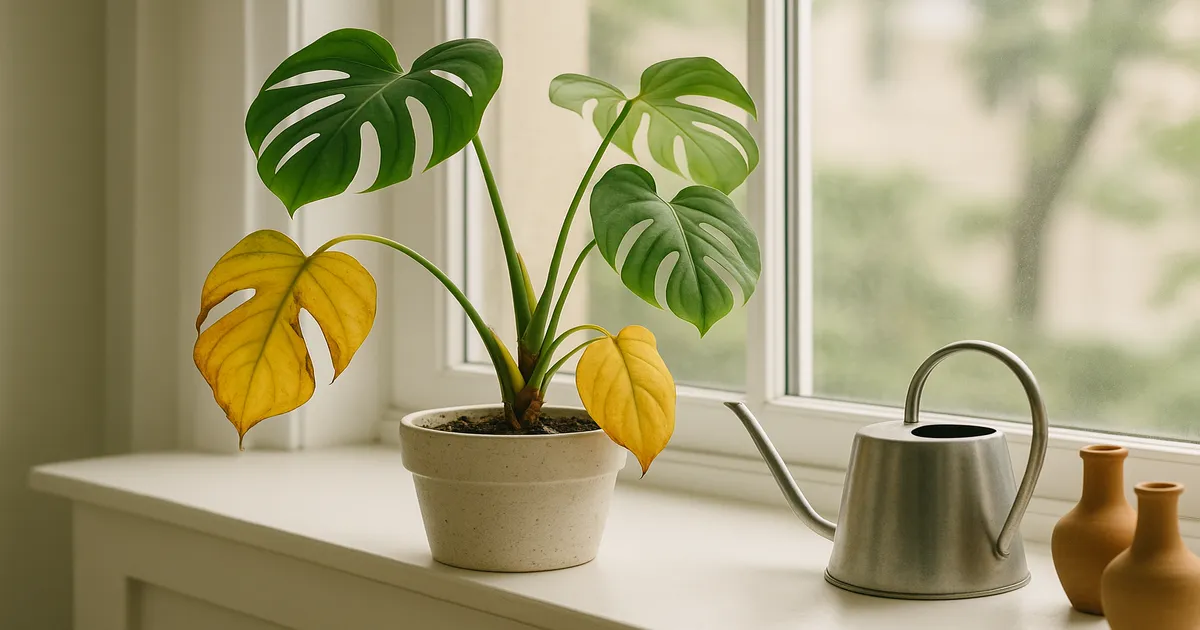
Quick Answer: Yes, you can almost certainly still save your monstera — these plants are remarkably resilient, and most problems are fixable if you act quickly. Start by identifying the cause, remove the stressor, and support recovery with the right conditions. Expect the process to take anywhere from a few days (drought stress) to several months (severe root rot).
If you’re searching “can I still save my monstera,” the good news is that you’re probably not too late — but the clock is ticking. Monsteras are tough, and whether your plant is yellowing, wilting, rotting, or just looking generally miserable, this guide walks you through exactly what’s wrong and how to fix it.
One important caveat: variegated cultivars like Thai Constellation and Albo Variegata are harder to revive. Their white leaf sections contain no chlorophyll, which means less energy in reserve when things go wrong. If you have one of these, move quickly.
Quick Viability Check: Is Your Monstera Still Saveable?
Before doing anything else, confirm the plant is worth saving with two simple tests.
The stem-scratch test: Use your fingernail to gently scratch the main stem near the base. Green or white-green tissue underneath means the stem is alive. Brown, dry, or hollow tissue is dead.
The root-firmness test: Unpot the plant and gently squeeze a few roots. Firm, white or tan roots are healthy. Roots that are brown, mushy, or fall apart when touched have rotted.
If you find any firm roots and any living stem tissue, your monstera has a fighting chance. Even a single healthy root and one node on the stem is enough to work with.
Diagnosing the Problem
Getting the diagnosis right is everything. Treating drought stress the same way you’d treat root rot will make things dramatically worse.
Overwatering and Root Rot (Most Common Cause)
This is the number-one monstera killer. Waterlogged soil creates anaerobic conditions where Pythium, Phytophthora, and Fusarium pathogens thrive and destroy roots fast.
Symptoms:
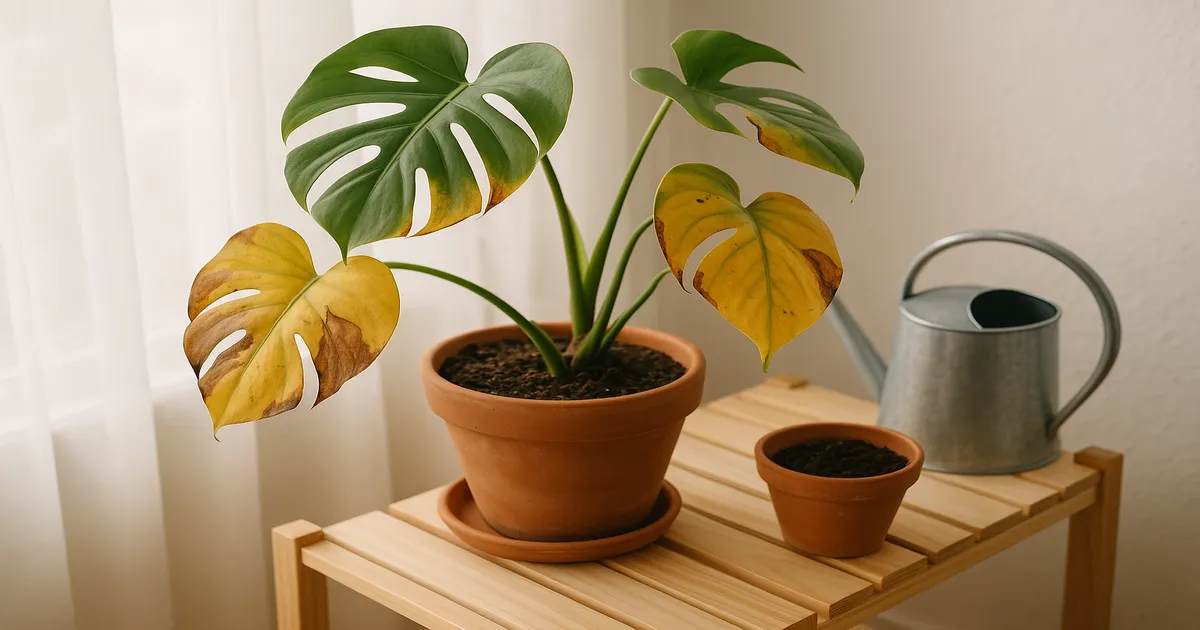
- Yellowing leaves, starting with the lower, older leaves
- Mushy or blackened stem at the base
- Soil that has stayed wet for more than 10–14 days
- Foul, sour smell from the potting mix
- Brown, slimy roots that disintegrate when touched
Underwatering and Drought Stress
Symptoms:
- Wilting and drooping despite soil that looks fine on the surface
- Crispy, brown leaf edges
- Leaves curling inward
- Bone-dry soil pulling away from the pot’s edges
- A noticeably lightweight pot
Too Little or Too Much Light
Too little light produces leggy, stretched growth, small new leaves without fenestrations, and pale foliage. Too much direct sun causes bleached white or tan patches and crispy scorch marks — especially on variegated sections.
Nutrient Deficiency or Fertilizer Burn
The pattern and location of discoloration tells you what’s missing:
| Symptom | Likely Cause |
|---|---|
| Uniform yellowing of older leaves | Nitrogen deficiency |
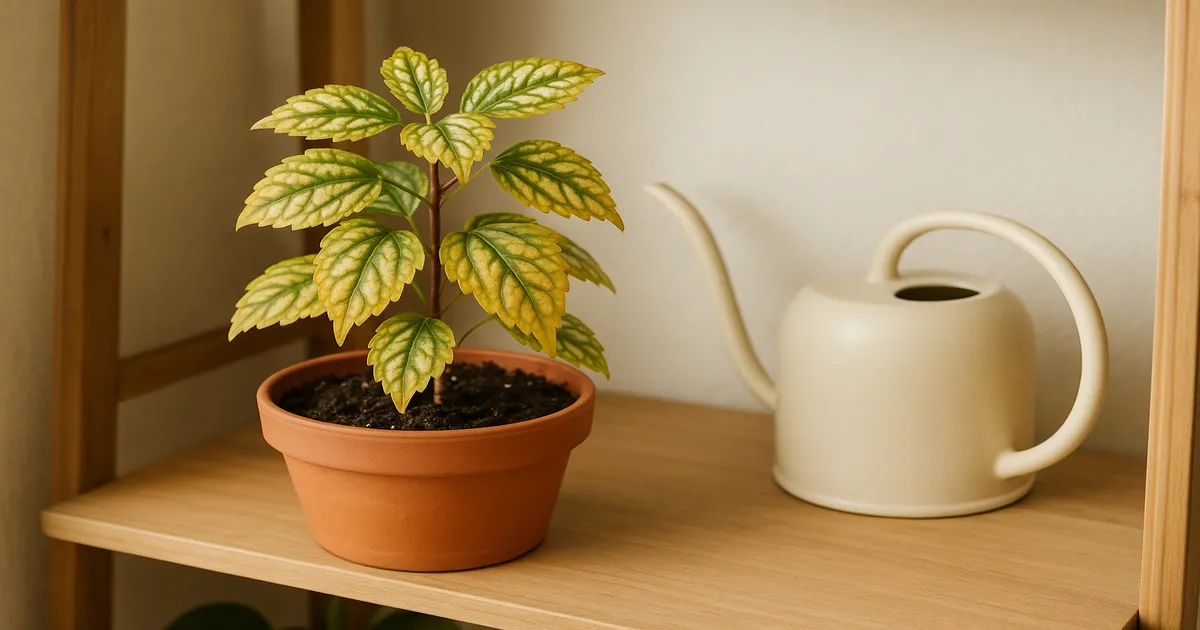
| Yellow between veins on older leaves | Magnesium deficiency |
| Yellow between veins on new leaves | Iron deficiency |
| Brown leaf edges and weak stems | Potassium deficiency |
| Distorted, cupped new growth | Calcium deficiency |
| Brown tips + white crust on soil | Fertilizer salt burn |
Pest Infestations
- Thrips: Silver or bronze streaking, tiny black frass dots, distorted new growth
- Spider mites: Fine webbing on leaf undersides, stippled or bronzed foliage — worst in dry air
- Scale: Brown bumps on stems, sticky honeydew residue, sooty mold
- Mealybugs: White cottony masses in leaf axils and along stems
- Fungus gnats: Tiny flies around the soil; larvae damage fine root hairs in consistently moist mix
Cold Damage and Temperature Stress
Blackened, water-soaked patches that turn brown and papery are the telltale sign of cold damage. Monstera deliciosa suffers chilling injury below 50°F (10°C). Even temperatures within the safe range cause stress when delivered as a constant cold draft from an AC vent or single-pane window.
Low Humidity
Below 40% relative humidity, expect brown crispy leaf tips, curling leaves, and a surge in spider mite activity. Variegated cultivars are especially vulnerable because their white tissue cannot regulate water loss.
Root Bound or Transplant Shock
Roots circling out of drainage holes, rapid drying after watering, and stunted growth despite good care all point to a pot-bound plant. If you’ve recently repotted, wilting and yellowing in the first 2–6 weeks is normal transplant shock — not a disaster.
How to Save a Monstera With Root Rot
Root rot demands immediate action. Every extra day in wet, infected soil makes recovery harder.
Step-by-Step Root Rot Treatment
- Unpot immediately. Don’t wait for “a better time.”
- Rinse the roots under lukewarm running water to expose all the damage.
- Prune every brown or slimy root with scissors sterilized in 70% isopropyl alcohol. Cut back to firm, white tissue.
- Treat cut surfaces with a 3% hydrogen peroxide solution diluted 1:4 with water, or dust with a biological fungicide containing Trichoderma spp. or Bacillus subtilis.
- Air-dry the roots for 30–60 minutes before repotting.
- Repot into fresh, sterile potting mix — never reuse infected soil.
- Choose a terracotta pot with drainage holes. Terracotta wicks excess moisture from the mix, which is exactly what you need during recovery.
- Withhold fertilizer for 4–6 weeks. Damaged roots cannot process nutrients and you risk burning what little root tissue remains.
- Increase light slightly to support recovery without adding heat stress.
- Monitor closely for the first few weeks and resist the urge to overwater again.
The Right Potting Mix for Recovery
A well-draining mix makes an enormous difference. A reliable recipe:
- 50% standard potting soil
- 25–30% perlite
- 20–25% orchid bark
This blend holds enough moisture for roots to absorb while draining fast enough to prevent anaerobic conditions from returning.
When More Than Half the Roots Are Gone
If you’ve had to prune away more than 50% of the root system, take stem cuttings as insurance before repotting the parent plant. A healthy cutting with at least one node can root in water or moist sphagnum moss, giving you a backup while the original recovers.
Reviving a Drought-Stressed or Wilting Monstera
Drought stress looks alarming but is usually the easiest problem to fix. Wilting can reverse within hours once the plant is properly watered.
Bottom-Watering for Severely Dry Soil
When soil dries out completely, it often becomes hydrophobic — water poured from the top runs straight down the sides and out the drainage hole without soaking in. Bottom-watering solves this. Place the pot in a basin filled with a few inches of room-temperature water and leave it for 30–45 minutes. The soil draws up moisture evenly from below. Lift the pot out, let it drain fully, and you’re done.
If bottom-watering still isn’t working, add a single drop of unscented dish soap to the water to break surface tension and help water penetrate. As a last resort, repot into fresh mix entirely.
Getting Back on a Consistent Watering Schedule
The goal is to stop the cycle of feast-and-famine. Water when the top 1–2 inches of soil are dry. A soil moisture meter takes the guesswork out — water when the reading drops to 3–4 on a standard 1–10 scale. Hold off on fertilizer until the plant has fully rehydrated and is pushing new growth.
Fixing Light, Nutrient, and Environmental Problems
Correcting Light Levels
The ideal range for monstera is bright indirect light — roughly 1,500–3,000 foot-candles. If your plant is in a dim corner, move it within 3–5 feet of a south- or east-facing window. A full-spectrum grow light on a 12–14 hour timer is an excellent supplement in darker homes.
For sunburn, move the plant out of direct sun and hang a sheer curtain to diffuse the light. Don’t remove scorched leaves right away — the undamaged portions are still photosynthesizing.
Treating Nutrient Deficiencies and Fertilizer Burn
If you suspect salt buildup from over-fertilizing, flush the soil first: slowly pour 3–4 times the pot volume of pH-adjusted water (target pH 6.0–6.5) through the mix to leach accumulated salts before adding anything new.
For general feeding, use a balanced liquid fertilizer at half strength every 2–4 weeks in spring and summer only. For magnesium deficiency, a soil drench with Epsom salt (1 teaspoon per gallon) works quickly. For iron deficiency, use chelated iron as a foliar spray or drench.
Humidity and Temperature
Target 60–80% relative humidity. A dedicated humidifier placed nearby is the most reliable solution; a pebble tray or grouping plants together helps modestly. Keep your monstera away from AC vents and cold drafts, even if the room temperature is technically within the safe range of 65–85°F (18–29°C). A constant cold airstream hitting the foliage causes stress regardless of what the thermometer reads.
Treating Pest Infestations
First step, always: isolate the plant. Move it away from all your other houseplants before doing anything else.
Thrips are small but destructive — they rasp leaf cells open and can vector plant viruses. For mild infestations, spray with neem oil every 5–7 days for 3–4 cycles. Spinosad spray is an effective organic alternative. For severe cases, an imidacloprid soil drench delivers systemic control. Use blue sticky traps to monitor whether populations are declining.
Spider mites hate humidity. Raise the relative humidity above 60% immediately, then spray with insecticidal soap or neem oil, targeting the undersides of leaves where mites congregate. For severe infestations, a miticide containing abamectin is more reliable.
Scale: Manually remove visible bumps with a cotton swab dipped in 70% isopropyl alcohol, then follow up with a horticultural oil spray to smother any crawlers you missed.
Mealybugs: The same alcohol-swab technique works well. Follow with weekly neem oil sprays for 3–4 weeks to catch newly hatched nymphs.
Fungus gnats: Let the soil dry out more between waterings — larvae need consistently moist soil to survive. Apply a Bacillus thuringiensis israelensis (Bti) soil drench as a biological larvicide. Yellow sticky traps catch adults and tell you when the population is dropping.
With all pests, multiple treatment cycles are non-negotiable. Eggs resist most treatments, and a single missed cycle allows the population to rebound.
Monstera Recovery Timeline: What to Expect
Recovery isn’t instant, and that’s completely normal.
1–4 weeks: Wilting from drought resolves within hours to a few days. Pest populations decline visibly after 2–3 treatment cycles. No new yellowing or browning is itself a good sign.
1–3 months: New leaf buds emerge from the growth point. Roots appear at drainage holes after repotting. Root rot recovery typically takes 4–12 weeks before the plant looks genuinely healthy.
On damaged leaves: Brown tips, scorch marks, and yellowed tissue will not revert to green — that’s just how plants work. The goal is to stop further damage and let the plant grow healthy new leaves. Remove dead leaves only once they are fully brown and papery. Pulling off leaves that are still partially green adds unnecessary stress to a plant that’s already struggling.
Prevention: Keeping Your Monstera Healthy Long-Term
The Ideal Monstera Care Routine
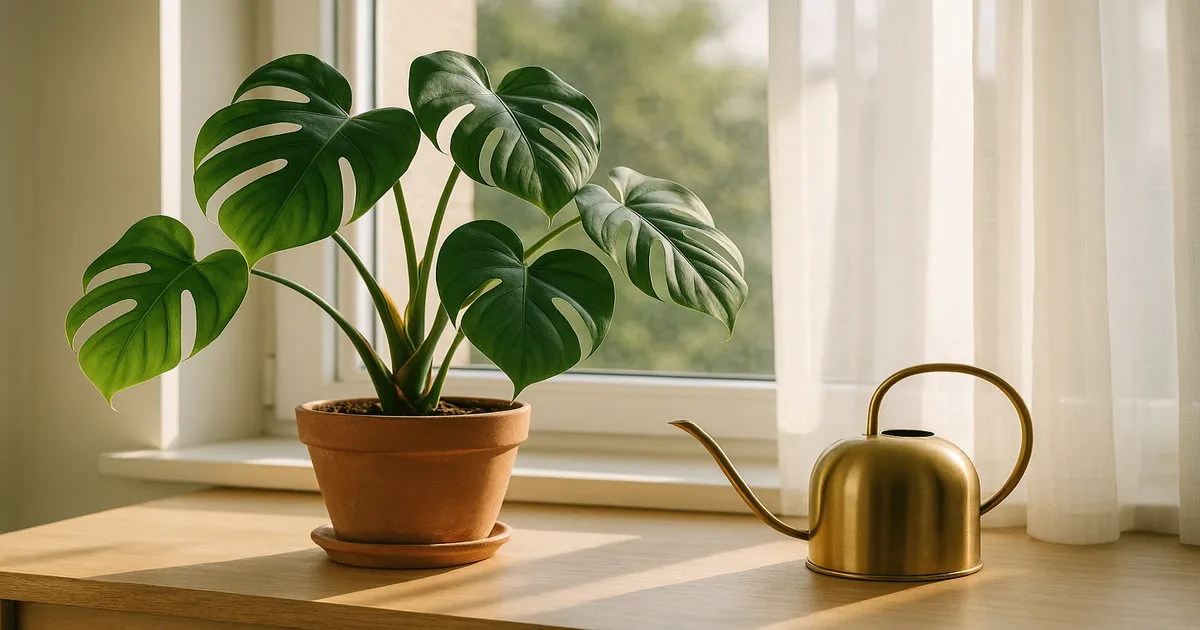
- Light: Bright indirect light (1,500–3,000 foot-candles), within 3–5 feet of a bright window
- Water: When the top 1–2 inches of soil are dry
- Temperature: 65–85°F (18–29°C); never below 50°F (10°C)
- Humidity: 60–80% RH
- Fertilizer: Balanced liquid fertilizer at half strength every 2–4 weeks in spring and summer; stop completely in autumn and winter
- Leaf care: Wipe leaves monthly with a damp cloth to remove dust and improve light absorption
- Pest monitoring: Check leaf undersides every time you water
Pot and Mix
The recovery potting mix works for long-term growing too: standard potting soil + 25–30% perlite + 20% orchid bark. Always use a pot with drainage holes — no exceptions.
When and How to Repot
Repot every 1–2 years, or when roots start circling out of drainage holes. Move up only 1–2 inches in pot diameter. Going too large at once dramatically increases overwatering risk, because the plant’s roots can’t access all that extra soil before it goes stagnant.
Seasonal Adjustments
In autumn and winter, reduce watering frequency and stop fertilizing entirely. Growth slows, water uptake drops, and the plant simply needs less input. Resume your full spring/summer routine once you see new growth pushing in late winter or early spring.
Frequently Asked Questions
Can I still save my monstera if most of the roots have rotted?
Yes, in many cases. If even a small portion of the root system is firm and white, and the stem has at least one living node, the plant can recover after the rotted roots are pruned away and it’s repotted into fresh, well-draining mix. When more than 50% of roots are gone, take stem cuttings as a backup before repotting the parent plant.
Why are my monstera’s leaves turning yellow?
Yellowing most commonly points to overwatering or root rot, especially when it starts with the lower, older leaves. Other causes include nitrogen deficiency, too little light, or the natural aging of the oldest leaves. Check soil moisture and drainage first — that’s the culprit in the majority of cases.
How do I know if my monstera is overwatered or underwatered?
Check the soil and the roots. Overwatered soil stays wet for more than 10–14 days and may smell sour; roots will be brown and mushy. Underwatered soil is bone dry and pulling away from the pot edges; the pot feels very light and the leaves wilt or curl inward. A moisture meter removes all guesswork.
Can a monstera survive without any leaves?
Yes, if the stem has living nodes and at least some healthy root tissue remains. Nodes are the points on the stem where leaves and aerial roots emerge, and they hold the genetic material needed to generate new growth. Keep the plant in warm, humid conditions with indirect light and minimal watering, and it may push new growth from the nodes over several weeks.
How long does it take for a monstera to recover after repotting?
Transplant shock typically resolves within 2–6 weeks as new root hairs establish and the plant regains its ability to absorb water and nutrients. Some wilting and yellowing during this period is normal. Keep conditions stable — consistent warmth, indirect light, and moderate watering — and avoid fertilizing until you see new growth emerging.