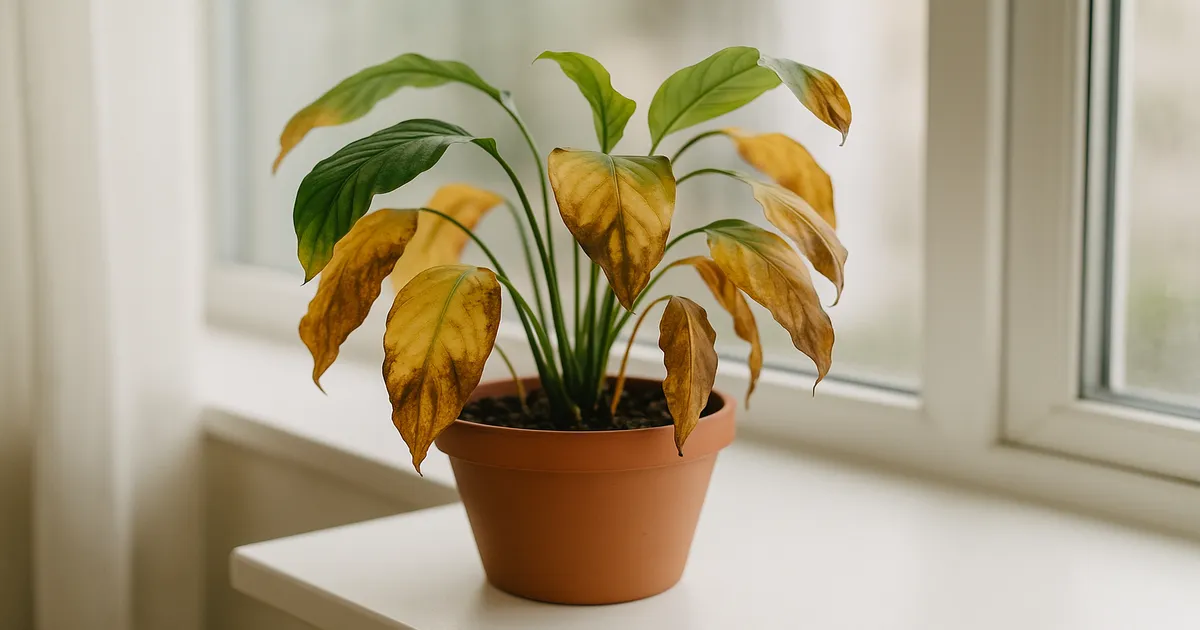
Quick Answer: When your plant changes color, it’s almost always a stress signal — the plant’s visible way of telling you something in its environment is off. Yellowing, browning, white patches, red or purple tints, and black spots each point to different root causes, from watering mistakes to nutrient deficiencies to pests. Match your plant’s color change to the right section below to diagnose and fix the problem fast.
If you’ve ever Googled why is my plant turning this color, you already know how frustrating it is to get vague answers. The good news: most discoloration follows predictable patterns once you understand what’s driving it. This guide covers six color categories — yellow, brown, white/pale, red/purple, black, and variegation loss — and gives you a clear path from symptom to solution. Some color changes are completely normal, so we’ll flag those too.
The Science Behind Plant Color Changes
Chlorophyll, Carotenoids, and Anthocyanins
Leaf color comes down to pigment ratios inside specialized cell structures called plastids. Chloroplasts hold green chlorophyll, which dominates in healthy leaves. Chromoplasts contain yellow and orange carotenoids — always present but masked by chlorophyll. Vacuoles store red and purple anthocyanins, produced on demand when the plant is under stress.
When something disrupts chlorophyll, those masked pigments show through. That’s why stressed plants often turn yellow or orange before dying.
What Chlorophyll Needs to Stay Green
Chlorophyll synthesis depends on adequate light, nitrogen (N), magnesium (Mg), iron (Fe), manganese (Mn), and temperatures within the plant’s comfort range. Remove any one of these and chlorophyll breaks down faster than it’s replaced.
Why Color Changes Are Diagnostic Clues
Think of discoloration as your plant’s alarm system. Each color — and the pattern in which it appears — points to a different failure. A few terms worth knowing:
- Chlorosis — loss of green color from chlorophyll breakdown
- Necrosis — cell death, appearing as brown or black tissue
- Etiolation — pale, stretched growth from insufficient light
- Anthocyanin upregulation — stress-triggered production of red/purple pigments
- Variegation reversion — loss of white or cream patterning as the plant reverts to solid green
Why Is My Plant Turning Yellow?
Yellow leaves are the most common houseplant complaint, and the cause is almost never just one thing. Pattern matters enormously here.
Overwatering and Root Rot
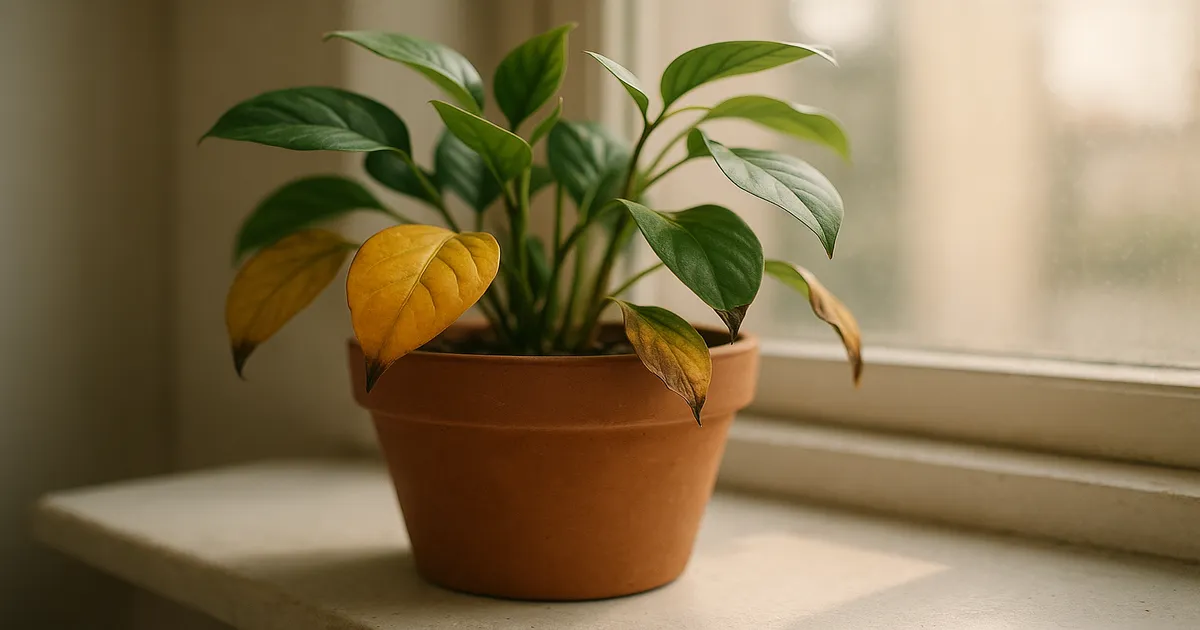
This is the single most common cause of yellowing. Waterlogged soil suffocates roots, which die and can no longer transport water or nutrients upward. Secondary fungal pathogens move in quickly. Yellowing tends to be uniform across the leaf blade and starts with older, lower leaves. If the soil has been wet for more than 10 days or you notice a foul smell, overwatering is the likely culprit.
Underwatering and Drought Stress
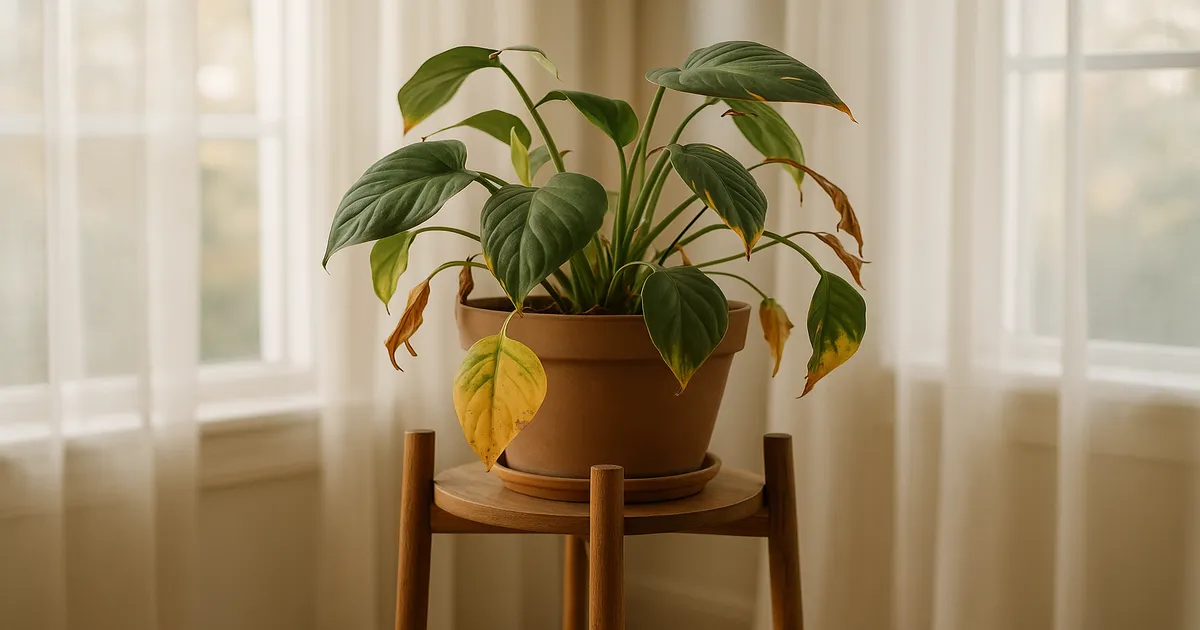
Drought also causes yellowing, but texture tells the story: leaves feel crispy or papery and often curl inward before they yellow. Browning usually starts at the tips and margins. The pot will feel noticeably light, and the soil will be bone dry several inches down.
Nitrogen Deficiency
Nitrogen is the backbone of chlorophyll molecules. When it runs low, the plant scavenges nitrogen from older leaves to support new growth — so older and lower leaves yellow first while new growth looks healthy. This is common in plants that haven’t been fertilized in over a year, or in soil with a pH outside the 6.0–7.0 range where nitrogen becomes chemically unavailable.
Iron or Magnesium Deficiency (Interveinal Chlorosis)
Both deficiencies cause yellowing between leaf veins while the veins themselves stay green — a pattern called interveinal chlorosis. The key difference:
- Iron deficiency hits new leaves first (iron is immobile in plants) and is usually triggered by soil pH above 7.0
- Magnesium deficiency hits older leaves first (magnesium is mobile) and is especially common in plants watered heavily with hard tap water
Natural Leaf Senescence
If only one to three lower leaves are yellowing at a time while the rest of the plant looks healthy and is producing new growth, this is completely normal. Plants regularly shed older leaves to redirect energy. Remove them cleanly and move on.
Root-Bound Stress
A severely pot-bound plant exhausts soil nutrients quickly and struggles to move water through a tangled root mass. Signs include yellowing despite consistent care, roots escaping drainage holes, and soil that dries out within 24 hours of watering.
Pest Infestations
Spider mites cause stippled, speckled yellowing by piercing individual leaf cells. Root mealybugs and fungus gnat larvae damage roots underground, mimicking overwatering symptoms. Check leaf undersides with a 10x loupe and inspect roots if you suspect root-zone pests.
Why Is My Plant Turning Brown?
Low Humidity and Tip Burn
Most tropical houseplants evolved in 50–80% relative humidity. Indoor air — especially in winter with heating running — often drops to 20–30% RH. The result: crispy brown tips and edges as leaf margins dry out faster than the plant can replace moisture. Ferns, calatheas, and fittonias are especially prone.
Fluoride and Salt Toxicity
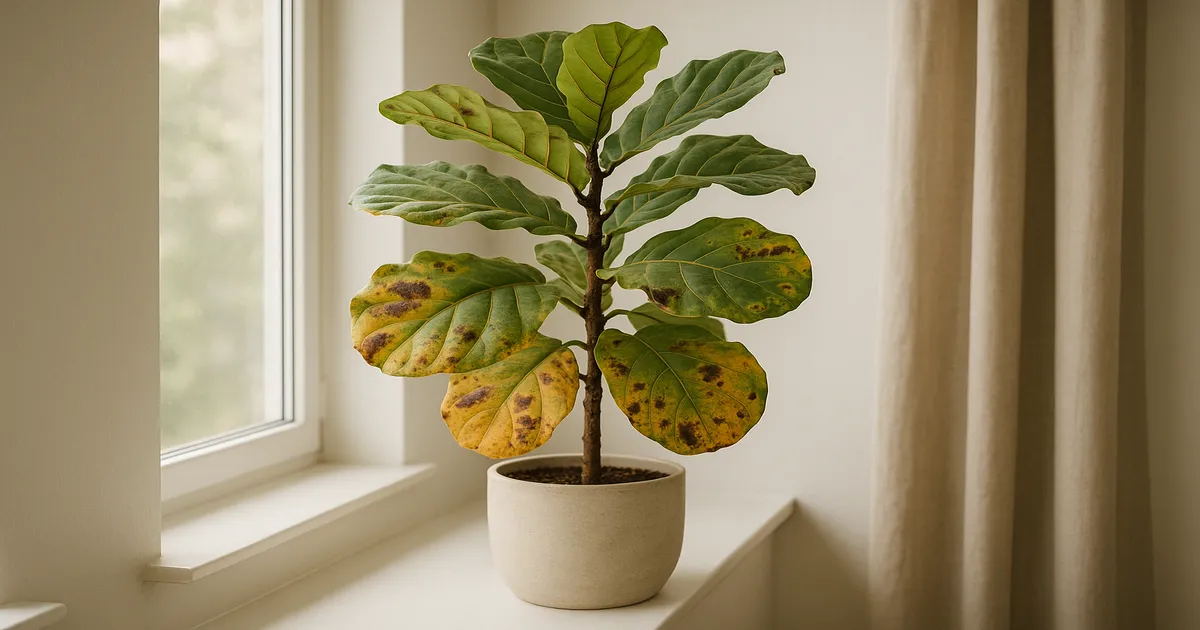
Fluoride in tap water accumulates in leaf tips where transpiration is highest. Fertilizer salts build up similarly over time. The diagnostic clue is a yellow halo between the brown tip and healthy green tissue, sometimes accompanied by white crusty deposits on the soil surface. Dracaenas, spider plants, and calatheas are particularly sensitive.
Sunburn and Excess Direct Light
When light intensity exceeds what a plant can handle, chlorophyll is destroyed faster than it’s synthesized. The result is bleached, papery, tan-brown patches on sun-facing leaf surfaces. This damage is irreversible — affected tissue won’t recover. Moving the plant protects new growth, but existing damage stays.
Cold Damage and Drafts
Cold air from windows, AC vents, or doorways causes sudden browning or blackening, often with a water-soaked look initially. Most tropical houseplants suffer chilling injury below 50–55°F (10–13°C). Leaves closest to the cold source are affected first.
Advanced Root Rot
If the stem base is collapsing and turning brown or black with a mushy texture and foul smell, you’re dealing with advanced fungal root rot — a more urgent situation than tip browning and one that requires immediate repotting.
Why Is My Plant Turning White or Pale?
Sunburn and Photobleaching
Intense direct light destroys chlorophyll faster than it can be replaced, leaving pale, washed-out, or white patches on sun-exposed surfaces. The damage is permanent on affected tissue.
Etiolation from Insufficient Light
Too little light causes the opposite problem: plants deplete existing chlorophyll and stretch toward any available light source. New growth comes in pale green to yellow-white, with elongated internodes and small, widely spaced leaves. It’s both a color change and a structural one.
Powdery Mildew
Powdery mildew looks like someone dusted white powder on the leaves. The key distinction: it’s superficial and wipeable. It thrives in moderate humidity (40–70% RH) with poor air circulation. Begonias and African violets are common victims indoors.
Variegation Reversion
Variegated plants like Monstera ‘Albo’ or Pothos ‘Marble Queen’ can start producing solid green leaves. This happens two ways: environmentally, when low light causes the plant to favor chlorophyll-rich cells for survival; or genetically, when a mutation in meristematic tissue produces an all-green growing point. Existing variegated leaves won’t change — only new growth comes in green.
Hard Water Mineral Deposits
Calcium carbonate from hard water leaves white spots or a film on leaf surfaces. Unlike powdery mildew, these deposits are hard and don’t wipe off easily without a dilute acidic solution (such as a 1:10 white vinegar and water mix). Purely cosmetic — switching to filtered or rainwater prevents new deposits.
Why Is My Plant Turning Red or Purple?
Anthocyanin Stress Response
Red and purple pigments aren’t always a bad sign. Plants produce anthocyanins as a photoprotective response when stressed by high light, cold temperatures, drought, or nutrient deficiency. Succulents like Echeveria and Sedum are famous for this, and the coloring is often considered desirable.
Phosphorus Deficiency
Phosphorus deficiency causes anthocyanin accumulation, typically showing up as purple or reddish coloration on leaf undersides and stems, with older leaves affected first and stunted overall growth. The most common culprit isn’t depleted soil — it’s cold soil temperatures below 55°F (13°C) that block phosphorus uptake even when it’s present.
Cold Stress and Temperature Fluctuations
Temperatures below a plant’s comfort zone trigger gradual whole-plant purpling over several days. Unlike phosphorus deficiency, cold stress tends to affect the entire plant rather than isolated leaves, and the color usually reverses once temperatures normalize.
Natural New Growth Coloration
Many species produce naturally red or bronze new growth — Syngonium, Ficus elastica ‘Burgundy’, and Cordyline among them. This is completely normal. The color typically deepens or changes as leaves mature.
Why Is My Plant Turning Black?
Frost and Freeze Damage
Ice crystal formation ruptures cell walls, causing rapid blackening. Onset is sudden after cold exposure, starting with a water-soaked appearance before collapsing to black mush. Affected tissue is dead and won’t recover.
Bacterial Infections
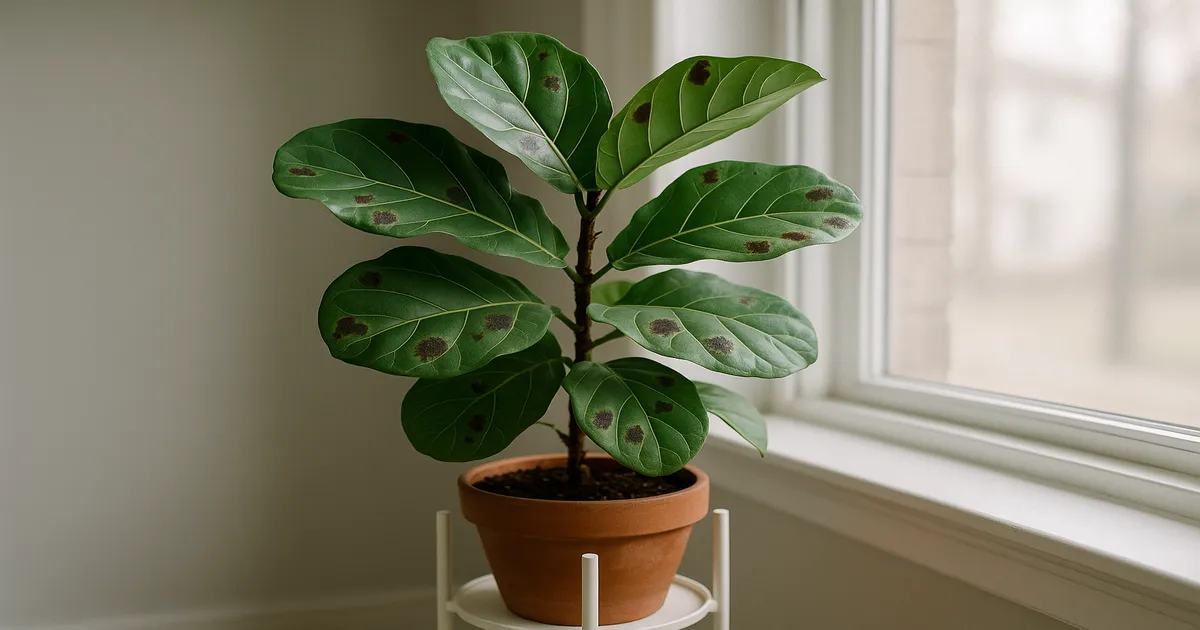
Bacterial pathogens like Erwinia and Xanthomonas create irregular, water-soaked black spots with yellow halos that spread quickly in humid conditions. The distinguishing feature: no visible fungal structures — no rings, no powdery coating, no fuzzy growth.
Fungal Disease (Botrytis and Black Spot)
Botrytis cinerea (gray mold) produces black or brown lesions with visible gray fuzzy spore masses — a key visual clue. Other fungal pathogens like Alternaria cause circular black spots with defined margins. Both are favored by humidity above 80% RH and poor air circulation.
Sooty Mold from Pest Infestations
Sooty mold is a black, soot-like coating on leaf surfaces, but it’s not a primary infection. It’s fungal growth feeding on honeydew secreted by sap-sucking pests like aphids, scale, whitefly, and mealybugs. Treating the mold without addressing the pest infestation won’t solve anything — find the bugs first.
How to Fix Plant Discoloration: Solutions by Color and Cause
Fixing Yellow Leaves
For overwatering and root rot:
- Stop watering immediately and move the plant to a bright, well-ventilated spot
- Unpot the plant and trim all black, mushy, or foul-smelling roots with sterile scissors
- Dust cut root ends with powdered cinnamon or sulfur as a natural antifungal
- Repot into fresh, well-draining mix with 20–30% perlite added (Fox Farm Ocean Forest)
- Before the next watering, let soil dry to a moisture meter reading of 2–3 on a 1–10 scale
- Never leave standing water in saucers longer than 30 minutes
For underwatering: Bottom-water the plant by setting the pot in a basin of room-temperature water for 20–30 minutes until the soil is saturated, then drain completely.
For nitrogen deficiency: Apply a balanced liquid fertilizer at half strength every two weeks during the growing season, and check soil pH — adjust to 6.0–7.0 if needed. (Jack’s Classic All Purpose 20-20-20)
For iron deficiency: Apply chelated iron as a soil drench and lower pH to 6.0–6.5. For magnesium deficiency: Use an Epsom salt solution (1 teaspoon per liter of water) monthly, or switch to a fertilizer containing magnesium sulfate.
Fixing Brown Tips and Edges
- Target 50–60% relative humidity with a humidifier placed within 3–4 feet of your plants — far more effective than misting
- Switch to rainwater or filtered water for fluoride- and salt-sensitive species
- Flush salt buildup by watering thoroughly until water runs freely from drainage holes, then repeating twice
- Move plants away from south- or west-facing windows if sunburn patches appear on upper leaf surfaces
Fixing White or Pale Leaves
For etiolation, move the plant to a brighter spot — bright indirect light (1,500–3,000 foot-candles) suits most aroids and tropicals. For powdery mildew, improve air circulation first, then apply a dilute neem oil or potassium bicarbonate spray. For variegation reversion, prune all-green growth back to the last variegated node to encourage patterned regrowth.
Fixing Red or Purple Leaves
Move the plant away from cold drafts and keep temperatures consistently above 60°F (15°C). If phosphorus deficiency is suspected, apply a fertilizer with a higher middle number (e.g., 5-10-5) and ensure soil temperatures are warm enough for uptake. Stabilizing the environment usually resolves stress-related coloring within two to four weeks.
Fixing Black Leaves
- Isolate the affected plant immediately to prevent spread
- Remove all blackened tissue with sterile tools
- For bacterial infections: apply a copper-based bactericide and improve air circulation
- For fungal disease: apply a fungicide labeled for the specific pathogen; reduce humidity and avoid overhead watering
- For sooty mold: eliminate the pest infestation first with insecticidal soap or neem oil, then wipe mold from leaves with a damp cloth
When to Repot, Propagate, or Let Go
Repot when roots are escaping drainage holes, soil dries out within 24 hours, or the plant shows persistent nutrient deficiency despite regular feeding. Propagate if the top growth is healthy but the root system is too far gone — stem cuttings can save the genetics even when the mother plant can’t be rescued. If more than 70% of the root system is rotten and the stem is collapsing, it’s time to let go.
Preventing Plant Color Changes: Proactive Care Tips
Check Soil Moisture — Not the Calendar
The single most impactful change you can make is checking soil moisture before watering rather than following a fixed schedule. Stick your finger 2 inches into the soil, or use a moisture meter and wait for a reading of 2–3 before watering again. Pot size, season, soil mix, and humidity all affect drying time — no calendar can account for all of that.
Environmental Baselines for Common Houseplants
Most tropical houseplants thrive in these ranges:
- Humidity: 50–80% RH
- Temperature: 60–80°F (15–27°C)
- Light: bright indirect light (1,500–3,000 foot-candles) for most aroids and tropicals; lower light (100–500 foot-candles) for ferns and calatheas
A digital hygrometer is worth every penny for tracking humidity, especially in winter when heating systems dry out indoor air dramatically.
Fertilize Consistently to Prevent Nutrient Deficiencies
Fertilize actively growing plants every 2–4 weeks during spring and summer at half the recommended dose. Reduce to monthly or stop entirely in winter when growth slows. Always water before fertilizing to avoid burning dry roots.
Inspect for Pests Weekly
Weekly leaf inspections catch infestations before they cause widespread discoloration. Flip leaves over and check stems with a 10x loupe — spider mites, scale, and early mealybug colonies are invisible to the naked eye at first. Early detection means a simple spray treatment rather than a full plant rescue.
Adjust Care Seasonally
Winter is when most discoloration problems spike — lower light, drier air from heating systems, and cooler temperatures all stress plants simultaneously. Anticipate this by moving plants closer to windows in autumn, running a humidifier, and dialing back watering frequency as growth slows.
Frequently Asked Questions: Why Is My Plant Turning This Color?
Why are my plant’s lower leaves turning yellow but the new growth looks healthy?
This is almost always nitrogen deficiency or natural leaf senescence. Nitrogen is mobile in plants — when it runs low, the plant pulls it from older leaves to support new growth. If only one to three leaves are dropping at a time and the plant is otherwise thriving, it’s normal turnover. If yellowing is spreading upward, start fertilizing with a balanced liquid feed.
Why are my plant’s leaf tips turning brown even though I water regularly?
Brown tips with otherwise green leaves are almost never a watering problem. The most common causes are low humidity, fluoride or salt buildup from tap water, or fertilizer accumulation in the soil. Switch to filtered or rainwater, flush the soil every few months, and place a humidifier nearby if indoor humidity drops below 40% RH.
Why is my plant turning red or purple when it used to be green?
Reddish or purple coloring usually means the plant is producing anthocyanins — pigments triggered by stress from high light, cold temperatures, drought, or phosphorus deficiency. If the color appeared after a temperature drop or a move to a brighter window, that’s your answer. Stabilize conditions and the color typically fades back to green within a few weeks.
Why are my plant’s leaves turning black?
Black leaves usually indicate one of four things: frost or cold damage, bacterial infection, advanced fungal disease, or root rot progressing up the stem. Check for mushy texture and foul odor (root rot), water-soaked spots with yellow halos (bacterial), or fuzzy gray growth (Botrytis). Isolate the plant immediately, remove all affected tissue, and treat based on the cause.
Can yellow or brown leaves turn green again?
Generally, no. Once leaf tissue has lost its chlorophyll or died, it won’t recover. The goal is to fix the underlying cause so new growth comes in healthy and green. Remove damaged leaves cleanly to redirect the plant’s energy and improve airflow around remaining foliage.