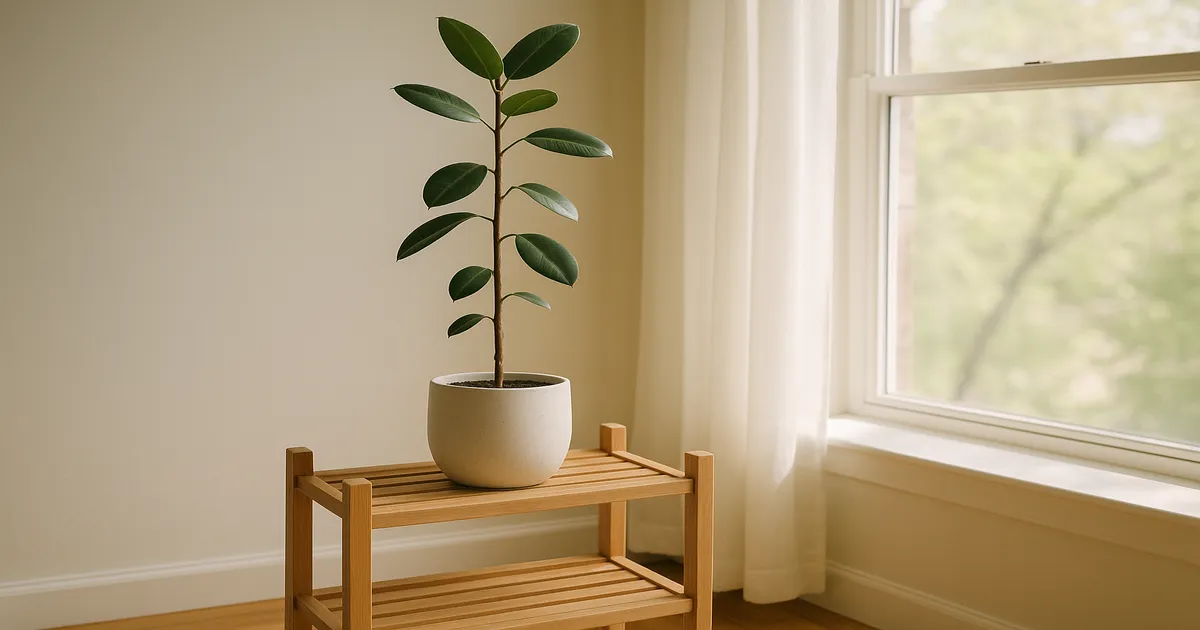
Quick Answer: It is almost never too late to chop and propagate the top half of your rubber plant. A leggy Ficus elastica is the ideal candidate — the chop rejuvenates the mother plant and gives you a rooted cutting at the same time. The only genuine “too late” scenarios are rot that has traveled into the stem, severe cold damage, or a cutting with no healthy leaves left.
If you’re asking “should I chop and propagate the top half of this rubber plant, or is it too late?” — the short answer is go for it. The longer answer depends on why your plant looks the way it does. A simple case of legginess is easy to fix. Something more serious underneath the surface needs a closer look first.
Should You Chop and Propagate Your Rubber Plant? A Quick Decision Guide
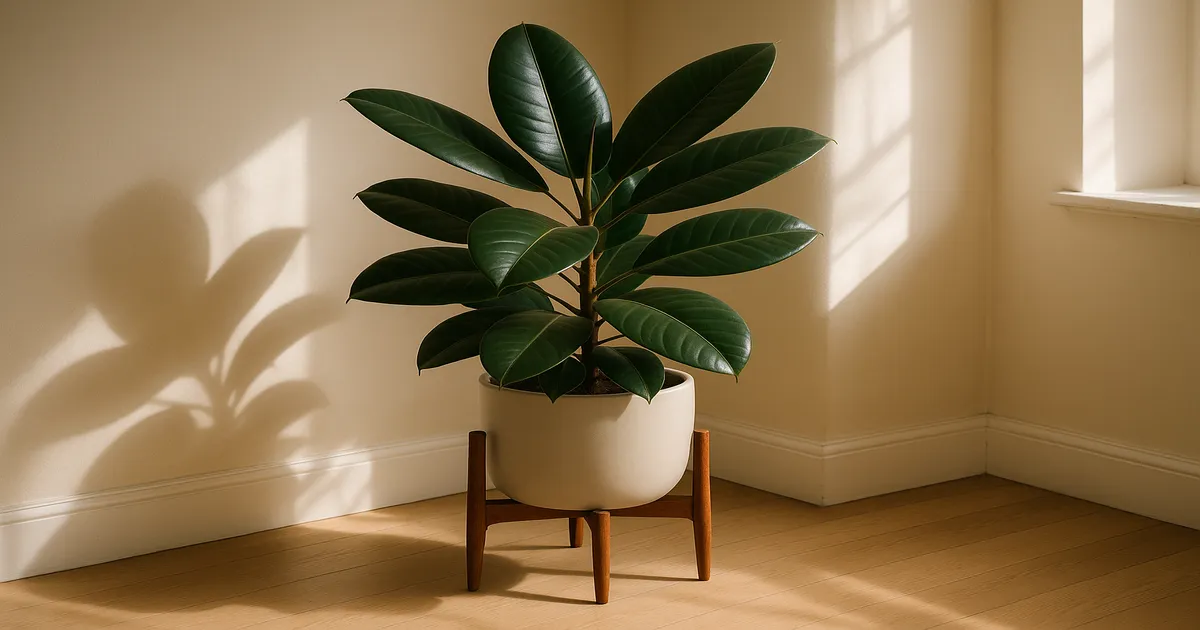
A rubber plant that has grown tall and dropped its lower leaves is the textbook case for a chop. Cutting the top section does two things at once: it removes the apical tip that was chemically suppressing your plant’s side buds, and it gives you a cutting to root into a second plant. This isn’t risky surgery — it’s exactly what the plant needs.
Here’s a simple framework:
- Green light — chop confidently: The stem is firm and green under the bark, at least two or three healthy leaves remain on the top section, and it’s spring or early summer.
- Yellow light — chop with preparation: The plant has mild pest activity, is slightly drought-stressed, or the stem is moderately woody. Treat the issue first, then cut.
- Red light — fix the problem before cutting: Active rot in the stem, visible cold damage on the section you plan to cut, mid-winter with no grow light, or no healthy leaves remaining.
When It Might Actually Be Too Late
Genuinely bad scenarios are rarer than you’d think. If root rot has traveled up into the main stem above the soil line, a cutting taken from that zone will fail. Severe cold damage — the kind that turns tissue black and water-soaked — can compromise the vascular system roots need to form. A cutting with no leaves at all also struggles, because it can’t photosynthesize enough energy to push roots. In any of these cases, the answer isn’t “give up.” It’s “assess carefully and possibly treat first.”
Is It Too Late? How to Check Your Rubber Plant Before Cutting
The Scratch Test
Before you make any cut, scratch the bark of the stem section you plan to propagate with a fingernail or the tip of a clean knife. Bright green tissue underneath means the cambium is alive and the cutting has a strong chance of rooting. Brown, grey, or dry tissue at that depth is a warning sign. Run this test on the section you intend to take — not just the lower stem.
Checking for Root Rot
Pull the plant from its pot and examine the roots. Healthy roots are white to tan and firm. Rotted roots are brown to black, mushy, and often smell unpleasant. If rot is confined to the roots and hasn’t reached the main stem, treat the plant and still take your cutting. If you can see or smell rot in the stem itself, take the cutting from well above the affected zone and do the scratch test first to confirm you’re working with clean tissue.
Other Red Flags: Cold Damage and Pests
Cold damage shows up as blackened, water-soaked patches. If that damage has reached the section you want to propagate, wait and reassess as the plant stabilizes. For pests — spider mites, scale, mealybugs, thrips — the issue isn’t that you can’t propagate, it’s that you’ll transfer the infestation to your new cutting. Treat first, wait two to three weeks, then cut.
Does Timing Matter?
Spring and early summer are ideal. The plant is in active growth, temperatures are rising, and rooting is fastest. Late summer and early fall are still workable. Mid-winter is the one time to genuinely pause, unless you have a grow light keeping both the cutting and the stump in bright indirect light through the cold months.
Method 1: Stem Cutting — Best for Green or Mildly Woody Stems
Tools and Preparation
Use a sharp knife or pruning shears sterilized with 70% isopropyl alcohol. A dull blade crushes vascular tissue and reduces rooting success. Wear gloves — rubber plant latex is a mild skin irritant and toxic to pets and children. After the cut, let the end air-dry for 20–30 minutes, or briefly dip it in lukewarm water to stop the latex flow. Excessive dried latex can seal the cut end and block root formation.
How to Make the Cut
Cut just below a node — the point where a leaf attaches to the stem. Your cutting should be 15–30 cm (6–12 inches) long with at least two to four nodes. Remove the lower leaves, leaving two or three at the top. If the remaining leaves are very large, roll them loosely and secure with a rubber band to reduce moisture loss without removing them.
Choosing a Rooting Medium
- Water: Simple and satisfying — you can watch roots develop. Works best for young, green stems. Change the water every three to five days and move to soil once roots reach 2–5 cm.
- Sphagnum moss: Good moisture retention with airflow. Wrap the cut end in moistened moss inside a clear plastic bag. Works well for semi-woody stems.
- Perlite/coco coir mix (50:50): The most reliable all-rounder. Reduces rot risk while staying moist enough to encourage roots. Aim for a pH of 5.5–6.5.
Apply an IBA-based rooting hormone to the cut end before placing it in any medium — it makes a real difference, especially for woodier material.
Humidity, Heat, and Light
Cover your cutting with a clear humidity dome or plastic bag to maintain 70–85% relative humidity. A seedling heat mat set to 21–27°C (70–80°F) at the root zone speeds things up noticeably. Place the cutting in bright indirect light — around 1,500–3,000 foot-candles — but not direct sun, which will overheat the leaves before roots can support the plant.
Green, soft stems typically root in four to eight weeks. Woodier material can take eight to twelve weeks. Don’t give up early — rubber plant cuttings are slow but reliable when conditions are right.
Method 2: Air Layering — Best for Thick or Woody Stems
When a stem is thick and woody, a simple cutting rooted in water has a much lower success rate. Air layering solves this by letting roots form while the cutting is still attached to the mother plant, so it keeps receiving water and nutrients throughout the process.
Step-by-Step
- Select a healthy stem section with two or three leaves above your intended rooting zone.
- Strip leaves from a 5–8 cm section of stem.
- Use a sharp, sterile knife to remove a complete ring of bark (girdling) — cut down to the wood and peel the ring away cleanly. This interrupts the downward flow of auxin and sugars, concentrating them at the wound.
- Dust or paint the exposed cambium generously with IBA rooting hormone.
- Pack the wound with a golf-ball-sized amount of sphagnum moss soaked and wrung out to about 70% moisture.
- Wrap the moss tightly in clear plastic film and seal both ends with grafting tape or twist ties. The clear plastic lets you monitor root development without disturbing anything.
Once roots are 2–5 cm long and visible through the plastic — usually four to twelve weeks — cut the stem just below the moss ball. Plant the entire moss ball into a well-draining mix (Fox Farm Ocean Forest) without disturbing the roots. They’ve grown into the moss, and pulling them apart sets back establishment significantly.
What Happens to the Mother Plant After the Chop?
The stump is not a casualty. Removing the apical tip releases dormant lateral buds from auxin suppression, and within two to six weeks you’ll typically see one to three new shoots emerging from nodes just below the cut. Make your cut at a 45-degree angle just above a node to encourage directional bud break and prevent water pooling on the cut surface.
With less leaf area, the stump transpires far less water than before. Pull back on watering and let the soil dry out more between sessions — overwatering a freshly chopped plant is one of the most common mistakes. Keep it in bright indirect light to fuel new bud break. Hold off on fertilizing for four to six weeks, then resume with a balanced liquid fertilizer at half strength once you see new growth.
Propagation by Cultivar: What to Expect
‘Robusta’, ‘Abidjan’, and ‘Burgundy’ are the most forgiving cultivars. ‘Robusta’ in particular roots readily and tolerates a range of conditions — it’s the best choice for first-time propagators. ‘Burgundy’ follows the same methods but roots a few weeks more slowly.
Variegated cultivars — ‘Tineke’, ‘Ruby’, and ‘Shivereana’ — are more sensitive to propagation stress. ‘Ruby’ is the most delicate of the group. One important note: variegation can partially revert in cuttings kept in low light, as the plant produces more chlorophyll-dense cells to compensate. Start these cuttings in bright indirect light from day one to preserve their coloring.
Frequently Asked Questions
Should I chop and propagate the top half of my rubber plant if it’s winter?
Mid-winter is the most challenging time, but it’s manageable. Use a heat mat to keep the root zone at 21–27°C and a grow light to maintain bright indirect light for both the cutting and the stump. Without those tools, it’s better to wait until spring.
Can you propagate a rubber plant from just the top cutting?
Yes — the top cutting is the most common and most successful type to propagate. It should include at least one node (ideally two to four), a few healthy leaves, and a clean cut end. The top section often roots faster than lower stem sections because the tissue tends to be younger and greener.
How long does it take a rubber plant cutting to root in water?
A green stem typically shows roots in three to six weeks at 21–27°C with bright indirect light. Woodier stems can take eight weeks or more. Change the water every three to five days to prevent bacterial buildup, and move the cutting to soil once roots reach 2–5 cm.
Will the mother plant grow back after being cut?
Yes. The stump produces new lateral shoots from dormant axillary buds within two to six weeks. Give it bright indirect light and resist the urge to overwater while it’s leafless. Over time, the new branching growth creates a fuller plant than the original single-stemmed version.
Is air layering better than stem cuttings for rubber plants?
For young, green stems, a standard stem cutting works perfectly well. For mature, woody, or thick stems — anything over about 2 cm in diameter — air layering is significantly better. The cutting forms roots while still attached to the mother plant, which eliminates the drought stress that causes woody cuttings to fail.