Quick Answer: PictureThis is the best plant identifier app for most people — it combines strong accuracy on common houseplants with a polished care ecosystem that beginners will actually use. If you want something completely free, PlantNet (Pl@ntNet) is the top choice for outdoor and wildflower identification, backed by genuine scientific credibility.
Figuring out what is the best plant identifier app is harder than it looks. Dozens of options exist, they all claim impressive accuracy, and the differences that actually matter — care guides, offline mode, disease diagnosis, cultivar coverage — are buried in marketing copy. This guide cuts through the noise. We compared seven major apps across the criteria that matter most, so you can pick the right tool for your situation, whether you’re a houseplant collector, a weekend hiker, or a parent trying to figure out what your toddler just chewed on.
What Is the Best Plant Identifier App? Our Top Picks at a Glance
Our Top Pick: PictureThis
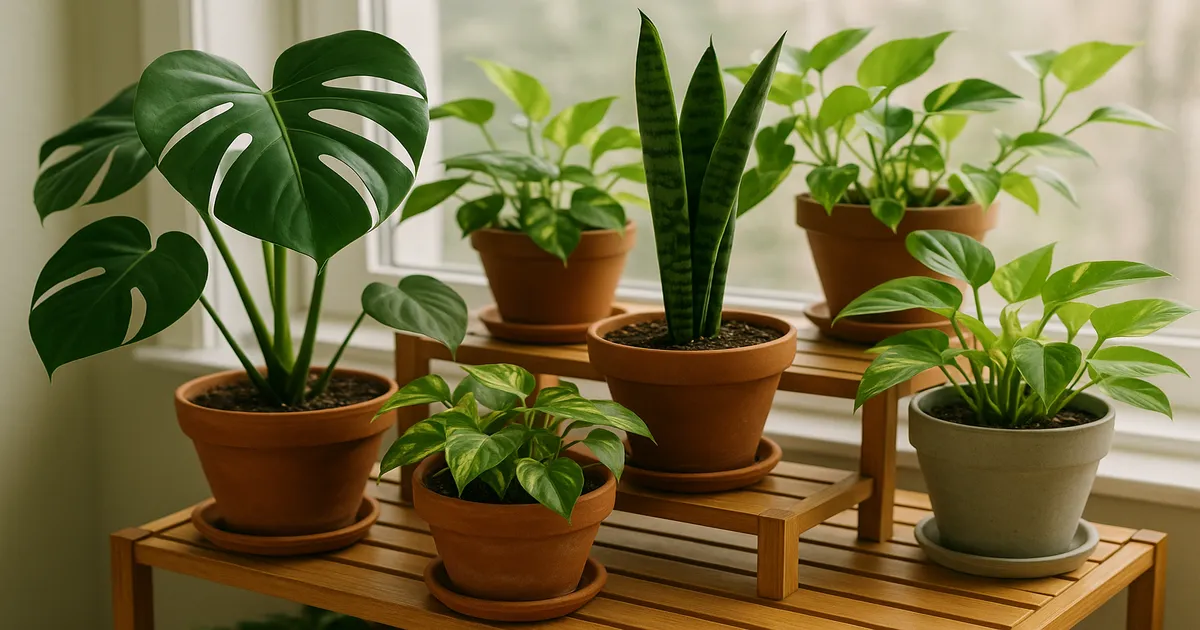
PictureThis earns the top spot because it does more than identify plants — it gives you a full care ecosystem alongside that ID. Accuracy on common houseplant genera like Monstera, Pothos, Philodendron, and Calathea is genuinely impressive, and the disease and pest diagnosis module is one of the best in the category. The subscription cost is the main trade-off, but for houseplant owners who want identification plus ongoing care support in one app, nothing else comes close.
Best Free Alternative: PlantNet (Pl@ntNet)
PlantNet is developed by a French research consortium and linked to the GBIF global biodiversity database — proper scientific infrastructure, not a startup side project. It’s completely free with zero paywalled features, and its coverage of European and North American wild flora is excellent. It won’t give you watering reminders or a plant journal, but if raw identification accuracy for outdoor plants is what you need, PlantNet delivers without asking for your credit card.
What to Look For in a Plant Identifier App
Identification Accuracy and Database Size
Top-1 accuracy — whether the app’s first suggestion is correct — ranges from around 67% to over 90% depending on the app, the species, and photo quality. That’s a meaningful gap. Database size matters, but data quality matters more. An app with 10,000 well-labeled species will outperform one with 30,000 poorly curated entries. Look for apps that cite independent accuracy benchmarks rather than raw species counts.
One limitation applies to every app on this list: cultivar-level identification is unreliable. No current app can confidently distinguish a Monstera deliciosa ‘Thai Constellation’ from an ‘Albo Variegata’, or tell apart specific Hoya cultivars. For rare or high-value plants, specialist human expertise remains the gold standard.
Houseplant vs. Outdoor Flora Coverage
Apps skew toward one or the other. PlantNet and iNaturalist excel at wild and outdoor flora; PictureThis and LeafSnap are stronger on cultivated and garden plants. If you’re primarily identifying houseplants, check whether the app covers tropical genera well — many apps trained heavily on North American and European flora struggle with Calathea, Alocasia, and other popular tropicals.
Disease and Pest Diagnosis
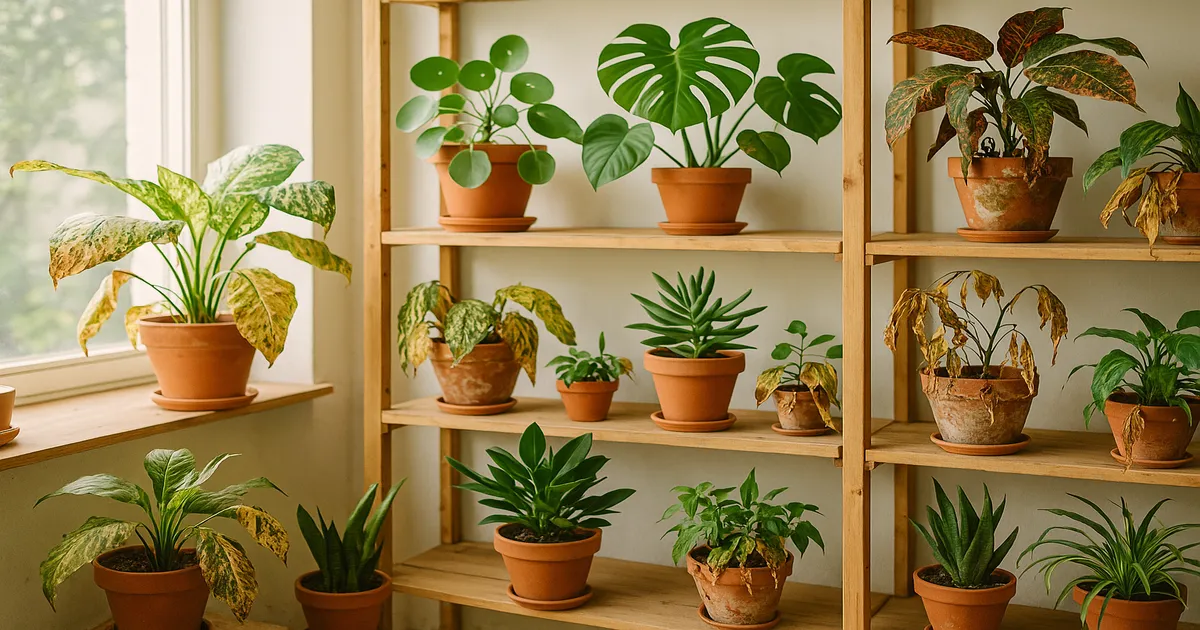
Bundled disease and pest identification is a major differentiator. PictureThis has the most developed module in this category, letting you photograph symptomatic leaves and get diagnosis suggestions alongside treatment advice. Knowing your plant is a Ficus lyrata is only half the battle when it’s dropping leaves.
Offline Mode and Care Features
For hikers and travelers in areas with patchy cell coverage, offline functionality is non-negotiable. Not all apps offer it, and those that do often require downloading regional databases in advance. For houseplant owners, the features around identification often matter as much as the ID itself — watering reminders, fertilization schedules, and plant journals help you keep plants alive after you’ve identified them. These features are almost exclusively in paid tiers; free and citizen science tools generally don’t include them.
Price: Free vs. Freemium vs. Paid
Free apps like PlantNet and iNaturalist are genuinely competitive on raw identification accuracy for common species. Where paid apps earn their subscription is in the care ecosystem. Try the free options first — you may find PlantNet covers everything you need. If you want disease diagnosis and reminders, upgrading to PictureThis is straightforward.
Best Plant Identifier Apps Compared
| App | Price | Best For | Offline Mode | Disease ID | Care Guides | Platform |
|---|---|---|---|---|---|---|
| PictureThis | $$ (subscription) | Houseplants, beginners | Yes (premium) | ✅ | ✅ | iOS & Android |
| PlantNet | Free | Outdoor, wildflowers, citizen science | Partial | ❌ | ❌ | iOS & Android |
| iNaturalist | Free | Accuracy verification, naturalists | ❌ | ❌ | ❌ | iOS & Android |
| Seek by iNaturalist | Free | Families, kids, privacy-conscious users | ❌ | ❌ | ❌ | iOS & Android |
| LeafSnap | $ (freemium) | Tree and woody plant ID | Limited | ❌ | Limited | iOS & Android |
| Google Lens | Free | Quick backup for common plants | ❌ | ❌ | ❌ | iOS & Android |
| FlowerChecker | $$$ (per ID) | Rare or difficult specimens | ❌ | ❌ | ❌ | iOS & Android |
PictureThis
PictureThis is the most complete plant identification app for everyday users. It combines a well-trained AI model — particularly strong on common houseplant genera — with a care ecosystem that includes watering reminders, fertilization schedules, a plant journal, and a disease and pest diagnosis module. The interface is polished and beginner-friendly without feeling dumbed down.
Key specs: ~30,000+ species | Subscription-based (limited free tier) | Disease and pest diagnosis | Plant journal and reminders | iOS and Android
Pros
- High accuracy on popular houseplant genera (Monstera, Pothos, Philodendron, Calathea, Ficus, Orchids)
- Disease and pest diagnosis is one of the best in the category
- Beginner-friendly UI with actionable care advice
- Large, active community for additional support
Cons
- Full feature access requires a paid subscription
- Care advice can be generic for unusual or rare species
- Weaker on uncommon cultivars and rare tropical species
Best for: Houseplant owners who want plant identification and ongoing care support in one polished app.
PlantNet (Pl@ntNet)
PlantNet is built by a French research consortium — CIRAD, INRAE, INRIA, IRD, and Tela Botanica — and linked directly to the GBIF global biodiversity database. That scientific pedigree shows in the results. Contributions you make go into real biodiversity research, not a proprietary commercial database. The interface is utilitarian, there are no care guides, and it won’t remind you to water anything. But as a pure identification engine for outdoor plants, it’s outstanding.
Key specs: ~30,000 species, crowd-sourced and scientifically curated | Completely free | Multi-organ search (leaf, flower, fruit, bark) | Linked to GBIF | iOS and Android
Pros
- Completely free with no feature limitations
- Strong scientific credibility — trusted by researchers
- Excellent European and North American wild flora coverage
- Multi-organ identification increases accuracy
- Contributions support real biodiversity science
Cons
- No care guides, plant journal, or watering reminders
- Weaker on tropical houseplants and cultivars
- Less beginner-friendly than commercial apps
- Community verification for uncertain IDs can be slow
Best for: Outdoor enthusiasts, wildflower hunters, and scientifically-minded users who want accurate free identification without lifestyle features.
iNaturalist
iNaturalist is backed by the California Academy of Sciences and National Geographic, and it covers every form of life — plants, fungi, insects, birds, everything. The AI suggestions are solid, but the real differentiator is human expert verification. Once you upload an observation, professional and amateur naturalists can confirm or correct the ID. That process takes time, but the result is the most reliable identification available from any app.
Key specs: 400,000+ species (all life forms) | Completely free | Community expert review | iOS and Android
Pros
- Unmatched accuracy through human expert verification
- Covers all life forms, not just plants
- Completely free with no limitations
- Trusted by professional researchers and conservationists
Cons
- AI-only suggestions are slower than dedicated plant apps
- No care guides, reminders, or houseplant-focused features
- Interface is built for naturalists, not casual houseplant owners
- Confirmed IDs can take hours or days
Best for: Naturalists and students who need the most reliable possible identification and can wait for community confirmation.
Seek by iNaturalist
Seek uses the same underlying AI as iNaturalist but wraps it in a gamified, real-time camera interface designed for younger users and families. It requires no account and collects no personal data — a meaningful advantage for parents. Point the camera at a plant and it identifies in real time, awarding badges as you discover new species. The identification engine is robust, and the experience is genuinely engaging for kids.
Key specs: Powered by iNaturalist’s AI | Completely free | No account required, no personal data collected | Real-time live camera ID | Gamified badge system | iOS and Android
Pros
- Completely free with no account required
- Real-time camera ID is engaging and immediate
- Privacy-friendly — ideal for children
- Great for educators and family nature walks
Cons
- Less taxonomic detail than the full iNaturalist app
- No care guides or disease diagnosis
- Not suited for serious botanical research or rare species
Best for: Families, educators, and anyone wanting a fun, privacy-friendly introduction to plant identification.
LeafSnap
LeafSnap originated as a joint project from the Smithsonian Institution and Columbia University, and that heritage shows in its strength with trees and woody plants. If you’re an arborist, landscape professional, or someone who spends more time identifying oaks and maples than Monsteras, LeafSnap’s range maps and habitat data are genuinely useful features you won’t find as well-developed elsewhere.
Key specs: Strong focus on trees and shrubs, North American emphasis | Freemium model | Species range maps and habitat information | iOS and Android
Pros
- Strong tree and shrub identification, particularly in North America
- Credible academic origins (Smithsonian, Columbia University)
- Range maps and habitat data useful for professionals
- Good for arborists and landscape architects
Cons
- Weaker on herbaceous plants and tropical houseplants
- Care guide features less developed than PictureThis
- Free tier is limited; some features require upgrade
Best for: Tree and woody plant identification across North America — a solid tool for arborists and landscape professionals.
Google Lens
Let’s address the myth directly: Google Lens is not the best plant identifier app. It’s a general-purpose visual search tool that happens to return plant-related results when you point it at a plant. For very common, widely-photographed species — a sunflower, a rose, a common succulent — it does fine. But it has no dedicated botanical training data, no care guides, no disease diagnosis, and no taxonomic depth. It’s a web search with a camera, not a botanical AI.
Key specs: Free, built into Google app and Android camera | No dedicated plant database | No care guides or disease diagnosis | iOS and Android
Pros
- Completely free and always available — no extra app needed
- Adequate for instantly recognising very common, well-photographed plants
- Links to web results for further research
Cons
- Not trained on botanical data — identification is inconsistent
- No care guides, disease diagnosis, or taxonomic information
- Poor accuracy on rare species, cultivars, and anything unusual
Best for: A quick backup for identifying very common plants — not a substitute for any dedicated app on this list.
FlowerChecker
FlowerChecker takes a fundamentally different approach: instead of pure AI, every identification is reviewed by a human botanist. You submit a photo, pay per query using a credit system, and a qualified expert responds — typically within a few hours. That model is slow and expensive for everyday use, but for a genuinely unusual specimen — a rare fern, a lichen, or a plant you’re considering spending serious money on — the accuracy is in a different league.
Key specs: Human botanist review (not AI-only) | Pay-per-identification credit system | Covers all plant types including mosses, lichens, ferns, and fungi | iOS and Android
Pros
- Human expert review delivers very high accuracy
- Handles difficult groups AI consistently struggles with (mosses, lichens, ferns, fungi)
- Ideal for rare, unusual, or professionally important specimens
Cons
- Pay-per-ID credit model is expensive for frequent use
- Slower turnaround than instant AI apps — hours, not seconds
- No care guides, journal, or ongoing plant management features
Best for: Anyone who needs near-certain identification for a rare or high-value specimen where accuracy outweighs cost and speed.
How to Get the Most Accurate Results from Any Plant ID App
Take Better Photos
Shoot in bright indirect light — the kind you’d find near a north- or east-facing window, or in open shade outdoors. Harsh direct sun creates blown-out highlights and deep shadows that obscure the leaf texture the algorithm needs. Overcast days are ideal for outdoor photography.
Take multiple photos rather than relying on one shot. Cover the top of the leaf, the underside (which shows venation patterns and tiny hairs), the stem, and any flowers or fruit if present. Fill the frame with the plant part you’re photographing, move physically closer rather than using digital zoom, and try macro mode for small specimens.
Cross-Reference Multiple Apps
No single app achieves 100% accuracy. Running a photo through two or three apps and comparing results significantly increases your confidence. If PictureThis, PlantNet, and iNaturalist all agree, you can be reasonably sure. When apps disagree, search the suggested species names in Plants of the World Online (Kew) to compare images against authoritative botanical records.
Enable Location
Always allow location access when an app asks for it. Many apps weight species probability by region — a plant photographed in Florida has a very different shortlist of candidates than the same photo taken in Scotland. Note whether the plant is growing indoors or outdoors, and be aware that dormant or out-of-season plants are harder to identify accurately.
When to Call an Expert Instead
If you suspect a plant is toxic and a person or animal has ingested part of it, put the app down immediately. Call ASPCA Animal Poison Control: 888-426-4435 or Poison Control: 1-800-222-1222. Apps can be wrong, and in a toxicity situation the stakes are too high to rely on algorithmic identification alone.
For high-value rare plant purchases — true Monstera obliqua, Philodendron spiritus-sancti, rare Hoya cultivars — consult the Aroid Society of America or American Orchid Society. No current AI reliably distinguishes rare aroids from common lookalikes at the cultivar level.
Our Verdict: Best Plant Identifier App by Use Case
Best Overall: PictureThis — The most complete package for the majority of users. Strong houseplant accuracy, excellent disease diagnosis, and a care ecosystem that keeps working long after the initial identification.
Best Free App: PlantNet — Genuinely competitive accuracy for outdoor and wild flora, completely free, and scientifically credible. If you don’t need care guides or reminders, this is all you need.
Best for Accuracy Verification: iNaturalist — When accuracy matters more than speed, iNaturalist’s human expert community delivers the most reliable confirmed IDs available from any app.
Best for Families and Kids: Seek by iNaturalist — Real-time camera ID, gamified badge system, no account required, no personal data collected. The best introduction to plant identification for younger users.
Best for Tree Identification: LeafSnap — Strong North American tree and woody plant coverage, with range maps and habitat data that genuinely serve arborists and landscape professionals.
Best for Difficult or Rare Specimens: FlowerChecker — When you need a near-certain answer on something unusual — a moss, a lichen, a rare fern — human botanist review is worth the per-query cost.
Best Quick Backup Tool: Google Lens — Useful for instantly recognising very common plants when you don’t have a specialist app open. Not a replacement for any of the above.
Start with the free options. PlantNet and iNaturalist cost nothing and cover a huge range of use cases. If you find yourself wanting disease diagnosis, watering reminders, and a more polished experience, PictureThis is worth the subscription. Whatever you choose, cross-reference two apps for anything important — and for rare aroid cultivars or high-value plant purchases, no app beats a specialist plant society.
Frequently Asked Questions
What is the best plant identifier app for beginners?
PictureThis is the best starting point for beginners. It combines solid identification accuracy with a care ecosystem — watering reminders, fertilization schedules, and disease diagnosis — that helps you keep plants alive after you’ve identified them. The interface is polished and doesn’t assume any botanical knowledge.
How accurate are plant identification apps?
Top-1 accuracy ranges from around 67% to over 90% depending on the app, the species, and photo quality. Accuracy drops for diseased plants, seedlings, dormant specimens, heavily variegated cultivars, and rare species. Always treat app results as a strong starting hypothesis rather than a definitive answer, and cross-reference with a botanical database for important decisions.
Are free plant ID apps as good as paid ones?
For raw identification accuracy on common species, free apps like PlantNet are genuinely competitive with paid options. The real difference is in the surrounding ecosystem: paid apps like PictureThis offer disease diagnosis, care guides, watering reminders, and plant journals that free apps don’t include. If you only need identification, free apps are often sufficient.
Can plant identifier apps tell the difference between cultivars?
This is one of the most significant limitations of current technology. Distinguishing Monstera deliciosa ‘Thai Constellation’ from ‘Albo Variegata’, or identifying specific Hoya or Philodendron cultivars, is beyond reliable AI capability in any app currently available. For high-value cultivar identification, consult specialist plant societies rather than relying on any app.
What should I do if I think my pet has eaten a toxic plant?
Do not rely on an app alone. Call ASPCA Animal Poison Control (888-426-4435) or Poison Control (1-800-222-1222) immediately. Apps can misidentify plants, and the consequences of a wrong answer in a toxicity situation are too serious. Use an app to gather information while you’re on the phone with poison control — not as a replacement for it.