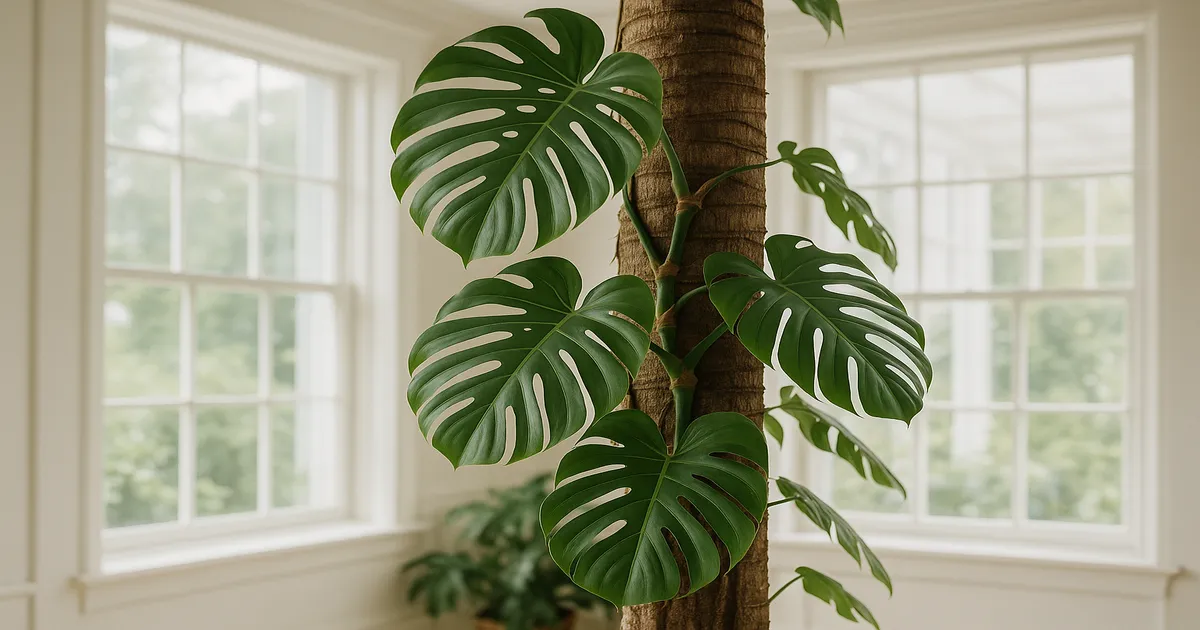
Quick Answer: Those ginormous leaves climbing your dad’s palm are almost certainly Monstera deliciosa (Swiss Cheese Plant) or Epipremnum pinnatum (Dragon Tail Plant) — two fast-growing tropical aroids that use palm trunks as natural climbing scaffolds. The small leaves near the ground look nothing like the enormous ones higher up, which is why the plant seems to appear out of nowhere. They’re not harming the palm right now — but they do need managing before they reach the crown.
If you’ve ever stood in a subtropical garden staring up at ginormous leaves climbing a palm tree and thought what on earth is that thing, you’re not alone. It’s one of the most common garden mysteries in Florida, Hawaii, California, and along the Gulf Coast. The good news: the plant is almost certainly identifiable, manageable, and — if you want it there — genuinely spectacular.
What Plant Has Ginormous Leaves Climbing a Palm Tree?
The two most likely culprits are Monstera deliciosa and Epipremnum pinnatum. Both are aroids (members of the Araceae family) that evolved in tropical forests to climb tall trees. Outdoors in warm climates, they find a palm trunk irresistible — and they grow fast. Leaves on mature, high-climbing stems can reach 24–36 inches long, with dramatic holes, splits, or deep lobes that look nothing like the small leaves near the ground.
Why Palm Trees Are Such Popular Hosts
Palm trunks offer everything a climbing aroid could want: rough, fibrous bark that aerial roots grip like velcro, a tall vertical surface leading toward better light, and a shaded, humid microclimate at the base. Most palms also have an open canopy, so the climbing plant gets adequate light as it ascends without being blocked. From the plant’s perspective, your dad’s palm is a perfect rainforest-tree substitute.
Identifying the Ginormous-Leaved Climbing Plant: The Most Likely Suspects
Monstera deliciosa (Swiss Cheese Plant): The #1 Suspect
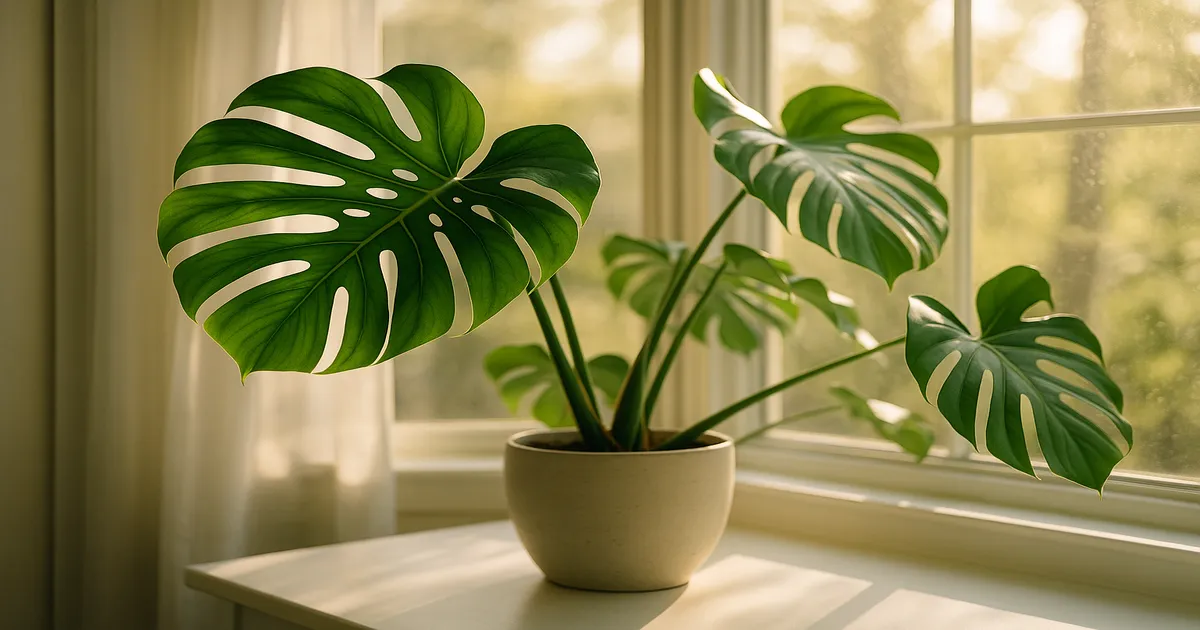
Monstera deliciosa is the most likely candidate whenever “ginormous leaves” are involved. Mature leaves on a free-climbing outdoor plant routinely reach 24–36 inches, with the iconic fenestrations — natural holes and splits — that give it the “Swiss cheese” nickname. It attaches via thick aerial roots and can ascend a palm trunk 15–20 feet or more in the right climate. It’s hardy in USDA Zones 10–12 and naturalized across much of South Florida and Hawaii.
Key visual clues: large, waxy, dark green leaves with holes within the blade and deep cuts from the edge inward, attached to a thick stem with prominent nodes.
Epipremnum pinnatum (Dragon Tail Plant): The Sneaky Impersonator
Epipremnum pinnatum is the plant most commonly mistaken for Monstera — especially by people who only know it as a modest houseplant. Outdoors on a palm trunk, it transforms completely. Adult leaves develop deep pinnate lobes (cuts that go almost to the midrib) and can also reach 24–36 inches. The stem is thinner than Monstera’s, and the leaves look more like a feather or dragon’s tail than the rounded, hole-punched Monstera shape.
Important: E. pinnatum is listed as invasive in parts of Hawaii and Florida. If you’re in either state, removal is worth serious consideration.
Monstera dubia (Shingle Plant): The Flat-Leaf Climber
If the leaves are pressed completely flat against the palm trunk — almost like roof tiles — you’re likely looking at Monstera dubia. Juvenile leaves lie flush against the bark in a striking shingling pattern and are much smaller (2–4 inches). Higher up, adult leaves become larger and fenestrated, though not as dramatically as M. deliciosa. It’s far less common in gardens than the other two, but worth knowing about.
Other Possibilities Worth Ruling Out
Rhaphidophora tetrasperma (Mini Monstera) produces similarly lobed leaves but tops out at 6–12 inches outdoors — impressive for a houseplant, but unlikely to be described as “ginormous.” Large-leaf Scindapsus and pothos species can also surprise people with their outdoor size, though they rarely match the drama of Monstera or E. pinnatum at height.
If the leaves are large and heart-shaped (4–8 inches) with no holes or lobes, and the vine twines around the palm rather than gripping it with aerial roots, consider Thunbergia grandiflora (Blue Sky Vine) — an invasive in several warm-climate regions. The absence of aerial roots is the key tell: aroids cling; Thunbergia wraps.
Why the Leaves Look So Different at Different Heights
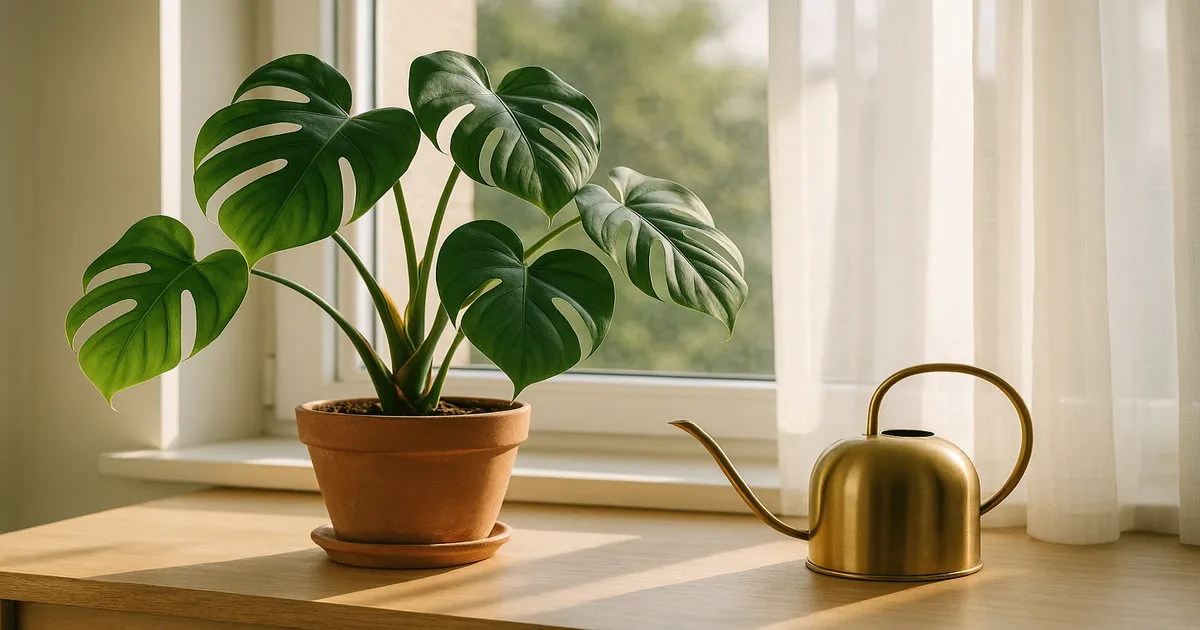
This is the single most common reason people don’t recognize the plant. The small, unremarkable leaves at the base of the palm — maybe heart-shaped, no holes, nothing special — belong to the exact same individual as the enormous fenestrated leaves 10 feet up the trunk. Botanists call this heterophylly: one species expressing two completely different leaf forms depending on its stage of development.
As the plant climbs higher, light levels increase. That shift triggers the plant to invest in progressively larger, more architecturally complex leaves. The fenestrations aren’t damage — they’re functional. Researchers believe the holes and splits allow wind to pass through large leaves without tearing them, and may also let dappled light reach lower leaves on the same plant.
The change is driven by plant hormones. Increased climbing height and light exposure shift auxin distribution and ramp up gibberellin signaling, directing the plant to produce larger, more complex leaves. The ginormous leaves are the plant doing exactly what millions of years of rainforest evolution designed it to do.
Does the Climbing Plant Harm the Palm?
Climbing aroids are not parasites. They don’t penetrate the palm’s vascular system or steal its water and nutrients. The relationship is purely structural — the aroid uses the trunk as a scaffold.
The genuine risks are mechanical. A large, heavy vine puts real stress on a palm, especially in high winds. Aerial roots entering cracks or damaged bark can create entry points for fungal pathogens and palm weevils. The most serious scenario is stems reaching the palm’s apical meristem — the single growing point at the crown. Palms have only one. Damage it, and the tree dies.
Intervene when:
- Stems are within 2–3 feet of the crown
- The vine’s weight is visibly pulling on the trunk or fronds
- Aerial roots are entering bark cracks or wounds
- The vine mass is large enough to act as a sail in storms
Early management is far easier than emergency removal.
How to Manage the Plant If You Want to Keep It
Redirect and Train Growth Away from the Crown
Guide stems toward a trellis or fence instead of upward along the palm using soft plant ties — coconut coir rope works well, or purpose-made garden ties. Install a wooden or metal trellis adjacent to the palm as an alternative climbing surface and gradually transition the plant onto it.
Pruning: When, Where, and How to Cut
Prune in late winter or early spring, before the main growth flush. Use clean, sharp bypass pruners sterilized with isopropyl alcohol between cuts. Always cut just above a node to encourage branching rather than unchecked vertical extension. Wear gloves — aroid sap contains calcium oxalate crystals that irritate skin. Avoid heavy pruning during summer heat peaks, when fresh cuts are more vulnerable to pathogens.
Moving It to a Container
If you’d rather grow it in a pot away from the palm entirely, use a chunky, fast-draining aroid mix: 40% orchid bark, 30% perlite, 20% coco coir, and 10% worm castings. Target a soil pH of 5.5–6.5. Apply a balanced slow-release granular fertilizer (10-10-10 or 14-14-14) in spring and early summer only. (Osmocote Smart-Release Plant Food Plus Outdoor & Indoor) Do not fertilize in fall or winter — unused nutrients accumulate as salts, and the extra growth push is the last thing you want.
Seasonal Pruning Calendar
| Season | Action |
|---|---|
| Spring (Mar–May) | Prune and redirect before growth flush; apply slow-release fertilizer |
| Summer (Jun–Aug) | Monitor weekly; light corrective cuts only |
| Fall (Sep–Nov) | Major structural pruning; wounds heal before growth slows |
| Winter (Dec–Feb) | No fertilizer; remove cold-damaged tissue; protect plants in Zone 9b |
How to Remove the Climbing Plant Without Damaging the Palm
Step 1 — Cut the stem at the base first. Never pull. Pulling a vine directly off a palm tears the bark and can rip out chunks of the fibrous trunk. Start by cutting the main stem at ground level with loppers or a pruning saw.
Step 2 — Let the attached portion die before removing it. Wait 2–4 weeks. Once the attached stems and aerial roots have desiccated, they release their grip significantly. Dead material peels away cleanly with far less bark damage than live, actively gripping roots.
Step 3 — Dig out the root system completely. Both Monstera and Epipremnum can regenerate from root fragments left in the soil. In warm conditions, a fragment the size of your finger can produce a new plant within weeks.
Step 4 — Use the cut-stump herbicide method for invasive species. For E. pinnatum in states where it’s invasive, apply a triclopyr-based brush killer directly to the freshly cut stem surface within 60 seconds of cutting. This translocates the herbicide into the root system. Never spray herbicide on palm bark or near palm roots — use the cut-stump method exclusively.
After removal, check the base of the palm monthly for 6–12 months. A 3–4 inch layer of mulch around the base (kept at least 6 inches from the trunk itself) will suppress seedling germination.
Prevention: Stopping Unwanted Climbers Before They Start
- Keep a clear zone around palm trunks. A 12–18 inch clear zone — no plantings, no ground cover, no mulch against the trunk — makes it immediately obvious if a climbing stem is approaching the bark.
- Place container aroids on hard surfaces. Pots sitting on bare soil let aerial roots escape through drainage holes and establish in the ground. A saucer on a patio or deck eliminates that escape route.
- Walk the garden monthly. A stem with three aerial roots takes five seconds to pull out. The same plant eight months later requires a weekend and a set of loppers.
- Know your local invasive species lists. In Florida, Hawaii, and parts of the Gulf Coast, Epipremnum pinnatum is a regulated invasive. Check the Florida Exotic Pest Plant Council (FLEPPC) or Hawaii’s Invasive Species Council (HISC) before planting any large-leaf aroid outdoors.
Frequently Asked Questions
Can a climbing Monstera or pothos damage a palm tree?
Climbing aroids aren’t parasites — they don’t steal nutrients from the palm. The real risks are mechanical: excessive vine weight straining the trunk, aerial roots entering damaged bark and creating pathways for fungal pathogens or palm weevils, and stems reaching the palm’s crown (apical meristem). Damage to the crown is fatal, since a palm has only one growing point. Manage the vine before it gets that high.
Why are the ginormous leaves on the climbing plant so much bigger than the ones near the ground?
This is called heterophylly. Juvenile leaves near the ground are small and simple. As the plant climbs higher and light levels increase, hormonal changes driven by auxins and gibberellins trigger progressively larger, fenestrated or deeply lobed adult leaves. The enormous leaves high on the trunk and the small ones at the base are the same individual plant at different stages of development.
Is Epipremnum pinnatum invasive in Florida or Hawaii?
Yes. E. pinnatum is listed as invasive in Hawaii and parts of Florida, where it escapes cultivation and smothers native vegetation. If you’re in either state and have this plant climbing a palm, removal using the cut-stump herbicide method is strongly recommended. Check the FLEPPC list or Hawaii’s HISC for current status and guidance.
How do I remove a vine from a palm tree without hurting the bark?
Cut the main stem at ground level first — never pull. Wait 2–4 weeks for the attached portion to dry out and release its grip, then peel it away gently. Dig out the root system completely to prevent regrowth. For invasive species, apply a triclopyr-based herbicide to the freshly cut stem surface using the cut-stump method.
What’s the fastest way to tell Monstera deliciosa apart from Epipremnum pinnatum on a palm?
Look at the stem thickness and the leaf shape. Monstera deliciosa has a thick, chunky stem and leaves with both interior holes (fenestrations) and edge cuts. Epipremnum pinnatum has a thinner stem and leaves with deep lobes that run almost to the midrib — more feather-like, with no interior holes. At ground level, Monstera juvenile leaves are larger and more heart-shaped; Epipremnum juveniles are smaller and narrower.