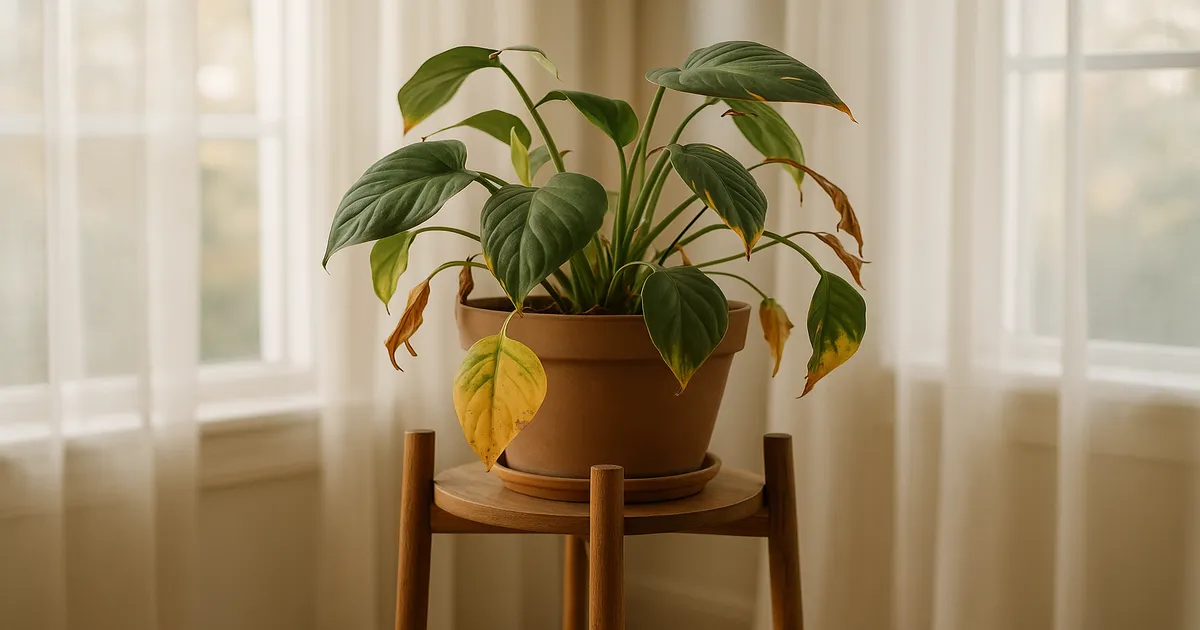
Quick Answer: Leaf symptoms are your plant’s primary distress signal, and almost every problem — from yellowing to brown spots to curling — has a diagnosable cause. Before you treat anything, identify the pattern: where on the leaf is the damage, and is it affecting new growth, old growth, or both? That single step narrows down the cause faster than anything else.
If you’ve ever stared at a struggling plant and wondered why is this happening to its leaves, you’re in good company. Leaf changes are the most common reason plant owners start troubleshooting, and the good news is that most symptoms follow predictable patterns once you know what to look for. Leaves respond to everything: watering habits, light levels, pests, pathogens, and even the humidity in your home. Learning to read them is the closest thing to a superpower a plant owner can have.
Why Is This Happening to Its Leaves? The Most Common Causes
Leaf problems fall into six categories: watering issues, light problems, humidity and temperature stress, nutrient imbalances, pests, and disease. Most of the time, one of the first two is responsible.
Here’s a fast-reference overview:
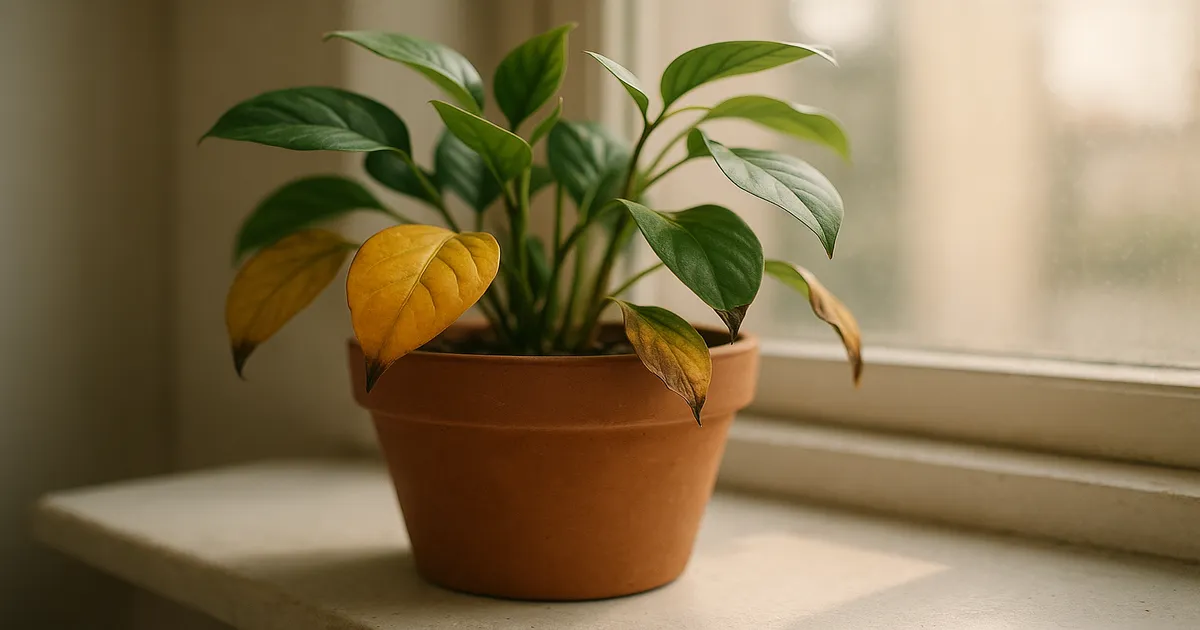
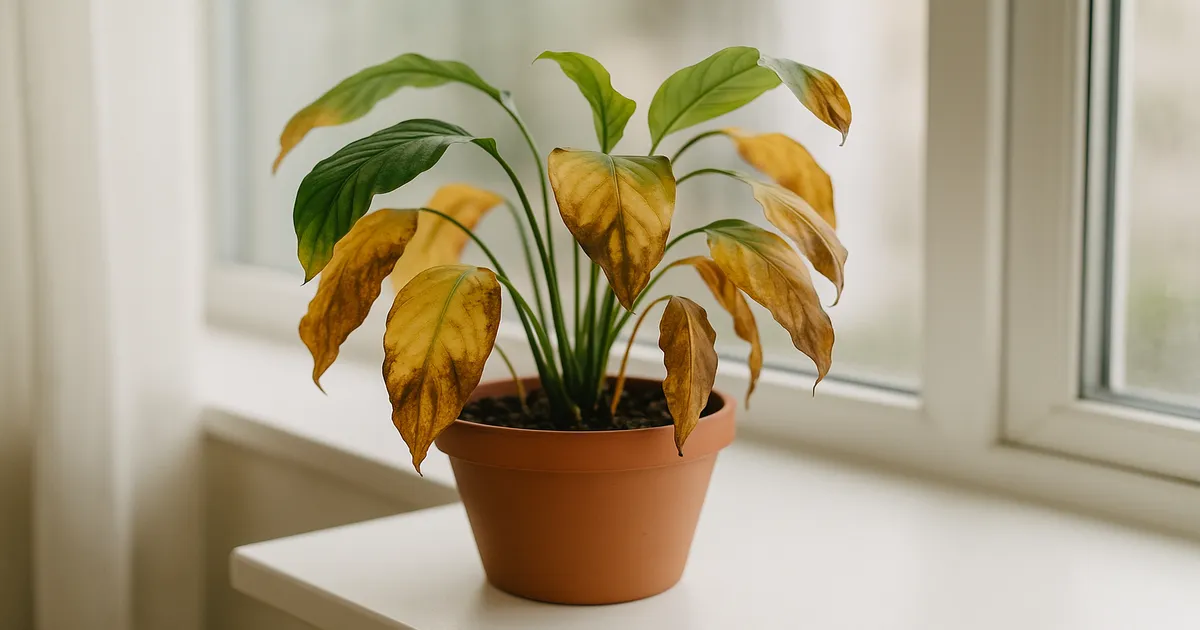
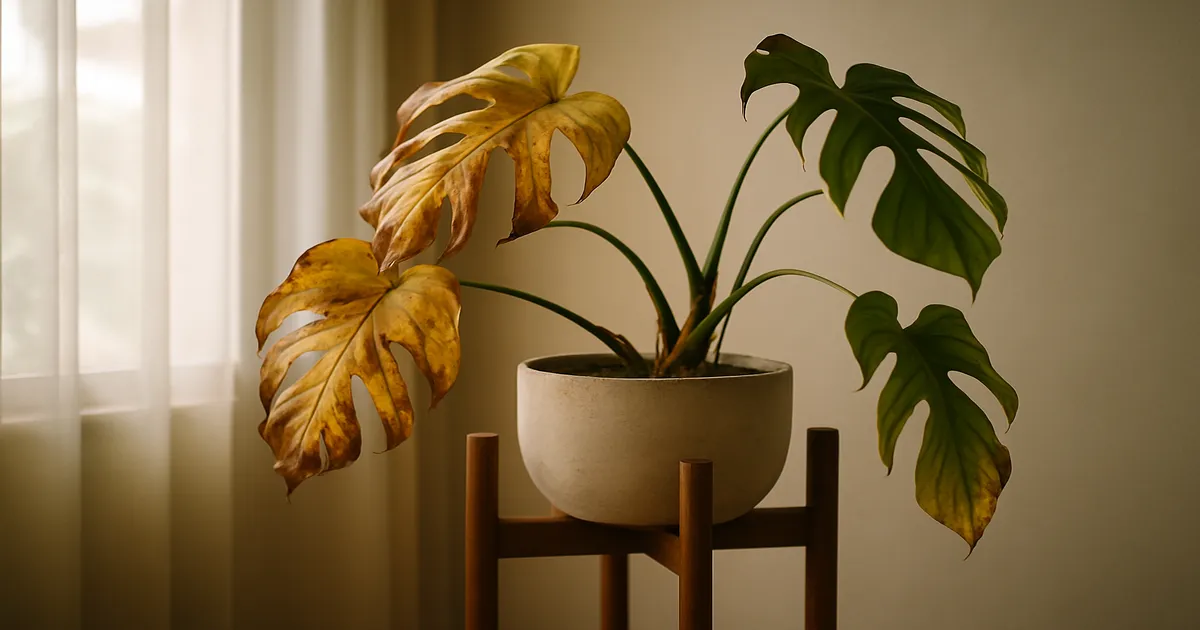
- Yellow leaves → overwatering, underwatering, nutrient deficiency, or low light
- Brown crispy tips or edges → underwatering, low humidity, or fertilizer burn
- Soft brown or black spots → overwatering or bacterial/fungal disease
- White powdery coating → powdery mildew
- Stippling or webbing → spider mites
- Distorted or silver-streaked new growth → thrips
How to Read Leaf Symptoms Like a Horticulturist
The pattern of damage is your most important clue. Ask yourself three questions before doing anything else:
- Where on the plant? Old leaves affected first usually signals a mobile nutrient problem or overwatering. New growth affected first points to immobile nutrients, pests, or cold damage.
- Where on the leaf? Tips and edges suggest a water or humidity issue. Interveinal yellowing (between the veins) points to nutrient deficiencies. Whole-leaf symptoms often indicate light or root problems.
- What does the texture tell you? Soft and mushy means rot or disease. Dry and papery means desiccation — from underwatering, low humidity, or sun damage.
Watering Problems: Overwatering and Underwatering
Signs Your Plant Is Overwatered
Overwatering is the most common houseplant killer, and it’s sneaky — the symptoms often look like drought stress. Saturated soil cuts off oxygen to the roots, creating anaerobic conditions where Pythium, Phytophthora, and Fusarium fungi rapidly colonize root tissue. Once roots are compromised, the plant can’t move water upward even though the soil is soaking wet.
Look for:
- Widespread yellowing starting on lower, older leaves
- Soft, mushy brown or black spots anywhere on the leaf
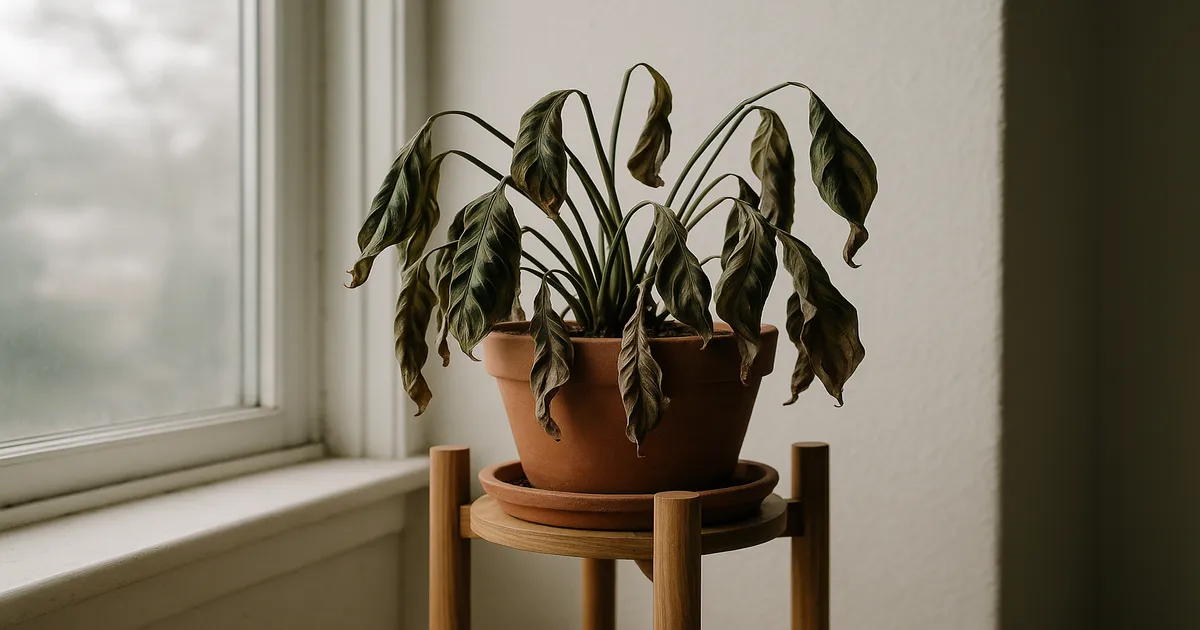
- Wilting despite wet soil — the classic giveaway
- A general collapsed or “defeated” appearance
Signs Your Plant Is Underwatered
Underwatering causes a very different kind of damage. As cells lose turgor pressure, leaf tissue dries out from the margins inward. The plant also increases production of abscisic acid (ABA), a hormone that accelerates leaf senescence and drop — so prolonged drought literally tells the plant to shed leaves faster.
Look for:
- Crispy, brown tips and edges that feel papery
- Leaves curling or cupping inward
- Dry, lightweight soil pulling away from the pot edges
- Lower leaves yellowing and dropping cleanly
How to Tell the Difference
Check the soil before you do anything else. Stick a finger two inches in, or use a moisture meter such as the XLUX Soil Moisture Meter for a more precise reading. Wilting in dry soil means drought. Wilting in wet soil means root rot. These two problems require opposite responses, so getting this right matters.
Light Issues: Too Much or Too Little Sun
Symptoms of Too Little Light
When light drops below 50–200 foot-candles, chlorophyll production slows and leaves begin to yellow — a process called chlorosis. New growth comes in small and pale, and variegated plants like Pothos or Calathea lose their patterning as the plant prioritizes whatever chlorophyll it can produce. Stems may also stretch dramatically toward any available light source.
Symptoms of Too Much Direct Sun
Shade-adapted species exposed to intense direct sun (above 5,000 foot-candles) suffer photoinhibition — their chloroplasts get overwhelmed and shut down. The result is bleached, tan, or white papery patches, always on the side facing the light. Unlike pest damage, sunscald patches are dry and have no distinct border or halo.
Finding the Right Light Level
Most tropical houseplants thrive in bright indirect light (1,500–3,000 foot-candles). Low-light tolerant species like Pothos and ZZ plant can survive at 100–500 foot-candles, though they won’t grow vigorously. A free light meter app gives a surprisingly accurate reading and removes the guesswork from placement.
For dark rooms, a full-spectrum grow light such as the Soltech Solutions Aspect on a 12–16 hour timer can make the difference between a struggling plant and a thriving one.
Humidity and Temperature Stress
How Low Humidity Causes Brown Leaf Tips
Most popular houseplants evolved in tropical environments where humidity runs 60–90% RH. In a heated home in winter, indoor humidity can crash to 20–30% RH. That gap creates a high vapor pressure deficit around the leaf — the air pulls moisture out of the plant faster than the roots can replace it, and the margins desiccate first.
Calathea, ferns, and orchids are the most sensitive. Their brown, crispy edges in winter are almost always a humidity problem, not a watering problem.
Cold Drafts, Heat Vents, and Temperature Shock
Cold damage typically appears as brown or water-soaked patches where the leaf has contacted a cold window (below 10°C/50°F) or been hit by a draft. Heat vent damage causes wilting, bleaching, and crispy patches on the side of the plant closest to the vent.
The sweet spot for most tropical houseplants is 18–27°C (65–80°F). Keep plants away from exterior windows in winter, air conditioning vents in summer, and exterior doors year-round.
Which Plants Are Most Sensitive
- Most sensitive: Calathea/Goeppertia, maidenhair ferns (Adiantum), orchids, Fittonia
- Moderately sensitive: Monstera, Ficus, Anthurium
- More tolerant: Pothos, Sansevieria, ZZ plant, succulents
Aim for 50–70% RH as your baseline. A digital hygrometer such as the Govee Bluetooth Hygrometer Thermometer costs under $15 and is one of the most useful tools you can own.
Nutrient Deficiencies and Fertilizer Problems
Identifying Specific Deficiency Patterns
Each nutrient deficiency leaves a distinct visual signature. Whether the symptom appears on old or new growth tells you whether the nutrient is mobile (moves from old leaves to new) or immobile (stays put):
- Nitrogen: Uniform yellowing of older/lower leaves first — the most common deficiency
- Iron: Interveinal chlorosis on new growth — yellow leaf, green veins
- Magnesium: Interveinal chlorosis on older leaves — same pattern, different location
- Calcium: Distorted, cupped, or blackened new growth; tip burn on youngest leaves
- Potassium: Scorched brown margins on older leaves
Fertilizer Burn and Salt Toxicity
Too much fertilizer is just as harmful as too little. Salt buildup from over-fertilizing causes dark green leaves, burnt leaf tips, and white crusty deposits on the soil surface or pot rim. Flush the soil thoroughly with plain water, then resume feeding with a balanced fertilizer such as Jack’s Classic All Purpose 20-20-20 at half the recommended strength.
The Role of Soil pH
You can have plenty of nutrients in the soil and still see deficiency symptoms if the pH is wrong. Most houseplants need a soil pH of 5.5–6.5. Outside that range, nutrients become chemically locked and unavailable no matter how much you fertilize. An inexpensive pH meter will tell you exactly where you stand.
Common Pests That Damage Leaves
Spider Mites
Spider mites are barely visible to the naked eye, but their damage is unmistakable: hundreds of tiny yellow or white dots (stippling) across the leaf surface from pierced cells. In severe infestations, fine webbing appears on leaf undersides. They thrive in low humidity and heat, so a dry apartment in summer is prime spider mite territory.
Mealybugs and Scale
Mealybugs show up as white cottony masses in leaf axils and stem joints. Scale insects look like small brown or tan bumps on stems and leaf undersides — easy to mistake for part of the plant. Both pests excrete honeydew, a sticky residue that quickly develops into sooty mold, a black fungal coating that blocks light absorption.
Thrips and Aphids
Thrips leave silver or bronze streaks on leaves along with tiny black fecal dots — a combination that’s distinctive once you’ve seen it. Aphids cluster on new growth tips, causing leaves to curl and distort. Both pests spread quickly, so isolate any affected plant immediately.
Fungus Gnats
Adult fungus gnats are mostly a nuisance, but their larvae feed on roots and organic matter. Significant larval populations cause yellowing, wilting, and stunted growth that looks exactly like overwatering — because the root damage has the same effect. Treat with a Bacillus thuringiensis israelensis (Bti) soil drench to kill larvae at the source.
Fungal and Bacterial Diseases
Powdery Mildew
Powdery mildew (Erysiphe spp.) looks exactly like someone dusted white powder across the leaf surface. Unlike most fungal diseases, it actually prefers moderate humidity (50–70% RH) with poor airflow rather than wet conditions. Improve air circulation, remove affected leaves, and apply a copper or sulfur-based fungicide.
Leaf Spot Diseases
Fungal leaf spots from Cercospora, Alternaria, and Septoria appear as circular brown or tan spots surrounded by a yellow halo, often with a darker center where fungal fruiting bodies are developing. The yellow halo is the plant’s immune response — tissue it’s sacrificing to wall off the infection. Remove affected leaves promptly and avoid overhead watering.
Bacterial Leaf Spot and Botrytis Gray Mold
Bacterial leaf spot (Pseudomonas, Xanthomonas) looks similar to fungal spots but tends to be more angular, following leaf veins rather than forming circles. Lesions start water-soaked and translucent, then turn brown or black. Botrytis gray mold is unmistakable: fuzzy gray growth on leaves and stems, typically in cool, humid, stagnant conditions. Both diseases spread fast in wet environments, so improving airflow and sterilizing tools between plants is essential.
Why Is This Happening to Its Leaves? How to Fix Each Problem
Step-by-Step Fixes
Root rot:
- Remove the plant from its pot and trim all black, mushy roots with sterilized scissors
- Dust cut ends with cinnamon or powdered sulfur as a natural antifungal
- Repot in fresh mix — standard potting soil blended with 20–30% perlite in a terracotta pot with drainage holes
- Water only when the moisture meter reads 3–4 on a 1–10 scale
Drought recovery:
- Bottom-water by placing the pot in a tray of water for 20–30 minutes
- For severely dehydrated plants, submerge the entire pot just below the rim for 30–45 minutes
- Going forward, water based on soil moisture, not a calendar schedule
Light correction: Move sun-scorched plants to bright indirect light immediately. Add a grow light for dark rooms on a 12–16 hour timer, and rotate plants 90° every couple of weeks for even exposure.
Humidity: A cool-mist ultrasonic humidifier is the most effective solution — pebble trays and grouping plants together help, but neither raises ambient humidity as reliably. Skip misting; it doesn’t meaningfully raise humidity and can promote fungal disease.
Pests:
- Spider mites: Neem oil at 2% concentration, every 5–7 days for 3–4 cycles
- Mealybugs/scale: 70% isopropyl alcohol on a cotton swab, followed by neem oil
- Thrips/aphids: Insecticidal soap or spinosad-based spray
- Fungus gnats: Bti soil drench for larvae, yellow sticky traps for adults
Disease: Remove all affected leaves, improve airflow, and apply copper or sulfur fungicide for fungal issues. For bacterial problems, copper bactericide can slow spread, but severely infected plants may need to be discarded.
Building a Weekly Inspection Routine
Spend five minutes each week checking leaf undersides, stem axils, and the soil surface. Most pest and disease problems are dramatically easier to treat when caught early — a few spider mites is a quick fix; a full infestation is a project. Quarantine new plants for 2–4 weeks before mixing them into your collection.
Frequently Asked Questions
Why are my houseplant’s leaves turning yellow?
Yellowing is most commonly caused by overwatering, underwatering, insufficient light, or nitrogen deficiency — in that order of likelihood. Check soil moisture first: wet soil plus yellow leaves usually means root rot, while dry soil points to drought stress. If watering seems fine, assess light levels and consider whether the plant has been fertilized recently.
Why do my plant’s leaf tips turn brown and crispy?
Brown, crispy tips are almost always a moisture issue — the soil is too dry, the humidity is too low, or both. Fertilizer salt buildup is another common culprit, especially if you see a white crust on the soil surface. Check soil moisture, move the plant away from heating vents, and add a humidifier if you’re in a dry climate or heating season.
Why are my plant’s leaves curling inward?
Inward curling is a stress response that reduces the leaf surface area losing water through transpiration. It can mean underwatering, low humidity, heat stress, or a pest infestation like spider mites. Check the soil and leaf undersides first — those two checks will identify the cause in most situations.
How do I know if my plant has pests or a disease?
Pests usually leave physical evidence: webbing, sticky residue, visible insects, or tiny feeding dots. Diseases tend to cause defined spots, lesions, or coatings on the leaf surface. Flip the leaf over and look closely in good light — most pests are visible to the naked eye, and the damage pattern (stippling vs. circular spots vs. powdery coating) will point you in the right direction.
Why does my plant have brown spots with yellow rings?
Brown spots surrounded by a yellow halo are a classic sign of fungal leaf spot disease, caused by pathogens like Cercospora, Alternaria, or Septoria. The yellow ring is the plant’s immune response — tissue it’s sacrificing to contain the infection. Remove affected leaves immediately, improve airflow, and treat with a copper-based fungicide to prevent spreading.