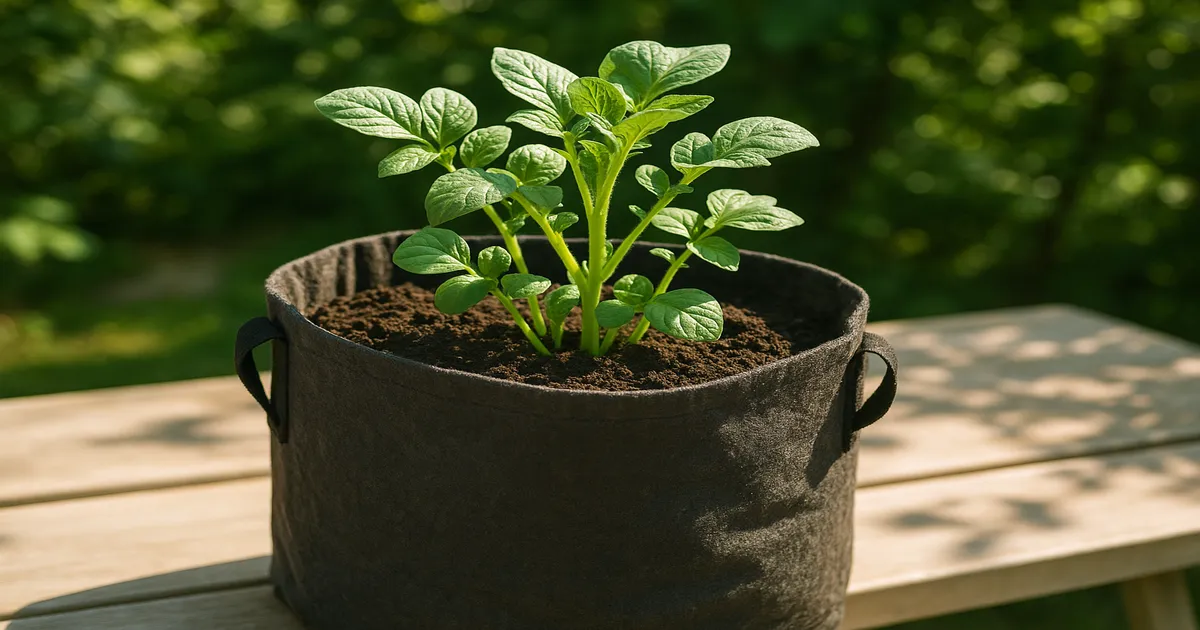
Quick Answer: To grow potatoes in a container, choose an opaque 15–30 gallon container with good drainage, plant certified seed potatoes using the progressive fill (hilling) method, keep soil consistently moist, and position in full sun (6–8 hours minimum). Determinate/early varieties suit most containers best. Expect harvest in 60–120 days depending on variety — when it’s time, tip the container and sort through the mix by hand.
How to Grow Potatoes in a Container: What You Need to Know First
Container growing gives you complete control over the one thing potatoes are most fussy about: their soil environment. No compacted clay, no soil-borne diseases left over from last season, no hardpan stopping root development. If you’re working with a patio, balcony, or a garden bed with poor native soil, containers are a genuinely practical solution — not a compromise.
The harvest is easier too. Instead of digging through a bed with a fork and spearing half your crop, you lay down a tarp, tip the container, and sort through the loose mix with your hands.
How Potato Tubers Actually Form
This is the piece of knowledge that separates successful container growers from frustrated ones. Potato tubers are not roots — they’re modified underground stems. They form on stolons, lateral stems that branch off from the main buried stem. The more stem you bury, the more stolons develop, and the more tubers you get. That’s the entire logic behind hilling, and it’s why container depth and the progressive fill method matter so much.
Choosing the Right Container
Size Requirements by Variety Type
Container volume is non-negotiable. Stolons need lateral and vertical space to develop. In a cramped pot, they hit the walls and abort tuber formation entirely — leaving you with beautiful foliage and almost nothing to eat.
- 10 gallons per single seed potato (absolute minimum — expect modest yields)
- 15–20 gallons for early and second-early determinate varieties (the sweet spot for most home growers)
- 25–30 gallons for maincrop/indeterminate varieties, which produce tubers in multiple layers
Aim for a minimum depth of 12 inches; 16–18 inches is ideal for maximum yield.
Fabric Bags, Plastic, or Wood?
Fabric grow bags are the top recommendation for most growers. They air-prune roots, provide excellent aeration, and prevent the waterlogging that kills more container potato crops than anything else. A 15–25 gallon fabric bag hits the sweet spot for early and second-early varieties.
Food-grade plastic containers work well if you drill enough drainage holes — at least 5–8 holes of 1-inch diameter in the base and lower sides. Avoid translucent or clear plastic: light reaching the tubers causes greening and solanine production.
Wooden half-barrels offer good soil temperature insulation and look great on a patio. They’re heavier to move but genuinely effective.
Whatever material you choose, elevate the container on pot feet or bricks so water escapes freely. Skip the gravel drainage layer at the bottom — research from Washington State University shows it creates a perched water table, making drainage worse, not better.
Selecting Varieties and Seed Potatoes
Determinate vs. Indeterminate
Determinate varieties stop growing at a fixed height and produce one concentrated flush of tubers. They’re compact, predictable, and well matched to the finite volume of a container. Indeterminate varieties keep growing, produce tubers in multiple layers over a longer season, and need larger containers with more hilling rounds. For most container growers, determinate first and second earlies are the right call.
Variety Picks by Category
| Category | Varieties | Days to Harvest | Container Size |
|---|---|---|---|
| First Early (Determinate) | Duke of York, Swift, Rocket | 60–70 days | 15–20 gal |
| Second Early (Determinate) | Charlotte, Yukon Gold, Nicola | 70–90 days | 15–20 gal |
| Maincrop (Indeterminate) | Desiree, King Edward, Russet Burbank | 90–120 days | 25–30 gal |
| Fingerling | Russian Banana, Purple Peruvian | 70–90 days | 15–20 gal |
| Heritage/Colored | All Blue, Adirondack Red, Magic Molly | 80–100 days | 20–25 gal |
Always Use Certified Seed Potatoes
Grocery-store potatoes are often treated with chlorpropham, a sprout inhibitor that can prevent or severely delay sprouting. More seriously, they may carry latent infections of Potato Virus Y (PVY), Potato Leafroll Virus (PLRV), or fungal pathogens like Rhizoctonia solani and Fusarium — none of which are visible until your crop fails. Certified seed potatoes are legally tested to meet disease-threshold standards.
Before planting, chit your seed potatoes: set them in bright indirect light at 50–60°F for 2–4 weeks. This pre-sprouting gives you a head start and lets you discard any non-viable pieces before they rot in your container.
Soil Mix and Fertilizer
Container Soil Recipe
Never fill a potato container with straight garden soil — it compacts into a near-solid block, destroying the pore structure tubers need. Use this blend instead:
- 40% high-quality peat- or coir-based potting mix
- 30% perlite or coarse horticultural grit
- 20% aged compost
- 10% vermiculite
This drains freely while retaining enough moisture to keep tubers developing evenly.
pH: The 5.8–6.5 Target
Potatoes want moderately acidic soil. Above pH 7.0, common scab (Streptomyces scabies) becomes a real problem. Below pH 5.0, phosphorus availability drops and aluminum toxicity can set in. Test your mix with a digital pH meter before planting.
- To lower pH: Incorporate elemental sulfur or use an acidic peat-based mix
- To raise pH: Add agricultural lime at roughly 1–2 tablespoons per gallon of mix
Feeding Through the Season
Potatoes are heavy feeders, but their nutritional needs shift as the season progresses.
- At planting: Work in a balanced slow-release granular fertilizer (10-10-10) plus bone meal for phosphorus
- Vegetative phase (weeks 1–6): Apply a nitrogen-forward liquid fertilizer like fish emulsion (5-1-1) every two weeks to drive leafy growth
- Post-flowering (tuber bulking): Switch to a low-nitrogen, high-potassium/phosphorus formula (5-10-10 or 3-12-12). Excess nitrogen at this stage pushes foliage at the direct expense of tuber size.
How to Grow Potatoes in a Container: Planting and Hilling
Step-by-Step Planting
Plant when soil temperature is consistently above 45°F (7°C) — use a soil thermometer rather than guessing, since cold soil causes seed pieces to rot rather than sprout.
- Add 4–6 inches of your soil mix to the bottom of the container
- Place seed potatoes with chits (sprouts) facing upward, spaced at least 10 inches apart
- Cover with 3–4 inches of mix — don’t bury them deeper yet
- Water gently and position in full sun
Spacing rule: one seed potato per 10 gallons, maximum three in a 25–30 gallon container. Crowding is one of the most common reasons container yields disappoint.
The Progressive Fill (Hilling) Method
As stems grow, keep adding mix around them, always leaving the top 2–3 inches of foliage exposed. Each layer of buried stem produces new stolons — and new tubers. Continue until the container is full, then let the plant grow out normally.
This is the single most impactful technique for maximizing container potato yields. Skipping it means relying on a single short section of stem for all your tuber production.
Watering, Light, and Temperature
Watering Container Potatoes
Target 60–70% field capacity — the soil should feel like a wrung-out sponge. The squeeze test works well: grab a handful of mix and squeeze hard. It should hold its shape but release only a drop or two of water. Streams of water mean it’s too wet; crumbling means too dry.
In hot weather, containers may need daily watering. In cooler spells, every 2–3 days is typical. Inconsistency is the enemy — drought followed by heavy watering causes hollow heart (internal cavities) and knobby secondary growth. Mulching the surface with 2–3 inches of straw or coir fiber dramatically reduces moisture loss and keeps soil temperatures more stable.
Managing Soil Temperature
Tuber initiation stops above 68°F (20°C) soil temperature and essentially halts above 80°F. This is the hidden reason many container growers get beautiful tops but no potatoes in midsummer — the containers are simply too hot. Dark containers in full sun can run 15–20°F above ambient air temperature.
Use white or light-colored containers, wrap dark containers in burlap or reflective material, and move containers to afternoon shade during heat waves.
Light Requirements
Potatoes need full sun — at least 6–8 hours of direct light daily. In the Northern Hemisphere, a south- or west-facing patio is ideal. Rotate containers a quarter-turn each week for even exposure. Low light produces lush, spindly growth with poor tuber development, since the plant prioritizes leaves over storage when photosynthesis is limited.
Common Problems, Pests, and Diseases
Why Your Container Potatoes Aren’t Producing
The three most common culprits are heat stress (soil above 68°F), a container that’s too small, and excess nitrogen applied after flowering. If your plants are flowering and looking healthy but producing nothing, check soil temperature first — it’s the most frequently overlooked variable.
Key Pests
- Colorado potato beetle: Hand-pick adults and larvae daily; treat with neem oil or spinosad for heavier infestations
- Aphids: Vectors for PVY and PLRV; control with insecticidal soap and reflective mulch
- Wireworms: Bore tunnels through tubers; far more likely if you used garden soil in your mix
- Flea beetles: Create small shot-holes in foliage; row cover fabric early in the season provides good protection
Key Diseases
Late blight (Phytophthora infestans) spreads fast in cool, humid conditions — look for water-soaked lesions with white fuzzy growth on leaf undersides. Remove affected foliage immediately and treat with a copper-based fungicide. Early blight (Alternaria solani) causes target-spot rings on older leaves; it reduces yield but rarely kills the plant outright. Common scab produces rough, corky patches on tuber skin — cosmetic only, and almost always a sign that soil pH crept above 6.5.
Harvesting, Curing, and Storage
Signs Your Potatoes Are Ready
For new potatoes, start checking 2–3 weeks after flowering begins. The skin will rub off easily with your thumb — that’s your signal. For maincrop varieties, wait until the foliage yellows and dies back naturally, typically 90–120 days from planting. The final weeks of bulking add significant weight to your harvest, so don’t rush.
The Tip-and-Sort Method
Lay a tarp on the ground, tip the container on its side, and pull it away from the pile of growing medium. Work through the mix with your hands, pulling out tubers as you find them. Avoid harvesting in wet conditions — wet soil clings to tubers and makes sorting messy.
Curing and Storing
Don’t wash potatoes before storing. Cure them in a dark, humid space at 50–60°F for 1–2 weeks — this hardens the skins and dramatically extends shelf life. After curing, move to a cool (38–45°F), dark, well-ventilated location. One often-overlooked tip: keep potatoes away from apples. Apples emit ethylene gas, which triggers premature sprouting.
Frequently Asked Questions
How many potatoes can you grow in a 5-gallon bucket?
A 5-gallon bucket is below the recommended minimum for a meaningful harvest. You can plant one seed potato in it, but the stolon system will be so restricted that you’ll likely get just 2–4 small tubers. If a bucket is all you have, choose a compact first early like Swift. For anything approaching a real yield, upgrade to a 10–15 gallon container.
Can you reuse container potato soil the following year?
It’s not recommended without treatment. Potato soil can harbor Phytophthora, Fusarium, Rhizoctonia, and other pathogens that overwinter in the mix. The safest approach is to compost the old mix and start fresh. If you want to reuse it, solarize it in sealed clear plastic bags in full sun for 4–6 weeks during summer before replanting.
Do container potatoes need to be hilled?
Yes — it’s one of the most important steps. Hilling buries more stem, which generates more stolons and more tubers. It also keeps developing tubers in the dark, preventing the greening and solanine production that makes them unsafe to eat. Skipping it won’t kill the plant, but it will significantly reduce your yield.
What is the best container for growing potatoes?
A 15–25 gallon fabric grow bag is the top choice for most home growers. The breathable fabric provides excellent aeration, prevents root circling, and virtually eliminates overwatering problems. Food-grade plastic with multiple large drainage holes is a solid budget option. Whatever you choose, make sure it’s opaque.
Why are my container potato plants flowering but producing no tubers?
The most likely cause is soil temperature above 68°F — tuber initiation stops at that threshold, and containers in full sun get significantly hotter than you’d expect. Check with a soil thermometer. Other causes include a container that’s too small, excess nitrogen applied after flowering, and insufficient hilling. Address the temperature issue first.