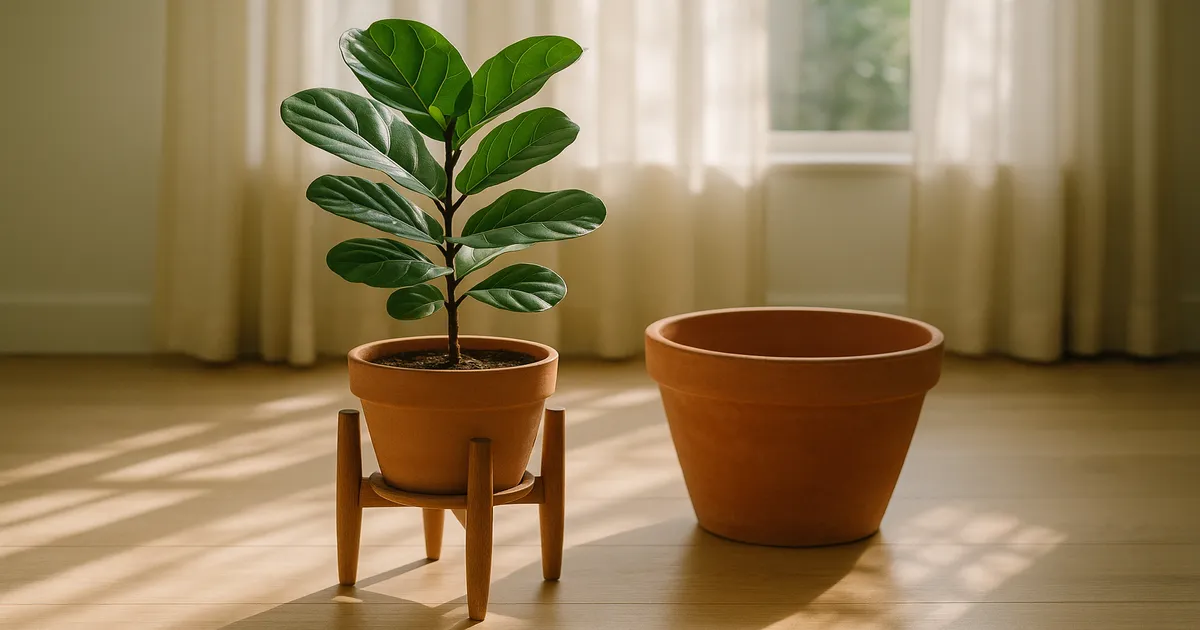
Quick Answer: If roots are escaping the drainage holes, growth has stalled during the growing season, or water runs straight through without being absorbed, yes — it’s time for a bigger pot. Go up just 1–2 inches in diameter, no more. The one big exception: root rot. A bigger pot will make that situation worse, not better.
Deciding whether you should put your plant in a bigger pot is one of the most common questions in houseplant care — and getting it wrong in either direction causes real problems. Go too small and roots suffocate. Go too big and the excess soil stays wet, inviting rot. This guide covers every scenario so you can make the right call with confidence.
Should You Put Your Plant in a Bigger Pot? The Short Answer
Upsizing makes sense when roots are crowded, growth has stalled during the growing season, or the potting mix is exhausted. The golden rule: go up only 1–2 inches in diameter from the current pot (or 2–4 inches for large floor plants). Never jump two full pot sizes at once — the extra soil volume holds moisture the roots can’t yet use, which sets up the conditions for root rot.
Bigger is the right call when the plant is actively growing and genuinely out of room. It’s the wrong call when you’re nursing a plant back from root rot, growing epiphytes like orchids, or repotting during winter dormancy.
8 Signs Your Plant Needs a Bigger Pot
Roots Are Escaping Through Drainage Holes
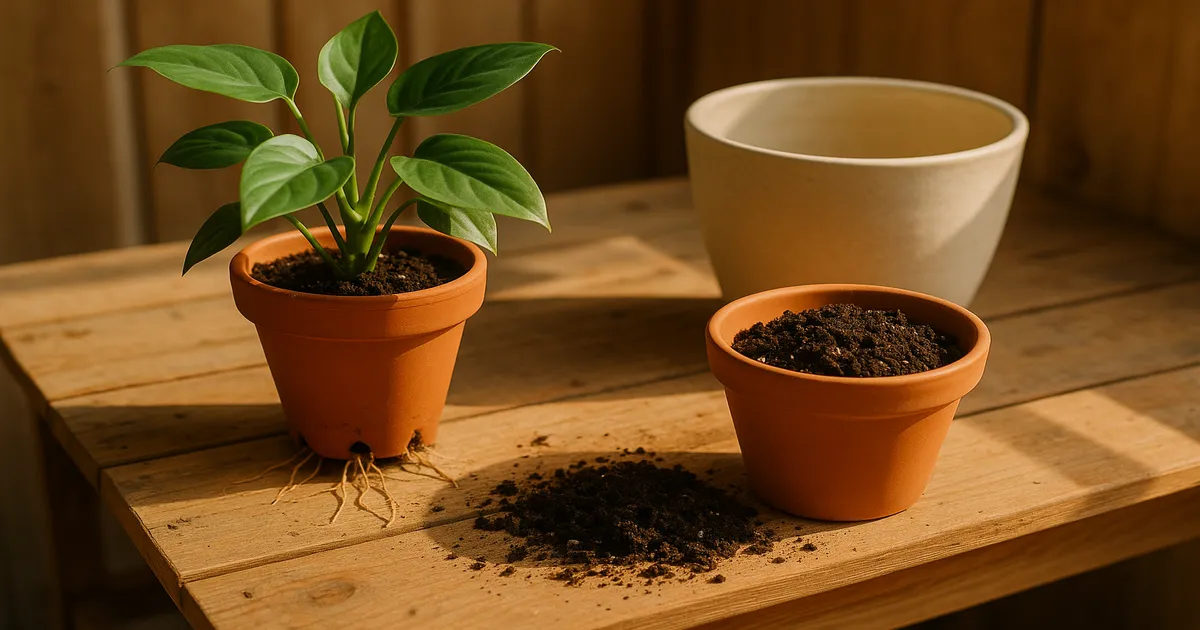
This is the clearest signal. When roots thread out through the bottom of the pot, the root system has run out of room and is searching for more. At this stage, roots may also be circling the interior walls — a process called girdling — which can restrict the plant’s own water and nutrient flow over time. Don’t ignore this one; it’s urgent.
Growth Has Stalled During the Growing Season
If your plant was pushing out new leaves in spring but has gone quiet for two or three months, a cramped root zone may be the reason. Roots that hit the container walls trigger a mechanosensory response that suppresses shoot growth — the plant essentially gets a signal to stop expanding above ground when it’s out of room below. Before blaming the pot, rule out low light first. Most tropical houseplants need 1,500–3,000 foot-candles of bright indirect light, and insufficient light is frequently the real culprit.
Water Runs Straight Through Without Being Absorbed
You water the plant and within seconds it pours out the drainage hole — but the plant still wilts a day later. This is called bypass flow: the dense root mass has displaced most of the growing medium, so water channels around the roots rather than through them. The plant is functionally underwatered even though you’re watering regularly. This is a moderate-to-high urgency sign.
Soil Is Compacted, Crusty, or Smells Sour
Potting mix doesn’t last forever. Organic components break down over 12–24 months, compacting the soil and reducing the air pockets roots need. White crusty deposits on the soil surface or pot exterior are salt buildup from fertiliser. A sour or foul smell signals anaerobic decomposition — the soil is essentially rotting. Even if the roots look fine, the medium needs replacing.
The Plant Tips Over or Looks Top-Heavy
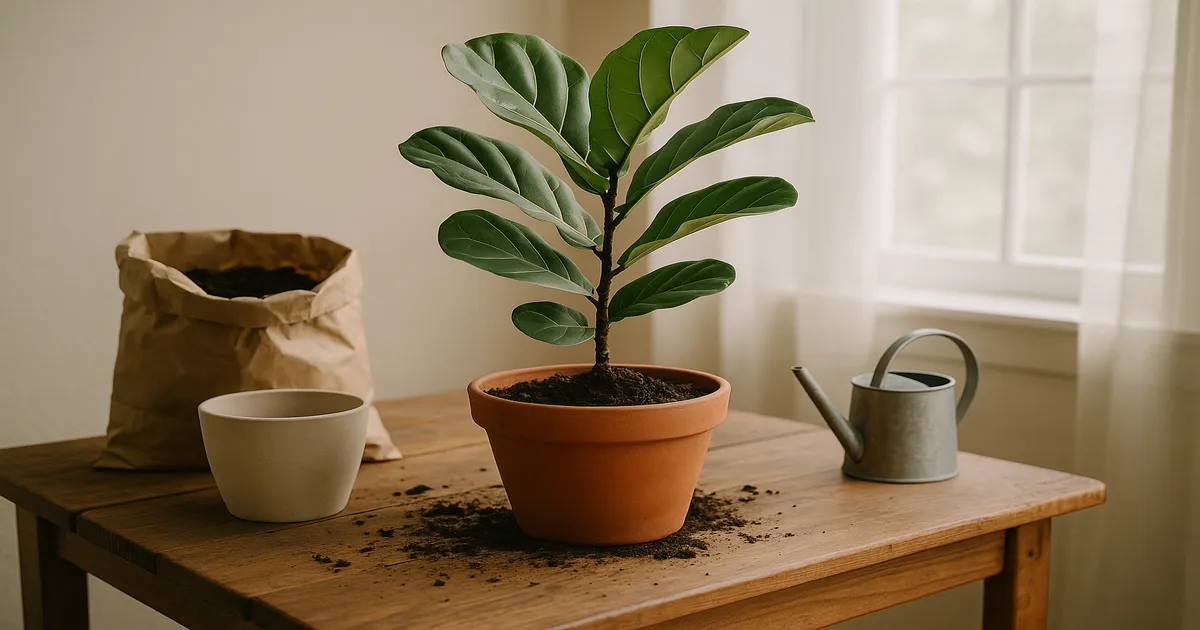
When a plant’s canopy significantly overhangs its container base, it will tip at the slightest nudge. This disrupts root-to-soil contact and can snap stems. Large plants like Bird of Paradise or a mature Fiddle-leaf Fig genuinely need a heavier, wider pot to stay stable.
Leaves Are Yellowing Despite Regular Care
Persistent yellowing in an otherwise well-cared-for plant often points to nutrient deficiency from exhausted soil. As soil ages, its cation exchange capacity — its ability to hold and release nutrients — declines. The plant goes hungry even if you’re fertilising, because the degraded medium can’t hold onto what you’re giving it.
The Root Ball Holds the Shape of the Pot
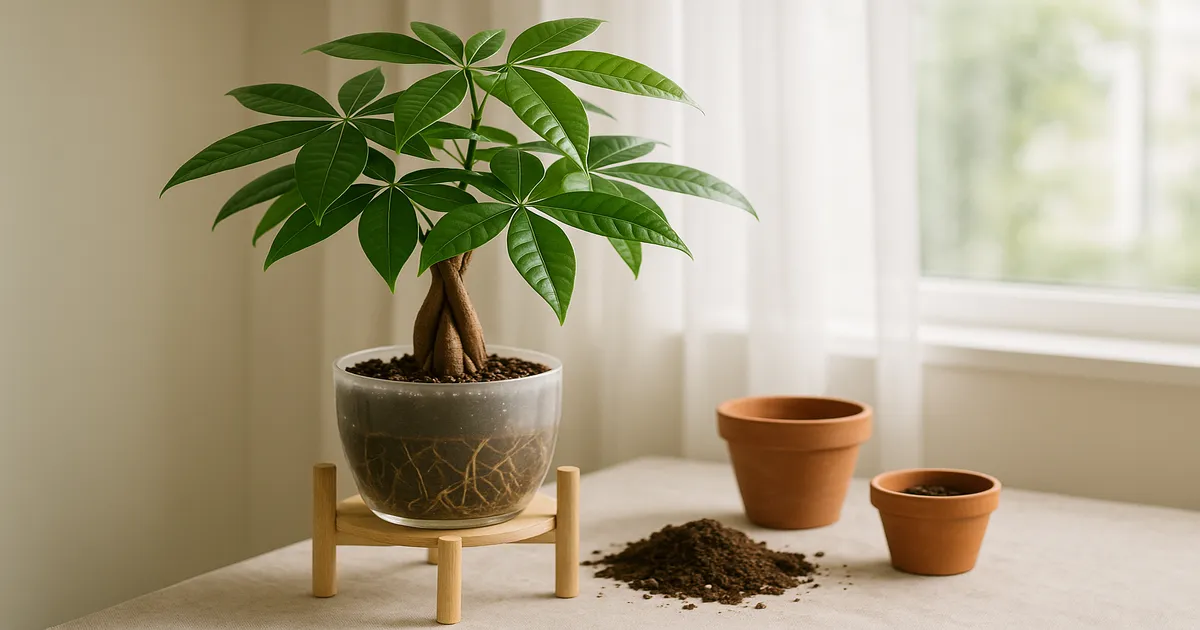
Pull the plant out and check. If the root ball keeps the exact shape of the container — a solid, pot-shaped mass with little visible soil — the roots have taken over. Mildly pot-bound (roots touching the walls) is fine for many species. Moderately pot-bound (roots actively circling) means repot soon. Severely pot-bound (root-to-soil ratio over 80% with visible stress symptoms) means repot now.
Multiple Crowns or Pups Are Competing for Space
Snake plants, peace lilies, aloe, and Boston ferns produce offsets over time. When several crowns share one pot, they compete for water, nutrients, and light — and all of them lose. This is a good opportunity to upsize and divide, giving each section its own appropriately sized container.
When You Should NOT Use a Bigger Pot
Recovering From Root Rot
This is the most important exception. When root rot has damaged a significant portion of the root system, extra soil volume will stay wet around the compromised roots and make recovery harder. After trimming all mushy, brown roots back to firm, healthy tissue, repot into the same size pot or one size smaller. Use a highly aerated mix (40–50% perlite or pumice) and let the top half of the soil dry before watering again.
Epiphytes and Orchids That Prefer Tight Quarters
Orchids, bromeliads, and some ferns evolved to grow on trees, not in soil. Their roots are adapted to air exposure and dry out quickly by design. Overpotting an orchid is one of the fastest ways to kill it — the bark medium stays wet too long and the roots rot. Keep epiphytes in snug containers with chunky, fast-draining media.
Succulents and Cacti at Risk of Overwatering
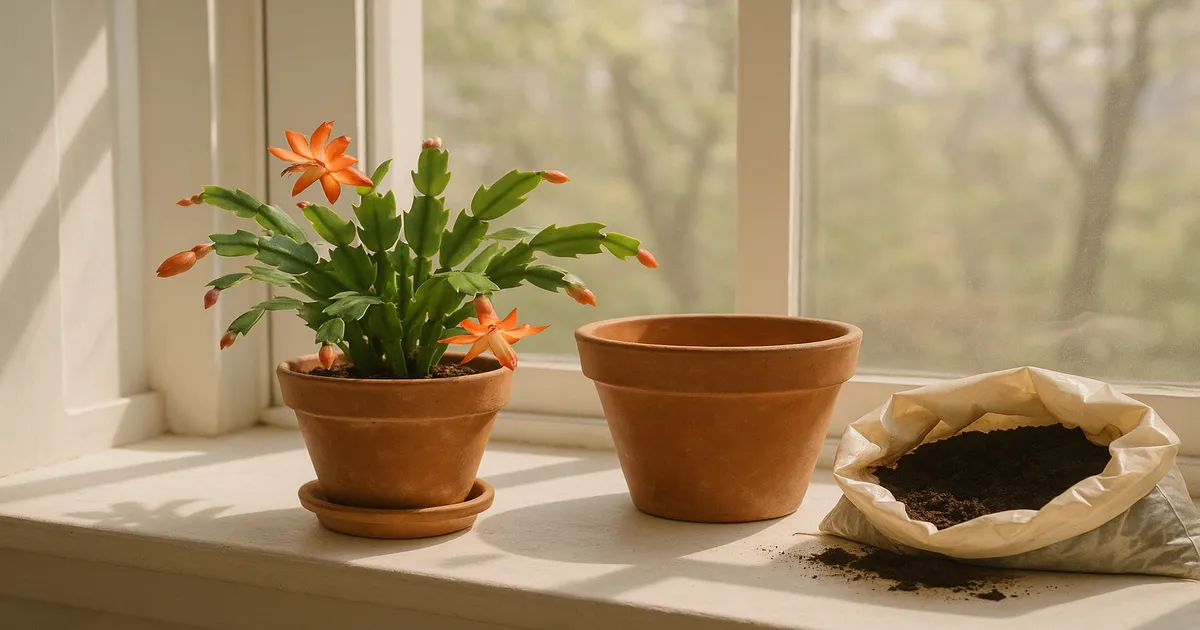
Succulents and cacti store water in their tissues because their native soils drain almost instantly. In an oversized pot, excess soil holds moisture far longer than these plants tolerate. Stick to pots that are only slightly larger than the root ball — 1 inch of clearance is often enough.
Plants in Winter Dormancy
Repotting during winter stresses a plant at the exact moment it has the least energy to recover. Most houseplants slow their growth significantly from October through February. Wait until March or April, when the plant is gearing back up and can heal quickly.
How to Choose the Right Pot Size and Material
The 1–2 Inch Rule
For most houseplants, go up 1–2 inches in diameter from the current pot. For large floor plants (Monstera, Bird of Paradise, large palms), a 2–4 inch increase is appropriate. A slightly larger pot gives roots room to expand without leaving so much unused soil that moisture accumulates dangerously.
As a rough sizing guide, pot diameter should be roughly one-third to one-half the height of upright plants. For spreading plants, pot diameter should roughly match the canopy spread.
Pot Material: Terracotta vs. Plastic vs. Ceramic
Terracotta is porous — it wicks moisture away from the root zone and allows gas exchange through the walls. It’s the best choice for plants prone to overwatering: succulents, cacti, snake plants, and orchids. The trade-off is that it dries out faster, so moisture-loving plants may need more frequent watering.
Plastic and glazed ceramic retain moisture much longer, which suits tropical species in low-humidity environments or plants that prefer consistently moist soil. They’re also lighter, which matters for large plants you need to move.
Drainage Holes Are Non-Negotiable
No drainage hole means no long-term health. Water accumulates at the bottom, creating an anaerobic zone that kills roots even when the surface soil looks dry. If you love a decorative pot without drainage, use it as an outer sleeve — keep the plant in a plain nursery pot with holes inside it, and empty any collected water within 30 minutes of watering.
How to Put Your Plant in a Bigger Pot: Step-by-Step
Best Time of Year
March through May in the Northern Hemisphere is the optimal window. The plant is entering its active growth phase and has maximum energy to recover from root disturbance. Avoid repotting in autumn or winter unless you’re dealing with an emergency like root rot or a broken pot.
What You’ll Need
- A new pot (1–2 inches larger in diameter, with drainage holes)
- Fresh, species-appropriate potting mix
- Sterile scissors or pruning shears
- A watering can or basin for bottom-soaking
- 70% isopropyl alcohol to sterilise tools
Preparing the Root Ball
Water the plant 24 hours before repotting — moist roots are more flexible and less prone to breakage. Tip the plant out gently, supporting the base of the stem. For a moderately pot-bound plant, tease apart circling roots with your fingers or a clean chopstick. For severely girdled roots, use sterile scissors to score the root ball vertically in three or four places to encourage outward growth.
Choosing the Right Potting Mix
Match the mix to the species:
- Tropical aroids (Monstera, Philodendron, Pothos): coir- or peat-based mix with 20–30% perlite by volume; target pH 6.0–6.5 (Fox Farm Ocean Forest)
- Succulents and cacti: 50–70% inorganic grit (perlite, pumice, or coarse sand); target pH 6.0–7.0 (Hoffman Organic Cactus and Succulent Soil Mix)
- Orchids: chunky bark with charcoal and perlite; target pH 5.5–6.5
- African violets: light, porous mix with extra perlite and vermiculite; target pH 6.0–6.5
Never use garden soil in containers. It compacts severely and introduces pests and pathogens.
Planting and Aftercare
Add a layer of fresh mix to the bottom of the new pot, position the root ball so the base of the stem sits at the same depth as before, then fill in around the sides. Firm gently — no need to pack hard. Water thoroughly and allow excess to drain.
Hold off on fertilising for the first four to six weeks. Stressed roots are vulnerable to fertiliser burn, and fresh potting mix contains enough nutrients to get started. If the soil had dried out badly before repotting, bottom-soak the pot in a basin of room-temperature water for 30–60 minutes to rehydrate the root ball evenly. Divisions and freshly separated pups benefit from higher humidity (60–80%) for the first week or two while they re-establish.
Once that window has passed, a balanced liquid fertiliser applied every two to four weeks through the growing season keeps growth strong. Stop feeding in autumn when growth naturally slows. (Jack’s Classic All Purpose 20-20-20 Water Soluble Plant Food)
Frequently Asked Questions
How do I know if my plant needs a bigger pot?
Look for roots emerging from drainage holes, a root ball that holds the shape of the pot when removed, water that runs straight through without being absorbed, or growth that has stalled during the active growing season. Any one of these is a reliable signal. If you’re still unsure, a quick root inspection each spring will tell you everything you need to know.
How much bigger should the new pot be?
Go up 1–2 inches in diameter for most houseplants, or 2–4 inches for large floor plants. Avoid jumping more than two pot sizes at once — the extra soil volume holds moisture the roots can’t yet use, which raises the risk of root rot significantly.
Can a pot be too big for a plant?
Yes. Excess soil stays wet long after the roots have absorbed what they need, creating anaerobic conditions that invite root rot. This is especially dangerous for succulents, cacti, and epiphytes. The right pot gives roots a little room to grow — not a swimming pool.
Should I repot a plant with root rot into a bigger pot?
No. After trimming all diseased roots back to healthy tissue, use the same size pot or go one size smaller. A larger pot retains more moisture around the already-stressed root system and makes recovery harder. Pair the smaller pot with a highly aerated mix and careful watering until the plant rebounds.
What’s the best time of year to repot houseplants?
Spring (March–May) is ideal for most houseplants in the Northern Hemisphere. The plant is entering active growth and can recover quickly from root disturbance. Avoid repotting in winter unless you’re dealing with an emergency like root rot or a cracked pot.