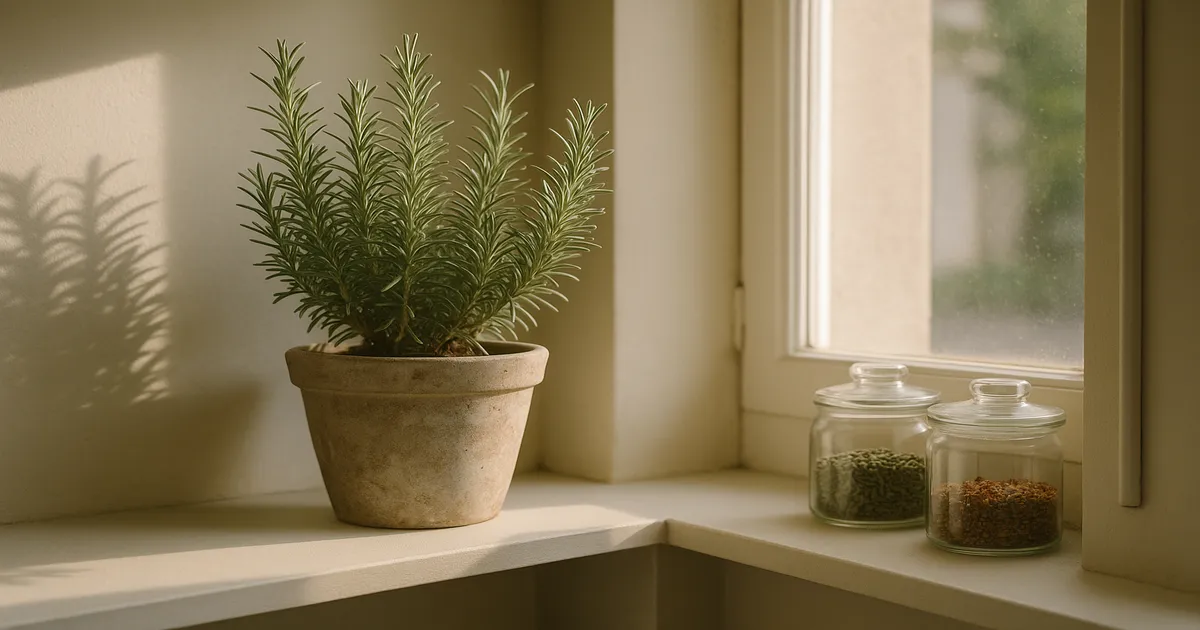
Quick Answer: Rosemary (Salvia rosmarinus) is a tough, long-lived Mediterranean herb that thrives in full sun (6–8 hours daily), fast-draining soil with a pH of 6.0–7.0, and deep but infrequent watering. Get those three things right and a single plant can live 15–25 years. The most common reason rosemary dies? Overwatering and the root rot that follows.
Learning how to grow rosemary well mostly means learning what not to do — keep it too wet, too shaded, or too well-fed and you’ll lose it. Nail the basics and you’ll have a fragrant, nearly indestructible shrub that feeds your kitchen and your local bees for decades.
Rosemary Plant Overview
Botanical Background and Native Habitat
Rosemary was reclassified from Rosmarinus officinalis to Salvia rosmarinus around 2017, after phylogenetic studies placed it firmly within the sage genus. It’s a woody, evergreen subshrub in the mint family (Lamiaceae), native to rocky limestone hillsides, coastal cliffs, and sun-baked scrublands across the Mediterranean Basin — Spain, Italy, southern France, Greece, and North Africa.
That origin story matters for care. Its native soils are poor, alkaline, and drain almost instantly. Annual rainfall in its home range is typically just 400–600 mm. Rosemary didn’t evolve to sit in moist, rich garden beds.
The characteristic fragrance comes from volatile oils in the needle-like leaves: 1,8-cineole (eucalyptol), camphor, α-pinene, and borneol. Flowers range from pale lavender-blue to deep violet or white, bloom from late winter through spring, and are magnets for honeybees and native bees.
USDA Hardiness Zones
Rosemary grows as a permanent outdoor perennial in USDA Zones 7–11. In Zone 6, it can survive with heavy mulching and a sheltered, south-facing position — but it’s a gamble. In Zone 5 and colder, treat it as an annual or grow it in containers you bring indoors before hard freezes.
The real killer isn’t cold alone — it’s cold combined with wet soil. Frozen, waterlogged roots are almost always fatal, even in plants that might otherwise survive the air temperature.
Best Rosemary Cultivars
| Cultivar | Habit | Best Use |
|---|---|---|
| ’Arp’ | Upright | Cold-hardiest; reliable in Zone 6 |
| ’Hill Hardy’ | Upright | Another cold-tolerant pick for northern gardens |
| ’Tuscan Blue’ | Upright, vigorous | Deep blue flowers; excellent for hedging |
| ’Prostratus’ | Trailing | Ideal for containers, walls, and slopes |
| ’Spice Islands’ | Upright | Intense flavor; top culinary choice |
| ’Miss Jessopp’s Upright’ | Strongly upright | Architectural; great for formal gardens |
If you’re in a marginal climate, start with ‘Arp’ or ‘Hill Hardy’ rather than a generic nursery variety — they’re meaningfully hardier.
How to Plant Rosemary: Soil, Location, and Setup
Choosing the Right Location
Rosemary needs full sun — at least 6–8 hours of direct sunlight daily. A south-facing spot against a wall is ideal in the Northern Hemisphere; the wall reflects extra heat and provides some wind protection. Avoid low-lying areas where cold air and water pool.
Raised beds and slopes are particularly good choices because they drain naturally. Flat ground with heavy soil requires aggressive amendment before planting.
Soil Mix and pH
Target a soil pH of 6.0–7.0, though up to 7.5 is fine given rosemary’s limestone origins. Drainage matters even more than pH — the soil should drain freely within 30 seconds of watering.
For in-ground planting in clay or heavy soil, amend the planting area with coarse horticultural grit at 30–50% by volume. Amend a wide area, not just the planting hole, so roots don’t hit a drainage wall as they spread.
For containers, use this mix:
- 50% quality potting mix (Fox Farm Ocean Forest)
- 30% coarse perlite or pumice
- 20% coarse sand or horticultural grit
In-Ground vs. Container Planting
Both work well. Containers give you flexibility — you can chase the sun or move plants indoors before a hard freeze. If you go that route, terracotta or unglazed clay pots are strongly preferred over plastic or glazed ceramic. Porous walls allow moisture to evaporate, which meaningfully reduces root rot risk.
Whatever container you choose, it must have drainage holes. Never let a pot sit in a saucer of standing water. Plant outdoors in spring after your last frost date, once soil has warmed to at least 60°F (15.5°C).
How to Water Rosemary
Watering Established Plants Outdoors
Overwatering is the single most common cause of rosemary death. Established in-ground plants may only need watering every 2–4 weeks in summer and rarely at all in winter. Water deeply each time, then let the soil dry out almost completely before watering again.
Young plants need more attention during their first season while roots establish — check weekly and water when the top 2 inches of soil are dry. After that first season, back off significantly.
Watering Rosemary in Containers
Containers dry out faster than garden beds, so you’ll check more often — but the principle is the same. Use the finger test: push your finger 2 inches into the soil. If it’s still damp, wait. If it’s dry, water thoroughly until it drains freely from the bottom. A soil moisture meter removes the guesswork entirely. Always water at the base, never overhead, to keep foliage dry and reduce fungal disease risk.
Overwatering vs. Underwatering: How to Tell the Difference
Overwatering looks like:
- Yellowing needles starting at the base of stems
- Wilting despite wet soil (a classic sign of root rot)
- Mushy, brown roots
- Blackening at the crown
Underwatering looks like:
- Dry, crispy needle tips
- A very lightweight pot
- Overall drooping that bounces back quickly after watering
When in doubt, do nothing. Rosemary handles drought far better than excess moisture.
Light, Temperature, and Humidity
Sunlight Requirements
Outdoors, rosemary wants full sun (5,000–10,000+ foot-candles) — no compromise. Indoors, place it within 6–12 inches of a south- or west-facing window. In winter, that’s often not enough. Supplement with a full-spectrum LED grow light (3,500–6,500K color temperature, PPFD of 200–400 µmol/m²/s at plant level) for 14–16 hours a day. Rotate the pot 90° every one to two weeks for even coverage.
Temperature Tolerance and Frost Protection
Most cultivars show stress below 20°F (-6.7°C) and suffer real damage below 10–15°F (-12 to -9°C). Wind chill accelerates moisture loss from foliage — a process called desiccation injury that can look like frost damage even on a relatively mild night.
For in-ground plants in marginal zones, apply a 4–6 inch layer of straw or bark mulch around the base before first frost, keeping it away from the crown itself. Wrap with horticultural fleece on the coldest nights. Move containers indoors before temperatures drop below 20°F.
Humidity Management
Outdoors, rosemary is happiest at 40–60% relative humidity. Indoors in winter, central heating commonly drops humidity to 20–30% — ideal conditions for spider mites. To raise it, place pots on a pebble tray filled with water, making sure the pot base sits above the waterline, not in it.
The opposite problem — humidity above 70% with poor airflow — triggers powdery mildew and botrytis. Space plants at least 18–24 inches apart and keep air moving with a small fan. Never mist rosemary.
Fertilizing Rosemary: Less Is More
Rosemary evolved in nutrient-poor soils, so it needs far less feeding than most garden plants. For in-ground plants, a single application of balanced slow-release granular fertilizer (10-10-10) in early spring is usually sufficient for the whole season. (Osmocote Smart-Release Plant Food)
Container plants deplete nutrients faster. Apply the same slow-release granular in early spring, then supplement monthly during the growing season with a liquid fertilizer at half the recommended strength.
Avoid high-nitrogen fertilizers. They produce lush, soft growth that’s more susceptible to pests and cold, and they dilute the concentration of aromatic oils — meaning weaker fragrance and flavor. If your rosemary is growing vigorously but smells faint, excess nitrogen is often the culprit. Under-fertilized container plants, by contrast, show pale yellowish foliage and stunted growth — that’s your signal to resume a light feeding schedule.
Pruning and Harvesting Rosemary
When and How to Prune
The best time for a proper shaping prune is early spring, after the last frost risk has passed and new growth shows you where live tissue is. Prune lightly again after the first flush of flowering. Regular tip harvesting throughout the growing season does most of the maintenance work naturally.
The one-third rule applies strictly: never remove more than one-third of the plant’s green growth at one time.
Never Cut Into Bare Wood
Unlike lavender, rosemary rarely regenerates from old, bare, brown wood. Cut into a thick woody stem and you’ll most likely end up with a dead stub. Always cut back into green, leafy growth. After a harsh winter, wait until spring before pruning — new growth will show you exactly where live tissue ends.
Harvesting for the Kitchen
Snip 4–6 inch stem tips with clean, sharp scissors or pruning shears. Harvest in the morning, after dew has dried but before the heat of midday — essential oil concentration peaks at this time. Regular harvesting keeps the plant bushy and productive, so don’t hold back during the growing season.
Common Rosemary Problems and How to Fix Them
Root Rot
Root rot, caused by water mold pathogens like Phytophthora and Pythium, is rosemary’s most serious threat. Symptoms include yellowing needles at the base of stems, wilting despite wet soil, and brown mushy roots.
If you catch it early, recovery is possible:
- Remove the plant from wet soil immediately
- Trim all mushy roots back to firm, white tissue with sterilized scissors
- Let roots air-dry for 30–60 minutes
- Repot in a terracotta pot with fresh, fast-draining mix
- Apply a copper-based or Trichoderma-based biological fungicide drench
- Withhold water until the top 2 inches of soil are completely dry
Pests: Spider Mites, Aphids, and Rosemary Beetle
Spider mites thrive in hot, dry indoor conditions. Look for stippled, bronzed foliage and fine webbing. Increase humidity, blast foliage with water, and apply insecticidal soap every 5–7 days for three cycles. For severe infestations, predatory mites (Phytoseiulus persimilis) are highly effective.
Aphids cluster on new spring growth. A strong blast of water knocks most off; follow up with insecticidal soap if needed.
Rosemary beetle — a striking metallic green-and-purple beetle increasingly common in the UK and Europe — defoliates plants quickly. Hand-pick adults and larvae by shaking the plant over a cloth. Use a pyrethrin-based spray for heavy infestations, but avoid applying when bees are foraging on the flowers.
Cold Damage
Brown, desiccated foliage after winter doesn’t always mean the plant is dead. Wait until spring and look for new growth before giving up. Prune back to the first point of green growth once live tissue is clearly visible. Prevention is far easier than recovery: mulch before the first frost, wrap with fleece on the coldest nights, and bring containers inside before temperatures drop below 20°F.
Seasonal Care Calendar
Spring: Plant after your last frost date, apply slow-release fertilizer as new growth emerges, and do your main structural pruning once live tissue is visible. Watch for aphids on tender new shoots. If you overwintered containers indoors, wait until nights consistently stay above 40°F (4.4°C) before moving them back outside.
Summer: This is rosemary’s most vigorous season. Water deeply but infrequently, harvest frequently to keep plants bushy, and monitor for spider mites during hot, dry spells.
Fall: Reduce watering as temperatures drop and growth slows. Apply mulch around in-ground plants before the first frost and start planning container moves indoors. Stop fertilizing by early fall — pushing new growth into winter increases cold damage risk.
Winter: Outdoor plants in Zone 7+ need little more than mulch and fleece on the worst nights. Containers brought indoors need a grow light, humidity management, and minimal watering. Don’t fertilize, don’t prune, and don’t fuss. Just keep it alive until spring.
Frequently Asked Questions About How to Grow Rosemary
Why is my rosemary turning brown and dying?
The most likely cause is root rot from overwatering, especially if browning starts at the base of stems and the soil has been consistently moist. Pull the plant and check the roots — mushy and brown means rot. Browning from the tips outward is more likely cold damage or winter desiccation. Remove damaged tissue in spring and adjust your watering habits going forward.
How often should I water rosemary in a pot?
There’s no fixed schedule — it depends on pot size, temperature, and season. Use the finger test: push your finger 2 inches into the soil and only water when it’s completely dry at that depth. In summer, that might mean every 7–10 days; in winter indoors, it could be every 2–3 weeks or longer. When in doubt, wait another day.
Can rosemary survive winter outdoors in cold climates?
In Zone 7 and warmer, yes — with mulching and a sheltered position. In Zone 6, cold-hardy cultivars like ‘Arp’ or ‘Hill Hardy’ can survive with 4–6 inches of mulch and protection from wet soil and wind. In Zone 5 and below, treat rosemary as an annual or grow it in containers you can bring indoors before hard freezes.
How do I propagate rosemary from cuttings?
Take 4–6 inch semi-hardwood cuttings in late spring or early summer. Strip the lower 2 inches of leaves, dip the cut end in rooting hormone powder, and insert into a mix of 50% perlite and 50% potting mix. Keep in bright indirect light and maintain consistent moisture without waterlogging. Roots typically form in 3–6 weeks. Once you see strong new top growth, the cutting is ready to pot up or transplant.
Why does my rosemary smell weak?
Two culprits account for most cases: insufficient light and excess nitrogen fertilizer. Both reduce the concentration of essential oils in the leaves. Move the plant to the sunniest available spot, add a grow light if you’re growing indoors, and switch to a low-nitrogen or herb-specific fertilizer formula.