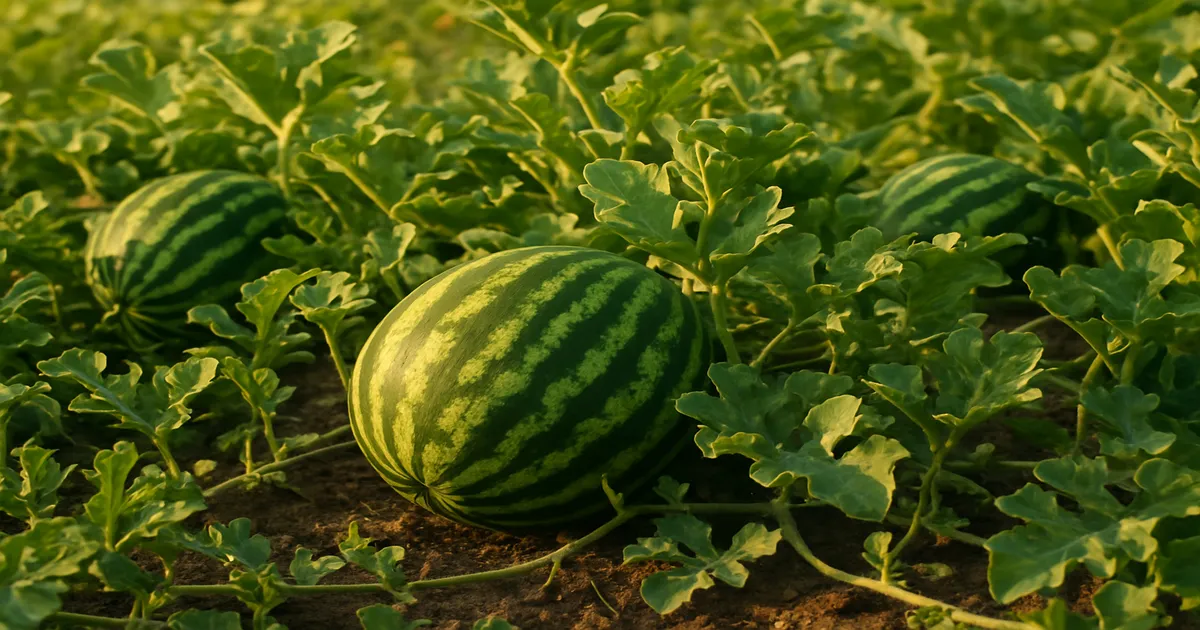
Quick Answer: To grow watermelon successfully, plant in full sun (8+ hours daily) once soil temperatures reach 65°F, space vines 6–8 feet apart in loose, well-draining soil with a pH of 6.0–6.8, and water deeply but infrequently. Most varieties are ready to harvest in 70–90 days from transplant.
Learning how to grow watermelon rewards patience — but punishes shortcuts. Get the heat, spacing, and watering right, and you’ll be thumping ripe melons by midsummer. Skimp on any of those, and you’ll end up with a lot of vine and very little fruit. This guide covers everything from variety selection and soil prep to pollination, pest control, and knowing exactly when to harvest.
How to Grow Watermelon: Key Requirements at a Glance
| Factor | Requirement |
|---|---|
| Light | Full sun, 8+ hours/day |
| Soil temp | 65°F minimum to plant; 85–90°F for best germination |
| Soil pH | 6.0–6.8 |
| Watering | 1–2 inches/week; reduce by 50% at ripening |
| Spacing | 6–8 ft between plants, rows 8–10 ft apart |
| Days to maturity | 70–90 days from transplant |
How Long Does It Take to Grow Watermelon?
Most standard varieties take 70–90 days from transplant to harvest. Icebox types like ‘Sugar Baby’ can come in as early as 75 days, while giants like ‘Carolina Cross’ push past 90. Count from transplant date — not from seed germination — for the most accurate estimate.
Choosing the Right Watermelon Variety
Picking the wrong cultivar for your climate or garden size is one of the most common reasons people struggle. Nail this decision first and everything else gets easier.
Standard Seeded Varieties
‘Crimson Sweet’ and ‘Jubilee’ are the classics. Both mature in 80–85 days, produce 20–35 lb fruits with familiar red flesh and striped rinds, and perform reliably across most of the country.
Seedless Varieties and Pollinator Requirements
Seedless varieties are triploid hybrids — they can’t produce viable pollen on their own. You must plant one diploid (seeded) pollinator for every three triploid plants. Keep them clearly labeled so you don’t accidentally harvest your pollinator thinking it’s a seedless melon.
Icebox and Personal-Size Varieties
‘Sugar Baby’ and ‘Tiger Baby’ are the top picks for small gardens. Both mature in 75–80 days and produce compact 6–12 lb fruits — ideal if you’re working with limited space or a short growing season.
Yellow, Orange, and Giant Varieties
‘Yellow Doll’ and ‘Orangeglo’ offer a sweeter, honey-like flavor that surprises most first-timers. At the other extreme, ‘Carolina Cross’ can exceed 200 lbs and needs 90+ days — impressive at a county fair, but impractical for most home gardens.
| Category | Examples | Days to Maturity | Fruit Weight |
|---|---|---|---|
| Standard/Seeded | Crimson Sweet, Jubilee | 80–85 days | 20–35 lbs |
| Seedless | Millionaire, Tri-X 313 | 80–85 days | 15–20 lbs |
| Icebox/Personal | Sugar Baby, Tiger Baby | 75–80 days | 6–12 lbs |
| Yellow/Orange | Yellow Doll, Orangeglo | 75–85 days | 8–20 lbs |
| Giant | Carolina Cross | 90+ days | 100–200+ lbs |
Soil Preparation and Site Selection
Ideal Soil Type, pH, and Drainage
Watermelons need loose, loamy, well-draining soil with a pH between 6.0 and 6.8. That range keeps nutrients available and soil biology active. Compacted or waterlogged soil invites root rot from Pythium and Phytophthora — and there’s no recovering a plant once those take hold.
The taproot can reach 24–36 inches deep, so deep, uncompacted soil isn’t optional. It’s how the plant anchors itself and accesses moisture during dry spells.
Test your soil 4–6 weeks before planting to give yourself time to adjust pH and work in amendments. A complete test covering NPK, micronutrients, and pH is worth the cost.
How to Amend Clay or Sandy Soils
- Clay soil: Work in 2–4 inches of aged compost plus coarse perlite to improve drainage and open up the structure
- Sandy soil: Add generous amounts of compost to boost water and nutrient retention
- Till amendments into the top 12 inches before planting
Raised Beds vs. In-Ground Planting
If drainage is a persistent problem, raised beds are worth building. Go at least 10–12 inches deep to give roots room to run. In-ground planting works fine in naturally loamy or sandy-loam soils.
Planting Watermelon: Timing, Seeds, and Transplants
When to Plant Watermelon (By USDA Zone)
Soil must be at or above 65°F before anything goes in the ground. In USDA Zones 9–11, that often means late February to March. In Zones 5–7, you’re typically looking at mid-May through early June.
Starting Seeds Indoors vs. Direct Sowing
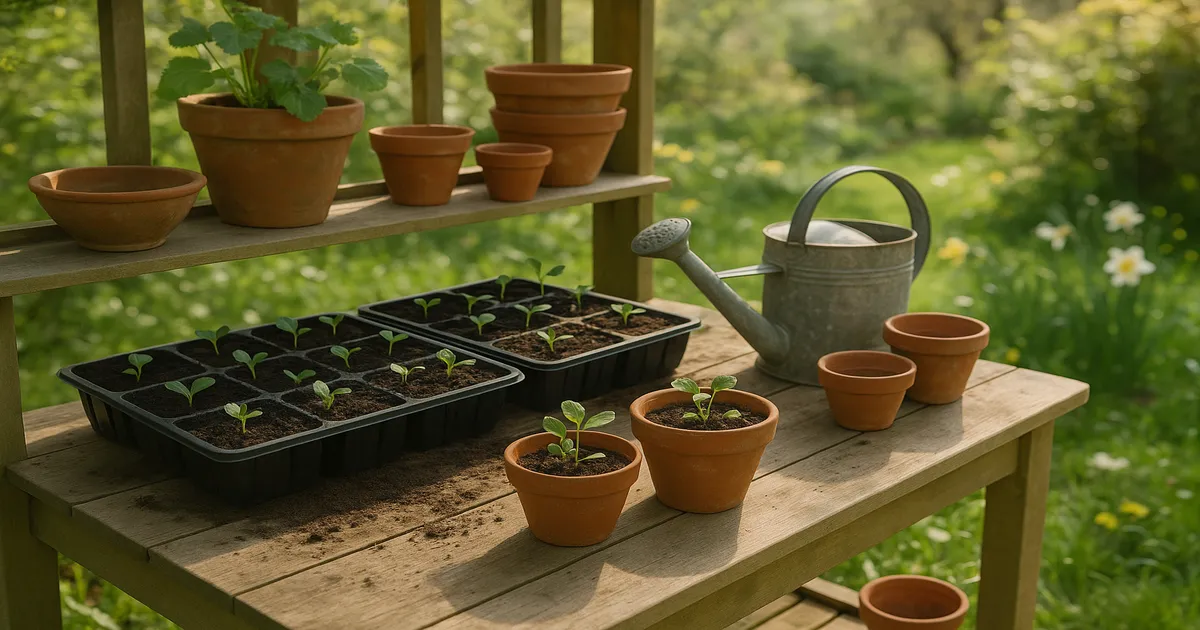
Start seeds indoors 3–4 weeks before your last frost date. Use a heat mat to hold the growing medium at 85–90°F — at that temperature, germination typically takes just 3–5 days.
Direct sowing works well in Zones 8 and warmer, where the soil heats up early and the season is long enough to support the full growing period.
Transplanting and Soil Warming
Harden off seedlings over 7–10 days by gradually increasing outdoor exposure. Transplant only after nighttime temperatures are consistently above 50°F, and handle the root ball gently — watermelons resent root disturbance and will stall or die if you’re rough with them.
Black plastic mulch pre-warms soil by 8–14°F, which can meaningfully extend your season in cooler climates. Lay it down 1–2 weeks before transplanting, cut holes for your plants, and leave it in place to suppress weeds and conserve moisture through the season.
Spacing Requirements
Standard vining varieties need 6–8 feet between plants with rows 8–10 feet apart — roughly 60–100 square feet per plant. It sounds excessive until you watch those vines run.
Watering and Fertilizing Watermelon Plants
How Much Water Does Watermelon Need?
During vegetative growth, aim for 1–2 inches of water per week, delivered deeply every 3–5 days. Deep, infrequent watering encourages roots to chase moisture downward, building drought resilience over time.
Drip irrigation or soaker hoses are strongly preferred over overhead sprinklers. Wet foliage invites powdery mildew, downy mildew, and anthracnose. Overhead watering during bloom can also wash away pollen and disrupt fruit set.
As fruits near maturity, cut watering by about 50%. This concentrates sugars in the flesh — it’s one of the biggest factors separating a truly sweet melon from a watery, disappointing one.
Fertilizing at Each Growth Stage
- Pre-plant: Work a balanced 10-10-10 fertilizer into the top 6 inches of soil at label rates
- At vine run: Switch to a low-nitrogen, high-potassium formula like 5-10-15 to push energy toward flowering and fruit development
- After fruit set: Back off nitrogen entirely — excess N at this stage produces lush vines and bland fruit
Fixing Nutrient Deficiencies
- Blossom-end rot (calcium deficiency): Apply calcium nitrate as a foliar spray or soil drench; maintain consistent moisture so roots can actually take it up
- Interveinal yellowing on older leaves (magnesium deficiency): Foliar spray of Epsom salt at 1 tablespoon per gallon of water
- Hollow heart (often linked to boron deficiency): Apply a dilute soluble boron product to soil — but use caution, boron toxicity occurs at relatively low thresholds
Pollination, Flowering, and Fruit Set
Male vs. Female Watermelon Flowers
Male flowers appear first — typically 7–10 days before female flowers — and that’s completely normal. Female flowers have a small, round proto-fruit at the base of the bloom. No swelling? It’s a male.
Why Watermelons Fail to Set Fruit
The most common culprits are pesticide applications during bloom hours, a shortage of bees, and extended rain during flowering. All three disrupt pollen transfer. If female flowers are opening and dropping without setting, pollination is almost certainly the problem.
To hand-pollinate, pick a freshly opened male flower, peel back the petals, and dab the pollen-covered anther directly onto the center of an open female flower. A small paintbrush works just as well.
Plant basil, borage, or marigolds near your watermelon patch to attract honeybees and native bees. If you must spray insecticides, do it in the evening only, after bees have returned to their hives.
Common Watermelon Pests and Diseases
Cucumber Beetles and Bacterial Wilt
Cucumber beetles (Diabrotica spp.) are the most dangerous watermelon pest — not just for feeding damage, but because they transmit bacterial wilt (Erwinia tracheiphila), which can collapse a vine within days and has no cure. Use kaolin clay as a physical deterrent and row covers on young plants. For heavy infestations, pyrethrin-based insecticide is effective. Remove row covers at first bloom so pollinators can get in.
Aphids, Spider Mites, and Squash Vine Borer
- Aphids: Knock off with a strong jet of water first; follow up with insecticidal soap or neem oil if needed
- Spider mites: Thrive in hot, dry conditions — increase humidity and apply horticultural oil
- Squash vine borer: Larvae tunnel into vines and cause sudden wilting that mimics drought stress; row covers are your best prevention since there’s no effective treatment once larvae are inside
Powdery Mildew, Downy Mildew, and Fusarium Wilt
Powdery mildew appears as white powdery patches on leaves, usually mid-to-late summer. Treat at first sign with potassium bicarbonate or neem oil, and improve air circulation by keeping vines from piling up. Downy mildew causes yellow angular lesions and favors cool, humid nights — copper-based fungicide applied preventatively is your best tool.
Fusarium oxysporum f. sp. niveum causes rapid, total vine collapse and can persist in soil for 10+ years. There is no chemical cure. Rotate crops (4–6 years minimum away from cucurbits), choose resistant cultivars, and remove infected plants immediately.
How to Know When Watermelon Is Ripe
Don’t rely on any single signal. Use all five indicators together:
- Dried tendril: The small curly tendril closest to the fruit turns brown and dries up
- Dull skin: The shiny surface becomes matte
- Yellow ground spot: The patch resting on soil turns from white to creamy yellow
- Hollow thump: A ripe melon sounds deep and hollow, not high-pitched
- Days to maturity: You’re within the expected window for your variety
Always cut the stem with a sharp knife or pruners — never twist or pull. Pulling can damage the main vine and injure other developing fruits. Leave a few inches of stem on the melon to extend shelf life.
Most standard varieties produce 2–4 fruits per plant under good conditions. Whole, uncut melons keep well at room temperature for up to two weeks. Once cut, wrap tightly and refrigerate for 3–5 days. Avoid refrigerating uncut melons — cold storage before cutting can dull the flavor.
Frequently Asked Questions About Growing Watermelon
Why is my watermelon plant not setting fruit?
Poor pollination is the most likely cause. Check whether female flowers are opening (look for the small round swelling at the base) and whether bees are visiting during bloom. Morning pesticide applications, extended rain, and a lack of pollinators are the top three culprits. Try hand-pollinating a few flowers with a small paintbrush to confirm the plants themselves are healthy.
How do I know when a watermelon is ripe and ready to pick?
Use five signs together: the tendril nearest the fruit dries and browns, the skin turns dull, the ground spot shifts from white to yellow, the melon sounds hollow when thumped, and you’re within the days-to-maturity window for your variety. No single indicator is reliable on its own.
How much space does a watermelon plant need?
Standard vining varieties need 6–8 feet between plants with rows 8–10 feet apart — roughly 60–100 square feet per plant. Vines can extend 10–15 feet in all directions, so plan accordingly. Icebox varieties are more compact but still need at least 3–4 feet of space.
Can you grow watermelon in a container or small garden?
Yes, with the right variety. Icebox types like ‘Sugar Baby’ are your best bet — compact, fast-maturing, and producing manageable 6–12 lb fruits. For true container growing, use a pot of at least 15–20 gallons, train vines vertically on a trellis, and support developing fruits with a sling made from netting or old pantyhose.
What causes hollow heart and how do I prevent it?
Hollow heart is an internal cavity that forms along the center of the fruit. It’s most often linked to boron deficiency or incomplete pollination. Maintain consistent soil moisture during fruit development, apply a dilute soluble boron supplement if a soil test confirms deficiency, and ensure thorough pollination. Extreme temperature swings during fruit set can also trigger it.