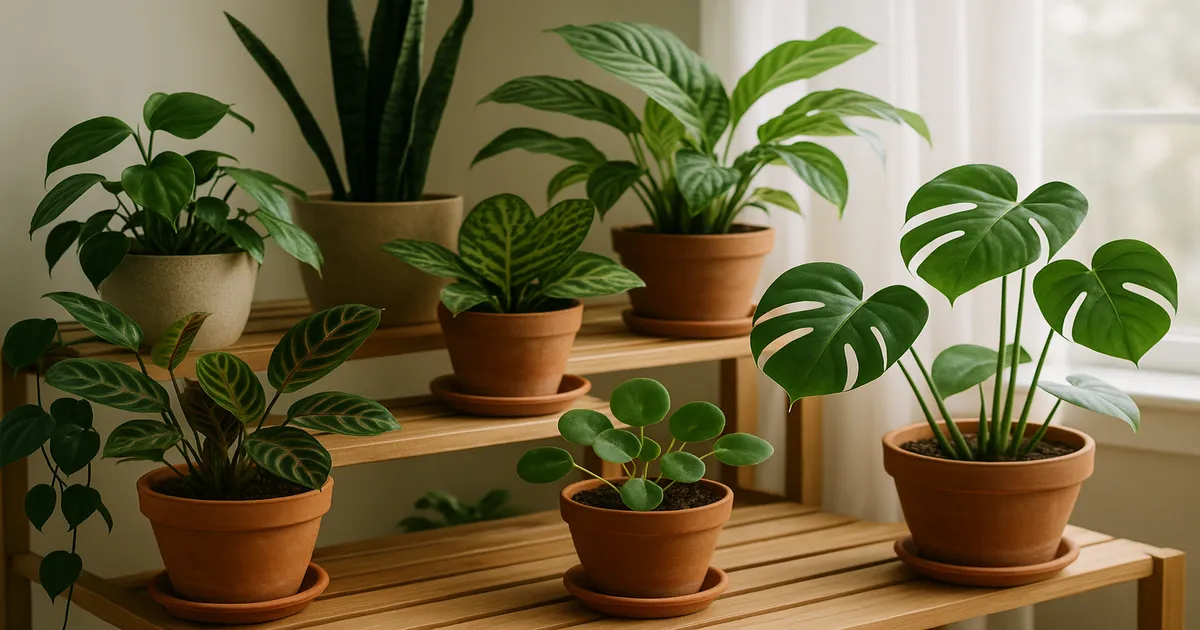
Quick Answer: If you’re asking “does anyone know what plant this is?” — you’re not alone. Start by observing leaf shape, stem type, and venation pattern, then take seven specific photos in bright indirect light. Run those photos through two or three identification apps, then verify any result against a reputable botanical database before adjusting your care routine.
Finding an unknown plant in your home can feel oddly stressful. You want to water it correctly, figure out whether it’s safe around your cat, and maybe just learn its name — but the tag is long gone and the internet keeps giving you conflicting answers. The question “does anyone know what plant this is?” gets asked thousands of times a day in online plant communities, and there’s a good reason it’s so hard to answer: roughly 28,000 species are kept as houseplants worldwide. Without a systematic approach, you’re guessing.
This guide walks you through every step — from what to observe before you pick up your phone, to the tools that actually work, to what to do once you finally have a name.
How to Identify an Unknown Houseplant
The Fast-Track Method
The fastest reliable approach is a three-step loop: observe, photograph, verify.
- Spend five minutes examining your plant’s physical features — leaf shape, stem type, venation pattern, and any unusual traits like aerial roots or milky sap.
- Take seven targeted photos in bright indirect light against a plain background (details below).
- Run those photos through two or three identification apps, then cross-check any consensus result against Plants of the World Online or iNaturalist before trusting it.
Skipping step one is the most common mistake. Apps work much better when you already have a genus or family in mind to verify against.
Why Getting the ID Right Matters
Getting the name wrong isn’t just a trivia problem — it leads directly to incorrect care. A fern and a succulent sitting in the same potting mix will have very different outcomes. More urgently, genera like Dieffenbachia, Euphorbia, and Philodendron are toxic to pets and small children, so knowing exactly what you have is a genuine safety issue.
Why “Does Anyone Know What Plant This Is?” Is So Hard to Answer
The Plant Arrived Without a Label
Most houseplants change hands informally — as housewarming gifts, cuttings from a friend’s collection, or inherited plants from a relative’s home. The nursery tag disappears, and with it goes the cultivar name. A Philodendron ‘Birkin’ just becomes “that white-striped plant.” Vintage plants from the 1970s and 80s houseplant boom can be especially tricky, since some cultivars are no longer in commercial production and won’t appear in modern databases.
Juvenile and Adult Leaves Look Completely Different
Many aroids go through heterophylly — their juvenile and adult leaves look like entirely different plants. Monstera deliciosa produces small, uncut leaves when young; the iconic fenestrated form only appears with maturity. Rhaphidophora tetrasperma is so frequently called “Mini Monstera” that people genuinely believe it’s a Monstera species — it isn’t. If your plant is young, searching its current leaf shape may consistently return the wrong species.
Trade Names and Common Names Are Unreliable
The houseplant industry runs on trade names, which no botanical authority governs. Scindapsus pictus is sold as “Satin Pothos,” “Silver Pothos,” and “Silk Pothos” — despite not being a Pothos at all. Meanwhile, “Money Plant” means Epipremnum aureum in some regions and Crassula ovata in others. Common names are local, inconsistent, and often shared across unrelated species — which is exactly why botanists use Latin binomials.
Identification Apps Gave You the Wrong Answer
AI identification apps use convolutional neural networks trained on image datasets. They achieve around 60–80% accuracy on common species, but that number drops sharply for rare cultivars, variegated forms, or plants that aren’t well-represented in the training data. Apps also struggle to distinguish between closely related species within the same genus — different Calathea species, for instance, look nearly identical to a neural network.
Stress Has Changed Your Plant’s Appearance
A stressed plant doesn’t look like its reference photo. Low light causes etiolation — stretched, pale growth that makes a compact rosette look like a leggy vine. Overwatering produces edema and leaf drop. Underwatering curls and crisps the leaf margins. A healthy Ficus lyrata and one that’s dropped half its leaves from cold drafts barely resemble each other.
Hybridization and Convergent Evolution
Many popular houseplants are interspecific hybrids or spontaneous mutations that don’t exist in any botanical database. × Fatshedera lizei is a bigeneric hybrid that matches neither parent plant. Variegated cultivars like Monstera ‘Albo Variegata’ arise from chimeric mutation — a genetic instability that makes every leaf different and complicates photo-based matching significantly.
Unrelated families have also independently evolved near-identical forms. Euphorbia trigona looks convincingly like a cactus but belongs to Euphorbiaceae and produces toxic latex. Haworthia, Gasteria, and Aloe are routinely swapped despite having meaningfully different care needs. The visual similarity is real — the relationship isn’t.
The Most Commonly Misidentified Houseplants
Pothos vs. Philodendron
Both are aroids, both vine, and both have heart-shaped leaves — but they’re different genera. Check these three things:
- Petiole cross-section: Pothos (Epipremnum aureum) has a petiole that’s slightly ridged or grooved where it meets the leaf; Philodendron petioles are smooth and round.
- Leaf texture: Pothos leaves feel slightly waxy and stiff; Philodendron leaves tend to be thinner and softer.
- New leaf emergence: Philodendron produces new leaves from a papery sheath called a cataphyll that dries and falls away; Pothos does not.
Calathea, Maranta, and Ctenanthe
All three belong to family Marantaceae and fold their leaves at night. Maranta leaves are generally smaller and oval, with a distinctive feathering pattern along the midrib. Calathea (many now reclassified as Goeppertia) tends to have more dramatic, contrasting patterns and a purple leaf underside. Ctenanthe leaves are more elongated and often asymmetrical, with a stiffer, more upright habit. All three prefer humidity above 50% and indirect light — but Maranta tolerates lower light than the other two.
Euphorbia vs. Cactus: A Potentially Dangerous Mix-Up
This is the one misidentification with real consequences. The easiest test: scratch the stem very gently with a fingernail. A true cactus produces clear, watery sap. Euphorbia produces a thick, white, milky latex that is toxic on contact with skin and eyes — wash immediately with soap and water if you encounter it. Structurally, cacti have areoles (small cushion-like structures from which spines emerge); Euphorbia spines grow directly from the stem with no areole.
Key Features to Observe Before Using Any App
Leaf Shape, Margin, and Texture
Before photographing, write down what you see. Is the leaf ovate (egg-shaped), lanceolate (lance-shaped), or cordate (heart-shaped)? Is the margin entire (smooth), serrate (toothed), or fenestrated (holes, like Monstera)? Is the surface glossy, matte, velvety, or waxy? Leaf underside color matters too — many Calathea species have purple undersides that are diagnostic.
Venation Patterns: Monocots vs. Dicots
This single observation halves your search space. Parallel venation — veins running side by side from base to tip — indicates a monocot (grasses, palms, snake plants, orchids). Netted venation — a branching network — indicates a dicot (most broadleaf houseplants). This distinction narrows your family-level search before you’ve done anything else.
Stem, Roots, and Sensory Clues
Is the stem woody, succulent, hollow, or herbaceous? Does the plant grow upright, trail, vine, or form a rosette? Look at the soil surface and any exposed roots — fibrous, tuberous, or rhizomatous? Aerial roots clinging to a support suggest an aroid.
Then gently scratch a small section of stem. Milky white sap immediately points toward Ficus, Euphorbia, or Hoya — three genera with very different care needs and toxicity profiles. Crush a leaf lightly and smell it; aromatic plants in the mint family (Lamiaceae) are instantly recognizable. These sensory checks take thirty seconds and can eliminate hundreds of possibilities.
How to Take Photos That Actually Get Your Plant Identified
The 7 Essential Shots
Photo quality is the single biggest variable in AI app accuracy. Take all seven:
- Full plant habit — the whole plant from a slight distance
- Leaf top — one representative leaf, filling the frame
- Leaf underside — same leaf, flipped
- Stem close-up — showing texture, color, and any nodes
- Petiole-stem junction — where the leaf stalk meets the main stem
- Root zone — if repotting or if roots are visible at the surface
- Flowers or fruit — if present, always include these
Lighting, Background, and Scale
Shoot in bright indirect light — a spot near a window but out of direct sun. Never use flash; it flattens texture and washes out color. A plain white or neutral grey background dramatically improves AI matching accuracy. A simple photography backdrop works well for this.
Include a ruler or a coin for scale — a leaf that looks large in a photo might be the size of your thumbnail, and that distinction matters. Photograph after a recent watering, when leaves are fully turgid. A wilted plant curls its leaves and droops its petioles, looking nothing like a healthy reference specimen.
Does Anyone Know What Plant This Is? — Best Tools to Find Out
Plant Identification Apps
No single app is right all the time. Run your photos through two or three different apps and look for consensus — if all three agree on the genus, you’re probably in the right neighborhood even if the species differs. When apps conflict, trust the result that best matches your physical observations.
Google Lens for a First Pass
Google Lens is excellent for broad initial matching. It’s not a specialized botanical tool, but its image database is enormous and it often surfaces the right plant family even when the species call is off. Use it to generate candidate names, then take those names to a proper botanical database for verification.
Reputable Botanical Databases
Always verify app results against at least one of these:
- Plants of the World Online (powo.science.kew.org) — maintained by Kew Gardens, the global authority
- iNaturalist (inaturalist.org) — community-verified observations with expert review
- USDA PLANTS Database (plants.usda.gov) — particularly strong for North American species
Online Plant Communities
Human experts beat AI for unusual or stressed specimens. Post to r/whatsthisplant on Reddit or dedicated Facebook plant groups with all seven photos plus your written observations. Include your geographic location, where you acquired the plant, its approximate size, and any care history. The more context you provide, the faster and more accurate the community response.
Physical Reference Books and Dichotomous Keys
Dichotomous keys walk you through paired choices based on observable features until you arrive at a species name. They’re slower than an app but far more reliable for difficult specimens. The RHS Encyclopedia of House Plants is an excellent physical reference with a comprehensive photo index worth keeping on your shelf.
DNA Barcoding for Truly Unidentifiable Specimens
For rare aroids, suspected novel hybrids, or plants that genuinely match nothing online, plant DNA barcoding services are increasingly accessible. Labs analyze standardized gene regions (rbcL, matK, ITS) and match your sample to a species. It’s not cheap, but it’s definitive — and for a rare or valuable specimen, it’s worth it.
What to Do After You’ve Identified Your Plant
Once you have a confirmed name, research care at the species level, not just the genus. Monstera deliciosa and Monstera adansonii have different humidity tolerances (60–80% vs. 50–60%). Ficus elastica prefers bright indirect light while Ficus benjamina tolerates lower levels. Generic genus-level advice is a starting point at best.
Before putting your newly identified plant back on a low shelf, check the ASPCA Animal Poison Control database (aspca.org/pet-care/animal-poison-control). Common toxic genera include Dieffenbachia (causes oral swelling), Euphorbia (toxic latex), and many Philodendron species (calcium oxalate crystals).
Finally, write the botanical name, acquisition date, and source on a waterproof label and push it into the pot today. Don’t rely on memory.
How to Build a Collection You Can Always Identify
Label every plant the day you bring it home — that’s the only moment you’re guaranteed to know its name. Use a permanent marker on a waterproof label and write the full botanical name, cultivar if known, the date, and where you bought it. This takes ninety seconds and saves hours of future detective work.
Photograph every new plant when it arrives, healthy and well-hydrated, and store photos in a dedicated album tagged with the botanical name. If the plant ever declines or you give away a cutting, you’ll have a clear reference image of what it looked like at its best.
Finally, learn to recognize four or five major plant families by sight — Araceae (aroids), Marantaceae (prayer plants), Asphodelaceae (aloes and haworthias), Cactaceae (true cacti). Combine that with the monocot/dicot venation check and you’ve eliminated most of the 28,000 possibilities before opening an app.
Frequently Asked Questions About Plant Identification
How accurate are plant identification apps?
Most popular plant ID apps achieve 60–80% accuracy on common species under good photo conditions. Accuracy drops significantly for rare cultivars, variegated forms, stressed plants, and species that are underrepresented in the app’s training data. Running two or three apps and comparing results improves reliability considerably.
What’s the fastest way to answer “does anyone know what plant this is?”
Take seven targeted photos — full plant, leaf top, leaf underside, stem, petiole junction, roots, and any flowers — then post them to r/whatsthisplant on Reddit with your location and care history. Community experts typically respond within a few hours and outperform AI apps for unusual or stressed specimens.
Can I identify a plant from a single photo?
Technically yes, but accuracy suffers. A single photo of a leaf top gives an app very little to work with. The more angles and details you provide, the better. If you can only take one photo, make it a well-lit shot of a healthy, representative leaf against a plain background — and include something for scale.
What if my plant doesn’t match anything online?
It may be a hybrid, a cultivar not yet in major databases, or a plant whose appearance has been significantly altered by stress. Try posting to specialist plant communities with detailed written observations alongside your photos. If it’s a valuable or rare specimen, plant DNA barcoding services can provide a definitive identification from a small leaf sample.
Is the snake plant still called Sansevieria?
Officially, no. In 2017, botanists reclassified Sansevieria into the Dracaena genus based on molecular evidence — your snake plant is now Dracaena trifasciata. Older nursery labels, books, and some current retailers still use Sansevieria, which is why you’ll find conflicting information. The care requirements haven’t changed; only the name has.