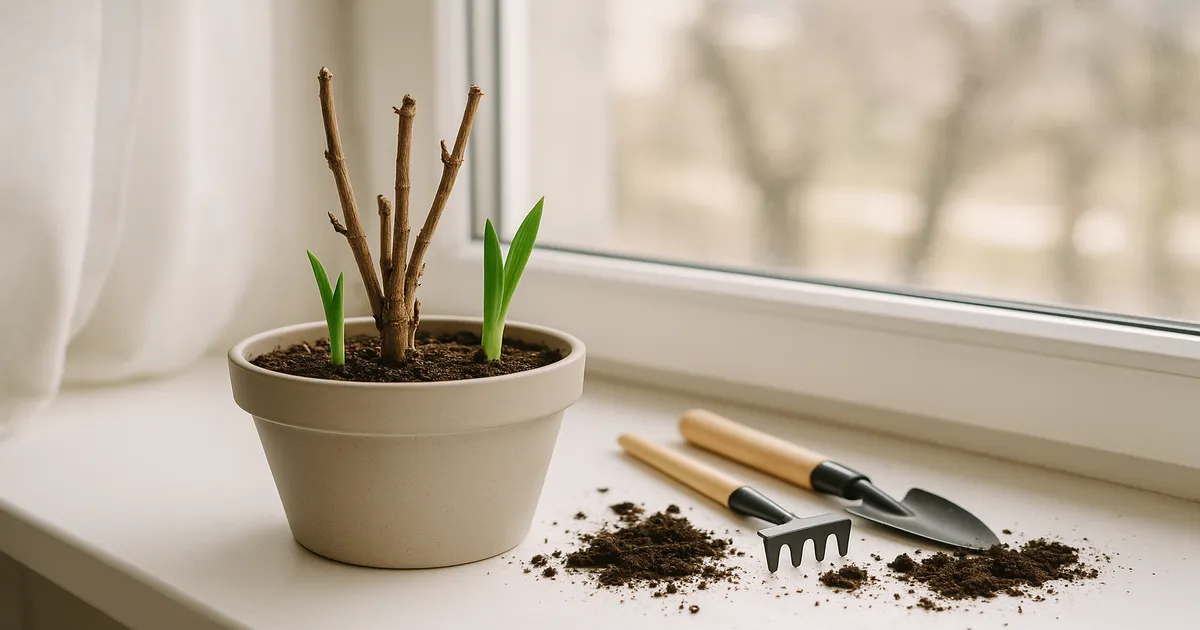
Quick Answer: Most plants that appear to have stopped growing are dormant, stressed, or dealing with a fixable problem — not permanently dead. If there’s still viable tissue at the crown, root collar, or underground rhizomes, your plant can almost certainly bounce back. Work through the causes below to figure out exactly what’s going on.
So you’re staring at your plant wondering, will anything grow on my plant again? — and honestly, it’s one of the most common questions plant owners face. The good news: a plant sitting motionless on your windowsill is far more likely to be resting or struggling than actually gone. Before you panic, run through this quick checklist.
Quick self-assessment:
- Is it autumn or winter? (Seasonal slowdown is the #1 cause)
- Is the pot very light and drying out within a day or two? (Likely root-bound)
- Is the soil staying wet for more than 10 days? (Possible root rot)
- Has the plant recently been repotted or moved? (Transplant shock)
- Are there visible pests on leaves or stems? (Pest stress)
If you answered yes to any of these, you already have a strong lead. Read on for the full breakdown.
Will Anything Grow on My Plant Again? Start Here
Growth doesn’t happen uniformly across a plant — it’s concentrated in specific zones called meristems. These clusters of undifferentiated cells sit at shoot tips, leaf axils, and root tips. When these zones are damaged, stressed, or dormant, visible growth stops completely.
Here’s the critical point: a plant can look completely dead above the soil while still harboring viable meristematic tissue at the crown, root collar, or in underground rhizomes and bulbs. That’s what makes recovery possible even in dramatic cases.
Four hormones essentially run the show:
- Auxins — promote cell elongation at shoot tips
- Cytokinins — stimulate cell division and trigger new bud break; produced mainly in root tips
- Gibberellins — regulate stem elongation and leaf expansion
- Abscisic acid (ABA) — the stress and dormancy hormone; rises sharply under pressure, suppressing the other three
This hormonal interplay explains why root damage — from rot or being root-bound — causes shoot growth to stall. When root tips are gone, the cytokinin signal that tells the plant to push new leaves simply never arrives.
Woody houseplants like Ficus and Dracaena can drop every single leaf and still have living cambium tissue beneath the bark. Bulbous plants like Caladium can disappear entirely above soil while their tubers sit dormant and perfectly healthy below. Don’t write a plant off based on what you can see at the surface.
Normal Growth Rates: What to Expect
Growth Rate Benchmarks by Plant Type
| Plant Type | Active Season | Dormant/Slow Season |
|---|---|---|
| Fast tropicals (Pothos, Philodendron) | 1–2 new leaves/month | Near zero in winter |
| Monstera deliciosa | 1 leaf every 4–6 weeks | 1 leaf per 2–3 months |
| Succulents | 1–2 cm/month | Virtually none |
| Fiddle-leaf fig | 1 leaf every 2–4 weeks | Prolonged stalls are common |
| Orchids (Phalaenopsis) | 1 leaf per growth cycle | Long rest between bloom spikes |
Why Slow Growth in Winter Is Completely Normal
As day length shortens in autumn, plants detect the shift through light-sensitive proteins called phytochromes. This triggers a surge in ABA production, which dials back auxin and cytokinin activity. Even tropical houseplants respond to lower indoor light intensity and cooler temperatures — even if you haven’t changed a thing about your care routine.
Many plant owners reach for fertilizer or a bigger pot in October when their plant slows down. That’s usually unnecessary and can cause real harm.
Most tropicals experience facultative dormancy — they can keep growing if conditions are ideal, but they naturally slow in winter. Plants like Caladium and Canna experience obligate dormancy — their tubers must rest for three to five months regardless of how perfect your care is. Trying to force these plants through their rest period exhausts the bulb. Let them sleep.
11 Reasons Your Plant Has Stopped Growing
1. Seasonal Dormancy
Growth simply stops or slows dramatically with no other signs of distress. The plant otherwise looks healthy. This is normal — wait it out.
2. Insufficient Light
Photosynthesis requires enough light energy to exceed the plant’s light compensation point — the intensity at which energy production equals energy consumption. Below that threshold, there’s nothing left over for growth. Most tropical foliage plants need 1,500–3,000 foot-candles for active growth. Light intensity drops off fast with distance: a plant sitting six feet from a window may receive 75–90% less light than one sitting right at the glass. Symptoms: stretched, pale new growth reaching toward the light source, then complete growth cessation.
3. Root-Bound Conditions
When roots fill the pot completely, they begin circling and compressing each other. Root tips — the primary sites of cytokinin production — get damaged or suffocated, cutting off the hormonal signal for new shoot growth. Symptoms: roots emerging from drainage holes, soil drying out within a day or two of watering, small or distorted new leaves.
4. Nutrient Deficiency
Nitrogen is the most critical macronutrient for vegetative growth — it’s a structural component of amino acids, chlorophyll, and DNA. Potting mix nutrients leach out within 6–12 months of regular watering. Key deficiency signs:
- Nitrogen: yellowing of older leaves, stunted growth
- Iron: interveinal chlorosis on new leaves
- Magnesium: interveinal chlorosis on older leaves
- Phosphorus: purple or red tones on leaf undersides
5. Overwatering and Root Rot
Waterlogged soil creates anaerobic conditions that allow Pythium, Phytophthora, and Fusarium to destroy root tissue rapidly. Without functional roots, the plant can’t absorb water or nutrients — even if both are physically present in the soil. Here’s the paradox: an overwatered plant often looks like it needs more water, wilting and yellowing because damaged roots can’t transport moisture upward. Symptoms: yellowing leaves, mushy stem base, foul-smelling soil, roots that are brown and mushy rather than white and firm.
6. Underwatering and Drought Stress
Water drives turgor pressure, which physically pushes cells to expand during growth. When water deficit triggers stomatal closure, CO₂ can’t enter the leaf, halting photosynthesis. Prolonged drought spikes ABA, actively suppressing growth hormones. Severe dehydration can cause irreversible damage to meristematic tissue. Symptoms: dry, crispy leaf edges, soil pulling away from pot walls, very lightweight pot.
7. Temperature Stress
Most tropical houseplants suffer chilling injury below 50–55°F (10–13°C). Heat above 95°F (35°C) denatures proteins and overwhelms the plant’s cooling capacity. A commonly overlooked source of cold stress: winter windows. Glass conducts cold air, and a plant pressed against a single-pane window in January may experience temperatures well below what your thermostat reads. The optimal range for most tropicals is 65–85°F (18–29°C).
8. Pest Infestation
Sap-sucking insects — spider mites, mealybugs, scale, and thrips — drain the plant’s phloem and inject phytotoxic saliva that disrupts hormone signaling. Fungus gnat larvae damage roots underground. Thrips and spider mites feeding directly on apical meristems can destroy the growing point entirely. Symptoms: stippled or distorted leaves, visible webbing, sticky residue, tiny moving dots on leaf undersides.
9. Repotting Shock
Repotting always damages fine root hairs — the plant’s primary water-absorbing structures. The plant redirects energy from shoot growth to root regeneration, causing a pause that can last two to eight weeks. Planting into an oversized pot makes this worse, as excess soil stays wet too long around the recovering roots.
10. Incorrect Soil pH
Most houseplants prefer a slightly acidic soil pH of 5.5–6.5. Above pH 7.0, iron, manganese, zinc, and boron become chemically insoluble — physically present in the soil but unavailable to the plant. Tap water with high alkalinity (pH 7.5–8.5) can gradually raise soil pH over months of regular watering. Symptoms: nutrient deficiency signs, especially interveinal chlorosis, that don’t respond to fertilizing.
11. Low Humidity
Most tropical houseplants evolved in environments with 60–90% relative humidity. Heated winter homes often drop to 30–50% RH. Low humidity forces stomata to close to prevent moisture loss, which also blocks CO₂ entry and shuts down photosynthesis. Symptoms: brown, crispy leaf edges; new leaves emerging curled or damaged, particularly on Calathea and Alocasia.
How to Fix a Plant That Has Stopped Growing
Fix Light Problems First
Move the plant to within three feet of a south- or east-facing window (Northern Hemisphere) to achieve bright indirect light. Use a free smartphone lux meter app to check actual light levels — you may be surprised how dim your space really is.
If natural light is genuinely limited, a full-spectrum LED grow light covering the 400–700nm spectrum works well, with peaks in the blue (450nm) and red (660nm) ranges. Position it 12–24 inches above foliage and run it on a timer for 12–16 hours per day. Also wipe dusty leaves with a damp cloth — a thick layer of dust can reduce photosynthetic efficiency by up to 30%.
Repot a Root-Bound Plant Correctly
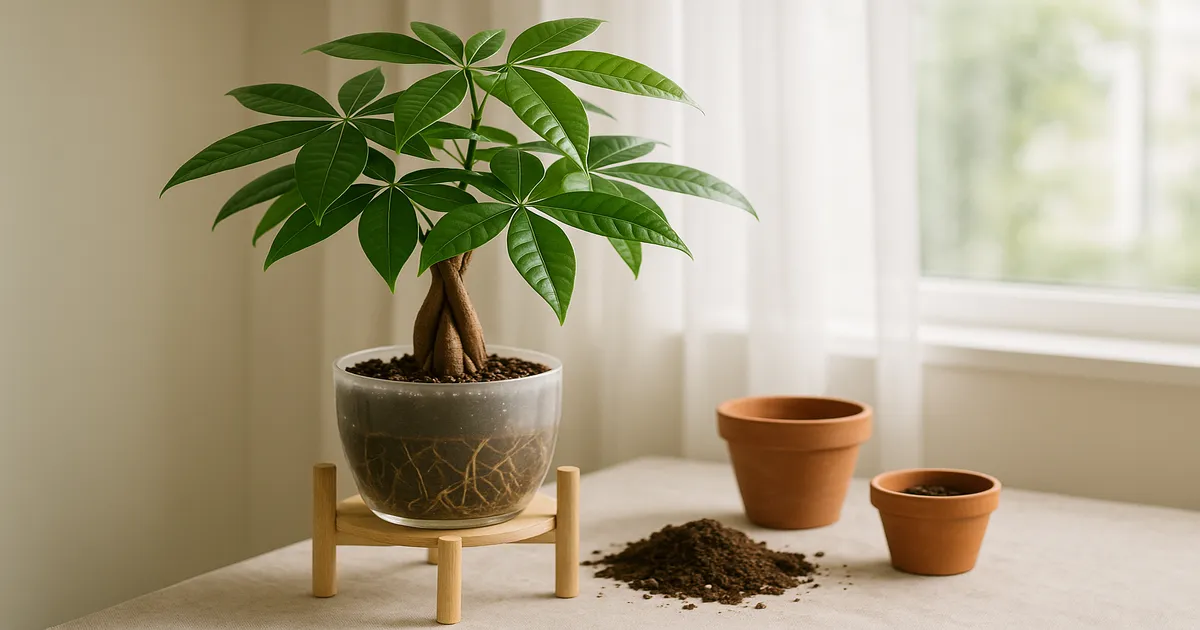
Choose a new pot only 1–2 inches larger in diameter than the current one. Always use a pot with drainage holes. Loosen any circling roots gently with your fingers, then plant into a well-draining mix — 20–30% perlite for most tropicals, or a chunky blend of orchid bark, perlite, and coco coir for aroids. Water thoroughly after repotting, then hold off on fertilizing for four to six weeks while roots re-establish.
Treat Root Rot Step by Step
Act quickly — root rot can destroy most of the root system before you see symptoms above soil.
- Remove the plant from its pot and brush away all old soil
- Identify healthy roots (white or tan, firm) versus rotted roots (brown or black, mushy, foul-smelling)
- Using sterile pruning snips sterilized with 70% isopropyl alcohol, cut away all rotted tissue back to healthy white growth
- Dust cut surfaces with powdered sulfur or cinnamon — both have antifungal properties
- Allow roots to air-dry for 30–60 minutes
- Repot into fresh, sterile potting mix in a clean pot; discard all old soil (Fox Farm Ocean Forest)
- Water sparingly going forward — only when the top 1–2 inches of soil are dry
Correct Nutrient Deficiencies
First, flush the soil by watering thoroughly three or four times in succession to leach accumulated salts that may be blocking uptake. Then apply a balanced, water-soluble fertilizer (NPK 10-10-10 or 20-20-20) at half the recommended strength during active growth.
For interveinal chlorosis on new leaves (iron deficiency), apply a chelated iron supplement as a foliar spray or soil drench — regular fertilizers won’t solve a pH-locked micronutrient problem. For suspected magnesium deficiency, dissolve one teaspoon of Epsom salt per gallon of water and apply monthly as a soil drench.
Manage Dormancy With Restraint
Reduce watering by 30–50%, stop fertilizing entirely, and maintain temperatures in the 60–70°F range. Resume fertilization only when you see new growth emerging in spring. For obligate dormancy plants like Caladium, allow the foliage to die back naturally, lift the tubers, and store them in barely moist peat or vermiculite at 55–60°F (13–16°C) until spring.
Address Temperature, Humidity, and Pests
Move plants away from cold windows and heating vents. For humidity, a small humidifier positioned nearby is the most effective solution for sensitive species like Calathea and Alocasia — aim for RH above 50%. A pebble tray provides only modest improvement by comparison.
For pests, identify the culprit before treating. Spider mites respond well to neem oil or insecticidal soap; scale requires manual removal plus systemic treatment; fungus gnats are best managed by allowing soil to dry between waterings and using yellow sticky traps to monitor populations.
Is Your Plant Dead or Just Dormant? How to Tell
The Scratch Test
Using your fingernail or a clean knife, gently scrape a small section of stem or bark. Green or white tissue beneath the surface means the cambium is alive and the plant can recover. Dry, brown, hollow tissue throughout indicates that section is dead — but work your way down toward the base before giving up.
Root and Crown Inspection
Unpot the plant and examine the roots and the crown (where stem meets roots). Healthy roots are white or tan and firm. A crown with any firm, pale tissue remaining is recoverable. The truly grim signs: a crown that is entirely black and mushy with no firm tissue remaining, or roots that are 100% rotted with not a single white root left.
Recoverable vs. Beyond Saving
Looks alarming but is recoverable:
- Bare stems with green cambium on the scratch test
- Dormant bulbs or tubers with no above-ground growth
- Leafless woody stems with firm tissue throughout
Genuinely beyond saving:
- Crown completely black, mushy, and structureless with no firm tissue
- 100% root rot — not a single white root remaining
- Stems fully desiccated and crispy throughout, with no moisture in the tissue at any point
Will Anything Grow on My Plant Again? Preventing Future Stalls
Think of plant care in two modes: active season (roughly March–September) and rest season (October–February). In active season, water thoroughly when the top inch or two of soil dries out, fertilize every two to four weeks at half strength, and repot if needed. In rest season, reduce watering frequency by 30–50%, stop fertilizing until you see new growth, and avoid repotting.
Potting mix nutrients are largely exhausted within 6–12 months of regular watering. Plan to refresh the mix every 12–18 months, even if you’re not moving up a pot size — a top-dress or full repot into fresh mix makes a real difference.
Measure light levels with a lux meter app rather than guessing. Keep plants away from cold windows in winter and heating vents year-round. For tropical species, maintain relative humidity above 50% and track it with a simple hygrometer on your shelf. If your tap water is highly alkaline, switch to rainwater or filtered water for sensitive plants to prevent gradual soil pH creep.
Frequently Asked Questions
How long does it take for a plant to start growing again after stress?
It depends on the cause and severity. Repotting shock typically resolves within two to eight weeks. Root rot recovery takes longer — often six to twelve weeks — because the plant must regenerate significant root mass before it can support new shoot growth. Seasonal dormancy lifts naturally as day length increases in spring, usually triggering new growth in March or April for most houseplants.
Can a plant with no leaves left still recover and grow back?
Yes, in many cases. What matters is whether living tissue remains — not whether leaves are present. Perform the scratch test on the stems and inspect the crown and roots. If you find green cambium tissue or any firm, pale root tissue, the plant has the raw material it needs to push new growth. Woody plants like Ficus and Dracaena are particularly good at recovering from complete defoliation.
Should I fertilize a plant that has stopped growing?
Not immediately. Fertilizing a stressed, dormant, or root-damaged plant can burn already-compromised roots and make things worse. First identify and fix the underlying cause — whether that’s light, watering, pests, or root health. Resume fertilizing only once you see new growth emerging, which signals the plant is ready to use the nutrients.
How do I know if my plant is dormant or dying?
The scratch test is your best tool. A dormant plant will show green or white tissue beneath the bark and have roots that are at least partially firm and pale. A dying plant will show brown, dry, or hollow tissue throughout the stems and roots that are entirely mushy or desiccated. Dormancy is also predictable — if your plant went quiet in October and otherwise looked healthy, dormancy is the far more likely explanation than death.
Why does my plant keep stopping and starting growth?
Inconsistent growth usually points to inconsistent conditions — fluctuating light levels as seasons change, irregular watering, or temperature swings from nearby vents or windows. Plants grow steadily when their environment is stable. Track your light levels, watering schedule, and temperature across the seasons and look for the pattern that corresponds to each growth pause.