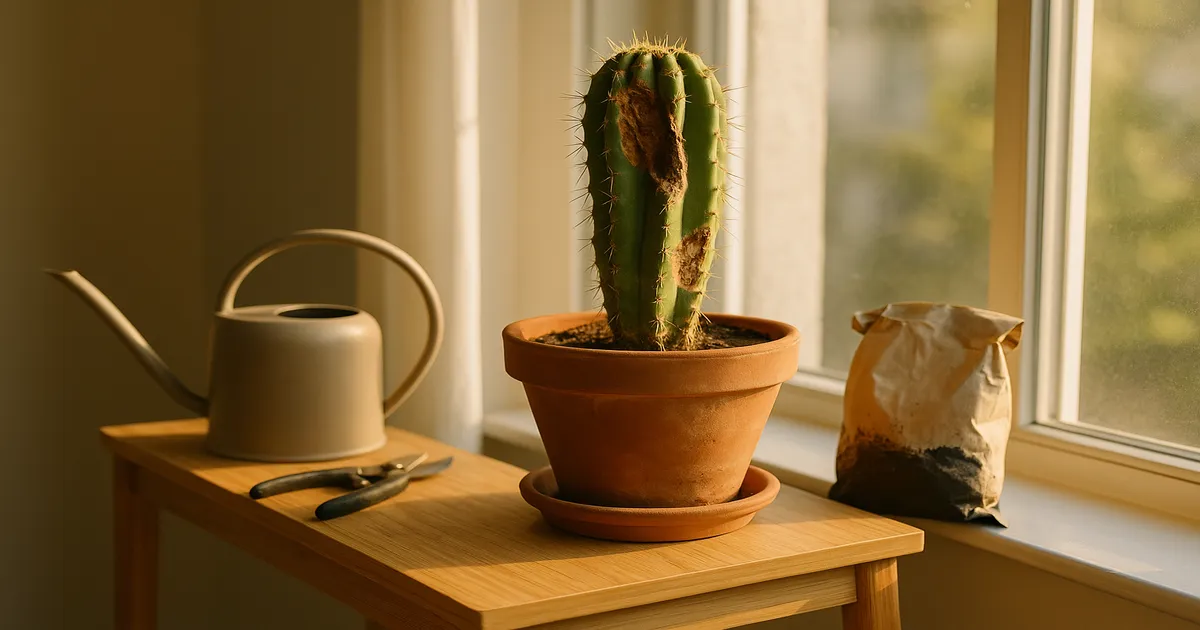
Quick Answer: Most dying cacti can be saved once you correctly identify the problem — and the majority of the time, that problem is overwatering and root rot. Unpot the plant, cut away any rotted tissue, let the wound callous for 3–7 days, and replant in fast-draining soil. The sections below walk you through every scenario, from drought stress to pest infestations.
If you’re asking “how do I save my cactus?”, here’s the good news: these are remarkably resilient plants — some species live 150 years or more. The bad news is that a cactus in serious decline can go downhill fast, especially when rot is involved. Getting the diagnosis right before you act is everything.
What’s Killing Your Cactus? Start Here
Eight problems account for nearly every struggling cactus:
- Overwatering / root rot — the #1 killer, by a wide margin
- Underwatering / drought stress — less common, but real
- Insufficient light / etiolation
- Pest infestation (mealybugs, spider mites, scale, fungus gnats)
- Wrong soil or poor drainage
- Temperature stress or frost damage
- Nutrient deficiency or fertilizer burn
- Sunburn from sudden light exposure
Use this checklist to narrow it down fast:
- Is the base soft and mushy? → Root rot (jump to that section)
- Is the stem wrinkled and dry to the touch? → Underwatering
- Is new growth pale, thin, and reaching toward the window? → Light problem
- White fuzz, rusty scarring, or sticky residue on the stem? → Pests
- Bleached or corky patches on one side? → Sunburn
- Yellowing despite normal watering? → Soil, drainage, or nutrient issue
Diagnosing the Problem: What Is Your Cactus Telling You?
Soft, Mushy Base — Root Rot
Press the stem near the soil line. If it feels squishy, the color has shifted to yellow, brown, or black, and there’s a faint sour smell, you’re dealing with basal rot. The plant may also wobble loosely in its pot even though the soil looks fine on the surface.
The culprits are fungal and oomycete pathogens — Pythium, Fusarium, and Phytophthora are the usual suspects. Because cacti use CAM photosynthesis, their stomata stay closed during the day and their roots simply aren’t built to sit in wet soil. Prolonged moisture creates the anaerobic conditions these pathogens love.
Wrinkled or Shriveling Stem — Underwatering
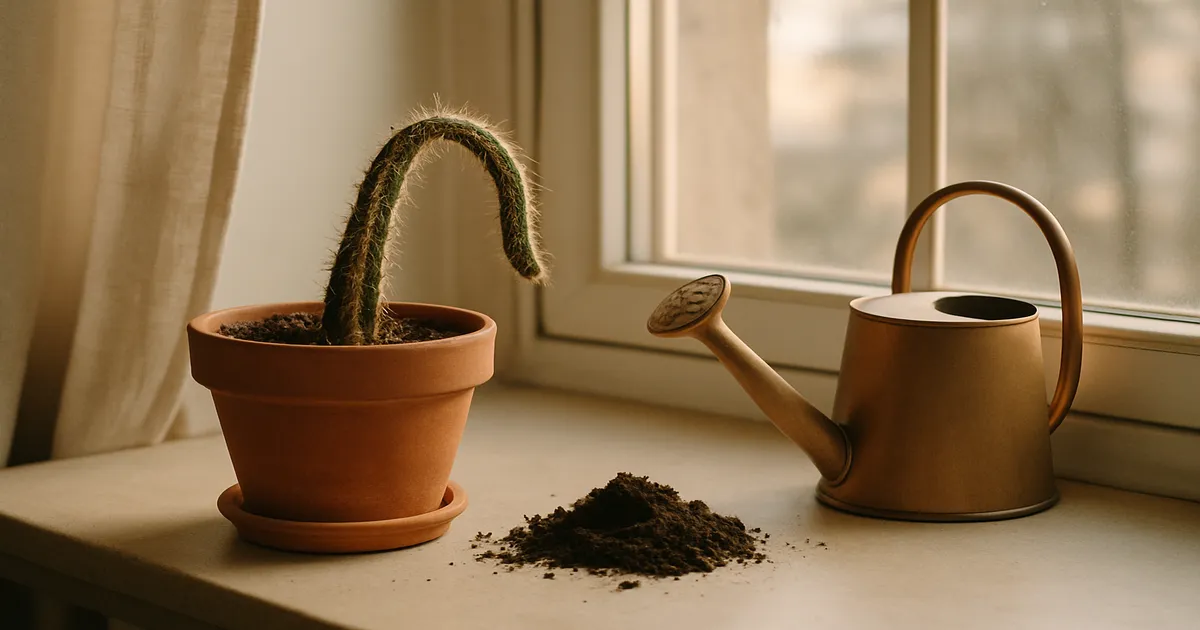
The stem looks accordion-pleated or deflated, and the surface has lost its waxy sheen. The key distinction: the texture is soft but dry — not slimy or wet. Soft-and-mushy means rot; soft-and-dry means drought stress. Treating one as the other will kill the plant.
Pale, Elongated New Growth — Insufficient Light
New growth emerges thinner than the established body, stretches awkwardly toward the nearest window, and may be pale yellow-green instead of the plant’s normal color. This is etiolation. Existing stretched tissue is permanent — it won’t plump back up — but you can stop more from forming by improving the light situation.
White Cottony Clusters or Rusty Scarring — Pests
White fluff tucked into the areoles points to mealybugs. Rusty-brown corky patches with fine webbing visible under a magnifying glass suggest spider mites. Flat, waxy brown bumps adhered to the stem are scale insects. None of these are fatal if caught early.
Bleached or Corky Patches — Sunburn or Cold Damage
A pale, tan, or white patch on the sun-facing side of a cactus that was recently moved outdoors is almost certainly sunburn. Cold damage looks similar but tends to produce water-soaked, translucent patches that later collapse. Both types of scarring are permanent, but neither is a death sentence — remove the damaged tissue if it’s spreading and let the plant stabilize.
How to Save a Cactus from Root Rot
Root rot moves fast. If you suspect it, act today — not next weekend.
Step-by-Step Root Rot Treatment
- Unpot the plant and gently shake or brush all soil from the roots.
- Inspect the roots. Healthy roots are white or tan and firm. Rotted roots are brown or black, mushy, and may smell foul. Cut all rotted material back to firm, healthy tissue using sterile scissors or a sharp knife. (Fiskars Micro-Tip Pruning Snips)
- Dust every cut surface with powdered sulfur or a copper-based fungicide to prevent reinfection.
- Set the plant aside in a dry, shaded spot for 3–7 days. Don’t rush this step — the wounds need to callous before the plant goes back into soil.
- Repot into fresh, dry mix (see below) and withhold water for 7–14 days.
How to Handle Stem Rot
If rot has traveled up into the stem, you’ll need to cut higher. Slice cleanly across the stem until you see only healthy green tissue with zero discoloration. Dust the cut with sulfur, then let it callous in a shaded, well-ventilated spot for at least a week. A calloused cutting can be planted as a new start — you’re essentially propagating the surviving portion and starting fresh.
The Right Soil Mix After Root Rot
The mix you use after treatment matters as much as the treatment itself. A reliable DIY recipe:
- 1 part quality cactus/succulent potting mix
- 1 part coarse horticultural sand
- 1 part perlite or pumice
That gives you roughly 50–67% inorganic material, which drains fast and dries out between waterings the way cactus roots need.
Fixing an Underwatered Cactus
How to Rehydrate a Shriveled Cactus
A wrinkled cactus needs a deep, thorough watering — not a light sprinkle. Water slowly until it runs freely from the drainage holes, then let the pot drain completely. Don’t leave it sitting in a saucer of water afterward. Within a few days to a week, the stem should plump back up as the plant rehydrates.
Bottom-Watering for Bone-Dry Soil
If the soil has pulled away from the pot edges, top-watering may run straight down the gap and out the bottom without actually wetting the roots. Instead, set the pot in a shallow tray of water for 20–30 minutes and let the soil absorb moisture from below, then remove it and let it drain fully.
When Wrinkles Won’t Go Away
If the plant doesn’t perk up within a week of proper watering, the roots may have died back from prolonged desiccation. At that point, treat it like a cutting rescue: cut above any dead root zone, let the base callous, and restart in fresh soil. One exception worth knowing — some species wrinkle slightly during winter dormancy, which is normal and resolves on its own come spring.
Saving a Cactus with Insufficient Light
Identifying Etiolation
Compare the new growth to the established body. If it’s noticeably thinner, paler, and reaching in one direction, that’s etiolation. South- or west-facing windows are your best bet indoors, ideally delivering 2,000–5,000+ foot-candles. If your space can’t provide that, a full-spectrum LED grow light positioned 6–12 inches above the plant for 12–16 hours per day will do the job.
If you’re moving a cactus from low light to a sunny windowsill or outdoors, do it gradually over 2–4 weeks. A sudden jump to intense direct sun will cause sunburn even on a sun-loving species.
Can Etiolated Growth Be Fixed?
The stretched tissue stays stretched — there’s no reversing it. You can prune the distorted section off and propagate the healthy base as a cutting, giving you a compact plant going forward. Gymnocalycium is worth a special mention: it’s one of the few cacti that genuinely tolerates lower light, making it a good choice for dimmer apartments.
Identifying and Treating Common Cactus Pests
Mealybugs: Dab individual bugs with a cotton swab soaked in 70% isopropyl alcohol, then follow up with a diluted neem oil spray over the whole plant. Repeat every 5–7 days for 3–4 cycles to break the egg cycle, not just kill the visible adults.
Spider mites: These thrive when indoor humidity drops below 30%. Raise humidity to 40–50% to slow them immediately, then apply neem oil or an abamectin-based miticide. Isolate the plant right away — mites spread fast.
Scale insects: Scrape off visible scale with a soft toothbrush, then treat with horticultural oil or isopropyl alcohol. For heavy infestations, a soil drench with an imidacloprid-based systemic insecticide works well because the plant absorbs it and the scale ingest it while feeding.
Fungus gnats: The adult gnats are harmless; the larvae are the real problem, feeding on fine root hairs in moist soil. Let the soil dry out completely between waterings — larvae can’t survive dry conditions. For persistent infestations, apply a Bacillus thuringiensis israelensis (Bti) soil drench or water in beneficial nematodes (Steinernema feltiae).
Correcting Soil, Drainage, and Pot Problems
Regular potting mix is engineered to retain moisture — great for ferns, terrible for cacti. It can stay wet for days or weeks, recreating exactly the anaerobic root zone that causes rot. If your cactus is sitting in standard mix, that’s a risk worth addressing even if the plant currently looks fine.
Aim for at least 50% inorganic aggregate — coarse perlite, pumice, or 2–4mm horticultural grit. Target a soil pH of 5.5–6.5; anything above 7.5 locks out micronutrients like iron and manganese, causing yellowing that looks like a watering problem but isn’t.
Pot choice matters too. Terracotta wins over plastic or glazed ceramic because the porous clay actively wicks moisture away from the root zone. Whatever material you choose, a drainage hole is non-negotiable. And resist the urge to size up dramatically — a pot no more than 1–2 inches larger in diameter than the root ball is the right call. Oversized pots hold far more soil than the roots can use, and that excess stays wet.
Long-Term Cactus Care: Preventing Future Problems
Watering: Use the soak-and-dry method. Water deeply until it flows freely from the drainage holes, then wait until the soil is completely dry before watering again. A wooden skewer pushed 2–3 inches into the soil is a reliable low-tech check — if it comes out with moist soil clinging to it, wait. A soil moisture meter takes the guesswork out entirely.
Seasonal adjustments: During spring and summer, most indoor desert cacti need water every 10–14 days. In winter, dial that back to once every 3–6 weeks — or nearly suspend watering altogether for cold-dormant species.
Fertilizing: Use a low-nitrogen fertilizer with a ratio like 2-7-7 or 5-10-10, applied at half the recommended label strength once a month during the active growing season (spring through early fall) only. Never fertilize in winter. High-nitrogen formulas cause salt buildup that pulls water out of roots, causing wilting even when the soil is moist.
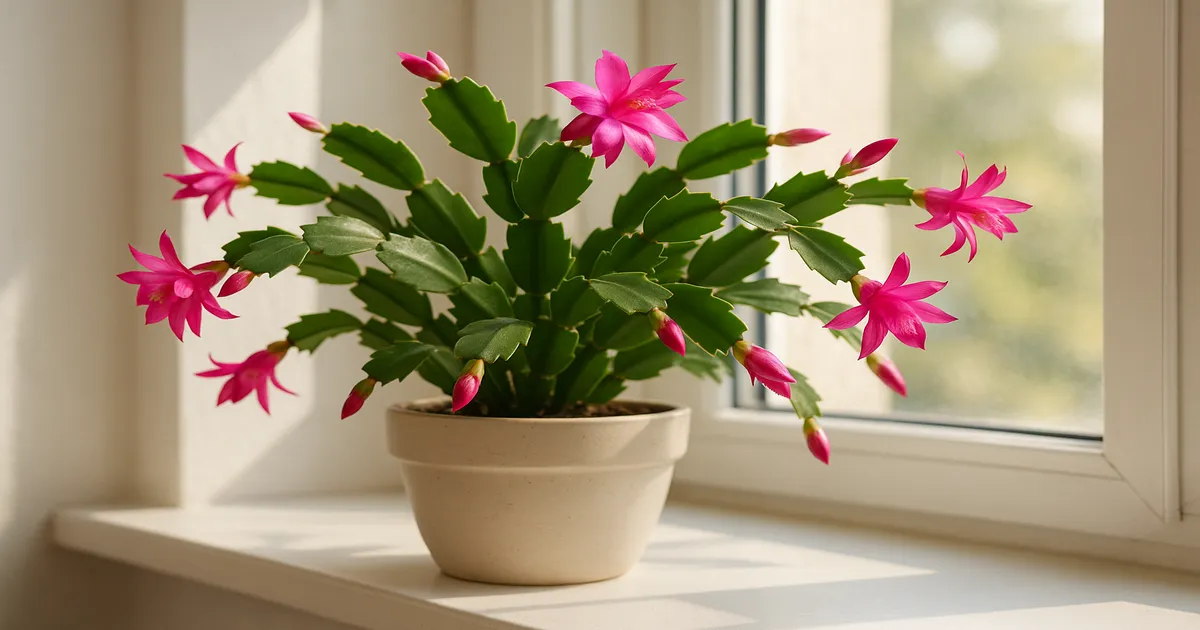
Temperature and placement: Most desert cacti are happiest between 65–85°F (18–29°C) with relative humidity in the 30–50% range. Keep them away from cold windowpanes in winter, HVAC vents year-round, and exterior doors that let in cold drafts. Epiphytic types like Christmas cactus (Schlumbergera) prefer slightly higher humidity, around 50–60%.
Repotting: Every 2–3 years in early spring. This refreshes depleted soil, gives roots room to expand, and — crucially — lets you check for early rot or pest activity before it becomes serious. Always sterilize cutting tools with 70% isopropyl alcohol between plants.
Frequently Asked Questions
Can a cactus recover from overwatering?
Yes, if you catch it before rot has spread too far into the stem. Unpot the plant, cut away all mushy roots and any rotted stem tissue, dust the cuts with sulfur, and let the wounds callous for 3–7 days before repotting in fast-draining soil. A cactus with healthy green tissue remaining above the rot line has a good chance of full recovery.
How do I know if my cactus has root rot?
The most reliable signs are a soft, mushy base near the soil line, discoloration ranging from yellow to brown or black, a foul or fermented odor, and a plant that wobbles loosely in its pot. To confirm, unpot the plant and inspect the roots — healthy roots are firm and white or tan; rotted roots are dark, slimy, and may fall apart when touched.
Why is my cactus turning yellow?
Yellowing has several possible causes: overwatering and root rot, insufficient light, nutrient deficiency, or soil pH above 7.5 locking out micronutrients. Check the base for softness first (rot is the most common culprit), then assess your light situation. If the plant is firm, well-lit, and properly watered, test your soil pH and consider flushing with pH-adjusted water to clear any salt buildup.
How often should I water an indoor cactus?
During spring and summer, every 10–14 days is a reasonable starting point — but always let the soil dry out completely between waterings rather than following a fixed schedule. In winter, reduce to once every 3–6 weeks. Pot material, soil mix, light level, and room temperature all affect how quickly the soil dries, so use the skewer test rather than the calendar.
Why is my cactus soft and mushy at the base?
A soft, mushy base almost always means root rot caused by overwatering or poorly draining soil. Fungal and oomycete pathogens thrive in waterlogged conditions and can destroy root tissue within days. Act immediately — unpot, prune away all rotted material, dust cuts with sulfur, and follow the rescue steps in the root rot section above.