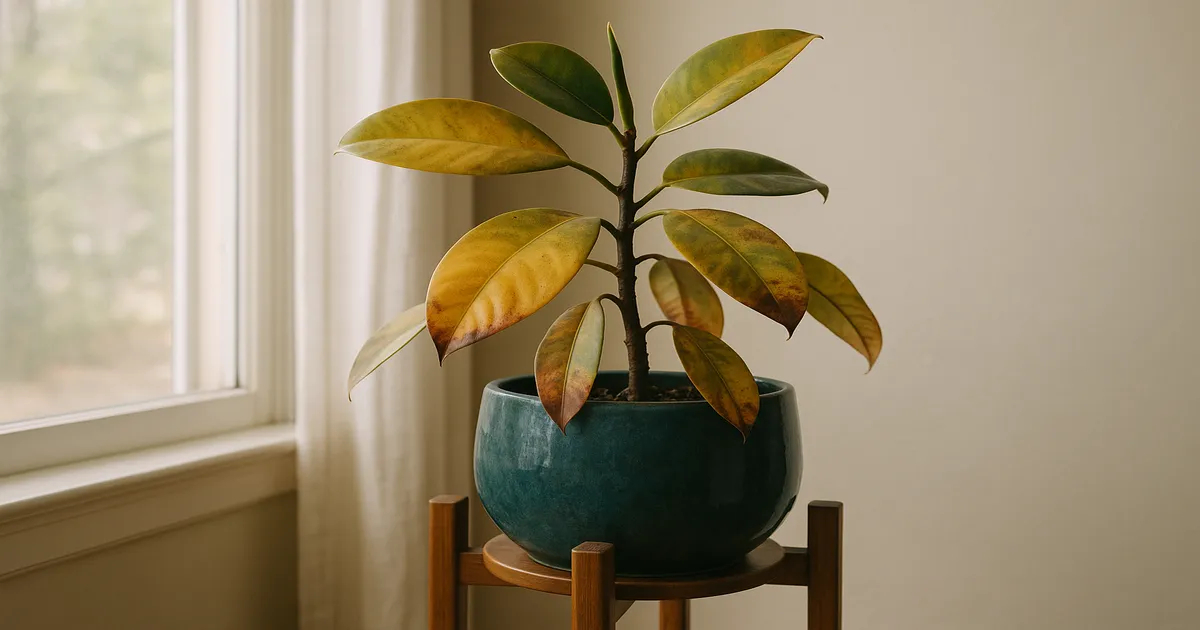
Quick Answer: The most common rubber plant problems are overwatering (which causes root rot), underwatering, incorrect light, cold drafts, pests, nutrient deficiencies, low humidity, repotting shock, and stress from being moved. Match your symptoms to the right cause using the table below, then follow the targeted fix — most rubber plants recover fully with the right intervention.
Ficus elastica is a tough, long-lived tropical plant from the rainforests of South and Southeast Asia — but “what is wrong with my rubber plant?” is one of the most searched houseplant questions online, and for good reason. Its needs are frequently misread in temperate homes, where low humidity, inconsistent watering, and dim winter light create a perfect storm of stress signals that can look confusingly similar to one another.
What Is Wrong With My Rubber Plant? Symptoms at a Glance
Use this table to match your symptoms to the most likely cause, then jump to the relevant section for the fix.
| Symptom | Most Likely Cause |
|---|---|
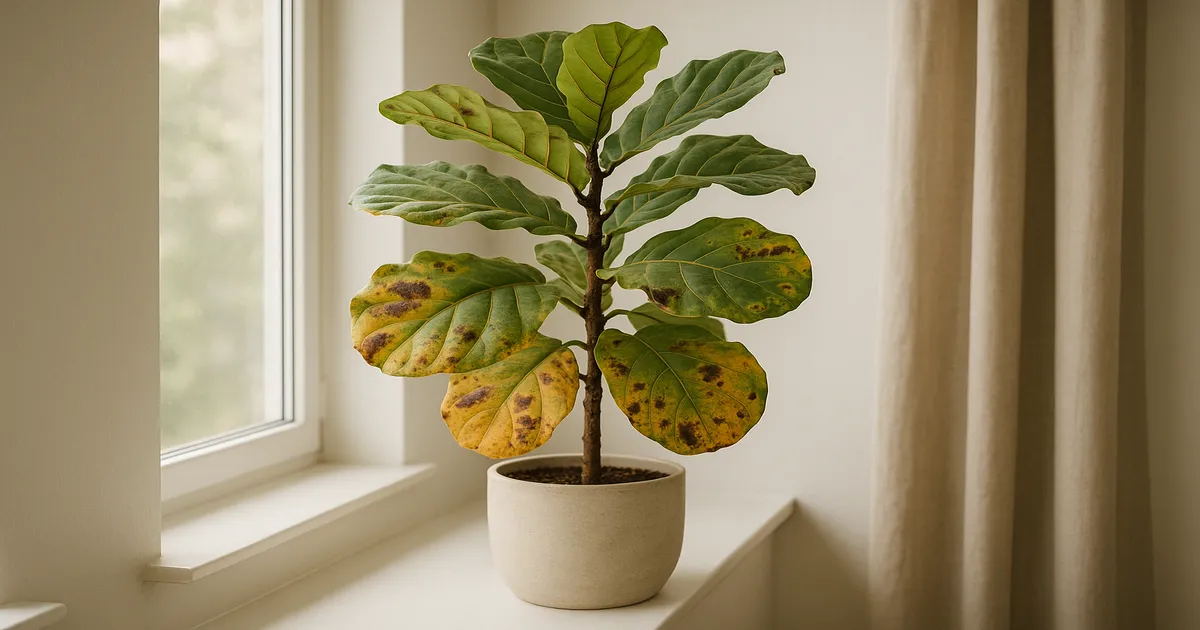
| Yellow leaves, lower leaves first | Overwatering or nitrogen deficiency |
| Green leaves dropping suddenly | Overwatering, cold draft, or being moved |
| Brown crispy tips and edges | Underwatering or low humidity |
| Leaves curling inward | Underwatering or heat stress |
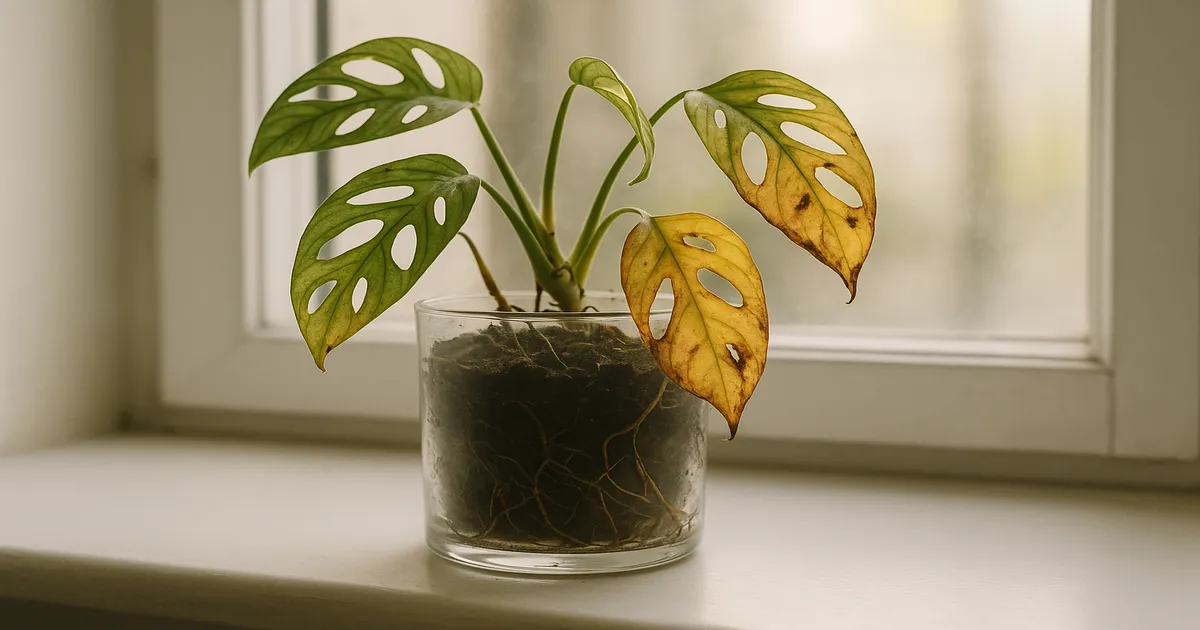
| Mushy stem base, foul soil smell | Root rot |
| Bleached or scorched patches | Sunscald (too much direct sun) |
| Pale color, leggy growth | Insufficient light |
| Stippled leaves, fine webbing | Spider mites |
| White cottony masses on stems | Mealybugs |
| Yellowing between veins on new leaves | Iron deficiency |
| Yellowing between veins on old leaves | Magnesium deficiency |
| Sudden overnight leaf drop after moving | Environmental change or cold exposure |
Many problems share overlapping symptoms. Yellow leaves, for instance, can signal overwatering, underwatering, or a nutrient deficiency — so the fix depends on reading the full picture, not just one sign.
Overwatering and Root Rot: The Number-One Rubber Plant Killer
Overwatering is the single most common way rubber plants die indoors. Ficus elastica evolved with seasonal dry periods and needs its roots to breathe. Saturated soil drives out oxygen, creating conditions where pathogens like Pythium, Phytophthora, and Fusarium destroy root tissue quickly.
The cruel irony: a plant with rotting roots looks drought-stressed. It wilts, drops leaves, and looks thirsty — even when the soil is soaking wet.
Symptoms to watch for:
- Yellow leaves starting at the bottom of the plant
- Leaves dropping while still green
- Soft or mushy stem at the base
- A foul, sulfurous smell from the soil
- Wilting despite consistently wet soil
Once roots are compromised, they can’t transport water or nutrients upward regardless of how much moisture is in the pot. The plant essentially starves. Catching overwatering early — before you can smell the soil — makes a significant difference to recovery odds.
Step-by-Step Fix for Root Rot
- Unpot the plant and inspect the roots. Healthy roots are white to tan and firm; rotted roots are brown, black, or mushy.
- Trim all damaged roots with sterile scissors or pruning shears, cutting back to healthy tissue.
- Dust cut surfaces with powdered cinnamon or sulfur — both have antifungal properties that slow further pathogen spread.
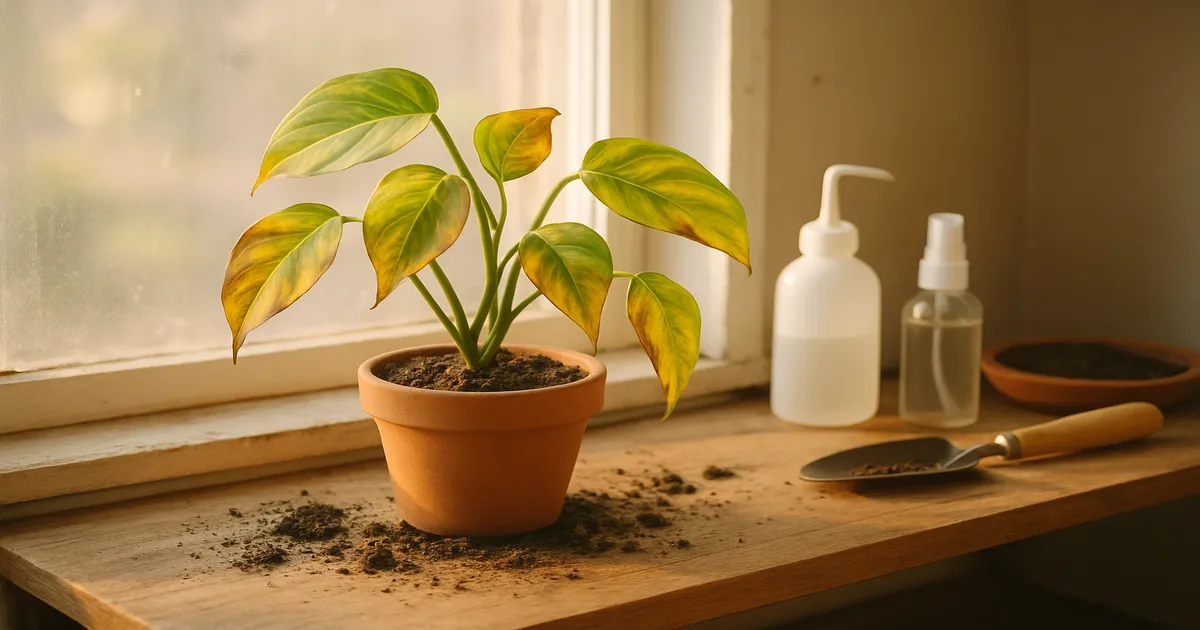
- Repot into fresh, well-draining mix — aim for roughly 60% quality potting mix, 20–30% perlite, and 10–20% orchid bark. A mix formulated for tropical plants works well here.
- Choose the right pot size — no more than 2–5 cm (1–2 inches) larger in diameter than the remaining root ball. Oversized pots hold excess moisture the roots can’t access.
- Confirm drainage holes are clear and never leave the pot sitting in standing water.
- Water only when the top 2–5 cm (1–2 inches) of soil is dry. A soil moisture meter removes the guesswork entirely.
For severe cases, drench the fresh soil with a biological fungicide containing Trichoderma spp. or Bacillus subtilis to suppress remaining pathogens.
Underwatering, Low Humidity, and Drought Stress
Underwatering is less common than overwatering, but it’s easy to let a rubber plant go too long between drinks — especially in a warm, dry home.
Signs your rubber plant is too dry:
- Crispy brown edges and leaf tips
- Leaves curling inward
- Soil visibly pulling away from the sides of the pot
- Leaves feeling thin and papery rather than firm and glossy
Brown tips vs. brown crispy edges — how to tell them apart: Brown tips with moist soil point to low humidity, not underwatering. Brown tips with bone-dry soil point to drought. Check the soil first.
Rubber plants prefer 40–60% relative humidity. Below 30% RH, leaf margins start to desiccate even when watering is on schedule. Low humidity also creates ideal conditions for spider mites, so fixing it pulls double duty.
Rehydrating a Severely Dry Plant
When soil dries out completely, it can become hydrophobic — water runs straight through without being absorbed. Bottom-watering solves this: set the pot in a basin of room-temperature water for 30–45 minutes and let it soak up moisture from below. For stubborn soil, add a few drops of unscented liquid soap to the water as a one-time wetting agent.
Raising Humidity
- Target 40–60% RH — a small hygrometer will tell you where you actually stand
- A compact humidifier placed nearby gives the most reliable results
- Group plants together to create a more humid microclimate
- Keep the plant away from heating vents, which strip moisture from the air fast
Light Problems: Too Little or Too Much
Rubber plants need bright indirect light — roughly 1,500–3,000 foot-candles — to thrive. In low light, they produce smaller, paler leaves, grow slowly, and stretch toward windows in a leggy, uneven way. Variegated cultivars like Tineke and Ruby are especially vulnerable; they’ll quietly revert to plain green when light is insufficient.
There’s a secondary problem too: low light means less photosynthesis, so the plant drinks less water. That slows soil drying time and makes overwatering much easier to do by accident.
Too much direct sun causes the opposite — bleached, faded patches or crispy brown spots appearing suddenly, usually after the plant has been moved to a sunnier spot. Damaged patches won’t recover, but new growth will be fine once you dial back the exposure.
Cultivar light guide:
- Robusta: Most tolerant of lower light — a good choice for dimmer rooms
- Burgundy and Abidjan: Do well in moderate to bright indirect light
- Tineke and Ruby: Need the most light to maintain variegation; place them in your brightest spot
East- or west-facing windows work well for most cultivars. With a south-facing window, position the plant a few feet back from the glass to avoid direct afternoon sun.
If your home doesn’t get much natural light, a full-spectrum LED grow light running at 5,000–6,500K for 12–14 hours per day can keep a rubber plant healthy year-round. When increasing light levels, acclimate the plant gradually over 2–3 weeks to avoid shock.
Temperature, Cold Drafts, and the Stress of Being Moved
Ficus elastica is a true tropical species, hardy outdoors only in USDA Zones 10–12. Temperatures below 10°C (50°F) cause real physiological damage — disrupting cell membranes and enzyme function even without frost. Watch for sudden overnight leaf drop, dark water-soaked patches that turn brown, blackened leaf margins, or stalled growth after cold exposure. Common culprits include single-pane windows in winter, air conditioning vents blowing directly on the plant, and exterior doors that let in cold air.
Moving the plant triggers a different but equally alarming response. Leaves are built to function in a specific light environment. Shift the plant to a new room and those leaves become metabolically inefficient — the plant sheds them and grows new ones calibrated to the new conditions. It’s self-limiting, not a death spiral.
Keep your rubber plant between 18–27°C (65–80°F). In winter, move it away from exterior walls and cold windowsills, and check that no vents are blowing air — hot or cold — directly onto the foliage.
Common Rubber Plant Pests
Spider mites thrive in hot, dry air below 40% RH. Look for stippled or bronzed leaf surfaces and fine webbing on leaf undersides. Their populations can double every 3–5 days, so act quickly. Wipe leaves with a damp cloth, then apply a 2% insecticidal soap solution or diluted neem oil every 5–7 days for at least three cycles. For persistent infestations, predatory mites (Phytoseiulus persimilis) offer excellent biological control.
Scale insects appear as small brown or waxy bumps on stems and leaf undersides. They excrete honeydew, which feeds a secondary black sooty mold that blocks light absorption. Remove scale manually with a cotton swab dipped in 70% isopropyl alcohol, then follow up with neem oil or horticultural oil. The sooty mold clears on its own once the honeydew source is gone.
Mealybugs show up as white cottony masses in leaf axils or along stems. Use the alcohol swab technique for visible colonies, then follow with insecticidal soap or neem oil. Don’t overlook the soil surface and roots — soil mealybugs are frequently missed and can cause significant root damage.
Fungus gnats signal soil that’s staying too wet. The adults are harmless; their larvae feed on root hairs and create entry wounds for pathogens. Let the soil dry more thoroughly between waterings, add a 1–2 cm layer of coarse sand to the surface as a physical barrier, and apply Steinernema feltiae nematodes as a soil drench to target larvae.
Thrips rasp through leaf tissue, leaving silvery streaks and causing new growth to emerge distorted or crinkled. Treat with diluted neem oil every 5–7 days and isolate the plant immediately to prevent spread.
Nutrient Deficiencies and Fertilizer Problems
Nitrogen deficiency causes uniform yellowing that starts on lower, older leaves and moves upward. It’s most common in plants that have been in the same soil for two or more years without regular feeding. Resume fertilizing with a balanced 10-10-10 or 20-20-20 fertilizer at half strength every 2–4 weeks through spring and summer.
Iron vs. magnesium deficiency — both cause interveinal chlorosis (yellowing between veins while veins stay green), but the affected leaves differ:
- Iron deficiency shows on new leaves first. It’s often caused by high soil pH (above 7.0) locking iron into unavailable forms rather than an actual lack of iron. Test pH before adding supplements; if pH is correct, apply chelated iron.
- Magnesium deficiency shows on older leaves first, because magnesium is mobile and the plant pulls it from old tissue to support new growth. Treat with a dilute Epsom salt solution (1 teaspoon per litre of water) once a month for 2–3 months.
Fertilizer burn from salt buildup draws moisture away from roots through osmosis — causing physiological drought even when soil is moist. Signs include brown leaf tips, white crusty deposits on the soil surface, and wilting despite adequate watering. Flush the soil with plain room-temperature water equal to 3–4 times the pot’s volume, and repeat after a week. If buildup is severe, repot into fresh soil.
Feed with a balanced water-soluble fertilizer at half strength every 2–4 weeks from spring through early fall. Stop entirely in winter — the plant is resting and unused nutrients simply accumulate as salt.
Repotting and Recovery
Signs your rubber plant is root-bound:
- Roots circling the bottom of the pot or pushing out of drainage holes
- Soil drying out within 1–2 days of watering
- Stunted growth despite good light and regular feeding
Choose a new pot only 2–5 cm (1–2 inches) larger in diameter — going too big leads straight back to overwatering problems. Use a well-draining mix (60% potting mix, 20–30% perlite, 10–20% orchid bark) and aim for a soil pH of 6.0–6.5. Spring is the best time to repot, just as the growing season begins.
One important note: Ficus elastica produces an irritating white latex sap when cut or disturbed. Wear gloves when repotting, and keep the plant away from pets and children — the sap is toxic if ingested.
Some temporary wilting and leaf drop after repotting is normal and usually resolves within 2–4 weeks. Keep the plant in stable, warm conditions, water slightly less than usual until new growth resumes, and hold off on fertilizing for 4–6 weeks to avoid stressing already-disturbed roots.
Frequently Asked Questions About Rubber Plant Problems
Why are my rubber plant leaves turning yellow and falling off?
Yellow leaves that drop are almost always caused by overwatering or root rot, particularly if the soil has been consistently moist. Less commonly, nitrogen deficiency causes uniform yellowing of older leaves. Check the soil first — if it’s wet and smells off, root rot is the likely culprit. If the soil is fine and the plant hasn’t been fed in over a year, start with fertilizer.
How do I know if my rubber plant has root rot?
Unpot the plant and examine the roots. Healthy roots are white to tan and firm; rotted roots are brown, black, or mushy and may smell foul. Above the soil, root rot typically shows as wilting despite wet soil, yellowing lower leaves, and sometimes a soft stem base. If caught early, trimming the damaged roots and repotting into fresh, well-draining soil gives the plant a strong chance of recovery.
What is wrong with my rubber plant if it drops leaves after being moved?
This is a normal stress response, not a sign the plant is dying. Leaves are optimized for the light conditions they grew in — move the plant and those leaves become metabolically inefficient. The plant sheds them and grows new ones suited to the new location. As long as temperature, watering, and light are adequate in the new spot, the plant will stabilize on its own within a few weeks.
What does an overwatered rubber plant look like compared to an underwatered one?
Both can cause wilting and leaf drop, which is confusing. Overwatered plants have soft, yellowing leaves and soil that stays wet; roots may be mushy and the soil may smell sour. Underwatered plants have dry, crispy brown leaf edges, inward-curling leaves, and soil that has pulled away from the pot edges. Always check soil moisture before diagnosing.
How often should I water a rubber plant indoors?
There’s no universal schedule — it depends on pot size, light, temperature, and humidity. The reliable rule is to water when the top 2–5 cm (1–2 inches) of soil is dry for smaller pots, or when the top third is dry for larger ones. In most homes this works out to roughly every 7–14 days in summer and every 2–3 weeks in winter. A moisture meter removes the guesswork entirely.