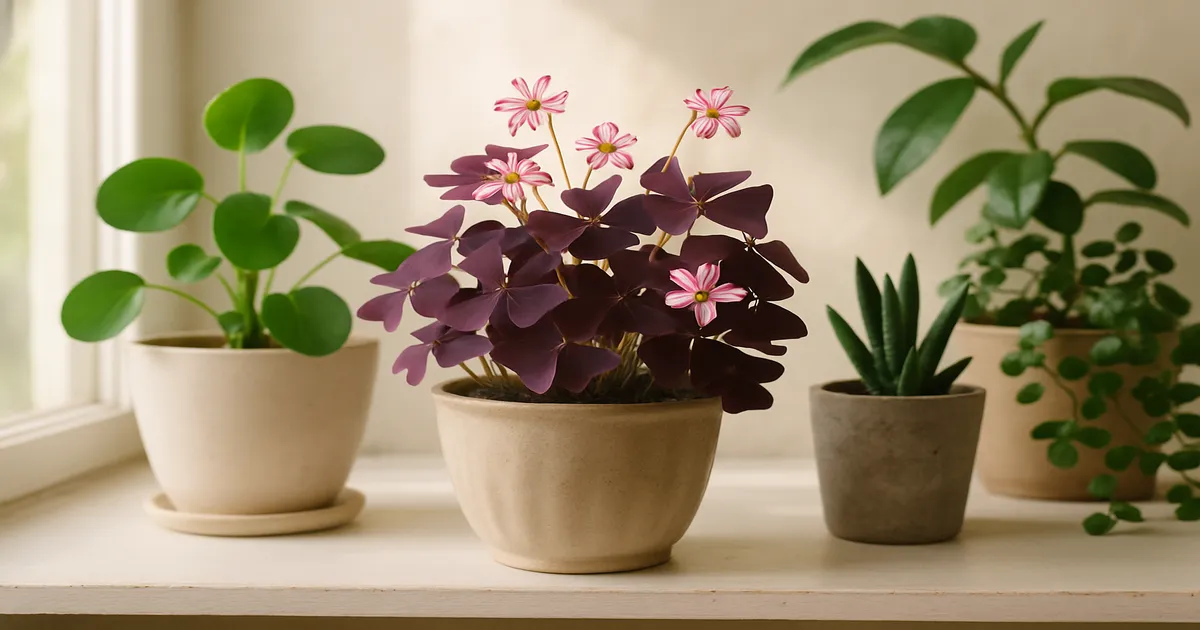
Quick Answer: Yes — plenty of enthusiasts grow both Oxalis versicolor and Oxalis adenophylla. They’re specialty bulbs with dedicated fan bases, but you won’t find them at most garden centres. Both are compact, unusual, and rewarding, but each has distinct care needs tied to its native climate. This guide covers identification, dormancy, light, soil, pests, and where to actually find them.
Does Anyone Have an Oxalis versicolor and/or Adenophylla? Yes — Here’s What to Know
If you’ve been searching “does anyone have an Oxalis versicolor and/or adenophylla,” you’re in good company. These two species have passionate followings among bulb collectors, alpine gardeners, and houseplant enthusiasts. They’re just not the kind of thing you stumble across at a local garden centre.
What Is Oxalis versicolor (Candy Cane Sorrel)?
Oxalis versicolor comes from the fynbos of South Africa’s Western Cape — a sun-drenched, nutrient-poor, Mediterranean-climate biome. Its claim to fame is one of the most striking buds in the plant kingdom: white petals tightly rolled to reveal vivid crimson spiral stripes, exactly like a miniature candy cane. Open those flowers in full sun and they transform into pure white blooms with a yellow centre. It’s a small plant, 10–15 cm tall, with delicate bright-green trifoliate leaves. It blooms from late autumn through early spring in the Northern Hemisphere.
What Is Oxalis adenophylla (Silver Shamrock)?
Oxalis adenophylla comes from the high-altitude scrublands of Patagonia in southern Chile and Argentina. Where versicolor dazzles with its flowers, adenophylla impresses with its foliage: each leaf is a fan of 9–22 deeply notched, blue-gray leaflets that look almost sculpted. The flowers are pale lilac-pink to deeper rose, appearing in spring and early summer. It’s also significantly hardier, tolerating temperatures down to around -15°C (5°F) when dormant.
How Do These Two Species Compare?
| Feature | O. versicolor | O. adenophylla |
|---|---|---|
| Origin | South Africa (Cape fynbos) | South America (Patagonia) |
| Foliage colour | Bright green | Blue-gray/silver |
| Leaflets per leaf | 3 | 9–22 |
| Flower colour | White with red stripes (in bud) | Pink/lilac |
| Bloom season (N. Hemisphere) | October–March | April–June |
| Cold hardiness | Zone 7b+ | Zone 5+ |
| Dormancy period | Summer (June–August) | Late summer–autumn (August–October) |
| Bulb type | Small tunicate bulb (5–8 mm) | Larger scaly tunicate bulb |
Both species share the genus trait of nyctinasty — leaves and flowers fold closed in response to darkness, cold, or low light. This is a normal physiological response driven by turgor pressure changes, not a sign of stress.
Identification: How to Tell Oxalis versicolor and Adenophylla Apart
Identifying Oxalis versicolor
The foliage is fine and feathery — three bright-green leaflets on slender stems, giving the plant an almost lacy look. The bulbs are tiny tunicate bulbs, just 5–8 mm across, easily mistaken for seeds if you’re not expecting them.
The flowers are the giveaway. In bud, the crimson spiral striping on the outer petal surface is unmistakable. Once fully open in bright, warm conditions, those same flowers appear completely white with a yellow centre. Many new owners are surprised by this — the candy cane pattern is a bud feature, not an open-flower feature.
Identifying Oxalis adenophylla
This one is almost impossible to misidentify once you’ve seen it. The blue-gray, pleated, fan-shaped leaves — each made up of 9–22 deeply notched leaflets — are unlike anything else in the genus. Even without flowers, it’s a genuinely ornamental plant.
The bulb is noticeably different too: larger and covered in fibrous brown scales rather than the smooth papery tunic of O. versicolor. Flowers are funnel-shaped, pale lilac-pink with darker veining, around 2–3 cm across.
Why Flowers Open and Close
Both species are heliophytes from open, high-light habitats, and their flowers behave accordingly. Blooms only fully open in bright light and temperatures above roughly 18°C (65°F). If your flowers keep closing or never seem to open properly, the most likely culprit is insufficient light or cool temperatures — not a sick plant.
Seasonal Calendar: Dormancy in Oxalis versicolor and Adenophylla
Why These Plants Go Dormant
Both species are geophytes — plants that store energy underground and shut down during their native dry or cold season. This dormancy cycle is genetically programmed, not optional. The number-one reason these plants die in cultivation is that owners don’t know dormancy is coming and either keep watering a “dying” plant (causing bulb rot) or throw it away entirely.
Oxalis versicolor: Summer Rest (June–August)
As temperatures warm and days lengthen in late spring, foliage yellows and dies back — this is natural. Gradually reduce watering over 3–4 weeks as the leaves fade, then stop entirely. Store the pot dry in a cool, shaded spot around 10–15°C (50–59°F) until late summer.
Oxalis adenophylla: Late Summer to Autumn Rest (August–October)
Adenophylla rests slightly later. After its spring-to-summer bloom, foliage begins to die back in August. Taper off watering as growth declines, then keep the pot dry and cool until new tips appear.
For container-grown plants kept indoors, lifting the bulbs and storing them in slightly damp vermiculite in a paper bag in the refrigerator (not the freezer) for 8–12 weeks mimics the Patagonian winter and often improves spring flowering significantly. Resume watering only when you see new growth tips emerging — not before.
Light, Temperature, and Triggering Blooms
Light Requirements
Versicolor needs bright direct light — around 2,000–5,000 foot-candles — to thrive and flower. Indoors, a south- or west-facing windowsill is your best option. In lower light, stems stretch and weaken, bulb energy reserves deplete, and flowering stops. Adenophylla tolerates partial shade slightly better but still performs best in bright indirect to direct light (1,500–4,000 foot-candles).
If natural light is limited, a full-spectrum LED grow light positioned 15–30 cm above the plant and running 12–14 hours per day will do the job.
Using Cool Temperatures to Trigger Flowering
This is a step many indoor growers miss. O. versicolor needs cool autumn nights — around 10–15°C (50–59°F) — to initiate bud formation. If your plant sits in a consistently warm room year-round, it may produce lush foliage but no flowers. Move pots to an unheated porch, garage, or cold windowsill in September or October, then bring them back inside before any hard frost.
Soil, Watering, and Pot Selection
The Right Soil Mix
Standard potting mix holds far too much moisture for these drought-adapted species. A gritty, free-draining mix is essential. A reliable DIY recipe:
- 40% coarse horticultural sand or perlite
- 30% standard potting mix (peat- or coir-based)
- 20% fine grit or pumice
- 10% fine bark chips
O. versicolor prefers slightly acidic soil (pH 5.5–6.5); O. adenophylla is happy from slightly acidic to neutral (pH 6.0–7.0). Amend with agricultural sulfur to lower pH or garden lime to raise it.
Watering Correctly
Water only when the top 2–3 cm of soil is dry. Water thoroughly until it drains freely from the bottom, then let it drain completely — never leave the pot sitting in a saucer of water. Bottom watering (setting the pot in a shallow tray for 20–30 minutes) encourages deep root growth without keeping the surface perpetually damp.
A soil moisture meter takes the guesswork out of timing, especially for beginners.
Pot Choice
Terracotta is porous — it wicks excess moisture away from the root zone and dries out faster than plastic or glazed ceramic. For bulbs that evolved in sandy, fast-draining soils, this matters. Use a pot with multiple drainage holes, sized appropriately: these are small plants that don’t need large containers.
Recognising and Treating Bulb Rot
Symptoms include yellowing leaves, mushy stems at the base, and foul-smelling soil. If you suspect rot, act quickly: unpot the plant, trim any soft or mushy sections with sterile scissors, dust cut surfaces with powdered sulfur or activated charcoal, allow bulbs to air-dry for 24–48 hours, then repot in fresh dry gritty mix and hold off watering for several days.
Fertilizing, Pests, and Common Problems
Fertilizing Low-Nutrient Natives
Both species evolved in nutrient-poor soils. Excess nitrogen pushes the plant toward soft foliage at the expense of flowers and bulb health. During the active growing season, apply a low-nitrogen, high-P/K fertilizer at half the recommended strength once every 3–4 weeks. (Jack’s Classic Blossom Booster 10-30-20) Never fertilize during dormancy.
Pests: Spider Mites, Aphids, and Bulb Mites
Spider mites thrive in warm, dry indoor air. Look for fine webbing and stippled, bronzed leaves. Raise humidity to 50–60% and spray with diluted neem oil every 5–7 days for three cycles.
Aphids cluster on new growth and buds. Remove them with a strong jet of water, then follow up with insecticidal soap.
Bulb mites are microscopic and often undetected until damage is done. Before planting, soak dormant bulbs in hot water at 43°C (110°F) for 10–15 minutes — this kills mites without harming the bulb. Mix diatomaceous earth into the soil as a preventive measure.
Vine Weevil
Vine weevil larvae feed on bulbs underground. By the time you notice adult notching on leaf margins, the damage below soil may already be significant. Apply biological control nematodes (Steinernema kraussei) to the soil in late summer as a preventive treatment.
Troubleshooting at a Glance
| Symptom | Most Likely Cause | Fix |
|---|---|---|
| Yellowing leaves | Overwatering or dormancy onset | Reduce watering; check dormancy calendar |
| No flowers | Insufficient light or missing temperature cue | Increase light; provide cool autumn period |
| Leggy, stretched growth | Low light | Move to brighter spot or add grow light |
| Flowers staying closed | Low light or temperature below 18°C | Increase light and warmth |
Where to Find Oxalis versicolor and Adenophylla
Does Anyone Have an Oxalis versicolor and/or Adenophylla for Sale?
Neither species has made it into mainstream retail in any meaningful way. Big-box garden centres stock Oxalis triangularis (purple shamrock) and little else from the genus. These two are specialty items, and availability is genuinely seasonal and limited.
O. versicolor bulbs typically become available only from August to October — their natural planting window before autumn growth. Outside that window, you’re unlikely to find them at all. Search specifically for “Cape bulb specialists” or “South African bulb nurseries.” O. adenophylla is somewhat more accessible through alpine and rock garden plant specialists, who often stock it alongside other Patagonian and Andean plants.
Botanical garden plant sales are an underrated source for both — many botanic gardens propagate their own stock and sell divisions or bulbs at annual sales.
Plant Swaps, Community Trades, and Forum Networks
This is exactly what the community behind this search query is looking for. Reddit’s r/TakeaPlantLeaveaPlant and r/whatsthisplant communities regularly feature both species. Facebook plant swap groups, alpine garden society seed and bulb exchanges, and specialist bulb collector forums are all worth joining. Growers with established colonies often have surplus bulbs to trade — and this is frequently the only way to find O. versicolor outside its narrow commercial window.
Seasonal Availability at a Glance
- O. versicolor: August–October (plant immediately on receipt)
- O. adenophylla: Spring and autumn from alpine specialists; bare bulbs available late summer
When you find stock, buy it. Quantities from specialty suppliers sell out fast, and restocking isn’t guaranteed within the same season.
Frequently Asked Questions
Does anyone grow Oxalis versicolor and adenophylla as houseplants?
Yes — both species are grown successfully as houseplants, though they’re more popular among bulb collectors and alpine enthusiasts than general houseplant growers. O. versicolor works well on a bright, cool windowsill indoors during its autumn-to-spring growing season. O. adenophylla is often grown in containers or rock gardens and brought under cover in winter in colder climates. Neither is a typical “set it and forget it” houseplant — understanding their dormancy cycles is the key to keeping them alive long-term.
Why do my Oxalis flowers keep closing?
This is nyctinasty — a completely normal response hardwired into the entire Oxalis genus. Flowers and leaves fold closed in response to darkness, cold, or low light intensity. O. versicolor flowers will only open fully in bright light and temperatures above around 18°C (65°F). Move your plant to a brighter, warmer spot and you’ll see the flowers open wide.
How do I know if my Oxalis bulb is dead or just dormant?
Gently squeeze the bulb — a healthy dormant bulb is firm throughout. Soft, mushy, or hollow sections indicate rot. You can also do a shallow scratch test on the outer surface: living tissue will be pale and slightly moist underneath, while dead tissue is brown and dry all the way through. If in doubt, wait a few more weeks in cool, dry storage before giving up — both species can look completely lifeless and still bounce back.
Can Oxalis adenophylla survive frost outdoors?
Yes, it’s one of the hardiest Oxalis species available. Dormant bulbs tolerate temperatures as low as -15°C (5°F), provided the soil drains well — waterlogged frozen soil is far more dangerous than cold alone. It’s reliably perennial outdoors in Zones 5–9, making it an excellent choice for rock gardens, raised beds, and alpine troughs.
Are Oxalis versicolor and adenophylla toxic to pets?
Both species contain oxalic acid, which is mildly toxic to cats, dogs, and horses if consumed in significant quantities. Occasional nibbling is unlikely to cause serious harm, but repeated ingestion of large amounts can cause drooling, vomiting, lethargy, and — in severe cases — kidney issues. Keep them out of reach of pets that like to chew plants, and contact your vet if you suspect your animal has eaten a substantial amount.