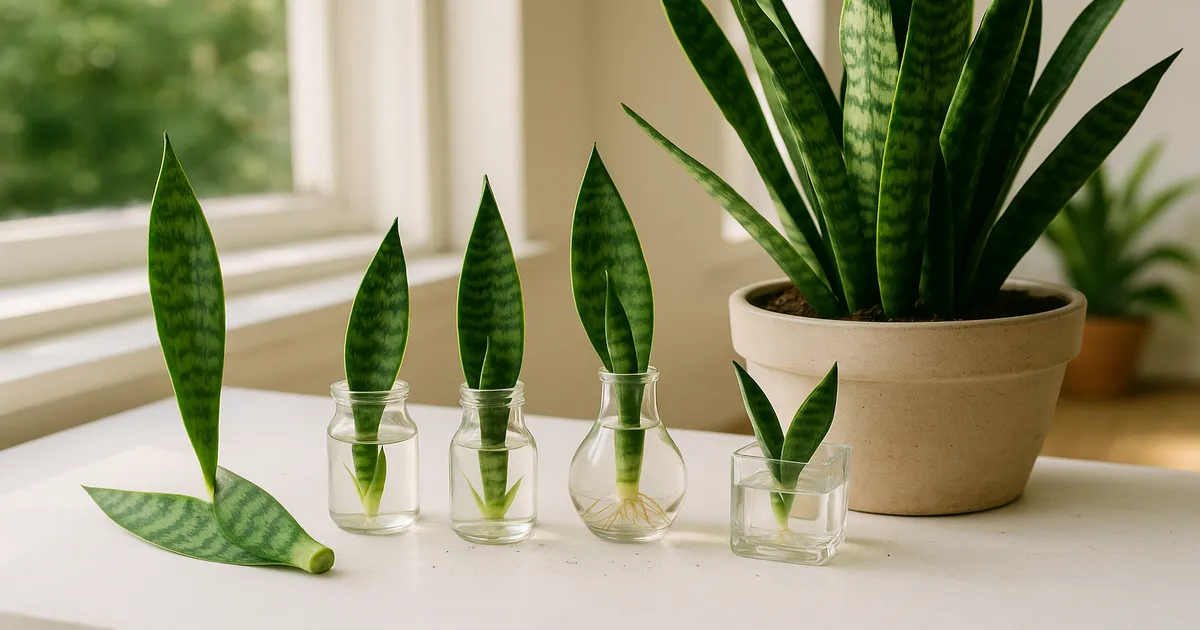
Quick Answer: “Should I separate these snake plant leaves?” depends on what you mean by “separate.” It could mean dividing pups from the mother plant, splitting a splayed or overcrowded clump, or taking leaf cuttings for propagation. Pups should be at least 3–4 inches tall before separation. Division is urgent when root rot or severe overcrowding is present, but optional for aesthetics or propagation. Understanding your plant’s rhizome-based growth is the key to making the right call.
Should You Separate These Snake Plant Leaves?
If you’re staring at your snake plant wondering whether to pull those leaves apart, the short answer is: it depends on why you want to separate them.
The Three Things “Separating Leaves” Can Actually Mean
- Dividing pups (offsets) from the mother plant — the most common scenario
- Splitting a splayed or overcrowded clump where leaves are flopping outward
- Taking individual leaf cuttings for propagation in soil or water
Each situation calls for a different approach, different tools, and a different level of urgency.
When Separation Is Necessary vs. Optional
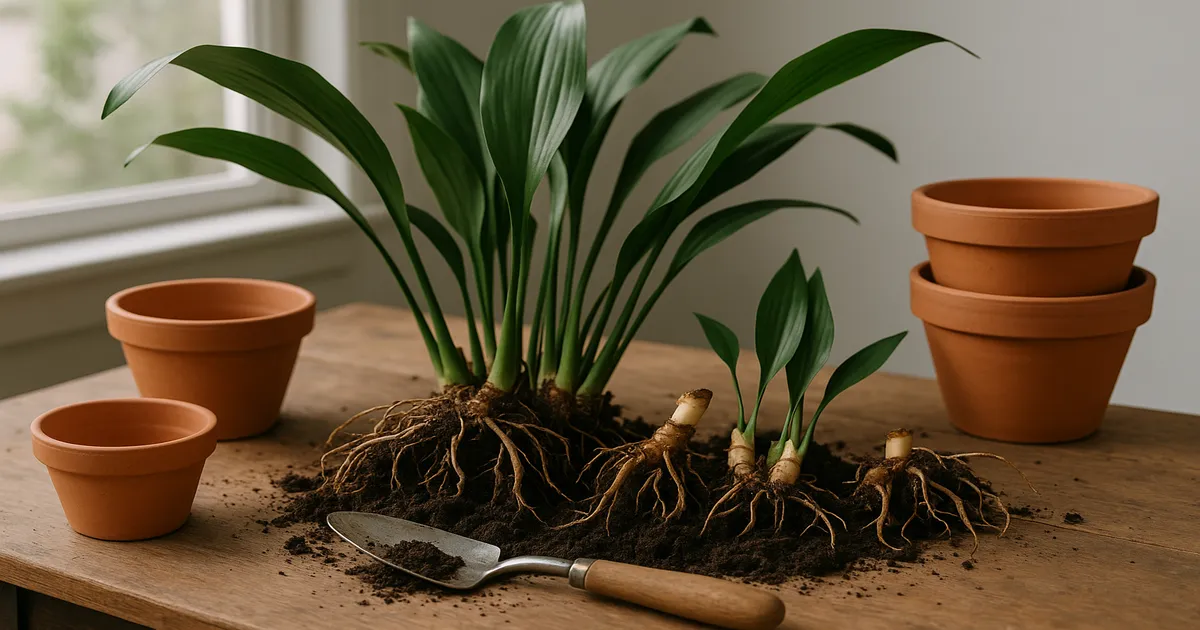
Snake plants grow via rhizomes — horizontal underground stems that send up new rosettes called pups. Because these rosettes share a root network, disease can spread between them, and overcrowding becomes a real health problem over time.
Urgent situations:
- Root rot spreading through shared rhizomes
- Severe overcrowding cracking the pot or starving roots
Elective situations:
- Propagating new plants from cuttings
- Tidying up a splayed clump
- Routine division during repotting
Understanding How Snake Plants Grow
Rhizomes: The Underground Engine
Dracaena trifasciata (formerly Sansevieria trifasciata) spreads underground through rhizomes — thick, fleshy stems that store water and energy and periodically push up new rosettes. A single plant in a pot can quietly become five or six without you doing a thing.
Because those rosettes share a rhizome network, they share problems too. A fungal infection in one section can travel to healthy sections within weeks, which is why disease is treated as an emergency rather than a cosmetic concern.
How Pups Form
When a mother plant reaches a certain size — or experiences mild stress — it redistributes auxin, the hormone responsible for apical dominance. That shift activates lateral buds along the rhizome, which sprout into new rosettes. The plant is essentially cloning itself as a survival strategy.
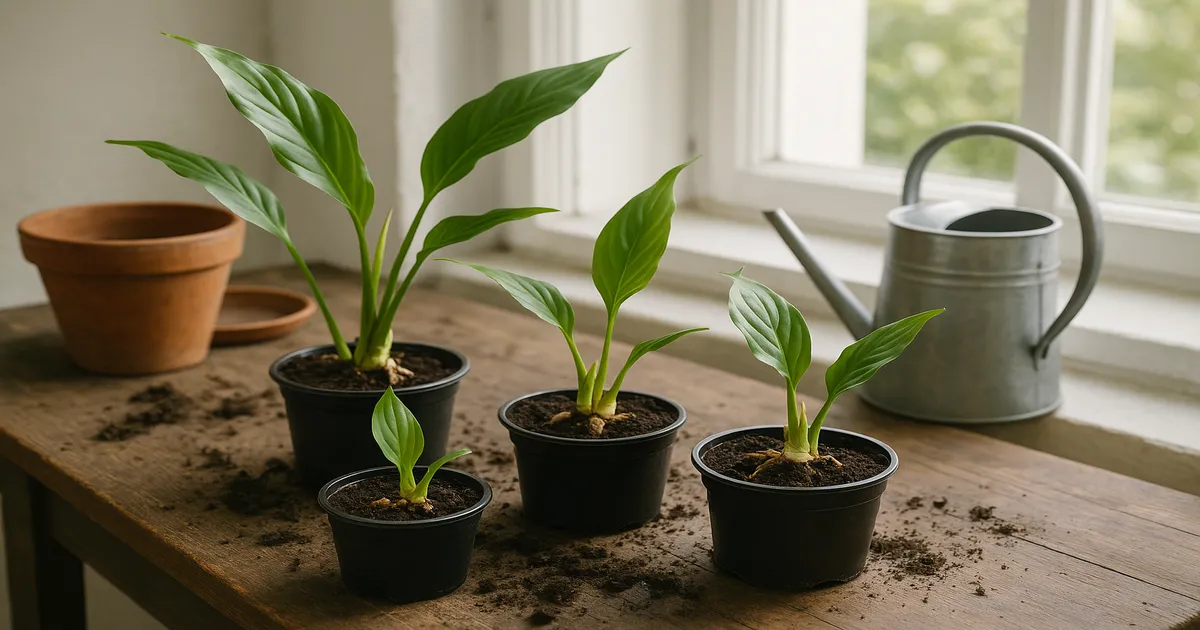
You can’t always control when pups appear, but you can control when you separate them. Wait until a pup is at least 3–4 inches tall (roughly one-third the mother plant’s height). At that size it has enough independent root mass to survive on its own.
Species Differences That Affect Your Decision
Not all snake plants behave the same way:
- ‘Laurentii’ (yellow-margined): The yellow margins are chimeric — a genetically distinct cell layer that adventitious bud formation cannot replicate. Leaf cuttings will always produce plain green plants. Only pup division preserves the yellow margins.
- ‘Hahnii’ (Bird’s Nest): Compact rosette with a shallow root system; pups form tightly and need careful separation.
- ‘Moonshine’ and Dracaena cylindrica: Both propagate reliably from leaf cuttings without variegation concerns.
6 Reasons to Separate Snake Plant Leaves
1. Natural Pup Production
Your plant is simply doing what snake plants do. Once pups reach 3–4 inches you can leave them for a fuller look or remove them to start new plants. Left indefinitely, though, the pot becomes overcrowded and resource competition kicks in.
2. Pot Overcrowding and Root-Bound Conditions
When the root-to-soil ratio gets too high, the soil can no longer hold nutrients effectively. Water channels straight through without being absorbed. Urgency: high. Watch for these signs:
- Roots pushing through drainage holes
- Soil pulling away from pot edges
- Pot visibly bulging or cracking
- Water running through instantly without slowing
3. Leaves Splaying or Fanning Outward
Outer leaves lean dramatically away from the center. This is often a light or watering issue rather than a structural one — diagnose the cause before reaching for a knife.
4. Root Rot or Fungal Disease
Urgency: critical. Root rot spreads through shared rhizomes and can kill an entire clump within weeks. Warning signs: mushy brown or black roots, a sulfurous smell from the soil, yellowing at the leaf bases, and translucent water-soaked tissue near the soil line. Act immediately.
5. Pest Infestation
Mealybugs, spider mites, and thrips thrive in crowded conditions. Dense foliage creates humid microclimates that accelerate spread, and physical leaf contact lets pests transfer between rosettes. Separating affected sections limits damage and improves treatment access.
6. Propagation via Leaf Cuttings
A low-stakes, elective reason to “separate” leaves. You’re deliberately cutting individual leaves to root in soil or water. No urgency, but technique matters — especially polarity (more on that below).
How to Separate Snake Plant Leaves: Step-by-Step
Tools You Need
- Sharp knife or pruning shears sterilized with 70% isopropyl alcohol
- Gloves — snake plant sap contains saponins, which irritate skin and are toxic if ingested
- Terracotta pots with drainage holes
- Cactus/succulent potting mix amended with 30–50% perlite
- Powdered sulfur or activated charcoal for cut surfaces
Pup Separation Process
- Water 24–48 hours before to soften the soil and reduce root stress.
- Remove the entire plant from its pot and gently shake off excess soil.
- Trace the rhizome connecting the pup to the mother — a horizontal, white or cream-colored stem just below the soil surface.
- Cut cleanly through the rhizome with your sterilized blade, keeping as many roots attached to the pup as possible.
- Dust all cut surfaces with powdered sulfur or activated charcoal to prevent fungal entry.
- Let cut ends air-dry for 1–24 hours before potting to seal the wound and reduce rot risk.
Pot Size and Soil
Use a pot only 1–2 inches larger than the pup’s root ball. Oversized pots hold excess moisture around roots that aren’t yet established, which is a fast track to rot. Your mix should drain freely and target a pH of 6.0–7.0. A pre-made cactus mix works well; blending in 30–50% perlite gives extra insurance against waterlogging.
Aftercare
- Withhold water for 5–7 days after potting to encourage roots to extend outward and allow cut surfaces to fully seal.
- Place in bright indirect light — around 1,500–3,000 foot-candles, such as a spot near a bright window without direct afternoon sun.
- Resume normal watering once you see new growth, which signals successful establishment.
How to Fix Splaying Snake Plant Leaves
Diagnosing the Cause First
Before separating anything, figure out why the leaves are falling outward:
- Low light: Below 100 foot-candles, cells on the shaded side elongate faster, causing leaves to reach and lean. More light fixes this — not surgery.
- Overwatering: Waterlogged roots can’t maintain turgor pressure, so leaves lose structural rigidity and flop.
- Natural aging: Older, heavier outer leaves gradually splay as gravity acts on their mass. This is normal.
Quick Fixes Without Separating
Correct light and watering conditions first — many plants self-correct once they’re getting what they need. For an immediate cosmetic fix, use a soft plant tie or fabric strip to loosely bundle the leaves upright while you address the underlying issue.
When Division Is the Right Answer
If the clump is genuinely overcrowded and the splay is structural — not caused by light or water — division is the better long-term solution. Repotting each rosette in a snug pot encourages upright growth because the roots can grip the pot walls more effectively.
Propagating Snake Plants from Leaf Cuttings
Soil Method
- Cut a healthy leaf into 3–4 inch segments with a sterilized blade.
- Mark the bottom of each segment — the end closest to the soil. Polarity is critical; cuttings planted upside down will not root.
- Let cut ends callous for 2–4 hours.
- Insert the bottom end 1 inch deep into a barely moist mix of 50% perlite and 50% coarse sand.
- Maintain 65–85°F (18–29°C) and 50–60% humidity.
- Expect roots in 4–8 weeks and new pups in 2–6 months.
Water Method
Place segments bottom-end down in a clean glass with 1–2 inches of water. Change the water every 5–7 days to prevent bacterial buildup. Roots typically appear in 3–6 weeks. Once roots reach 1–2 inches, transition to soil gradually — water-rooted cuttings are more susceptible to transplant shock than soil-rooted ones.
The Variegated Cultivar Warning
This is one of the most common mistakes snake plant owners make. ‘Laurentii’s yellow margins exist because of periclinal chimeric variegation — a genetically distinct cell layer that adventitious bud formation simply cannot replicate. Every leaf cutting from a Laurentii will produce a plain green plant. If variegation matters to you, divide pups only.
Treating Disease and Pests Through Separation
Identifying Root Rot Early
Root rot doesn’t always show above the soil line until it’s advanced. Check for:
- Brown or black, mushy roots (healthy roots are white to tan and firm)
- A sulfurous or sewage-like odor from the soil
- Yellowing or softening at the very base of the leaves
Emergency Root Rot Protocol
- Remove the plant from its pot and shake off all soil.
- Prune all rotted roots back to healthy tissue with sterilized scissors.
- Treat remaining roots with a fungicide drench: a 3% hydrogen peroxide solution diluted 1:4 with water, or a biological fungicide containing Trichoderma spp. or Bacillus subtilis.
- Repot in completely fresh, sterile cactus mix — never reuse contaminated soil.
- Quarantine for 2–4 weeks before returning the plant to its usual spot.
Isolating Pest-Infested Sections
Move the affected plant away from all other houseplants immediately. For mealybugs, spider mites, and thrips:
- Dab individual pests with 70% isopropyl alcohol on a cotton swab.
- Spray the entire plant with a 2% neem oil solution or insecticidal soap.
- Repeat every 7–10 days for at least three cycles — a single treatment almost never eliminates an infestation.
After treatment, keep humidity at 40–50% RH and improve air circulation to discourage reinfestation.
Ongoing Care to Prevent Emergency Separation
Watering: Let the top 2–3 inches of soil dry out completely between waterings — roughly every 2–4 weeks in summer and every 6–8 weeks in winter. Bottom-watering (setting the pot in a tray of water for 20–30 minutes, then draining) encourages deep root growth and keeps moisture away from leaf bases where rot starts. A soil moisture meter takes the guesswork out of timing.
Light: Bright indirect light (1,500–3,000 foot-candles) keeps growth compact and upright. Snake plants tolerate low light but become slower and more prone to splay. Rotate the pot 90° every 2–4 weeks for even exposure.
Repotting: Plan to repot every 2–3 years or when roots emerge from drainage holes. Always inspect for pups during repotting and separate any that are 3+ inches tall. Terracotta pots are the best choice — their porosity lets excess moisture evaporate through the walls.
Fertilizing: Feed monthly in spring and summer with a balanced liquid fertilizer (10-10-10 NPK) at half the recommended strength. Skip fall and winter entirely — unused nutrients accumulate as salts and burn roots. Flush the soil with plain water every 3–4 months to clear any buildup.
Sanitation: Wipe leaves with a damp cloth every month or two to remove dust, which can reduce photosynthetic efficiency noticeably. Inspect leaf axils monthly for early signs of mealybugs.
Frequently Asked Questions About Separating Snake Plant Leaves
When should I separate these snake plant leaves — is my pup ready?
A pup is ready when it’s at least 3–4 inches tall, roughly one-third the height of the mother plant. At that size it has enough independent root mass to survive on its own. Separating smaller pups is possible but risky — they’re more vulnerable to transplant shock and may not establish well.
Will separating snake plant leaves hurt the mother plant?
No. Separation doesn’t harm a healthy mother plant — it often encourages renewed vigor. Use a clean, sterilized blade, let the cut rhizome surfaces callous before repotting, and the mother plant will heal quickly. It may produce new pups within a few months.
Can I separate snake plant leaves without roots and still grow a new plant?
Yes. Individual leaf segments generate adventitious roots from meristematic tissue at the base of each cutting — no existing roots needed. Keep polarity correct (bottom end down), let the cut callous for a few hours, and plant in a fast-draining mix. Roots typically appear within 4–8 weeks.
Why do my snake plant leaves keep splaying after separation?
Persistent splay usually points to insufficient light, overwatering, or a pot that’s too large. Make sure the plant is in bright indirect light (1,500–3,000 foot-candles), let the soil dry out between waterings, and use a pot only slightly larger than the root ball. A snug pot helps roots anchor the plant more firmly.
Do variegated snake plants lose their color when propagated from leaf cuttings?
Yes — ‘Laurentii’ will always revert to plain green from leaf cuttings because its yellow margins are chimeric tissue that adventitious buds cannot replicate. To preserve the variegation, divide pups only. Other non-chimeric variegated varieties, such as ‘Moonshine’, propagate true from cuttings.