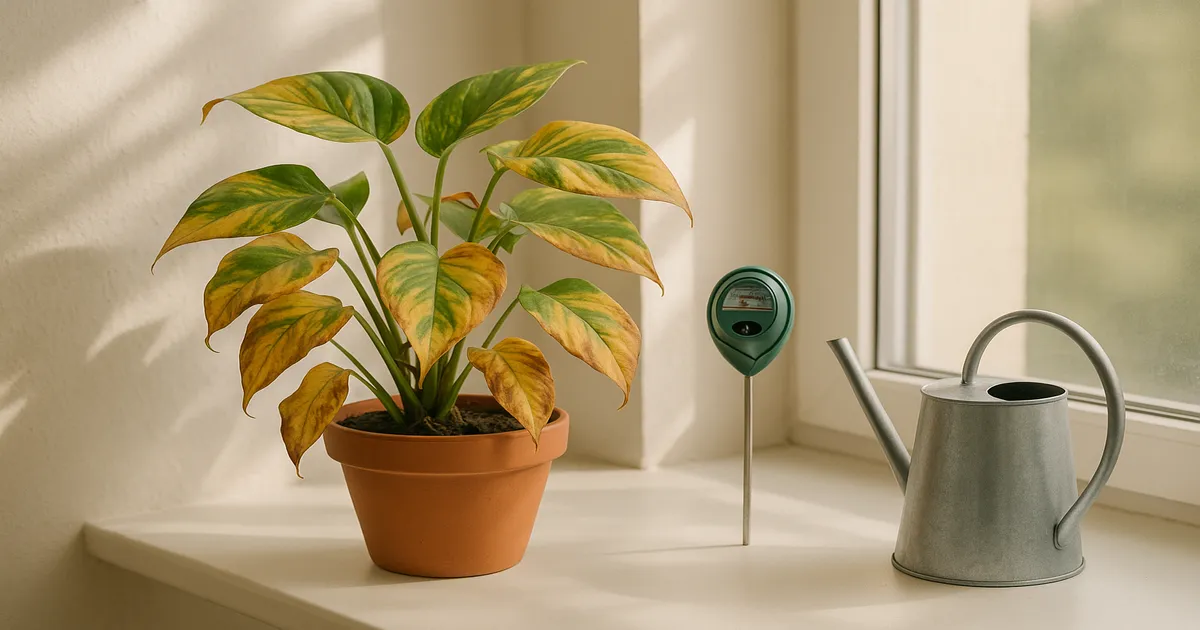
Quick Answer: Not all dying leaves mean your plant is in trouble — older leaves naturally yellow and drop as part of normal leaf senescence. But if young leaves are dying, leaf loss is rapid and widespread, or you notice mushy stems and no new growth, something is genuinely wrong. Use your plant’s symptoms as clues: the pattern, location, and color of leaf damage will point you toward the real cause.
If you’ve ever held up a yellowing leaf and typed “what is this? my leaves are dying” into a search bar, you’re in good company. Leaf problems are the most common reason houseplant owners panic — and also one of the most diagnosable. The key is learning to read what your plant is actually showing you before reaching for the watering can or a bottle of fertilizer.
Why Are My Leaves Dying? Normal Senescence vs. a Real Problem
Leaf senescence is completely natural. Plants are programmed — via hormones like ethylene and abscisic acid — to shed older leaves as they age. A healthy plant loses lower or interior leaves while continuously pushing out new growth. That’s not a crisis. That’s just how plants work.
A real problem looks different. Watch for:
- Rapid, widespread leaf loss across the whole plant
- Young or new leaves dying before they’ve had a chance to mature
- Mushy, soft, or foul-smelling stems at or near the soil line
- No new growth over several weeks during the growing season
The simplest check: is new growth happening? A plant pushing out fresh leaves — even slowly — is coping. A plant that’s only losing leaves with nothing coming in is under real stress and needs attention.
How to Diagnose Dying Leaves: Read the Symptoms
Yellowing Leaves
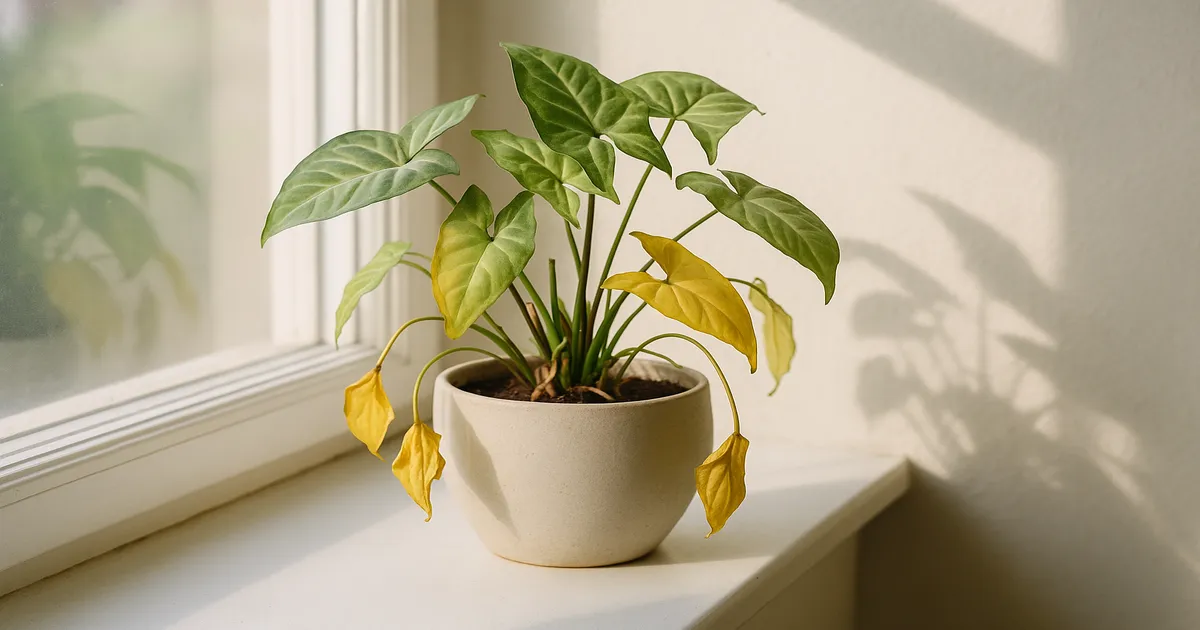
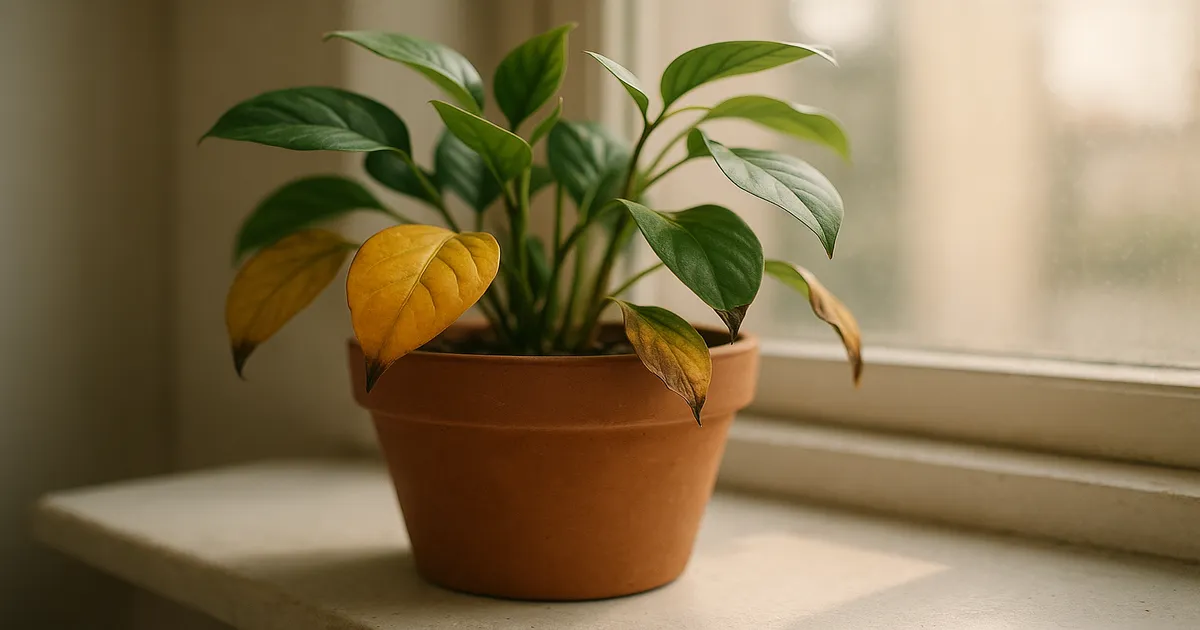
Yellow leaves (chlorosis) are the most common complaint and the least specific symptom. Yellowing can signal overwatering, underwatering, low light, nutrient deficiency, pests, or normal aging. Context is everything.
Location narrows it down fast. Uniform yellowing of the oldest, lowest leaves usually points to nitrogen deficiency or natural senescence. Yellow leaves scattered across the whole plant combined with wet soil suggest overwatering. New leaves yellowing with green veins (interveinal chlorosis) is a classic sign of iron deficiency.
Brown Tips and Edges vs. Brown Patches
These are two very different problems. Crispy brown tips and edges — where browning starts at the leaf margin and moves inward — almost always point to low humidity, fluoride toxicity, salt buildup, or underwatering. The tissue is drying out.
Brown patches in the middle of a leaf, or irregular blotches with yellow halos, suggest something else entirely: fungal leaf spot, bacterial infection, cold damage, or sunscald. Texture matters too — dry and papery means desiccation; soft and water-soaked means disease or cold injury.
Wilting, Translucent, or Mushy Leaves
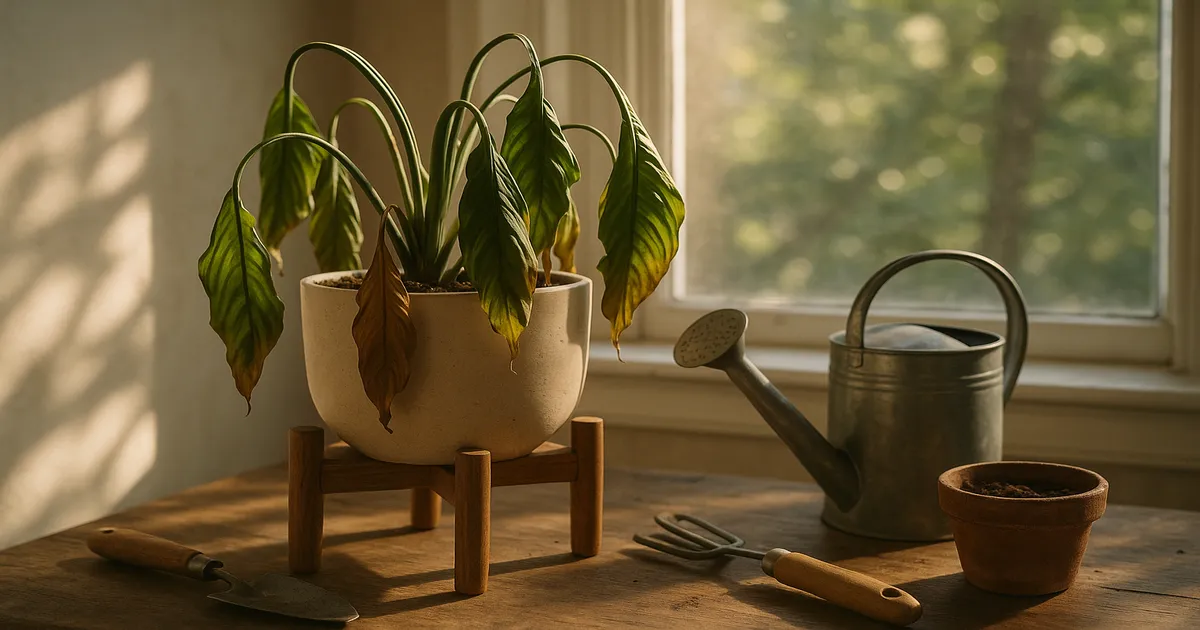
Wilting with dry soil is drought stress. Wilting with wet soil is root rot — the roots have died and can no longer move water, so the plant wilts even though moisture is present. It’s a cruel paradox that catches a lot of people out.
Translucent, water-soaked patches that turn black are almost always cold damage. Mushy leaves or stems at soil level point to bacterial soft rot or severe overwatering.
Distorted, Spotted, or Streaked Leaves
Distorted new growth — curled, puckered, or stunted leaves — often means pests (especially thrips, aphids, or mealybugs) or calcium deficiency. Silver streaking with tiny black specks is a thrips calling card. Mosaic patterns, ring spots, or irregular color breaks can indicate a viral infection.
Symptom-to-Cause Quick Reference
| Symptom | Most Likely Cause |
|---|---|
| Uniform yellowing, lower leaves first | Nitrogen deficiency / natural senescence |
| Yellowing + wet soil | Overwatering / root rot |
| Crispy brown tips and edges | Low humidity / fluoride / salt buildup |
| Brown patches with yellow halos | Fungal or bacterial leaf spot |
| Wilting + wet soil | Root rot |
| Translucent patches turning black | Cold damage |
| Interveinal chlorosis on new leaves | Iron deficiency |
| Silver streaks + distorted new growth | Thrips |
| Mosaic or ring-spot patterns | Viral infection |
| White powdery coating | Powdery mildew |
The Most Common Causes of Dying Houseplant Leaves
Overwatering and Root Rot
This is the number one killer of houseplants. Waterlogged soil cuts off oxygen to the roots — they essentially suffocate, then get colonized by pathogens like Phytophthora and Pythium. Dead roots can’t transport water or nutrients, so leaves yellow, wilt, and die. The cruel irony: it looks exactly like drought stress.
Key signs: yellowing lower leaves, mushy stems at the soil line, dark slimy roots, soil that stays wet for more than 7–10 days, and a foul smell from the pot.
Underwatering and Drought Stress
When soil dries out completely, plants close their stomata to conserve water, halting photosynthesis. Prolonged drought causes cells to lose turgor faster than they can recover, leading to crispy brown margins and irreversible wilting. Soil that has been bone-dry for a long time can also become hydrophobic — water runs straight through without being absorbed, so the plant stays thirsty even after you water.
Too Little or Too Much Light
Without enough light, a plant can’t produce the energy to maintain all its leaves, so it sacrifices older and interior ones first. You’ll see pale yellowing, leggy growth, and a slow decline. Too much direct sun causes the opposite problem — photoinhibition, where chloroplasts are damaged by excess light, creating bleached, silvery, or white patches (sunscald).
Most tropical houseplants want bright indirect light (1,500–3,000 foot-candles). Low-light tolerant plants like snake plants and ZZ plants can survive at 25–150 foot-candles but will slowly decline in deep shade.
Low Humidity
Most popular houseplants evolved in tropical environments with 60–90% relative humidity. The average home sits at 30–50% RH — and in winter with the heating on, it can drop to 20–30%. That gap shows up as crispy brown leaf tips and edges, inward leaf curl, and leaf drop in sensitive species.
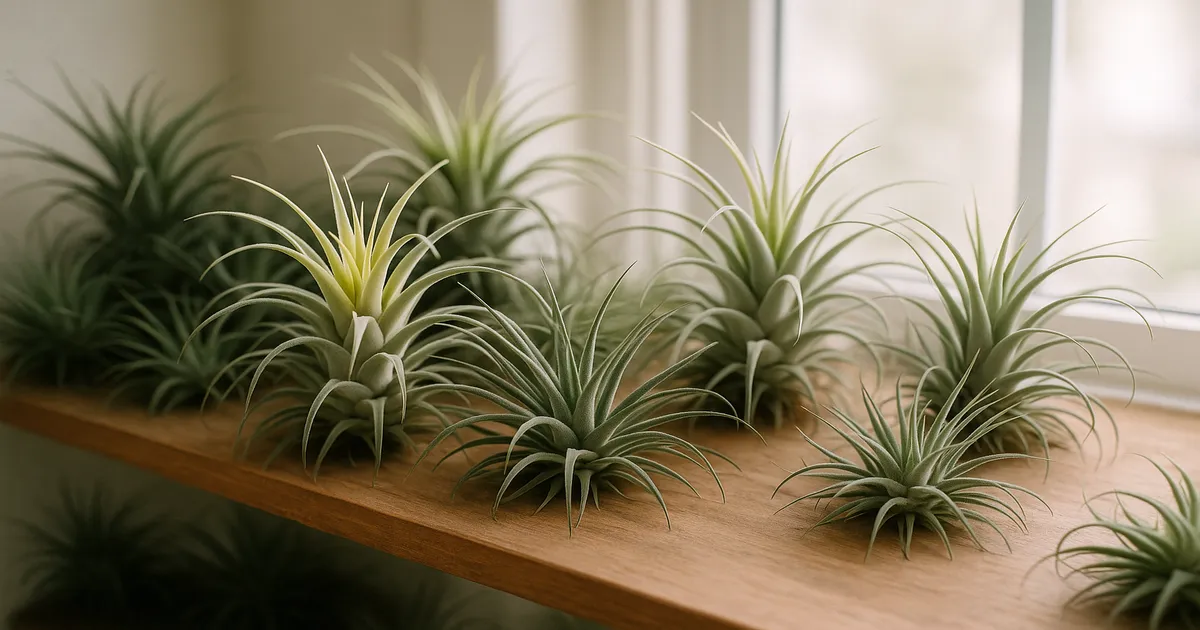
The most vulnerable plants: ferns, Calatheas, orchids, anthuriums, and air plants. All of them want a minimum of 50–60% RH.
Nutrient Deficiencies and Fertilizer Burn
Nitrogen deficiency shows as uniform yellowing of older leaves. Iron deficiency causes interveinal chlorosis on new leaves — often because soil pH is above 7.0, locking out iron that’s actually present in the soil. Potassium deficiency scorches older leaf margins. Calcium deficiency distorts new growth.
Over-fertilizing is just as damaging. Salt buildup creates osmotic stress — roots can’t absorb water despite adequate soil moisture. White crusty deposits on the soil surface or pot rim are the tell-tale sign.
Pest Infestations
Spider mites leave stippled, bronzed leaves with fine webbing. Thrips cause silver streaking and distorted new growth. Mealybugs inject toxins while feeding, causing yellowing and distortion. Scale insects look like small brown bumps and lead to yellowing and leaf drop. Aphids cluster on new growth, causing curling and stunted leaves — and they can transmit plant viruses.
Fungus gnat larvae are a sneaky one: they feed on roots underground, causing yellowing and wilting that looks exactly like overwatering.
Disease: Fungal, Bacterial, and Viral
Botrytis (gray mold) appears as fuzzy gray growth on dying tissue in cool, humid, stagnant conditions. Powdery mildew coats leaves in white powder. Fungal leaf spot diseases create circular brown lesions with yellow halos, spread by water splash. Bacterial soft rot (Erwinia) causes mushy, foul-smelling tissue collapse.
Viral infections — mosaic patterns, ring spots, distorted growth — have no cure. Isolate infected plants immediately and consider discarding them to protect the rest of your collection.
Temperature Extremes and Cold Drafts
Most tropical houseplants want temperatures between 65–85°F (18–29°C) and are damaged below 50°F (10°C). Cold injury shows as water-soaked, translucent patches that quickly turn black. Even a brief blast of cold air from a window or AC vent can cause localized leaf death in sensitive species. Heat above 95°F (35°C) causes rapid wilting, scorching, and leaf death.
Less obvious causes worth checking: repotting shock (sudden leaf drop 1–3 days after transplanting), fluoride toxicity from tap water (brown tips on Dracaenas, Peace Lilies, and Spider Plants), and ethylene gas from ripening fruit nearby — which accelerates leaf yellowing and drop.
How to Fix Dying Leaves: Step-by-Step Solutions
Treating Overwatering and Root Rot
- Remove the plant from its pot and inspect the roots. Healthy roots are white or tan and firm; rotted roots are brown or black, mushy, and may smell.
- Trim all rotted roots with sterilized scissors (wipe blades with 70% isopropyl alcohol between cuts).
- Dust cut ends with cinnamon or powdered sulfur, or rinse remaining roots with a 1:4 solution of 3% hydrogen peroxide and water.
- Repot into fresh, well-draining mix — for most tropicals, standard potting soil amended with 20–30% perlite and 10–20% orchid bark works well. A quality mix like Fox Farm Ocean Forest blended with perlite hits the right balance of drainage and moisture retention.
- Use a pot with drainage holes. Water only when the top 1–2 inches of soil are dry.
Damaged leaves won’t recover — trim them once the plant is stable and focus on watching for new growth as a sign of recovery.
Rehydrating an Underwatered Plant
If the soil has gone hydrophobic, bottom water: set the pot in a tray of water for 30–60 minutes and let the soil reabsorb moisture by capillary action. Alternatively, add a couple of drops of unscented dish soap to your watering can to break surface tension and help water penetrate.
Once rehydrated, trim the crispy leaves and establish a consistent watering routine. The finger test works well for most plants — stick your finger 1–2 inches into the soil and water when it’s dry at that depth. A soil moisture meter removes the guesswork entirely, especially if you tend to over- or under-water. Calendar watering is the enemy of healthy houseplants.
Correcting Light Levels
For too little light, move your plant within 3–5 feet of a south- or east-facing window. If natural light is genuinely limited, a full-spectrum grow light providing 1,500–2,000 foot-candles for 12–16 hours a day will make a real difference.
For sunscald, move the plant back or filter the light with a sheer curtain. If you’re transitioning a plant to more direct sun, do it gradually — increase exposure by 30 minutes per day over 2–3 weeks. Burned patches won’t green up again, but preventing further damage is what matters.
Raising Humidity the Right Way
A humidifier is the most effective solution by a significant margin. An ultrasonic or evaporative humidifier near your plants can maintain 50–70% RH consistently. (Levoit Classic 300S) A pebble tray raises local humidity by roughly 5–10% RH — helpful as a supplement but not sufficient on its own for ferns or Calatheas.
Misting is largely ineffective. It raises humidity for minutes at most and leaves wet foliage that can invite fungal disease. Grouping humidity-loving plants together helps too, since their collective transpiration creates a more humid microclimate.
Fixing Nutrient Problems and Salt Buildup
For most deficiencies, start with a balanced liquid fertilizer at half the recommended strength every 2–4 weeks during the growing season. A complete formula like Dyna-Gro Foliage Pro 9-3-6 covers the full range of macro- and micronutrients in a single product. For iron deficiency specifically, check your soil pH first — it should be 5.5–6.5. A chelated iron supplement can correct it quickly if pH is in range.
For salt buildup, flush the soil with 3–4 times the pot volume of distilled or filtered water to leach the excess. Never fertilize a stressed, newly repotted, or dormant plant — fertilizer salts make compromised roots worse.
Getting Rid of Common Houseplant Pests
First, isolate the plant immediately to prevent spread.
- Spider mites: Spray leaves (top and underside) with water to dislodge mites, then apply neem oil solution (2 tsp neem oil + 1 tsp dish soap per quart of water) every 5–7 days for 3–4 treatments.
- Mealybugs and scale: Manually remove with a cotton swab dipped in 70% isopropyl alcohol, then follow up with horticultural oil or insecticidal soap sprays.
- Thrips and aphids: Insecticidal soap or neem oil on the same 5–7 day schedule. For thrips, yellow sticky traps help monitor population levels.
Dying Leaves by Plant Type: What Is This on My Specific Plant?
Monsteras, Pothos, and Aroids
Yellowing lower leaves on a Monstera or Pothos usually means overwatering, low light, or natural senescence — all three look similar. Check the roots and soil moisture first. Brown crispy patches on Monstera leaves more often indicate low humidity or cold drafts than a watering problem.
Succulents and Cacti
Root rot can be well advanced before above-ground symptoms appear. By the time leaves are mushy and translucent, the damage is often severe. Bottom leaves naturally dry up and shrivel as the plant grows — that’s normal. Soft, yellowing leaves in the center of the rosette, however, signal overwatering.
Ferns and Calatheas
Both are hypersensitive to low humidity and fluoride in tap water. Brown crispy frond tips on ferns almost always mean humidity is too low or you’re using fluoridated tap water — switch to filtered or rainwater and aim for 60–70% RH. Calatheas curl their leaves inward when humidity drops and develop brown edges quickly. They also dislike cold and drafts intensely.
Orchids
With orchids, the roots tell the story before the leaves do. Healthy orchid roots are green when wet and silvery-gray when dry. Mushy brown roots signal rot, and leaf death often lags behind root decline by weeks. Lower leaves yellowing and dropping one at a time is natural. Yellowing across multiple leaves simultaneously with soft stems points to overwatering or bacterial rot.
Palms and Dracaenas
Lower frond yellowing and browning on palms is completely normal — palms naturally shed their oldest fronds. Crown leaf death (the newest growth at the very top dying) is serious and often indicates bacterial or fungal crown rot, which can be fatal. Dracaenas are particularly prone to fluoride toxicity; their brown leaf tips are almost always a water quality issue rather than a watering frequency issue.
Ficus Species
Ficus are drama queens about environmental change. Moving a Ficus to a new location — even a slightly different spot in the same room — can trigger dramatic leaf drop. It’s a stress response, not a death sentence. Stabilize the light, temperature, and humidity, stop fussing with it, and new leaves will follow. Persistent leaf drop with yellowing and no new growth points to root problems or a genuine light deficiency.
When to Worry: Signs Your Plant May Not Recover
Most plant problems caught early are fixable. But some situations are genuinely beyond saving:
- Complete root system collapse: If you repot and find no healthy roots remaining — nothing white or firm — the plant has no mechanism to recover.
- Crown death in palms: Once the growing point at the top of a palm dies, the plant cannot regenerate.
- Widespread bacterial soft rot: Fast-moving, foul-smelling, mushy collapse of stems and leaves is very difficult to stop once it’s systemic.
- Confirmed viral infection: Mosaic patterns, ring spots, and distorted growth with no other explanation mean a virus. There’s no treatment — discard the plant before it infects others.
Ask yourself two questions: Is there any healthy root tissue left? And is there new growth, or any realistic chance of it? If the answer to both is no, discarding is often the responsible call — especially if the plant is near others. That said, most problems you’ll encounter aren’t this severe. A plant with yellowing leaves, some root rot, and a stressed owner is usually very salvageable with prompt action. Don’t give up before you’ve inspected the roots.
How to Prevent Leaves From Dying in the Future
Ditch the calendar. Water when the soil tells you to, not when the date does. Keep most tropical houseplants in bright indirect light (1,500–3,000 foot-candles), at temperatures between 65–85°F, and at 50–70% RH. Place plants away from heating vents, cold windows, and air conditioning units. Check for pests monthly — catching an infestation early is far easier than treating a severe one.
The single biggest shift most houseplant owners can make: slow down. Most leaf problems develop over days or weeks, and most fixes require patience rather than immediate intervention. Observe first, act second.
Frequently Asked Questions: “What Is This? My Leaves Are Dying”
Should I remove dying leaves from my plant? Yes — once a leaf is more than 50% brown or yellow and not recovering, remove it. Dead tissue can harbor fungal disease and draws energy the plant could use elsewhere. Use clean scissors and cut close to the stem.
Can a leaf turn green again after it yellows? Generally no. Once chlorophyll breaks down in a yellowing leaf, it doesn’t come back. The goal is to fix the underlying cause so new, healthy leaves can grow — not to revive the damaged ones.
How do I know if my plant has root rot without repotting it? Look for these signs without disturbing the roots: soil that stays wet for more than 10 days, a sour or rotten smell from the pot, yellowing that starts at the bottom and moves upward, and wilting despite moist soil. If you see three or more of these together, root rot is very likely.
My plant is losing leaves but the soil is dry — what’s wrong? Dry soil with leaf drop usually means drought stress, but it can also mean the soil has become hydrophobic and isn’t actually absorbing water when you irrigate. Try bottom watering for 30–60 minutes. If the soil still won’t absorb water, it may need to be replaced entirely.
How long does it take a plant to recover after fixing the problem? It depends on the severity. Minor issues like low humidity or inconsistent watering can show improvement within 2–4 weeks once corrected. Root rot recovery takes longer — expect 4–8 weeks before you see meaningful new growth, and only if healthy roots remain. Be patient and resist the urge to over-correct.