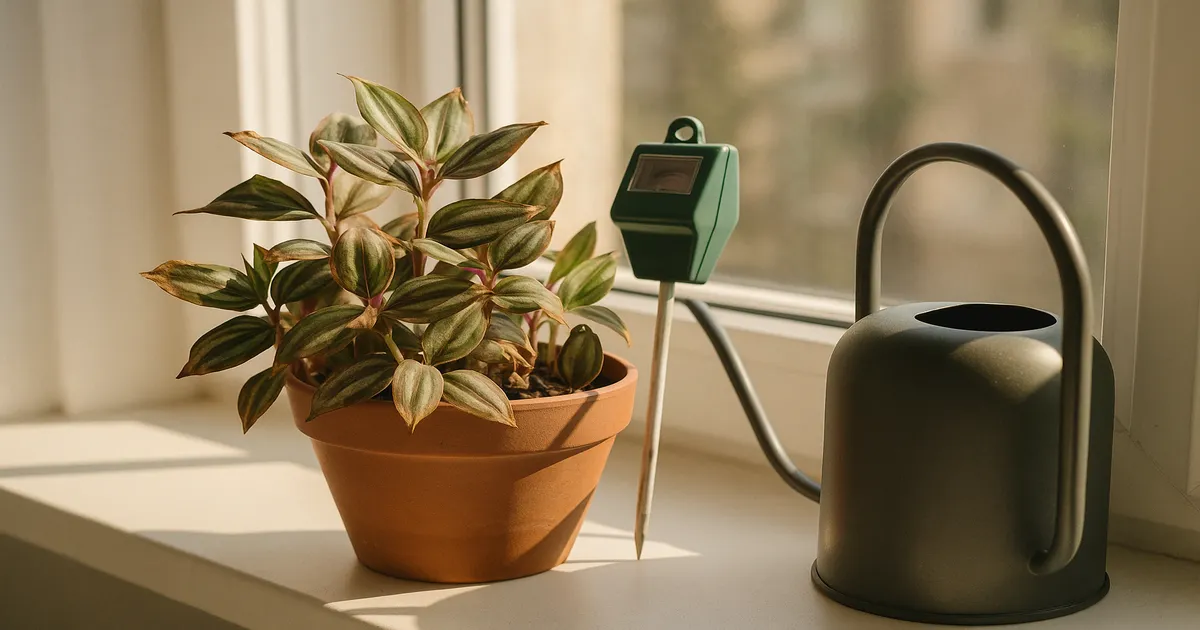
Quick Answer: Wandering Jew leaves turn brown most often because of watering problems (too much or too little), low humidity, or direct sun exposure. Crispy, papery brown tips point to underwatering, dry air, or fertilizer salt buildup, while soft, mushy browning signals overwatering or root rot. Nearly every cause is fixable once you identify it — and this guide walks you through exactly how.
If you’ve been searching why is my wandering jew leaves turning brown, you’re in good company. These fast-growing, vividly coloured Tradescantia plants are among the most popular houseplants around, but their thin leaves are quick to show stress. The good news: browning is almost always a symptom, not a death sentence.
Here’s a quick reference to match what you’re seeing to the likely cause:
| Symptom | Most Likely Cause |
|---|---|
| Crispy, papery brown tips | Underwatering, low humidity, or fertilizer burn |
| Soft, mushy brown patches | Overwatering or root rot |
| Bleached white-to-tan patches turning brown | Sunburn (direct light) |
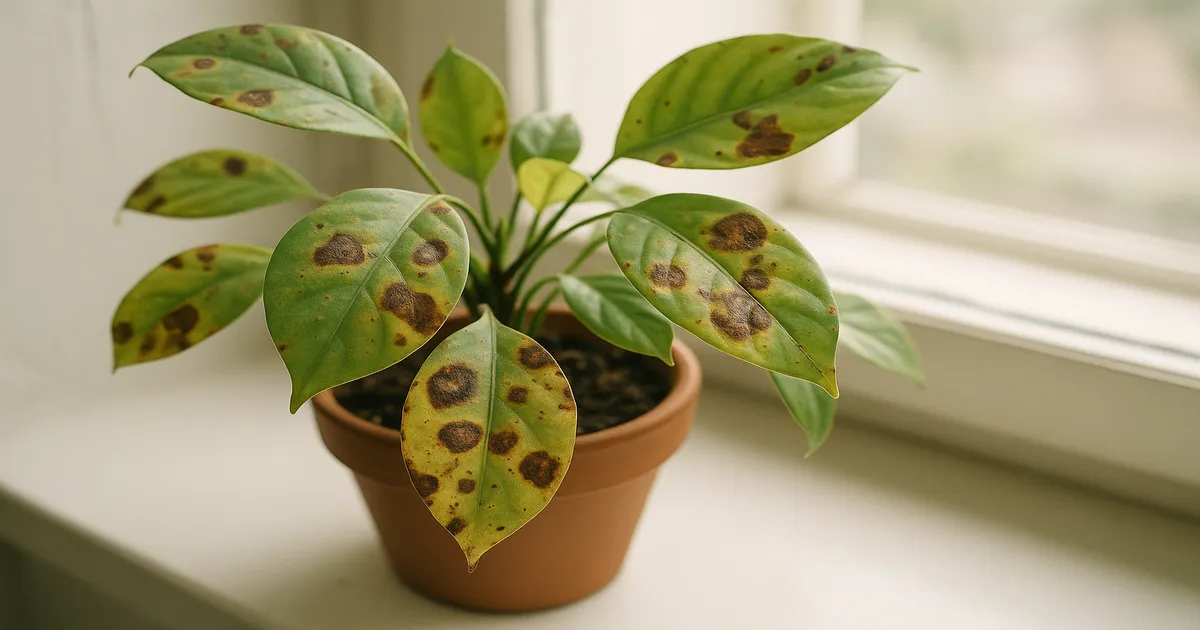
| Brown spots with yellow halos | Fungal or bacterial disease |
| Stippled, bronzed browning with webbing | Spider mites |
| Browning on oldest lower leaves only | Natural senescence |
| Sudden widespread browning | Cold draft or temperature shock |
Understanding Your Wandering Jew Plant
Species Overview
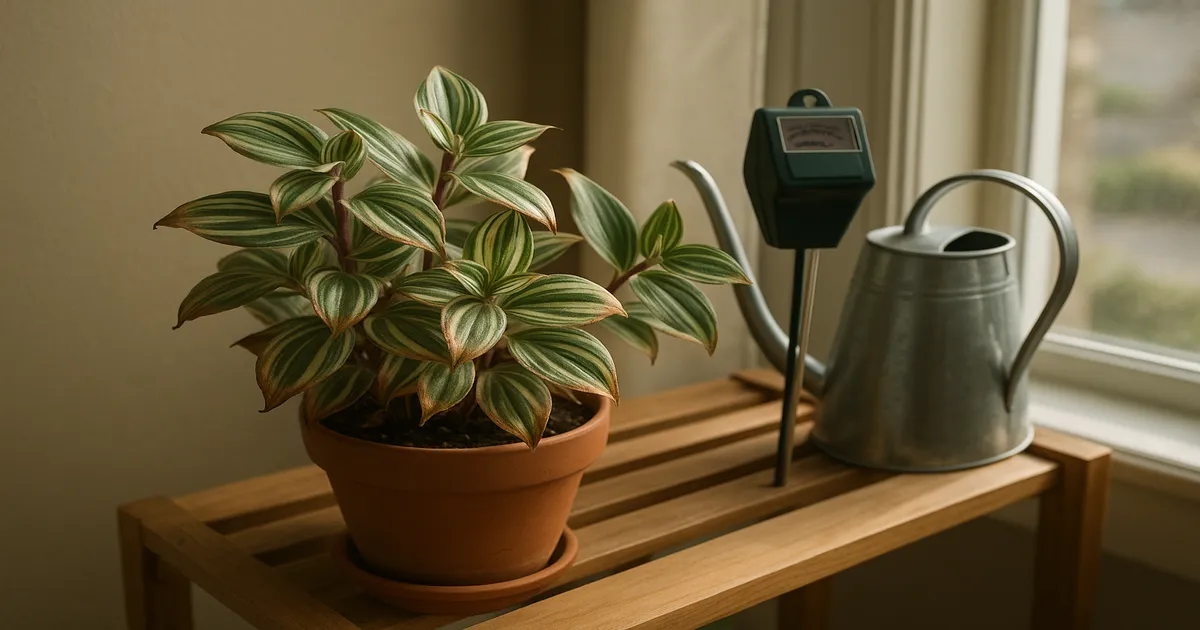
“Wandering Jew” covers several Tradescantia species, and they don’t all share the same needs. T. zebrina is the most common — those iconic silver-striped, purple-backed leaves. T. fluminensis has smaller green-and-white variegated foliage and is considered invasive in some warm climates. T. pallida (Purple Heart) is the most sun- and drought-tolerant of the group. T. sillamontana (White Velvet) has densely hairy leaves that help it handle dry air better than its relatives.
Knowing your species matters. What stresses a T. zebrina may barely faze a T. pallida.
Ideal Growing Conditions
These plants evolved in humid tropical and subtropical understories across Mexico, Central America, and South America. Their thin, minimally waxy leaf cuticles are built for moisture-rich air — not the dry interiors of heated or air-conditioned homes, which is why browning is so common indoors.
- Temperature: 60–80°F (15–27°C); damage begins below 50°F (10°C)
- Humidity: 40–60% RH; stress becomes visible below 30% RH
- Light: Bright indirect light (1,500–3,000 foot-candles)
- Soil pH: 6.0–7.0
- Watering frequency: Every 5–10 days, adjusted for season and pot size
One more thing worth knowing upfront: individual stems naturally senesce after 12–18 months. Lower leaves yellow and brown as part of normal aging — this is biology, not neglect.
Why Is My Wandering Jew Leaves Turning Brown? Watering Is Usually the Answer
Signs of Overwatering and Root Rot
Overwatering is the single most common cause of houseplant death, and Tradescantia is no exception. Waterlogged soil cuts off oxygen to the roots, creating ideal conditions for pathogens like Pythium and Phytophthora. The cruel irony: roots damaged by rot can’t transport water or nutrients, so the plant wilts and browns even though the soil is soaking wet.
Look for:
- Brown leaf tips that are soft and mushy, not crispy
- Yellowing lower leaves
- Soggy, foul-smelling potting mix
- Visible mold on the soil surface
Fix it:
- Stop watering and move the plant somewhere warm and bright.
- Unpot and inspect the roots. Healthy roots are firm and white to tan; rotted roots are brown or black, mushy, and may smell.
- Prune all rotted roots with sterilized scissors and dust cut ends with powdered sulfur or activated charcoal.
- Repot into fresh, well-draining mix (standard potting soil with 30–40% perlite) in a pot with drainage holes. Terracotta dries out faster than plastic and is ideal here — a classic Deroma terracotta pot works well.
- Resume watering only when the top 1–2 inches of soil are dry.
Signs of Underwatering and Drought Stress
Tradescantia stores a little moisture in its stems, but it’s not a true succulent. When water runs low, the cells at leaf tips and margins — the farthest points from the root system — are the first to lose turgor pressure and die. The result is crispy, papery browning that starts at the very tip and works inward.
A lightweight pot, bone-dry soil pulling away from the pot edges, and wilting that resolves quickly after watering all confirm the diagnosis.
Fix it:
- Bottom-water by placing the pot in a basin of room-temperature water for 20–30 minutes. This rehydrates compacted soil far more effectively than pouring water from the top.
- Check moisture every 3–4 days rather than watering on a fixed schedule. A soil moisture meter removes the guesswork entirely — the XLUX Soil Moisture Meter is inexpensive and reliable.
- Trim crispy brown tips with sterilized scissors at a slight angle to match the natural leaf shape.
Low Humidity and Temperature Stress
How Dry Air Causes Brown Leaf Tips
Because Tradescantia leaves have a thin cuticle, they lose moisture to the air quickly. Once ambient humidity drops below about 30% RH — common in centrally heated homes in winter or heavily air-conditioned spaces in summer — the plant transpires faster than it can replenish, and leaf tips burn.
The pattern is a useful diagnostic clue: humidity-related browning is crispy, tan, and symmetrical across the whole plant. Pest or disease damage tends to be patchy and irregular.
Cold Drafts and Heat Stress
Below 50°F (10°C), cellular membranes in leaf tissue begin to break down. The damage is fast and widespread — entire leaves can brown seemingly overnight after a cold draft from a window or vent, and that damage is irreversible. At the other extreme, temperatures above 90°F (32°C) accelerate transpiration dramatically, especially in dry air, causing rapid tip burn and wilting.
How to Raise Humidity and Protect from Temperature Extremes
- Use a cool-mist humidifier near your plant, targeting 40–60% RH. This is the most reliable solution — a Levoit Classic 300S is a popular choice for plant owners.
- Group plants together to create a localized humidity microclimate.
- Place the pot on a pebble tray with water, ensuring the pot base sits above the waterline.
- Move plants away from heating vents, radiators, air conditioning units, and drafty windows.
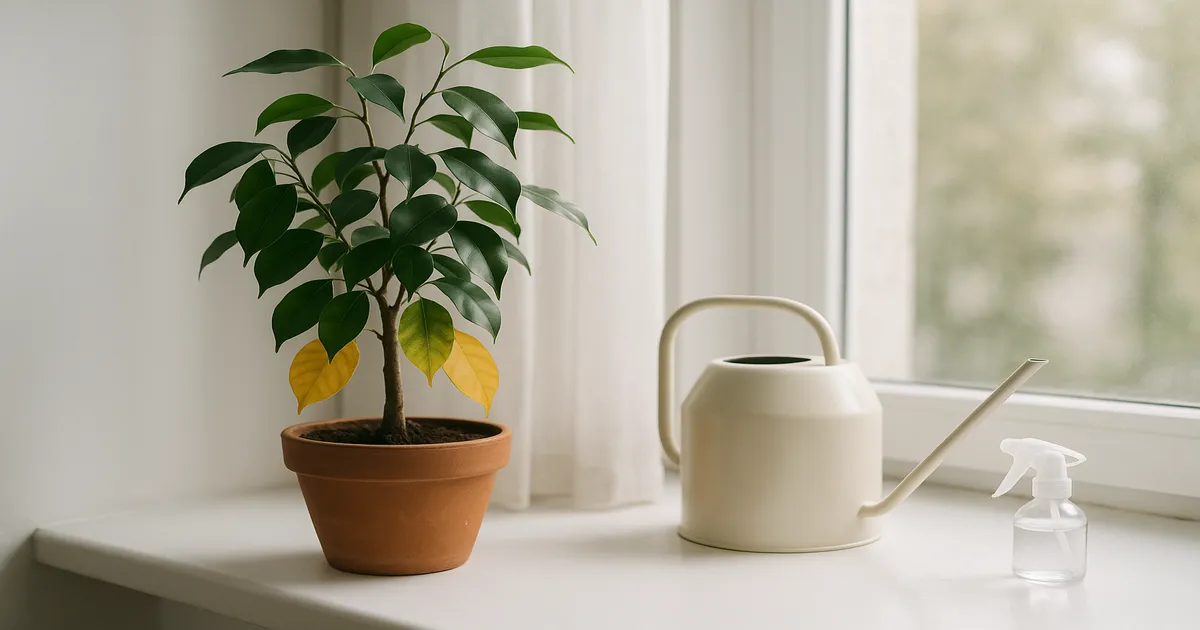
- Don’t mist directly onto leaves. Despite its popularity, misting creates wet foliage that promotes Botrytis and leaf spot diseases — it’s not a substitute for ambient humidity.
Light Issues: Too Much or Too Little
Sunburn: Bleached and Brown Patches from Direct Light
When light intensity exceeds roughly 5,000 foot-candles — think a south- or west-facing windowsill in summer — reactive oxygen species overwhelm the leaf’s natural defenses and scorch the tissue. Damage first appears as bleached, white-to-tan patches on the sun-facing surface, then turns papery brown. It’s almost always on the upper side of the leaves most exposed to the light source.
T. pallida is the exception. It can handle a few hours of bright direct light (3,000–5,000 foot-candles) without significant damage. The other species cannot.
Too Little Light
Very low light (below 200 foot-candles) causes etiolation — stems stretch and weaken, variegation fades, and the plant becomes far more vulnerable to root rot and fungal disease. The browning in this case is secondary, a consequence of a weakened plant rather than direct light damage.
Finding the Right Spot
Bright indirect light (1,500–3,000 foot-candles) is the sweet spot — an east-facing window, or 2–3 feet back from a south or west window. A few practical tips:
- Use sheer curtains to diffuse harsh afternoon sun without blocking light entirely.
- Supplement with a full-spectrum LED grow light if natural light is limited; aim for 12–14 hours per day. The Soltech Aspect is a well-regarded option that blends into most rooms.
- Rotate the pot 90° every 1–2 weeks for even exposure.
Fertilizer Problems: Burn and Deficiencies
Recognising Fertilizer Burn
Over-fertilizing creates a hypertonic environment in the soil. Excess soluble salts draw water out of root cells via osmosis — the same mechanism as underwatering, but the soil is moist and the pot feels heavy. The telltale sign is a white crystalline crust on the soil surface or around the pot rim, paired with crispy brown tips and margins.
Fix it: Slowly pour 3–4 times the pot’s volume of room-temperature water through the drainage holes over about 30 minutes. If the crust is severe, repot into fresh mix.
Nutrient Deficiencies That Cause Browning
- Potassium deficiency: Scorched brown margins on older leaves
- Magnesium deficiency: Interveinal yellowing that progresses to necrosis
- Nitrogen deficiency: General yellowing and browning of older leaves, reduced growth
Use a balanced, water-soluble fertilizer (10-10-10 or 20-20-20 NPK) at half the recommended strength, every 3–4 weeks from spring through early fall. Jack’s Classic All Purpose 20-20-20 is a reliable and widely available option. Stop feeding entirely in winter, or reduce to once every 6–8 weeks at most.
Pests That Cause Brown Leaves on Wandering Jew
Spider Mites
Spider mites thrive in warm, dry air and on stressed plants — exactly the conditions many indoor environments provide. They pierce leaf cells and extract the contents, leaving stippled, bronzed, or silvery patches that spread and merge into widespread browning. Fine webbing on leaf undersides and between stems is the diagnostic sign. Populations can explode within days, so act fast.
Other Common Pests
Aphids cluster on new growth, sucking sap and causing distorted, browning shoot tips. They also excrete honeydew that coats leaves in a sticky film, which then grows sooty black mold. Mealybugs appear as white cottony masses at leaf axils and stem joints. Scale insects look like small brown or tan bumps on stems — easy to miss until the damage is obvious. Fungus gnat larvae feed on roots in moist soil, causing the same tip browning you’d see from other root problems.
How to Treat Pest Infestations
- Isolate the plant immediately to prevent spread.
- Rinse the entire plant — including leaf undersides — with a strong stream of water in the shower or sink.
- Apply insecticidal soap or neem oil emulsion to all leaf surfaces; repeat every 5–7 days for 3–4 cycles to break the full lifecycle.
- For severe spider mite infestations, use a miticide containing abamectin or spinosad — standard insecticides often don’t work on mites, which are arachnids, not insects.
- For fungus gnats, let the top 2 inches of soil dry out between waterings and drench with a Bti (Bacillus thuringiensis var. israelensis) biological insecticide to kill larvae.
- Dab individual mealybug clusters with a cotton swab soaked in 70% isopropyl alcohol.
- Raise ambient humidity above 50% RH — spider mites struggle to reproduce in humid conditions, making this both a treatment aid and a preventive measure.
Root-Bound Plants and Natural Senescence
How Being Root-Bound Causes Browning
Tradescantia grows fast. In a single growing season it can fill a pot so completely that roots circle the container and displace most of the soil. When that happens, water runs straight through with almost no absorption, the plant dries out within 24–48 hours of watering, and tip browning follows. Roots emerging from drainage holes and unusually rapid wilting after watering are the giveaways.
Repot into a container 1–2 inches larger in diameter — going too large encourages waterlogged soil. Gently tease apart any circling roots, use a well-draining mix (standard potting soil with 30–40% perlite), water thoroughly, and place in bright indirect light.
Normal Aging vs. a Care Problem
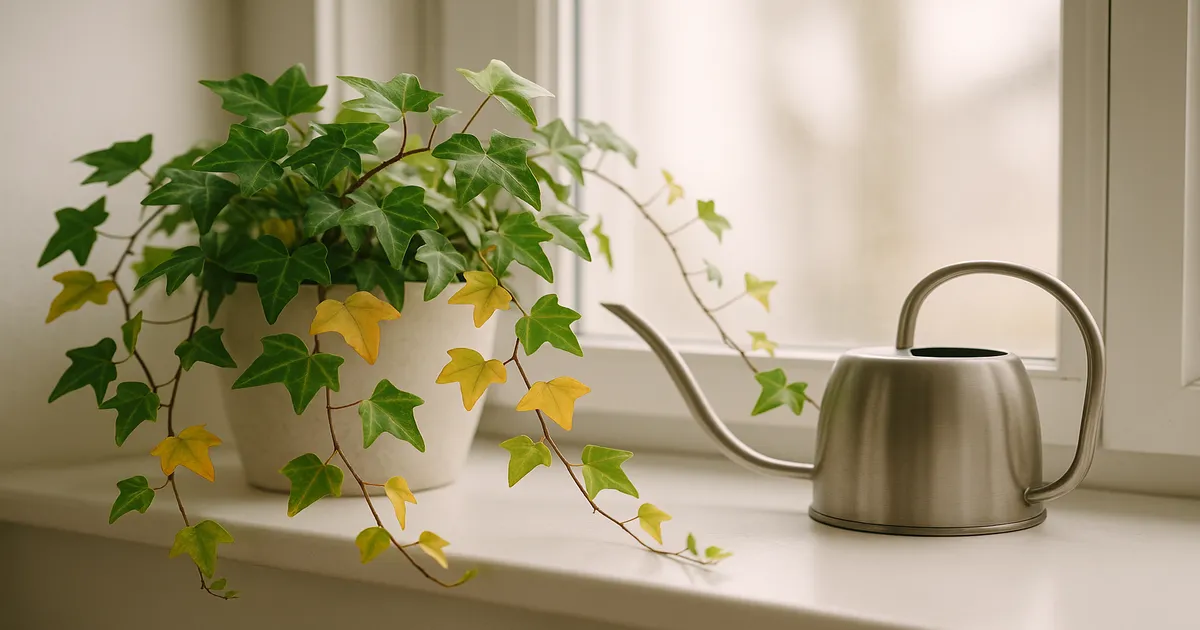
The oldest stems on a Tradescantia naturally yellow and brown from the base upward after about 12–18 months. This is programmed cell death — completely normal. The key distinction: new tip growth remains vibrant and healthy while the older lower leaves die back. If the browning is confined to the base of older stems and the growing tips look great, there’s nothing to fix.
Fungal and Bacterial Diseases
Botrytis cinerea (gray mold) loves cool, humid, poorly ventilated spaces. It starts as water-soaked brown spots and quickly develops a fuzzy gray sporulating mass. It spreads through dead plant material left on or near the plant, so removing debris promptly is essential.
Leaf spot diseases caused by Cercospora and Colletotrichum produce discrete circular brown spots with distinct yellow halos, spread by water splash. Bacterial blight (Pseudomonas spp.) causes water-soaked lesions that turn brown to black, usually surrounded by a yellow halo. Unlike fungal diseases, there’s no cure once bacterial blight is established in tissue — removal and prevention are the only options.
Prevention and treatment:
- Improve air circulation and avoid overhead watering or direct leaf misting.
- Remove dead leaves and debris from the soil surface promptly.
- Sterilize scissors and pruning tools with 70% isopropyl alcohol between cuts.
- For fungal issues, remove affected leaves and apply a copper-based fungicide such as Bonide Copper Fungicide.
- For bacterial blight, remove all affected tissue aggressively and do not compost it.
Prevention: How to Keep Wandering Jew Leaves Healthy
A few consistent habits prevent the vast majority of browning problems:
- Water by feel, not by calendar. Check the top 1–2 inches of soil before every watering; water only when dry at that depth.
- Keep humidity at 40–60% RH with a humidifier, especially in winter.
- Maintain bright indirect light — an east window or a few feet back from a south or west window.
- Fertilize at half strength from spring through early fall; stop in winter.
- Propagate regularly. This is the most underrated piece of Tradescantia care advice. Because stems naturally decline after 12–18 months, taking healthy tip cuttings and rooting them in water or fresh soil effectively resets the plant. You get a full, vibrant plant instead of a leggy, browning one. Pinch back long stems to encourage bushier growth, and don’t hesitate to take cuttings even from a plant that looks healthy — it’s the best way to stay ahead of senescence.
Frequently Asked Questions
Why are only the tips of my wandering jew leaves turning brown? Brown tips that are crispy and dry almost always point to low humidity, underwatering, or fertilizer salt buildup. Check soil moisture first, then consider whether your home’s humidity is below 30% RH — both are easy to fix.
Can brown leaves turn green again? No. Once leaf tissue dies and turns brown, that damage is permanent. Trim the brown portions with sterilized scissors, correct the underlying cause, and the new growth that follows will be healthy and green.
How do I know if my wandering jew has root rot? Unpot the plant and inspect the roots. Healthy roots are firm and white to tan. Rotted roots are brown or black, mushy, and often smell unpleasant. Soft, mushy brown patches on leaves combined with soggy soil are the above-ground warning signs.
Why is my wandering jew leaves turning brown even though I water it regularly? Regular watering doesn’t guarantee the right amount of water. Overwatering is just as likely as underwatering to cause browning — and fertilizer salt buildup can mimic drought stress even in moist soil. Check for a white crust on the soil surface, and make sure your pot has drainage holes.
Should I cut off brown leaves on my wandering jew? Yes. Remove or trim brown leaves and tips with sterilized scissors. Dead tissue won’t recover, and leaving it in place can invite fungal disease. Cutting just past the brown area — at a slight angle to match the leaf’s natural shape — keeps the plant looking tidy while it recovers.